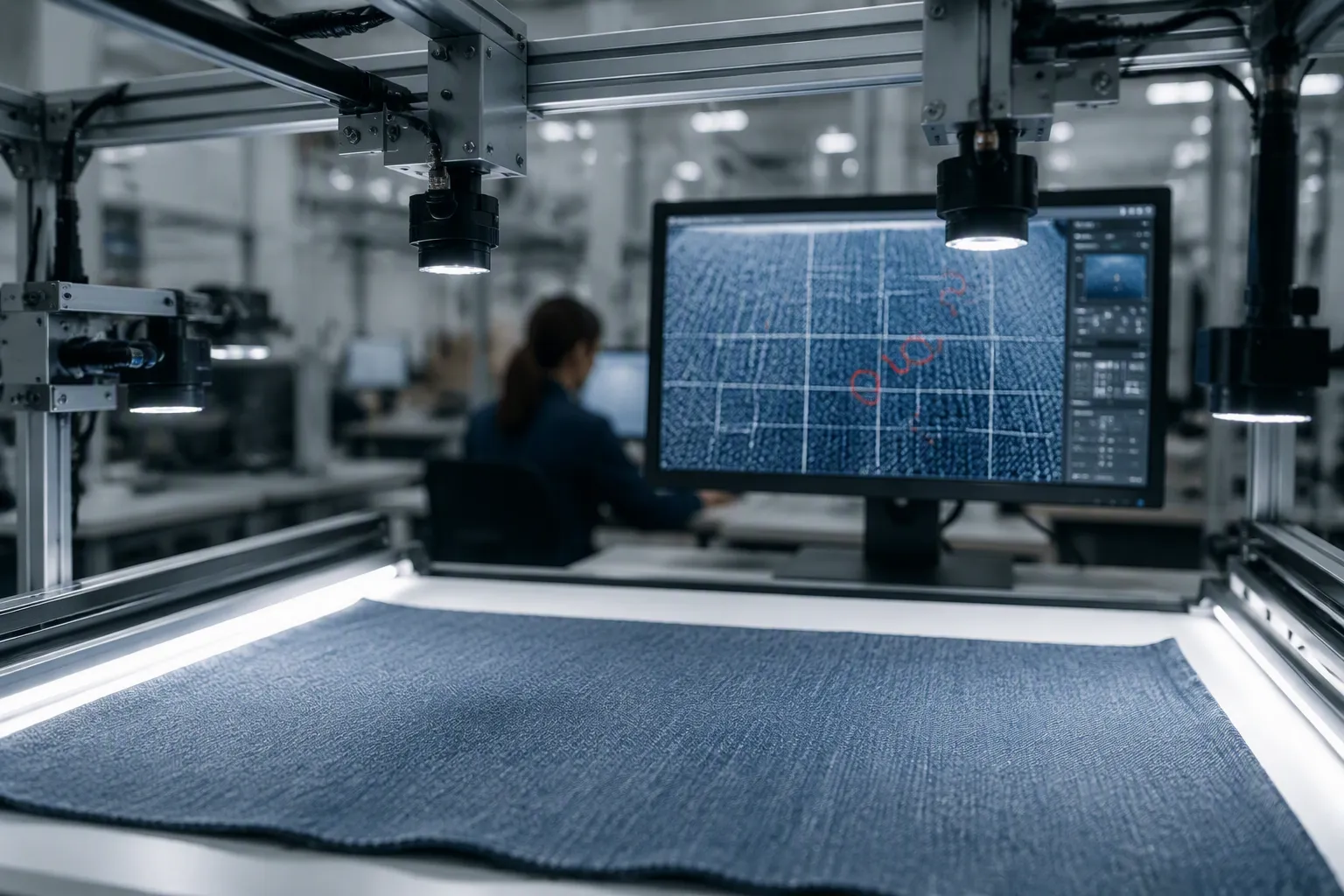
Denim defects cost manufacturers millions annually through returns and wasted fabric. You face a constant battle to maintain quality while production speeds increase. Human inspectors cannot keep pace. They miss roughly 15% of defects, averaging only 85% accuracy. Fatigue compounds this problem. Their accuracy starts at 80-90% but plunges to 50-70% after just 20-30 minutes of continuous inspection.
- Human inspectors miss approximately 15% of defects
- Accuracy drops from 80-90% to 50-70% within 30 minutes
Multi-Camera AI changes this equation. It watches every inch of fabric in real time, catching flaws you would miss. This technology delivers consistent, reliable detection that never tires. You gain confidence in your quality control and protect your bottom line.
Common Denim Defects
Holes, Stains, and Weaving Errors
Your denim production faces recurring defect types. These flaws compromise quality. Understanding them helps you target the right inspection approach. Holes, stains, and weaving errors rank among the most frequent issues. Each defect has specific causes you can identify and address.
| Defect | Cause(s) |
|---|---|
| Holes | Cloth breakage (tears, cuts); temple mark (yarns misshapen near selvedges) |
| Stains | Contamination with impurities (oil, dirt); iron marks from rusted reed |
| Smashes | Mechanical faults: daggers not working, frog spring ineffective, bad shuttle, improper boxing, worn out picker, damaged pirn, entanglements |
| Reed marks | Defective reed, improper warp tension, denting errors |
| Reediness | Excessive warp tension, late shedding, coarse reed with too many ends per dent, bent reed wires, wrong drawing, insufficient shed opening |
| Cracks | Lower pick density than normal, caused by mechanical faults in the loom |
| Tails out | Cutter not working properly |
| Gout (foreign matter) | Lint, waste, etc. from improper loom cleaning and unclean environment |
| Temple mark | Yarns misshapen from their paths, producing holes near selvedges |
| Float | Slack warp, faulty pattern card, damaged/broken heald wire, foreign matter falling on warp |
| Misdraw / wrong denting | One or more ends incorrectly drawn in the reed |
Beyond these specific defects, you encounter broader categories of quality issues. Weaving defects include neps, slubs, barre marks, skewing, bowing, and broken picks or ends. Dyeing and finishing problems create color streaks, shading variations, and color bleeding or crocking. Sewing defects involve skipped stitches, seam puckering, misaligned components, and incorrect stitch counts. Each category demands a different detection strategy.
Why Early Detection Matters
Catching defects early transforms your quality control process. Inspecting fabric before cutting rolls gives you the greatest advantage. You stop flawed material from entering production. This prevents wasted labor, thread, and trim on garments that will fail inspection.
Early detection also reduces material waste significantly. A defect found after cutting means you discard the cut pieces and the time invested. Finding the same flaw on the roll lets you cut around it or reject only that section. Your fabric yield improves dramatically when you catch issues before the cutting table.
Your production speed increases too. You avoid the delays of rework and the costs of returns. Your customers receive consistent quality. Your brand reputation stays strong. Multi-camera AI makes this possible by spotting defects as fabric moves through production, giving you immediate information to act on.
How Multi-Camera AI Works
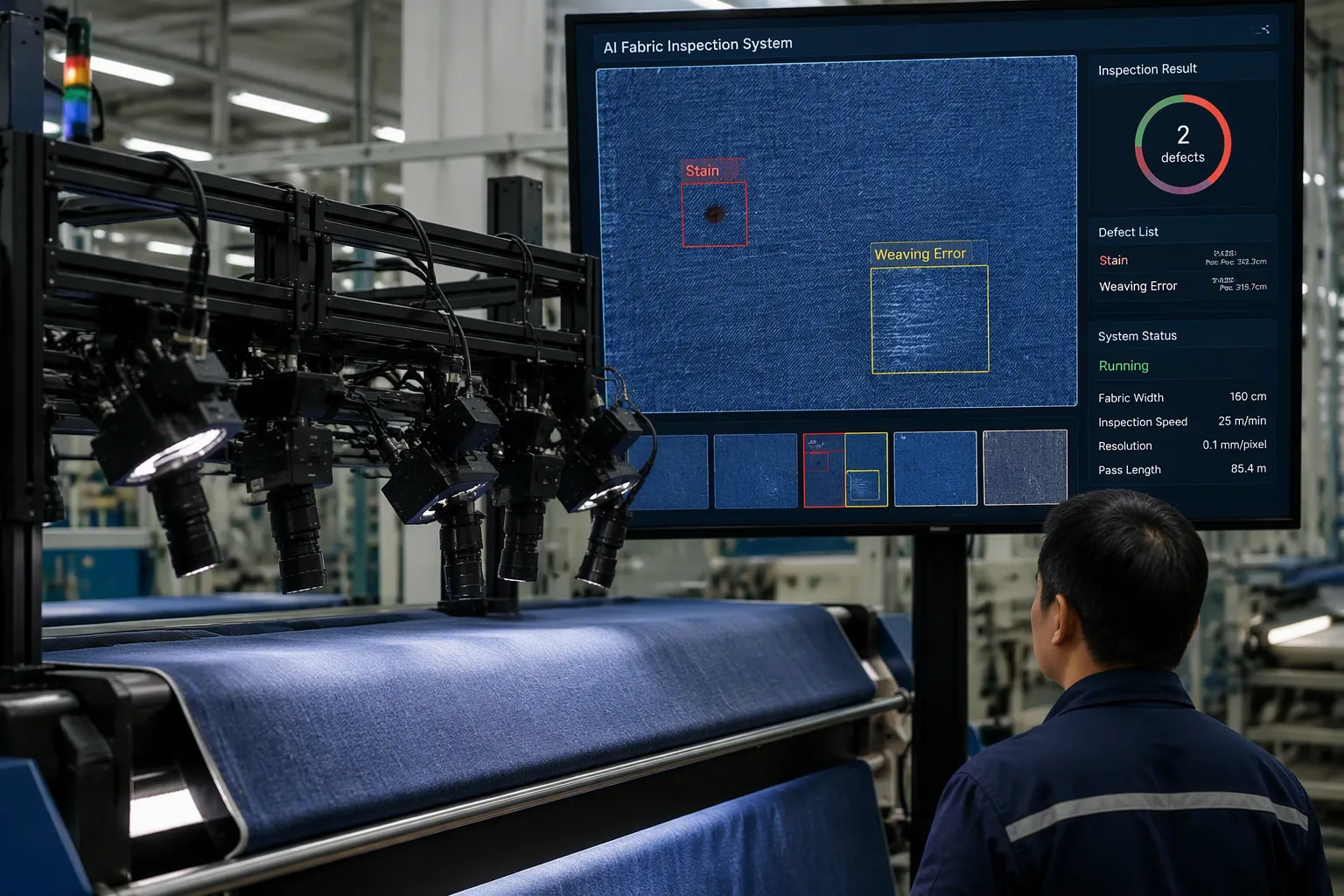
You see the fabric moving at high speed through your production line. Human eyes cannot catch every flaw at this pace. Multi-Camera AI changes this reality. It uses cameras and algorithms to inspect every inch of denim as it moves. The system never tires. You get consistent detection from start to finish.
Camera Array Setup and Image Capture
You mount multiple high-resolution cameras across the full width of the fabric. Each camera covers a specific section of the moving material. The fields of view overlap to ensure complete coverage. The Multi-Camera AI system stitches these images together. It creates a continuous view of the entire fabric surface.
You position each camera at a precise angle and distance. This setup ensures consistent lighting and focus. The cameras capture images at high speeds. They keep pace with your production line. You get real-time data as the fabric moves through the inspection zone.
The image capture runs continuously. Every frame feeds into the processing system. You do not stop the line or slow production. The system handles the speed. You watch results appear on your monitoring screen. You maintain full production speed with complete inspection coverage.
AI Algorithms for Defect Recognition
The captured images flow into the AI system for analysis. Deep learning models power this analysis. They process each image and identify potential defects. It learns from thousands of training examples. You train it on your specific defect types. It recognizes holes, stains, weaving errors, and other common issues you face.
The system does not analyze raw images alone. It uses advanced image processing techniques to detect texture patterns and highlight areas where the fabric weave changes. This makes subtle defects stand out. Small stains become clearly visible. These techniques work together to improve detection accuracy.
The Multi-Camera AI system processes each image in milliseconds. It compares what it sees against patterns from training. When it finds a match with a known defect, it flags the location. The system categorizes the defect by type. This information appears on your screen instantly.
You see a display with every flaw highlighted. The screen shows you where each defect is located. You know the type of defect. You know its size and position. You can mark the section for removal. You can adjust machine settings to prevent further defects. You can track patterns over time to identify root causes in your production line.
The system alerts you to problems as they happen. You halt the line or mark the fabric section. You prevent flawed material from continuing through production. You gain control over quality that human inspection cannot match.
You can also adjust the system over time. It learns from new data. It improves accuracy with each run. You build a dataset that makes detection better. This continuous improvement strengthens your quality control process.
Advantages Over Traditional Inspection
Boosting Accuracy to 98%
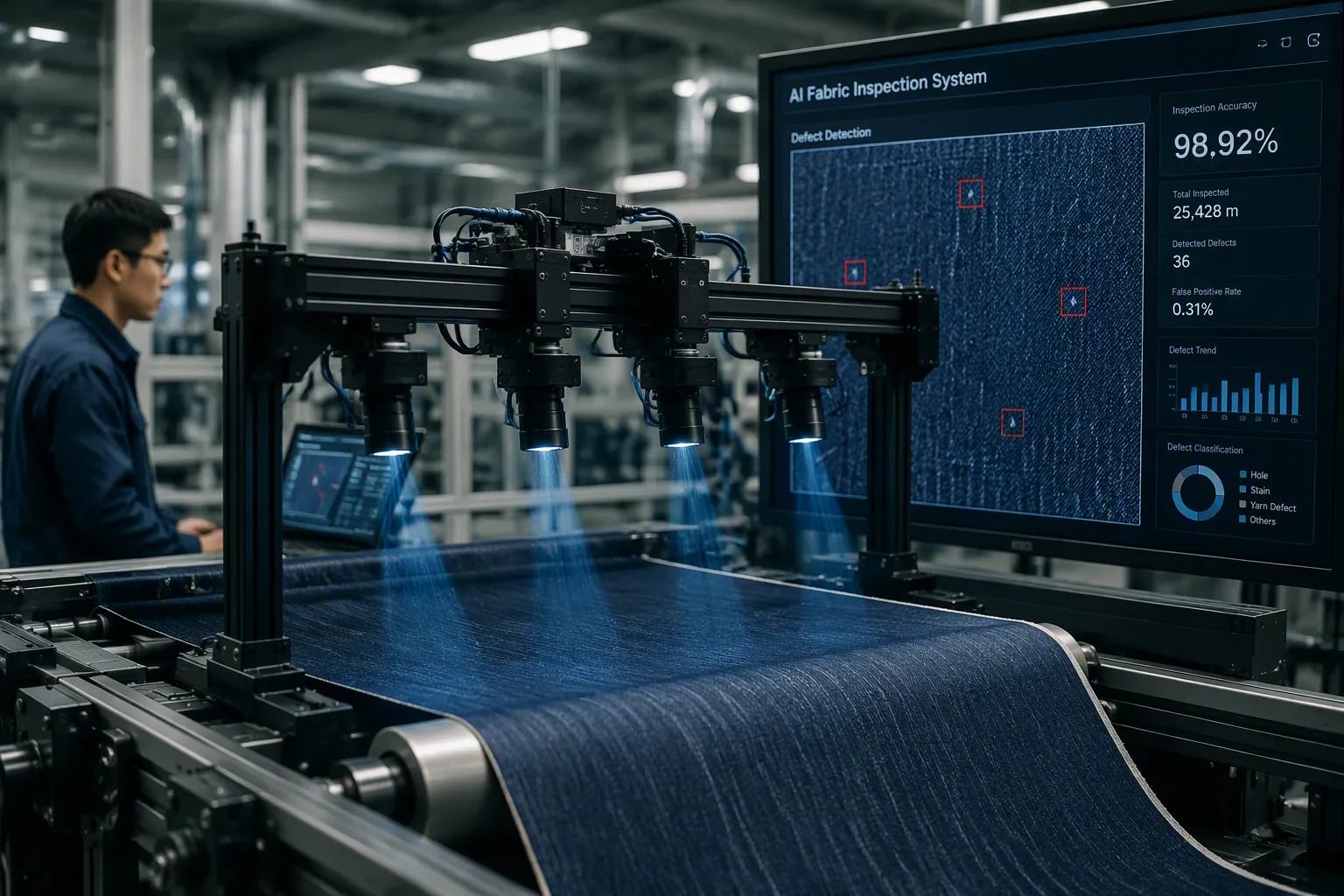
You face a stark choice between human inspection and automated systems. The numbers tell the story clearly. Human inspectors catch only 50-65% of defects on moving garment lines. Their accuracy drops further after two hours of continuous work. Automated AI systems achieve 95-98% detection rates. They maintain this level across every shift, every day, without exception.
| Inspector Type | Defect Detection Rate | Additional Notes |
|---|---|---|
| Human Inspectors | 50–65% | Manual inspection on moving garment lines; consistency degrades after 2 hours |
| Automated AI Systems | 95–98% | Consistent across shifts; on black garments detection rates are typically 2–4% lower |
The gap between these numbers represents real money. Every missed defect becomes a returned product or a rejected batch. You lose fabric, labor, and customer trust. Multi-Camera AI closes this gap with pixel-level analysis. It detects micro-defects and textural anomalies that human eyes simply cannot see on fast-moving fabric.
Denim presents a special challenge. The fabric's complex texture and dark colors strain human vision. Inspectors experience rapid visual fatigue. Their performance declines quickly. AI systems handle these conditions without difficulty. They analyze every pixel of every frame. They find flaws hidden in the weave pattern. They maintain accuracy even on the most intricate denim designs.
The system also learns continuously. Every false positive becomes training data. Every new defect type gets cataloged. The AI improves with each production run. Your detection accuracy grows over time. You build a system that understands your specific production environment better with every passing week.
You can also calibrate the system to your quality standards. High-end markets demand stricter tolerances. Cost-focused markets accept minor variations. The AI adapts to your requirements. It detects exactly what you need it to detect. It avoids over-detection that wastes good fabric. It prevents under-detection that allows flawed products through.
Real-Time Detection and Cost Savings
Real-time detection delivers two benefits simultaneously. You identify defects instantly as fabric moves through production. You also prevent flawed material from continuing down the line. This dual action transforms your cost structure.
The financial impact is substantial. Potential scrap reduction reaches 12-20%. Overall scrap reduction reaches 15-30%. These numbers translate directly to your bottom line. You keep more fabric. You discard less material. You spend less on replacement inputs.
- Potential scrap reduction: 12-20%
- Overall scrap reduction: 15-30%
You also reduce labor costs significantly. One AI system replaces multiple human inspectors. You reassign those workers to higher-value tasks. Your inspection costs drop while your coverage improves. The system never takes breaks. It never loses focus. It never relaxes standards at the end of a shift.
Immediate alerts give you control over production. The system flags defects the moment they appear. You stop the line or mark the section. You prevent batch-wide defects from spreading. You catch problems before they multiply. This early intervention preserves the quality of your entire production run.
The system operates 24 hours per day. It maintains consistent criteria across all shifts. You eliminate the variability that comes with human fatigue. You eliminate the inconsistency of different inspectors applying different standards. Your quality control becomes uniform and predictable.
Real-time detection also improves your throughput. You do not stop production for inspection. The system works alongside your existing line. It keeps pace with your fastest speeds. You maintain full production velocity while gaining complete inspection coverage. This combination of speed and accuracy gives you a competitive advantage in the denim market.
Practical Implementation Steps
Integrating with Existing Production Lines
You do not need to rebuild your factory to adopt Multi-Camera AI. The system mounts directly onto your current machine frames. You keep your existing dyeing process untouched. The installation requires only a single scheduled maintenance window of 2–3 days per slasher range. You plan this downtime during a regular maintenance period, so you lose no extra production time.
The hardware setup is straightforward. You attach the camera array and edge inference hardware onto your existing frames. You connect the system to your mill LAN for dashboard reporting and alert routing. Your team receives real-time notifications on their existing devices. You do not need new computers or specialized monitors. The system works with your current network infrastructure.
| Category | Technical Requirement |
|---|---|
| Hardware | Camera array and edge inference hardware mounted onto existing machine frames |
| Installation | No modification to the dyeing process; requires a single scheduled maintenance window of 2–3 days per slasher range |
| Network | Connection to the mill LAN for dashboard reporting and alert routing |
Your operators need minimal training. The interface shows defect locations on a simple screen. They learn to read the display within hours. Your IT team handles the network connection. Your maintenance crew secures the cameras. Each role stays within its existing expertise.
Data Requirements and ROI
The system learns from your specific production environment. You train it with multi-class defect examples. You provide images of holes, stains, weaving errors, and other flaws unique to your line. The more examples you supply, the better the detection becomes. You start with a baseline dataset from your historical quality records. You add new examples as production continues.
Your return on investment comes from three sources. First, you reduce waste. The system catches defects before you cut fabric. You discard less material. Second, you lower return rates. Fewer flawed garments reach your customers. You avoid the cost of shipping replacements. Third, you cut inspection labor. One AI system replaces multiple human inspectors. You reassign those workers to higher-value tasks.
The numbers show the impact. Potential scrap reduction reaches 12-20%. Overall scrap reduction reaches 15-30%. These savings accumulate quickly across a full production year. You also gain consistency. The system maintains 95-98% detection rates across every shift. You eliminate the variability of human fatigue.
You start with a pilot project. You install the system on one slasher range. You measure the results over 30 days. You compare defect rates before and after installation. You calculate your actual savings. This data helps you justify expansion to other lines. You scale with confidence based on real performance.
You started with a costly problem. Defects drained your profits and damaged your reputation. Multi-Camera AI delivers the solution. This technology transforms quality control from a weakness into a strength.
The impact extends beyond catching flaws. You optimize your entire manufacturing process. You reduce waste, lower costs, and protect your brand. Luxury brands like Versace already trust this technology to maintain premium quality standards.
The AI verifies that each seam adheres to specific industry standards. It ensures stronger threads for heavy fabrics like denim and finer threads for delicate materials. This prevents common defects that compromise quality.
Consider a pilot project. Consult with technology providers. See how this system adapts to your production environment. Your next step starts today.
FAQ
How quickly can I install the system on my existing line?
You can mount the camera array and edge hardware onto your current machine frames. Installation requires one scheduled maintenance window of 2–3 days per slasher range. You do not modify your dyeing process. Your team connects the system to your mill LAN for dashboard reporting.
What defect types can the AI recognize?
The system detects holes, stains, weaving errors, smashes, reed marks, cracks, and float defects. It also identifies dyeing issues like color streaks and shading variations. You train the AI with examples from your own production line. It learns new defect types as you add data.
How accurate is the system compared to human inspectors?
Human inspectors catch only 50–65% of defects on moving garment lines. Automated AI systems achieve 95–98% detection rates. The system maintains this accuracy across every shift without fatigue. On black garments, detection rates run 2–4% lower but still exceed human performance.
Do I need a large dataset before starting?
You begin with a baseline dataset from your historical quality records. The system learns from multi-class defect examples you provide. You add new examples as production continues. The AI improves with each run, building a stronger detection model over time.
What return on investment can I expect?
You gain potential scrap reduction of 12–20% and overall scrap reduction of 15–30%. You lower return rates and cut inspection labor costs. One AI system replaces multiple human inspectors. You reassign those workers to higher-value tasks across your operation.
See Also
Advanced AI Solutions Reduce Fashion Return Rates
AI Sensors Revolutionize Fashion Supply Chains By 2025
AI Optimizes Safety Stock Levels For Fashion Retailers
AI Manages Rapid Trend Shifts In Fast Fashion Industry
Predictive AI Enhances Textile Equipment Maintenance In 2025