

Generative ai changes the way you approach AI Product Design. You see faster cycles and enhanced creativity when generative ai suggests new ideas and prototypes. Generative ai lets you make data-driven choices, which improves your design workflow. Many workers report productivity gains and higher job security when they use generative ai daily. You can view some key statistics in the table below.
| Statistic Description | Value |
|---|---|
| AI-related job postings tied to generative AI roles | 60% |
| U.S. workers using generative AI at work | 37.4% |
| Average work hours saved by workers using generative AI | 5.4% |
| Productivity gain for each hour spent using generative AI | 33% |
| Daily generative AI users reporting productivity gains | 92% |
| Daily users reporting higher job security | 58% |
| Daily users reporting salary increases | 52% |
| Generative AI adoption rate three years post-launch | 54.6% |
| Estimated labor income exposed to automation by generative AI | 40% |
| Projected GDP impact over time | 10% |
| Projected GDP impact in two decades | 15% |
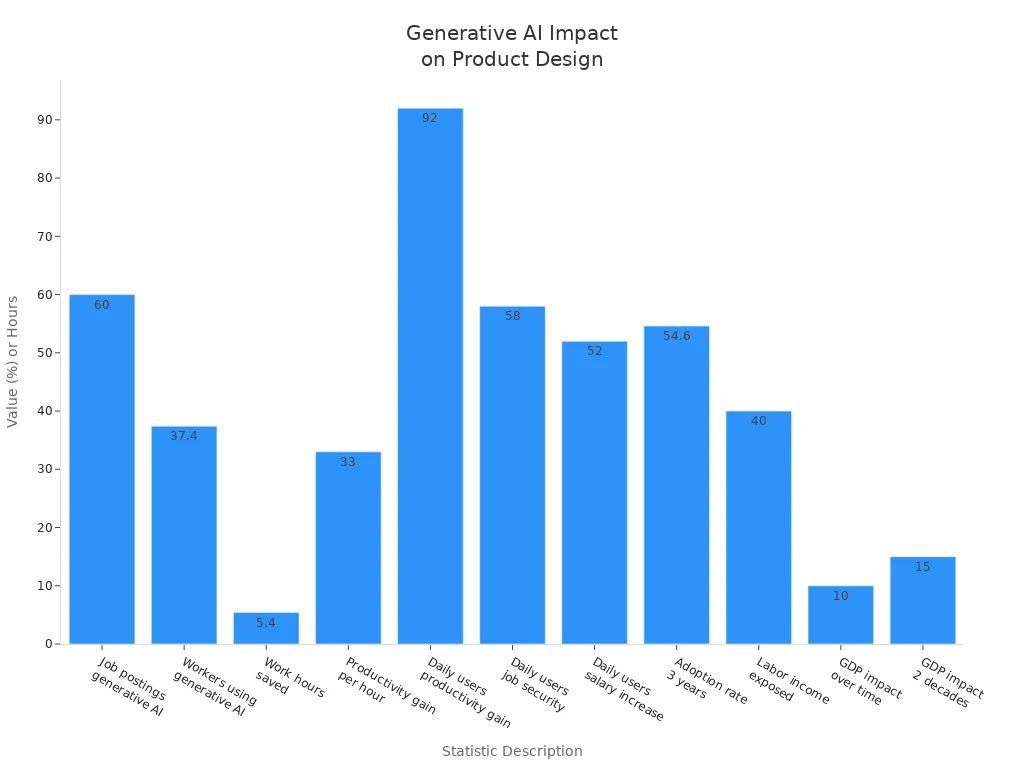
You notice the generative design process brings rapid ideation, quick prototyping, and better collaboration. Generative ai helps you deliver products to market faster and make decisions based on real data.
- Faster ideation and concept generation
- Improved market and user research efficiency
- Accelerated prototyping and design iterations
- Better collaboration across teams
- Reduced time-to-market
- Data-driven product decision making
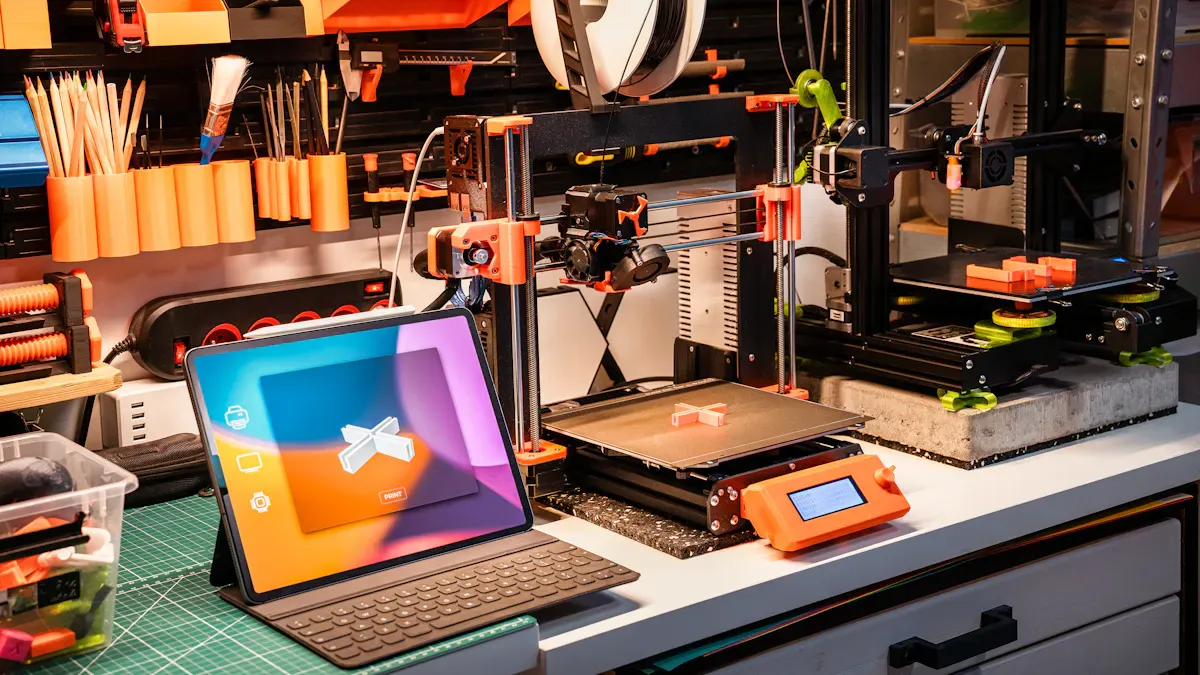
Generative AI Benefits in Product Design
Faster Design Cycles
You can speed up your design process with generative ai. This technology helps you create, test, and improve ideas much faster than before. You do not need to wait weeks or months for a prototype. You can see results in days or even hours. For example, Eaton used generative ai to cut design time for a high-speed gear by 65%. The company also reduced the time needed for an automated lighting fixture by 87%. These numbers show how much time you can save.
Many companies have seen big changes in their workflows. Nike uses ai to make new shoes and sports gear. The company now finishes prototypes in half the time. Nike also creates shoes that fit each user better and wastes less material. In the car industry, ai has helped cut the time to build a new car from four years to just over two years. You can see these results in the table below:
| Case Study | Industry | AI Impact | Key Results |
|---|---|---|---|
| Nike's AI-Enhanced Product Design | Sports & Apparel | Faster prototyping and hyper-personalization | 50% shorter development timelines, 20% less material waste, better fit |
| Automotive Design & Engineering with AI | Automotive | Faster design-to-production cycle | Time cut from 4 years to 28 months, 18% lighter parts, 15% lower costs |
Generative ai tools, like Autodesk Fusion, let you explore thousands of design options. You can find the best solution for your product design without long delays. This means you can bring new products to market faster and stay ahead of your competitors.
Enhanced Creativity
Generative ai gives you more creative power in ai product design. You can use ai to suggest new shapes, colors, and features that you might not think of on your own. The technology can mix ideas from many sources and show you fresh options. You do not have to start from scratch every time. Instead, you can build on smart suggestions and focus on what works best for your user.
Nike uses ai to offer shoe recommendations based on each user’s needs. The system looks at how you move and what you like. Then, it creates a design that fits you perfectly. In the car industry, ai helps engineers test many shapes and materials. This leads to lighter, stronger, and more stylish cars. Generative ai also helps you reduce waste and use resources wisely.
Tip: Use generative ai to brainstorm new ideas. You can ask the system to show you many versions of a design. Pick the ones you like and improve them. This process makes your work more creative and fun.
Data-Driven Decisions
You can make better choices in product design when you use generative ai. The technology looks at large amounts of data and finds patterns you might miss. You can use information from sales, user feedback, sensors, and even real-time data. This helps you understand what your user wants and how your product performs.
Here is a table showing common data sources for ai product design:
| Data Source Type | Description |
|---|---|
| Master Data | Databases with details on products, users, and professionals |
| Sales Data | Sales figures from different regions and times |
| Claims Data | Billing and payment patterns from hospitals and pharmacies |
| EMR Data | Clinical data from healthcare providers |
| User Feedback | Insights from users about design and features |
| Sensor Data | Information from devices to improve user experience |
| Historical Data | Past data for training and testing ai models |
| Real-time Data | Up-to-date information for fast decisions |
Generative ai helps you define what your user needs and how your product compares to others. The technology can even automate the process of gathering requirements. You can use ai to check if your ideas match what users want. A study from the University of Illinois Urbana-Champaign shows that generative ai can analyze user feedback and simulate how people will react to your product. This leads to better user experience and higher satisfaction.
- Generative ai supports you in making smart, data-driven choices.
- You can validate your ideas before you build.
- You can improve your product design with real feedback and data.
You can see how generative ai changes the way you work. You get faster cycles, more creative ideas, and smarter decisions. This makes ai product design more effective and user-focused.
Integrating Generative AI
Preparing Datasets
You need high-quality data to get the best results from generative ai. Start by outlining your project goals. This helps you know what data you need. Gather data from all possible sources, like user feedback, sales numbers, or sensor readings. Make sure your data is accurate, complete, and free from bias. Handle missing values and standardize formats so everything matches. Even a small set of good data can work better than a large set of poor data. Poor-quality datasets can cause bias, legal problems, and wasted time. Many projects fail because of bad data, so focus on quality from the start.
Tip: Document every step you take with your data. This helps you track changes and spot problems early.
Workflow Integration Steps
Integrating generative ai into your workflow works best when you follow clear steps. Here is a simple process you can use:
- Define your objectives and ai strategy.
- Encourage your team to start experimenting.
- Check your current skills and needs.
- Plan training for everyone involved.
- Involve your team in planning.
- Choose the right generative ai tools, such as Zapier, Asana, or Google Cloud AI.
- Run a pilot project to test your approach.
- Scale up if the pilot works well.
- Keep monitoring and improving your process.
You can also use platforms like Adobe Sensei or Notion to automate tasks and manage your workflow. These tools help you connect generative ai with your existing design process.
Team Collaboration
Your team plays a big role in making generative ai work. Everyone should learn the basics of ai and how it fits into product design. Training should cover both technical skills, like prompt engineering, and strategic thinking, such as finding the best use cases. When your team understands generative ai, you can deliver products faster and discover better solutions. Involve all team members in planning and testing. This builds trust and helps everyone feel confident using new tools.
Note: Good collaboration leads to better results and a smoother transition to generative ai.
Generative Design Process Stages

Generate and Analyze
You start the generative design process by defining constraints. You set limits for size, shape, materials, and budget. Generative ai uses these rules to create many design options. You see hundreds of possibilities in minutes. The system helps you analyze each option by simulating stress, load, and performance. You can quickly test prototypes and find flaws before building anything. Generative ai automates repetitive tasks and lets you explore new design frontiers. You tailor designs to user preferences and boost productivity.
Tip: Use generative ai to generate ideas and test them fast. You save time and reduce manual errors.
Main stages of the generative design process:
- Defining the constraints
- Exploring the shape
- Simulation and optimization
A study by Deloitte shows that using ai in the design process can cut time-to-market by up to 30% and save 15% in prototyping costs.
Rank and Evolve
You rank the generated options based on performance, cost, and fit. Generative ai engines need structured inputs like site dimensions and budget caps. They also use past project data to evolve designs. The system iterates design variants within your constraints. Leading platforms connect generative ai with BIM tools for real-time updates and layout optimization. You see how each option improves with every cycle.
| Benefit | Description |
|---|---|
| Efficiency | Generative design allows for faster iterations by automating the optimization process, reducing manual errors and time spent on CAD. |
| Cost-Savings | Rapid design iterations lead to reduced material waste and lower labor costs, providing significant savings for firms. |
Explore and Integrate
You explore the best options and integrate them into your final product. Generative ai enhances generative experiences by providing natural language responses and simplifying information. User experience matters when you present ai outputs and interact with the system. You align data quality, ai engine type, and user experience design for successful integration. You follow best practices to ensure generative ai outputs match your product goals.
| Best Practice | Description |
|---|---|
| Data Quality | Ensuring data accuracy, completeness, consistency, and timeliness to reduce hallucination risk. |
| Governance Frameworks | Implementing role-based access control, data cataloging, and compliance alignment to protect reputation. |
| Scalable Architecture | Building cloud-first infrastructure and modular pipelines to ensure long-term viability. |
| Formal Governance Structures | Establishing cross-functional coordination to prevent fragmentation in AI initiatives. |
| Ethical Safeguards | Embedding transparency, bias mitigation, and accountability in AI processes. |
| Structured Pilots | Running pilots to define KPIs and validate success before scaling. |
| Contextual Evaluation | Evaluating outputs based on the specific use case to align with product goals. |
You use generative ai to create, rank, and integrate designs. You improve efficiency, save costs, and deliver better products.
Overcoming Challenges in AI Product Design
Ensuring Brand Fit
You want your ai product design to reflect your brand’s voice and values. Generative ai can help you create many assets quickly, but you must keep your brand consistent. You face challenges like keeping your content authentic and building trust with your user. Sometimes, ai struggles with true creativity or misses cultural and emotional details. This can lead to generic or even off-brand results. To overcome these issues, you should:
- Use quality control checks and ethical ai practices.
- Work closely with your team and clients to review and refine ai-generated designs.
- Apply the same brand standards to every asset, no matter how many you create.
- Let ai automate compliance checks, so you catch brand mistakes before they reach your user.
- Update brand guidelines in real time, so every project uses the latest rules.
Note: Consistent brand fit builds trust and keeps your product design original.
Data Privacy and Security
You must protect user data when you use ai in product design. Generative ai can expose sensitive information if you do not follow strong privacy rules. Here are some common risks:
| Risk Type | Description |
|---|---|
| Data Poisoning | Attackers change training data to trick ai or cause unsafe results. |
| Reverse Engineering | Attackers steal ai models or secrets, risking your intellectual property. |
| Privacy Leaks | Models may reveal private user data in their outputs. |
| Social Engineering | Fake ai messages can trick users into sharing personal details. |
| Overreliance on AI Outputs | Trusting ai too much can spread errors or false information. |
| Prompt Safety | Weak prompts can let attackers find security holes. |
| Long-term Data Storage | Keeping data too long increases the risk of leaks. |
| Informed Consent | You must tell users how you collect and use their data. |
You should follow privacy laws like GDPR, CPRA, and the EU AI Act. Always use secure datasets and explain your data practices to your user.
Measuring Success
You can measure the success of ai product design by tracking key metrics. These include:
- Operational efficiency
- Customer experience
- Decision intelligence
- Innovation scalability
You should also look at:
- Average time to finish a task
- Support ticket resolution time
- Customer satisfaction scores
- Cost per user interaction
Case studies show that using generative ai can cut development time by up to 70%, reduce material use by 50%, and lower costs by 40%. You can use user feedback to see if your product design meets user needs and improves their experience.
You see how generative ai transforms ai product design. Generative ai gives you faster cycles, more creative ideas, and smarter choices. You can use generative ai to improve teamwork and deliver better products. Remember to integrate generative ai with care and address any challenges. When you use generative ai, you help your team work faster and focus on what users need. Start exploring generative ai today to unlock new possibilities.
FAQ
What is generative AI in product design?
Generative AI uses algorithms to create new ideas, shapes, or prototypes. You can use it to speed up your design process and find creative solutions.
How do you prepare data for generative AI?
You collect accurate data from sources like user feedback and sales numbers. Clean your data by removing errors and standardizing formats. Quality data helps AI work better.
Can generative AI replace designers?
Generative AI supports you by suggesting options and automating tasks. You still make key decisions and add your creative touch. AI does not replace your role.
How do you measure success with generative AI?
| Metric | What It Shows |
|---|---|
| Time saved | Faster design cycles |
| Material used | Less waste |
| User satisfaction | Better experiences |
You track these metrics to see improvements.
See Also
Exploring AI's Role In Shaping Fast Fashion Trends
Optimizing Brand Strategies Through AI Capacity Planning
Innovative AI Approaches For Sustainable Fashion Solutions