
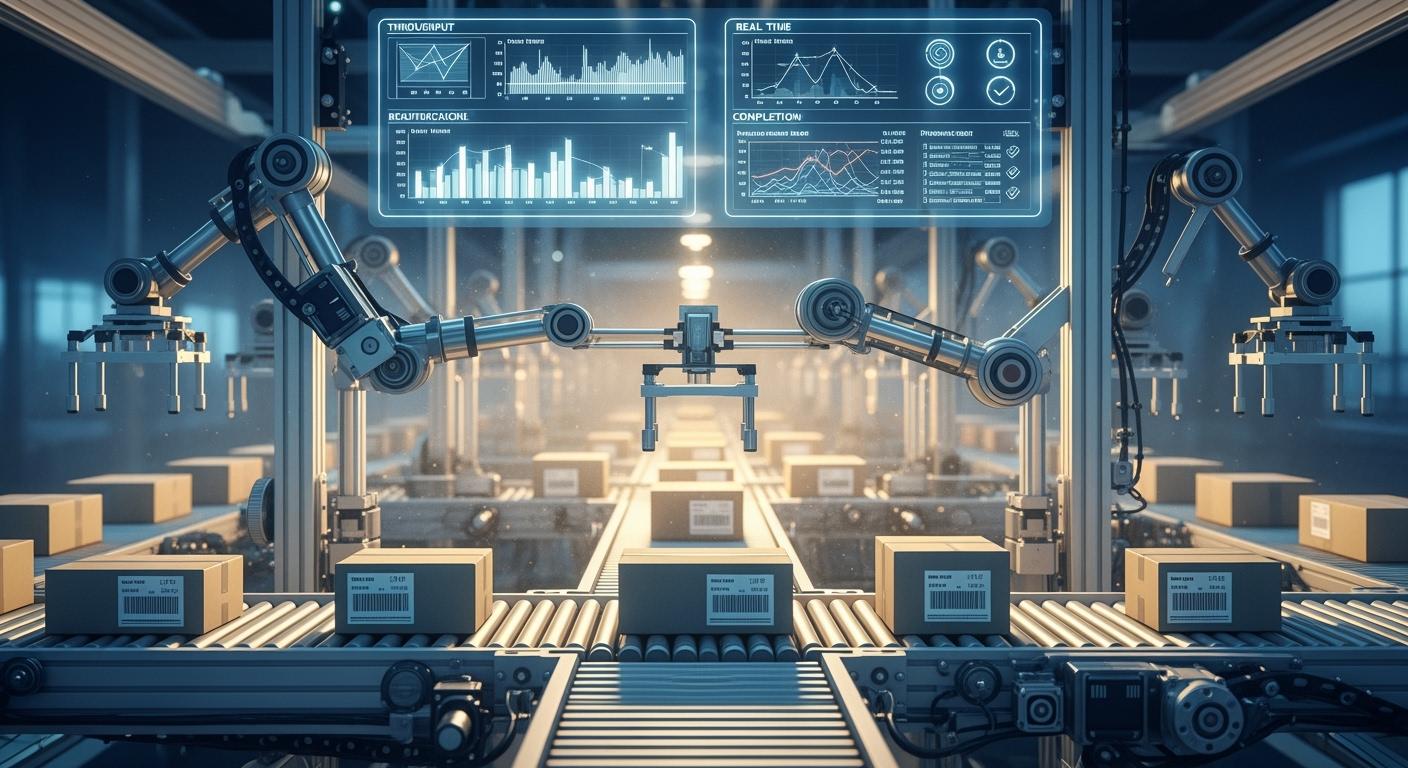
Imagine your supply chain working like a well-oiled machine. You see every part moving smoothly, with no delays or surprises. AI makes this possible for you. AI speeds up your decisions and boosts reliability. You can spot problems early and fix them fast. AI gives your business better control and flexibility. Today, about two-thirds of organizations use AI in their supply chains. Experts expect 75% of large companies to adopt AI by 2026. The global market for AI in supply chains could reach $192 billion by 2034. With AI, Supply Chain Automation helps you lower risks and cut costs by over 67%.
- AI market in supply chains: $9.9 billion today, $192 billion by 2034
- 75% of large enterprises will use AI by 2026
- Companies cut risks and costs by over 67% with AI
AI helps you handle common supply chain challenges, so you get faster, more reliable results.
What Is AI Supply Chain Automation?
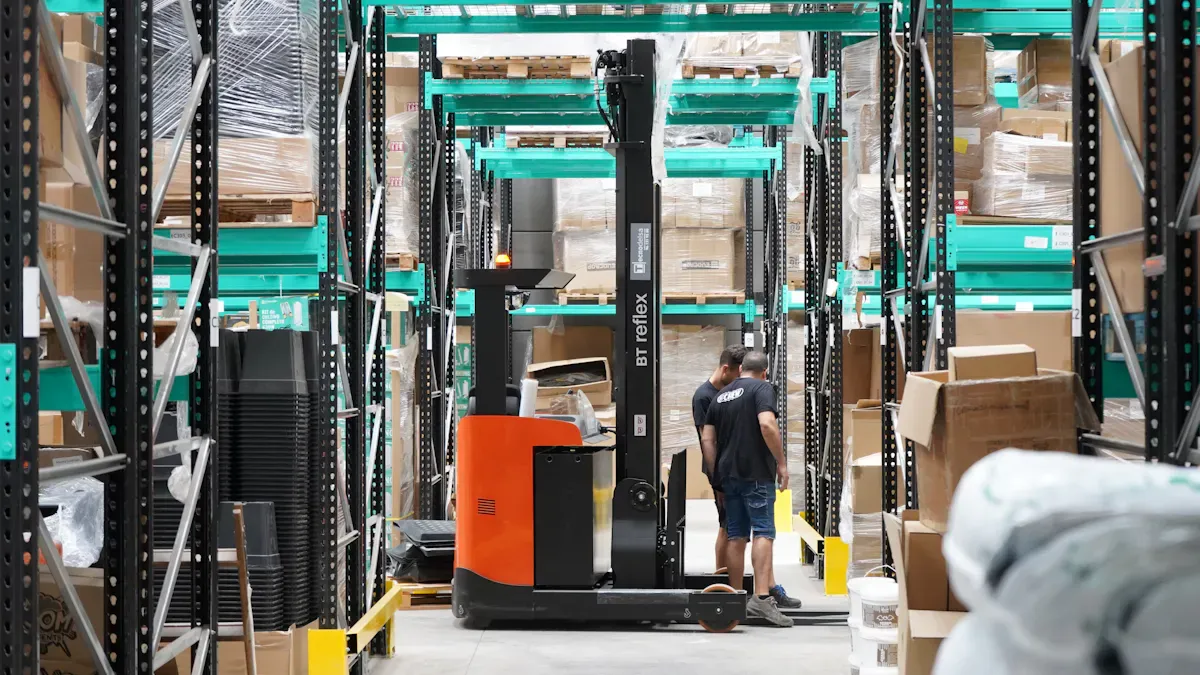
AI supply chain automation means you use smart technology to manage your supply chain. You move from simple, rules-based systems to advanced tools that learn and adapt. This shift helps you make better decisions, faster. You do not just automate tasks—you let ai handle complex workflows and respond to changes in real time.
AI supply chain automation turns your process from reactive to proactive. You can spot problems before they happen and fix them quickly.
Here is a table that shows how ai supply chain automation stands out from traditional automation:
| Feature | Traditional Automation | AI Supply Chain Automation |
|---|---|---|
| Basis | Rules-based logic | Machine learning and predictive analytics |
| Decision-making | Human intervention required | Autonomous and proactive operations |
| Task Complexity | Simple, rules-based tasks | Complex, multistep workflows handled autonomously |
| Adaptability | Limited to predefined rules | Real-time adaptation and self-healing networks |
| Optimization | Manual adjustments | Continuous, autonomous optimization |
AI Technologies in Supply Chains
You find many ai technologies working together in supply chains. These tools help you automate, optimize, and improve every step. Here are some of the most common ai applications in supply chain:
- Machine learning analyzes data and improves demand forecasting.
- Computer vision detects product defects and tracks goods in warehouses.
- Natural language processing automates document processing and communication.
- Predictive analytics forecasts demand and evaluates supplier performance.
- Robotic process automation speeds up repetitive tasks and document handling.
- Digital twins simulate supply chain scenarios to optimize workflows.
- Generative ai creates synthetic data and supports scenario planning.
You use ai for predictive demand forecasting, inventory optimization, supplier and risk management, and automated logistics. These technologies help you reduce costs and improve customer satisfaction.
Core Components and Functions
An ai-powered supply chain system has several key parts. Each part helps you work smarter and faster:
| Phase | Description | Example |
|---|---|---|
| Simple task automation | Executes tasks based on conditions | Sending alerts when shipment times change |
| Diagnostic reporting | Analyzes past data for insights | Reporting on shipping costs by location |
| Predictive analytics | Models scenarios and predicts outcomes | Forecasting the impact of supplier changes |
| Prescriptive recommendations | Suggests actions based on goals and data | Recommending new carriers for better performance |
| Autonomous optimization | Implements changes with little human help | Rerouting shipments in real time |
You can let ai manage inventory by exception, reroute shipments to avoid delays, and use vision systems for accurate counts. Procurement teams can automate paperwork and focus on strategy. These functions make your supply chain faster, more reliable, and cost-effective.
Key Benefits of AI-Driven Supply Chain Optimization
Real-Time Decision-Making
You want your supply chain to react quickly to changes. AI-driven supply chain optimization gives you this power. AI collects data from many sources and analyzes it instantly. You see what is happening right now, not just what happened last week. This helps you make better decisions every minute.
AI-driven solutions give you automated, predictive recommendations based on real-time data. You can respond to demand signals as soon as they appear. This improves your operational efficiency and keeps your customers happy. AI improves visibility across your supply chain and updates forecasts as new information comes in. You can fill more orders on time and raise your service levels.
Here is a table that shows how AI supports real-time decision-making in supply chain management:
| Evidence Description | Impact on Real-Time Decision-Making |
|---|---|
| AI-driven solutions provide automated, predictive recommendations based on real-time data. | Enhances agility by allowing companies to respond to demand signals as they arrive, improving operational efficiency. |
| AI improves visibility across demand signals and updates forecasts dynamically. | Increases order fill rates and service levels, leading to better customer satisfaction. |
| AI optimizes production schedules based on current demand and supply conditions. | Ensures production aligns with the latest market needs, reducing waste and improving responsiveness. |
| AI continuously optimizes reorder parameters and inventory levels. | Helps maintain optimal stock levels, reducing costs and improving service delivery. |
| AI identifies emerging logistical issues and enables proactive actions. | Allows companies to mitigate risks before they impact operations, enhancing overall supply chain resilience. |
| AI monitors supplier health and delivery history to predict delays. | Improves customer delivery timelines and reduces costs associated with late shipments. |
You can use AI for route optimization, warehouse automation, and document processing. These tools help you avoid delays and keep your supply chain running smoothly. Improved decision-making means you can solve problems before they grow.
Demand Forecasting and Efficiency
You need to know what your customers want and when they want it. AI-driven supply chain optimization uses advanced demand forecasting to help you plan better. AI looks at sales data, market trends, and even weather reports. It finds patterns that humans might miss. This leads to more accurate forecasts and less wasted inventory.
Many companies have seen big improvements with AI-powered demand forecasting. For example, a global FMCG company used an AI-driven model to improve its forecast accuracy by 25%. This change reduced inventory imbalances and cut air-freight costs by 15% in just six months. Trinetix used a hybrid AI-powered forecasting model and saw a 10% improvement in forecast accuracy and a 15% drop in inventory costs. These results show how AI can boost supply chain efficiency.
AI-driven supply chain optimization helps you manage inventory, plan production, and meet customer needs. You can avoid stockouts and reduce excess inventory. This means you save money and keep your customers satisfied.
Note: AI-driven demand forecasting lets you move from guessing to knowing. You can plan with confidence and respond to changes faster.
Here are some common ways organizations measure the success of AI in supply chain management:
| Metric | Description |
|---|---|
| Forecast Accuracy | Measures the precision of demand forecasts. |
| Inventory Turns | Indicates how often inventory is sold and replaced. |
| Order Fulfillment Rates | Assesses the efficiency of fulfilling customer orders. |
You can track these metrics to see how AI improves your supply chain over time.
Cost Savings and Risk Reduction
You want to lower costs and reduce risks in your supply chain. AI-driven supply chain optimization helps you do both. AI finds ways to cut delivery costs, save on tariffs, and boost manufacturing efficiency. You can see real savings and less risk.
Here is a table that shows the measurable impact of AI in supply chain management:
| Benefit Description | Measurable Impact |
|---|---|
| Reduced delivery costs | 35% reduction |
| Annual tariff savings | $25M |
| Increase in manufacturing efficiencies | 45% increase |
| Improvement in EBITDA | $75M |
| Decrease in supply risk exposure | 40% decrease |
Many companies report a 20% average reduction in supply chain costs after using AI. You can also see a 10% growth in revenue because you have better product availability. AI-driven supply chain optimization helps you avoid costly mistakes and respond to risks before they become problems.
You can use AI to monitor supplier health, predict delays, and reroute shipments. This keeps your supply chain strong and reliable. Increased efficiency means you get more value from every part of your operation.
Tip: Set clear performance indicators before you start your AI project. Track forecast accuracy, inventory turnover, and order fulfillment rates to measure your success.
AI-driven supply chain optimization gives you the tools to save money, reduce risk, and deliver better results for your business.
Implementing Supply Chain Automation with AI
Assessing Current Processes
You need to start by understanding your current supply chain. Evaluate your technology readiness by looking at your people, skills, and tools. Make sure you have the right data available and bring all your data together for better analysis. Set new KPIs to measure the impact of ai on your supply chain. This step helps you see where ai can make the biggest difference.
Tip: Clean, accurate data is the foundation for successful ai projects. Take time to fix data issues before you begin.
Choosing AI Solutions
When you choose ai solutions, focus on your business goals. Look for features that match your needs and make sure the solution can grow with your company. Check if the ai tools work well with your current systems. Think about the total cost, including licensing, maintenance, and training. You should also pick ai experts who have strong technical skills and know your industry. Review your infrastructure and set clear expectations for what the service will deliver.
- Align ai solutions with your business strategy.
- Choose tools with relevant features and scalability.
- Ensure compatibility with your existing systems.
- Consider all costs, not just the initial price.
- Work with experienced ai partners.
Integration and Training
You need a plan to bring ai into your supply chain. Start by checking your digital maturity and find areas where ai will have the most impact. Build a strong data foundation by improving data quality and making it easy to access. Select tools and vendors with proven success in supply chain optimization. Test ai solutions in a small area before using them everywhere. Train your teams to use ai tools and encourage teamwork across departments.
Note: Many companies fail with ai because they skip data preparation or do not invest in training. Take these steps seriously for the best results.
You can use ai for demand forecasting, route optimization, and risk management. Make sure you address data quality, security, and privacy concerns. With the right approach, ai will help you create a smarter, more efficient supply chain.
Overcoming Challenges in AI Supply Chain Automation
Data Quality and Integration
You need high-quality data for successful ai supply chain automation. Many companies struggle with inconsistent formats, missing information, and siloed systems. These problems confuse ai and lead to poor results. Duplicate entries and outdated records also lower the accuracy of your ai models.
"Every leader must understand that they have a responsibility for data management... In order to ever get AI right, we've got to solve the data challenges." – Dr. Cindy Gordon
Start with a data audit to find gaps and errors. Set up data governance standards before you deploy ai. This ensures clean, consistent data flows into your systems. You can also use data-sharing partnerships to improve the quality and quantity of your data. Human review helps catch mistakes and keeps your ai models reliable. Protect customer data with anonymization and encryption to address privacy concerns.
| Challenge | Description |
|---|---|
| Insufficient Data for Customizing AI Models | Difficulty in obtaining high-quality data for AI model development. Solutions include data-sharing partnerships. |
| Inaccurate Data | AI model reliability is contingent on the accuracy of training data, necessitating human review. |
| Security and Privacy Concerns | Risks associated with customer data collection, mitigated through data anonymization and encryption. |
| Inadequate AI Expertise | Talent gaps slow AI tool development; solutions include training programs and collaboration with experts. |
Change Management
You must prepare your team for ai adoption. Many employees worry about new technology. You can help them by building ai literacy through education and communication. Weekly study groups or workshops make ai less intimidating. Leadership should show strong support for ai projects. When you involve employees early, you build trust and ownership.
- Education and communication build understanding.
- Leadership commitment inspires confidence.
- Employee engagement increases acceptance.
- Comprehensive training builds skills.
- Process redesign ensures ai fits your workflows.
Continuous training helps your team use ai tools with confidence. Change champions can guide others and answer questions. Rethink your workflows so ai supports your business goals.
Scalability and Adaptation
You want your ai solutions to grow with your business. Scalable ai systems analyze data, detect patterns, and recommend changes automatically. This lets you respond quickly to supply chain disruptions without adding more staff. For example, Mars reduced manual operations by 80% and cut CO₂ emissions using ai. Danone saw 20% fewer forecasting errors and 30% fewer losses from stockouts with scalable predictive analytics. A European retail chain saved €3.5 million each year and reached a 90% on-time delivery rate by optimizing logistics with ai.
- Scalable ai adapts to new challenges.
- Predictive analytics reduce errors and losses.
- Automated recommendations keep your supply chain efficient.
You can also use ai to simulate tariffs, track ESG metrics, and monitor compliance. This helps you stay resilient and meet regulatory requirements.
Real-World Examples of Supply Chain Automation
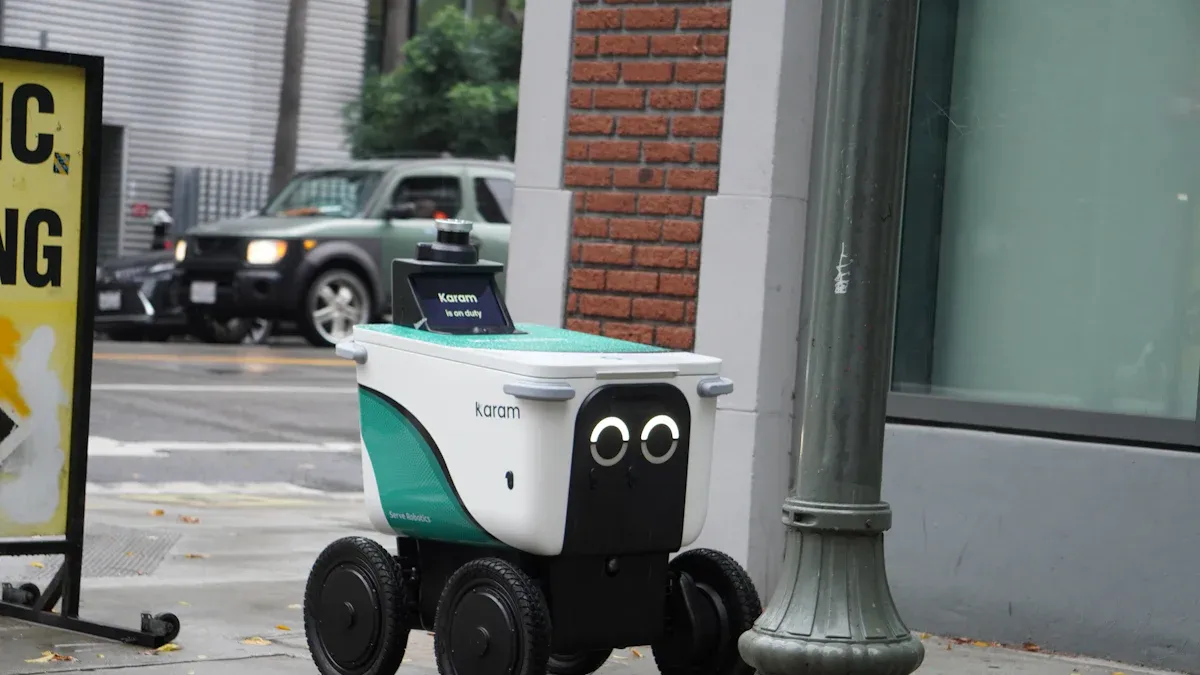
Predictive Inventory Management
You can see the power of artificial intelligence in predictive inventory management. Amazon uses ai to forecast demand by analyzing sales history, promotions, and outside factors. This approach has cut stockouts by 15%. You get better inventory placement and faster turnover. Walmart also uses ai to manage perishable inventory, which helps you reduce waste and keep shelves stocked. Target sharpens its inventory forecasting with artificial intelligence, so you can meet customer needs more often.
BMW uses real-time data analysis to predict bottlenecks in manufacturing. Toyota relies on artificial intelligence for inventory management, which leads to cost savings and higher efficiency. These companies show how ai can help you align stock levels with demand and avoid costly shortages.
Here is a table with more examples of ai in action:
| Company | Application of AI | Benefits |
|---|---|---|
| Amazon | Predictive inventory management | 15% fewer stockouts, faster turnover |
| Walmart | AI for perishable inventory | Less waste, better product availability |
| BMW | Real-time data analysis for bottleneck prediction | Smoother production, fewer delays |
| Toyota | AI-driven inventory management | Cost savings, improved efficiency |
Automated Logistics and Document Processing
You can transform logistics management with artificial intelligence. Companies like DHL use ai to boost warehouse efficiency. UPS uses its ORION system, powered by ai, to optimize delivery routes. This means you save fuel and deliver packages faster. Procter & Gamble uses ai for dynamic routing and predictive planning, which improves service levels.
Automated logistics and document processing powered by ai bring measurable results. You see lower labor costs, faster document turnaround, and 100% digital audit trails. These changes help you ensure compliance and traceability. You also get better cash flow because invoices process faster.
| Outcome | Description |
|---|---|
| Cost Reduction | Lower manual processing labor costs |
| Faster Document Turnaround | Fewer shipment delays |
| 100% Digital Audit Trails | Full compliance and traceability |
| Increased Productivity | More efficient logistics and back-office teams |
| Better Cash Flow | Quicker invoice processing and payments |
You benefit from ai solutions that reduce dispute cycles and speed up compliance checks. Real-time supply chain visibility lets you respond to issues before they affect your customers. Artificial intelligence improves demand forecasting and proactive communication, which builds trust and satisfaction.
Note: When you use ai in your supply chain, you do not just automate tasks—you create a better experience for your customers.
Best Practices for AI Supply Chain Automation
Continuous Monitoring and Improvement
You need to keep your ai supply chain automation running at its best. Start by setting up real-time alerts for stock levels and demand patterns. These alerts help you act before problems grow. When you monitor key metrics like forecast accuracy and inventory turns, you can see how well your system works. This practice builds trust in ai and helps you secure support for future improvements.
Self-learning ai creates feedback loops that help you spot and fix mistakes quickly. You can use these insights to adjust your operations and avoid repeating errors. Regular checks on stock levels and market trends let you respond fast to changes. This approach supports better teamwork with your supply chain partners. You will see less waste and lower costs.
Here are some best practices for continuous improvement:
- Use predictive demand forecasting to plan for what customers want.
- Automate inventory management to keep the right amount of stock.
- Evaluate supplier performance and risks with ai for better decisions.
- Optimize delivery routes to save money and time.
- Use smart warehousing tools like RFID for real-time data.
Tip: Continuous monitoring with ai helps you make smarter choices and keeps your supply chain strong.
Fostering Innovation and Training
You need skilled people to get the most from ai. Upskill your team so they can use ai tools with confidence. Programs like DHL’s ‘Certified Supply Chain Specialist’ have improved planning by 30% and boosted employee engagement. Siemens and MIT offer hands-on learning that helps supply chain professionals solve real problems. AWS works with universities to provide short courses in ai supply chain analytics.
Encourage your team to take part in innovation programs. When employees help define how ai works in your business, they accept and use it more. Focus on training that matches real-world needs. This approach helps your team adapt to new technology and supports ai-driven decision-making.
You can use these strategies to build a culture of learning and innovation:
- Offer regular training on ai tools and analytics.
- Support hands-on projects and case studies.
- Invite employees to share ideas for new ai applications.
- Reward creative solutions that improve supply chain performance.
Note: A strong training program helps your team stay ahead and makes ai a natural part of your supply chain.
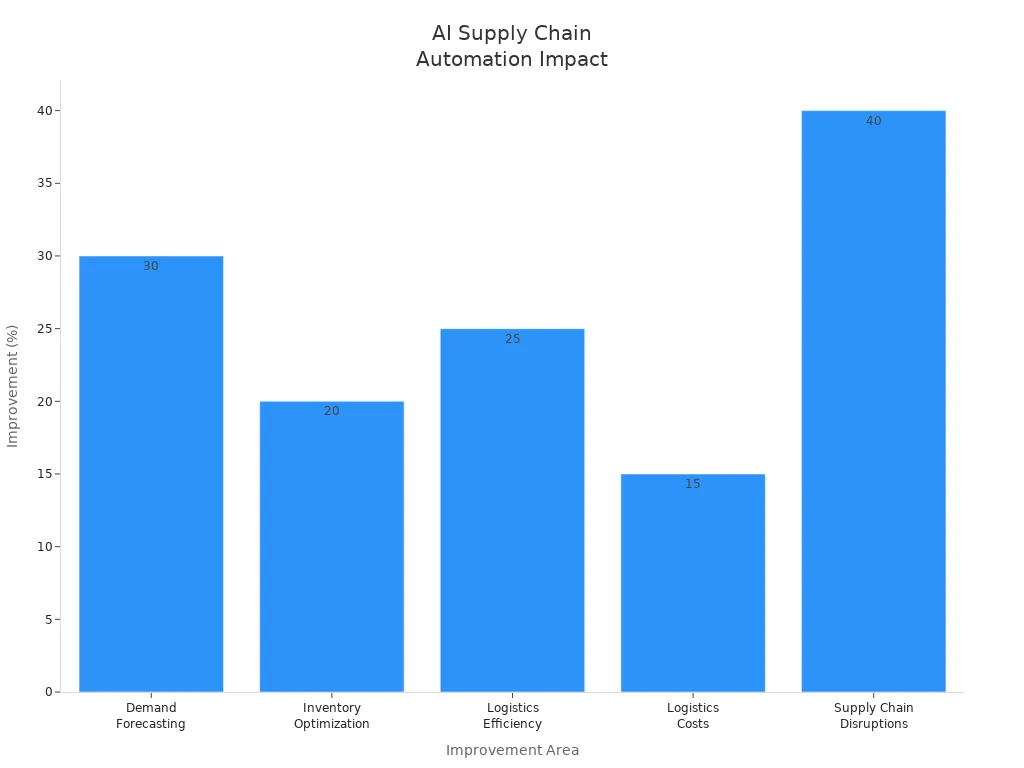
You can transform your business with ai and achieve seamless, efficient operations. When you use ai for end-to-end supply chain automation, you improve speed, accuracy, and resilience. Companies see up to 30% better demand forecasting and 25% higher logistics efficiency.
| Improvement Area | Metric/Outcome |
|---|---|
| Demand Forecasting | Accuracy improved by up to 30% |
| Logistics Efficiency | Enhanced by 25% |
| Logistics Costs | 15% reduction |
| Supply Chain Disruptions | Reduced by 40% |
You gain faster response times and fewer errors with ai. Start your journey today and build a future-ready supply chain with ai.
FAQ
What is supply chain automation?
You use supply chain automation to let technology handle tasks like tracking shipments and managing inventory. This makes your work faster and more accurate. You save time and reduce mistakes. Supply chain automation helps you focus on important decisions.
How does AI in supply chain improve efficiency?
AI in supply chain helps you analyze data quickly. You can spot problems before they grow. AI in supply chain also predicts demand and manages inventory. This means you avoid running out of products. You keep your customers happy and your costs low.
Can small businesses use AI in supply chain automation?
Yes, you can use ai in supply chain even if you run a small business. Many tools are easy to set up. You do not need a big budget. Supply chain automation helps you compete with larger companies by making your operations smarter.
What are the main benefits of AI in supply chain?
You get better forecasting, faster deliveries, and fewer errors with ai in supply chain. You also save money and reduce risks. Supply chain automation lets you respond quickly to changes. You build a stronger and more reliable business.
Is AI in supply chain secure?
You can trust ai in supply chain when you use strong security steps. Always protect your data with passwords and encryption. Supply chain automation systems often include safety features. You should update your software often to keep your information safe.
See Also
Understanding Technology's Role in Supply Chain Efficiency
Achieving Quick, Sustainable Success Through Lean Logistics
Why WarpDriven ERP Is Essential for Smart Supply Chain Management