
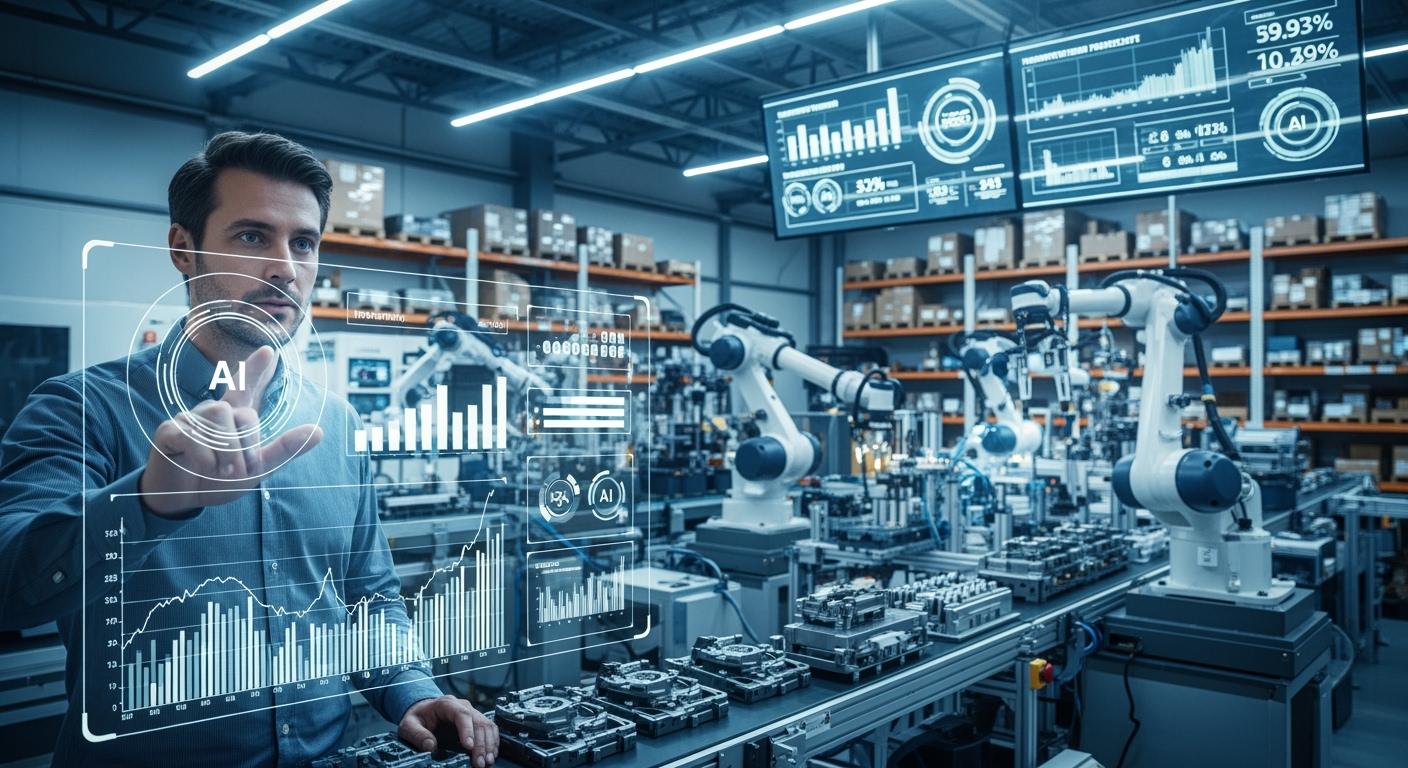
AI demand forecasting changes how you manage manufacturing in 2026. You can now predict trends and adjust production quickly. Most manufacturers understand this shift.
- 95% have adopted or plan to adopt smart manufacturing technologies within the next one to two years.
- 83% expect to use AI in operations by 2024.
With AI, you improve production optimization, warehouse efficiency, and gain real-time insights. You need advanced demand forecasting to stay ahead in a competitive market.
AI Demand Forecasting Benefits for Manufacturers
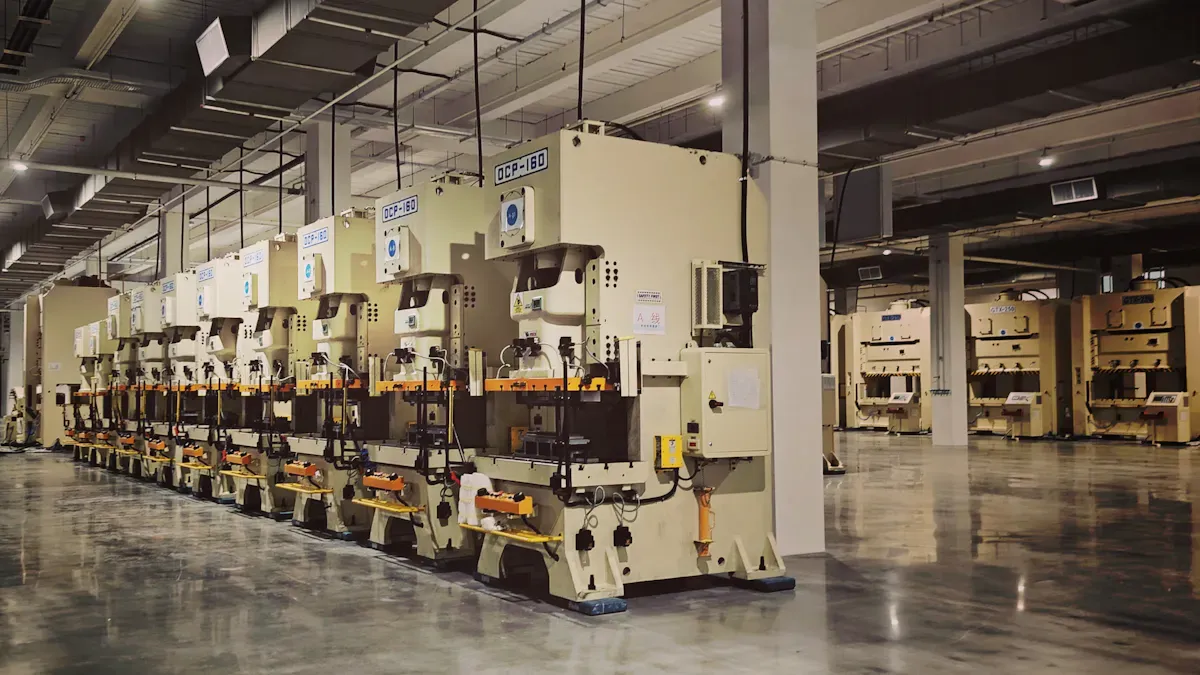
Production and Capacity Optimization
You can use ai-powered demand forecasting to transform how you plan production. These systems analyze large amounts of data, including past sales, weather, and promotions. They learn from new information and adjust predictions quickly. This helps you match supply with real-time demand. You avoid making too much or too little product.
Tip: Automation in ai-powered demand forecasting reduces your workload and helps you spot problems or opportunities early.
Here is a comparison of ai demand forecasting and traditional methods:
| Aspect | AI Demand Forecasting | Traditional Methods |
|---|---|---|
| Data Processing | Real-time analytics and adaptive algorithms | Manual updates |
| Pattern Recognition | Finds complex and hidden patterns | May miss important patterns |
| Automation | Continuous data updates and prediction refinement | Manual adjustments |
| Forecast Accuracy | High accuracy and fast response | Less accurate and slower |
When you use ai, you can predict production needs with more accuracy. This reduces overproduction, which leads to lower inventory costs. You also avoid underproduction, so you do not lose sales. You keep your supply chain running smoothly and avoid storage problems.
Warehouse and Inventory Efficiency
You can improve warehouse and inventory optimization with ai-powered demand forecasting. Accurate forecasting helps you keep the right amount of stock. You do not waste money on extra inventory, and you do not run out of products when customers need them.
- More accurate forecasting
- Automated replenishment
- Lower operational costs
- Faster response to market changes
- Centralized demand visibility
Accurate demand forecasting leads to better cash flow and higher customer satisfaction. You can align with suppliers more easily. In fast-moving industries, ai helps you adapt to changes quickly. Companies have seen forecasting accuracy rise from 60% to 80%. Even a small improvement can cut inventory costs by 5%. Some manufacturers have reduced total inventory levels by 20% to 30%. This means you spend less on holding inventory and avoid waste.
Note: Ai helps you minimize overproduction and lowers the risk of products becoming outdated. You save money and keep your supply chain lean.
Real-Time Insights and Agility
You need to respond quickly when the market changes. Ai gives you real-time insights so you can act fast. For example, a global fiberglass manufacturer improved forecast accuracy by 30%, reduced extra inventory by 25%, and cut disruptions by 20% in just 90 days after using ai-powered demand forecasting.
- High-performing supply chains using ai see 25% less overstock and 20% fewer disruptions.
- Ai creates dynamic risk profiles by analyzing both past and current data.
- You can spot problems early and manage disruptions before they grow.
Many companies, like Amazon and Siemens, use ai to update production plans and adjust to demand changes in real time. This helps you stay ahead, even when the market is unpredictable.
Alert: With ai, you can anticipate demand, avoid costly mistakes, and keep your business running smoothly during disruptions.
Challenges of Traditional Demand Forecasting
Data Limitations and Inaccuracy
You face many challenges when you rely on traditional demand forecasting. These older methods depend on historical data and human judgment. When the market changes quickly, these tools often fail to keep up. You may find it hard to predict demand for new products or during unusual events like pandemics. Traditional forecasting cannot process large amounts of complex data from different sources. This limits your ability to make smart decisions.
- Traditional forecasting depends on past sales and human guesses.
- It struggles with seasonality, new products, and outside events.
- These methods cannot handle big data or spot hidden patterns.
When you use inaccurate or outdated data, your predictions become unreliable. This can hurt your production and inventory planning. Look at the table below to see how poor data affects your outcomes:
| Impact on Manufacturing Outcomes | Description |
|---|---|
| Poor Production Planning | Inaccurate data leads to incorrect production schedules, causing either overproduction or underproduction. |
| Excess Inventory | Overproduction results in surplus stock, increasing holding costs. |
| Missed Deadlines | Underproduction can lead to failure in meeting customer demand and deadlines. |
| Increased Operational Stress | Employees face stress due to last-minute changes and adjustments in production schedules. |
You may also see last-minute changes and delays because teams do not share information well. This makes your forecasting less consistent and less effective.
Impact of Market Volatility
Market volatility creates even more problems for traditional demand forecasting. These methods look backward and assume the future will be like the past. When the market shifts, you cannot adjust quickly. Manual updates slow you down, and important knowledge often stays with just a few people.
| Limitation | Explanation |
|---|---|
| Looks backward | Traditional methods rely on historical averages, assuming future demand will mirror past trends. |
| Manual adjustments create bottlenecks | Knowledge is often trapped in individual experience, leading to delays in adjusting forecasts. |
| Limited variable processing | These methods typically handle only a few variables, missing complex interactions affecting demand. |
The cost of inaccurate forecasting is high. On average, forecast errors range from 20% to 50%. This leads to lost revenue and wasted resources. Global supply chain waste from poor forecasting reaches $1.1 trillion. Retailers lose $1.75 trillion each year from stockouts and overstocks. Poor data quality alone can cost you $12.9 million every year.
Note: You can avoid these losses by moving to ai-powered demand forecasting. Ai helps you process more data, react faster, and make better decisions than traditional methods.
AI Capabilities in Demand Forecasting

Real-Time and Historical Data Analysis
You can use ai to combine real-time and historical data for better demand forecasting. Ai integrates live sales transactions and supply chain updates, giving you immediate insights. It also brings in external signals like weather forecasts, social media trends, and economic indicators. This helps you understand what drives demand. Ai models detect irregularities in data, so you spot demand changes early. The continuous learning feature lets ai refine forecasts automatically. Over time, your predictions become more accurate. Ai excels in real-time forecasting, making your results current and relevant. You see measurable improvements. For example, a leading consumer products company increased forecast accuracy by 40% after switching to ai demand forecasting.
- Ai integrates real-time data streams for immediate insights.
- It uses external signals to enhance demand forecasting context.
- Ai models detect irregularities and refine forecasts automatically.
Ai makes your forecasting more accurate and responsive to market changes.
SKU-Level Planning and Supply Chain Optimization
Ai-driven tools help you optimize demand forecasting for every SKU. These tools analyze large datasets and find complex patterns. They learn from new information, reducing errors and improving planning. Ai streamlines inventory management with predictive forecasting and dynamic replenishment. You track inventory in real time and automate supplier management. SKU-level decision-making lets you create precise strategies for each product. Ai systems identify high-performing products and refine assortments by store cluster. You also spot underperforming SKUs, leading to focused assortments and a stronger customer experience. Ai enhances multi-echelon inventory optimization by finding relationships among locations, products, and fulfillment paths. Companies report a 15% improvement in turnover ratios and a 30-40% reduction in write-offs due to early detection of slow-moving inventory.
- Ai analyzes data to identify high-performing products.
- It refines assortments and improves customer experience.
- Ai enhances inventory optimization and reduces write-offs.
Predictive Modeling and Scenario Planning
Ai supports manufacturers with predictive modeling and scenario planning. You use ai to analyze sensor data and forecast machine failures. This enables preemptive repairs and lowers operational risks. Ai helps you anticipate disruptions, such as political instability affecting raw ingredient sourcing. You model conflict scenarios and logistics challenges. Ai systems run many what-if simulations, helping you find contingency plans like securing secondary suppliers or maintaining strategic stock. A global beverage manufacturer uses ai to predict supply chain disruptions and minimize losses. Ai enriches scenario planning by detecting patterns and weak signals that human planners might miss.
Ai gives you the power to plan ahead and keep your business running smoothly during unexpected events.
Implementing AI Forecasting for Manufacturers
Data Preparation and Integration
You need to start with strong data preparation when you bring ai demand forecasting into your business. Make sure your data is high-quality and relevant. Clean data helps you get better insights from forecasting. Use real-time data to improve accuracy. Segment your data to get more precise results. Involve different departments so you have the right context for your forecasts.
- Collect only the data that matters most for your goals.
- Clean and organize your data before using it in ai systems.
- Use real-time updates to keep your forecasting current.
- Segment your data by product, region, or customer type.
- Bring in insights from sales, marketing, and operations teams.
You may face challenges like poor data quality or trouble connecting new ai tools with old systems. Plan carefully to avoid disruptions. Invest in training so your team can work well with ai. Protect your data with strong security and follow all rules for privacy.
Change Management and ROI Measurement
You must manage change well to get the most from ai. Set clear goals for your demand forecasting project. Align your teams and define what success looks like. Track key metrics like forecast accuracy, cost savings, and productivity gains.
- Record your current costs and performance before starting.
- Measure direct benefits, such as reduced waste or faster production.
- Add up all costs, including software, hardware, and training.
- Use a simple ROI formula to see if your investment pays off.
Tip: Use control groups or A/B testing to see the real impact of ai on your forecasting.
Avoiding Common Pitfalls
Many manufacturers struggle with data quality and system integration. You can avoid these problems by setting up strong data rules and investing in good sensors. Sometimes, it is hard to see if ai is making a difference. Try rolling out changes in stages and compare results. High costs can slow you down, so look for quick wins and train your team early.
| Pitfall | How to Avoid It |
|---|---|
| Poor data quality | Set up data checks and cleaning routines |
| Hard system integration | Plan carefully and test before launch |
| High costs | Start small and measure early results |
| Team resistance | Offer training and clear communication |
Note: Good planning and teamwork help you get the most from ai demand forecasting.
You can transform your business with ai demand forecasting. This technology helps you use data to improve forecasting, reduce costs, and respond faster to market changes. Many manufacturers see big gains, such as a 40% drop in forecast variance and a 45% boost in on-time delivery rates.
| Metric | Improvement |
|---|---|
| Demand planning precision | +25% |
| Reduction in stockouts | -40% |
| Time saved on manual tasks | -60% |
Start by preparing your data and training your team. When you use ai, you stay ahead in the changing world of manufacturing.
FAQ
What is AI demand forecasting?
AI demand forecasting uses smart algorithms to predict how much product you need. It looks at real-time and past data to help you plan production and inventory. You get better accuracy and faster responses to market changes.
How does AI improve inventory management?
AI tracks inventory levels and sales trends. You can automate restocking and avoid running out of products. It helps you keep the right amount of stock, which saves money and reduces waste.
Is it hard to start using AI for manufacturing?
You can start by preparing your data and training your team. Many tools connect with your current systems. Begin with small projects and measure results. You will see benefits quickly.
What are the main benefits of AI in manufacturing?
- Higher forecast accuracy
- Faster response to demand changes
- Lower inventory costs
- Better customer satisfaction
Tip: You can use AI to spot problems early and keep your supply chain strong.
Can AI help during market disruptions?
AI gives you real-time insights. You can adjust production plans quickly when the market changes. It helps you avoid costly mistakes and keeps your business running smoothly.
See Also
Utilizing AI and Data for Demand Predictions in 2025
Best Practices for Accurate Production Forecasting Using AI in 2024
AI-Based Production Scheduling Focused on Demand for 2025
Enhancing Your Shopping Experience with AI Demand Forecasting