
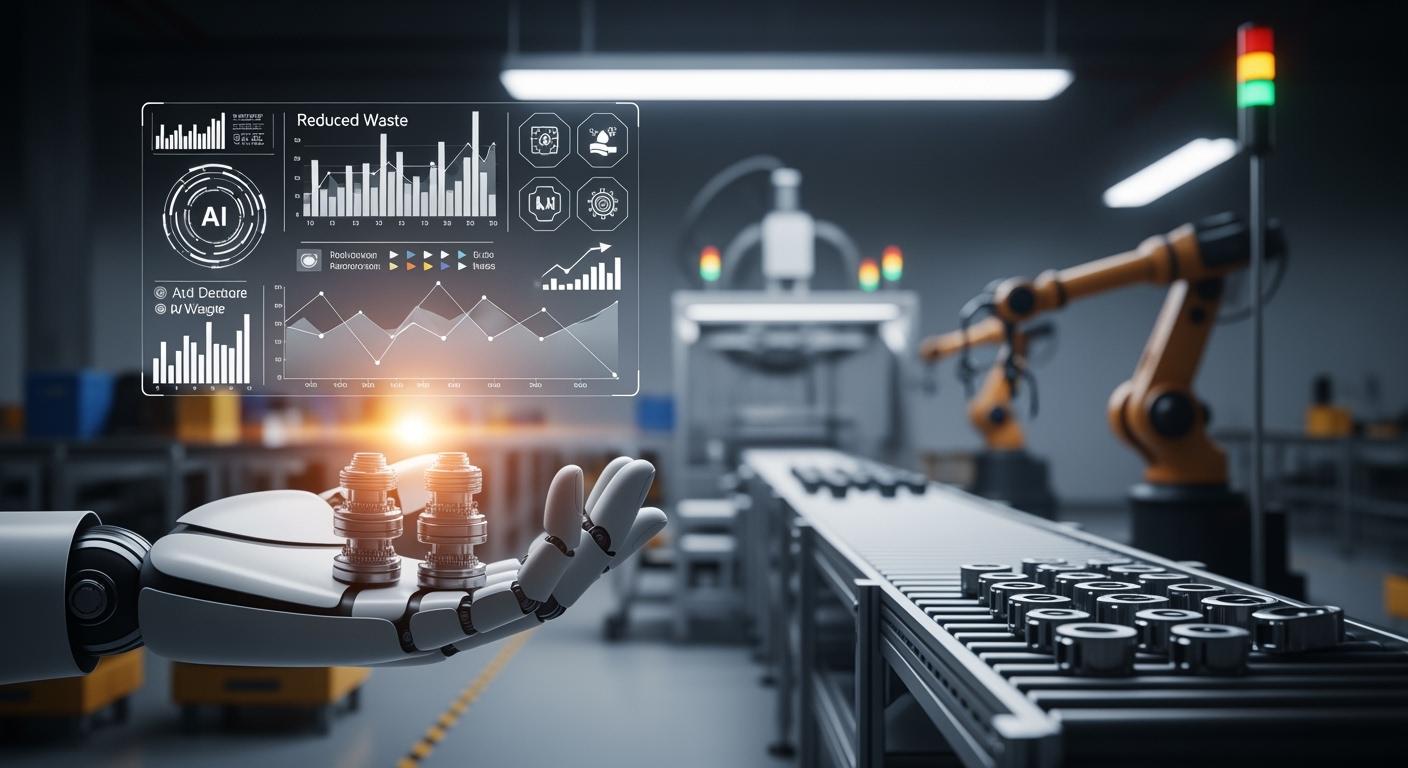
You can cut waste and boost efficiency with ai demand forecasting. When you use ai, you improve accuracy in predicting demand, optimize inventory, and streamline production scheduling. Ai pulls data from across your business and the market, so you respond fast to changes. Manufacturers who use ai see real results:
| Impact Area | Improvement |
|---|---|
| Forecasting Error Reduction | 20-50% less errors |
| Inventory Cost Savings | 15-30% reduction |
| Waste and Overproduction | 10-25% decrease |
| Supply Chain Efficiency | 8-20% savings |
Ai also helps you spot demand shifts quickly and reduce time spent on manual tasks by up to 60%. You get faster production scheduling and better data-driven decisions. When you adopt ai, you gain a competitive edge and support sustainability in manufacturing.
AI Demand Forecasting for Manufacturers
What Is AI Demand Forecasting
You use ai demand forecasting to predict what your customers will want and when. This process uses ai-based demand planning tools that combine machine learning, predictive analytics, and optimization algorithms. These tools help you make decisions based on real data, not just guesses. You get real-time insights into demand, inventory, and production schedules. Ai demand forecasting connects with your ERP systems, so you can improve how your business runs every day.
| Feature/Technology | Description |
|---|---|
| AI-driven demand planning tools | Use machine learning and analytics for better decisions. |
| Real-time insights | Show you up-to-the-minute demand and inventory levels. |
| Integration with ERP systems | Work with your current systems for smooth operations. |
Ai demand forecasting does more than look at your own data. It also checks outside signals like weather, social media, and economic trends. This gives you a full picture of what drives demand in manufacturing.
Tip: A user-friendly interface makes it easy for everyone on your team to use ai-based demand planning, even if they are new to ai.
Why Manufacturers Need Accurate Forecasts
You need accurate demand forecasting to cut waste and save money. When you know what your customers want, you can keep just the right amount of inventory. This means you avoid having too much stock that goes unused or too little that causes delays. Ai-based demand planning helps you plan for raw materials, production cycles, and supplier needs. You can spot changes in demand early and adjust quickly.
Accurate ai demand forecasting improves your cash flow and keeps your operations running smoothly. If you rely on guesswork, you risk higher costs, wasted resources, and unhappy customers.
"Forecasting errors come with tangible financial and operational costs. Inaccurate demand signals lead to excess safety stock, markdowns, or stockouts that directly affect customer experience and net revenue."
Traditional vs. AI-Powered Forecasting
Traditional forecasting uses old data and simple averages. These methods are slow to react when demand changes. Ai-based demand planning uses both structured and unstructured data from many sources. Ai learns from new data all the time, so your forecasts stay up to date.
-
Traditional methods:
- Inflexible to market changes
- Manual and prone to bias
- Lack real-time visibility
-
Ai-powered forecasting:
- Integrates many types of data
- Continuously learns and self-corrects
- Finds complex patterns in demand
| Aspect | AI-Powered Forecasting | Traditional Methods |
|---|---|---|
| Data Handling | Processes lots of different data | Uses only past sales and simple math |
| Forecast Accuracy | 80–95% (forecast accuracy improvements) | Less than ai |
| Responsiveness | Adjusts fast to market changes | Slow to react |
| Operational Costs | Lowers costs with better planning | Higher costs from extra inventory |
Ai demand forecasting helps you reduce waste and stay ahead in manufacturing. Manufacturing leaders use ai to make better decisions and respond to customer demand faster than ever before.
Types of Waste AI Reduces in Manufacturing

Inventory and Stock Waste
You face many challenges with inventory management in manufacturing. When you rely on guesswork, you often end up with too much stock or items that never sell. AI-based demand planning helps you avoid these problems by giving you accurate forecasting. You can see which products move fast and which ones sit on shelves. This insight lets you keep only what you need.
Here is a table showing the main types of inventory waste you can reduce with AI:
| Type of Inventory Waste | Description |
|---|---|
| Overstock | Excess inventory that exceeds demand, leading to increased holding costs. |
| Obsolete Items | Products that are no longer sellable due to changes in market demand or technology. |
| Dead Stock | Inventory that has not sold for a long time and is unlikely to sell in the future. |
With AI-based demand planning, you can cut forecasting errors by up to 50%. Many manufacturers report that AI inventory management improves inventory turnover by 15–30%. You also align your stock levels with real demand patterns. This means you move products faster and avoid waste.
Tip: Use AI-based demand planning to track inventory in real time. You will spot slow-moving items early and take action before they become dead stock.
Production and Resource Inefficiencies
Production and resource waste can hurt your profits in manufacturing. AI-based demand planning gives you better forecasting, so you match production with real demand. You do not waste time or resources making products no one wants. AI helps you plan your production schedule and use your resources wisely.
Here is a table showing how AI-based demand planning improves your operations:
| Evidence Type | Description |
|---|---|
| Demand Prediction | AI-based demand planning enhances accuracy in forecasting demand, which helps manufacturers align production with actual market needs. |
| Inventory Management | Improved inventory management through AI reduces excess stock and minimizes waste, leading to cost savings. |
| Production Scheduling | AI optimizes production schedules based on demand forecasts, reducing idle time and improving resource allocation. |
You can respond quickly to market changes. Real-time data analysis lets you monitor key performance indicators and adjust your production and inventory levels. AI-based demand planning also improves energy and resource management, which saves money and supports sustainability. AI algorithms find patterns in your data, so you forecast resource needs better and reduce waste.
- AI-based demand planning improves accuracy in predicting demand and enhances inventory management, resulting in reduced waste.
- AI analyzes real-time market data for accurate demand predictions, optimizing production schedules and resource allocation, which reduces waste.
Handling Demand Volatility
Demand in manufacturing can change fast. If you do not react quickly, you risk overproduction or stockouts. AI-based demand planning helps you manage these ups and downs. You get better forecasting, so you plan raw material purchases and production schedules with confidence.
AI-based demand planning improves supplier coordination. You share forecasts and work together to meet changing demand. For make-to-order models, AI balances production with real-time demand, so you do not waste resources.
- AI enhances raw material planning by predicting demand changes and aligning procurement schedules.
- It improves supplier coordination through shared visibility and collaborative forecasting.
- For make-to-order models, AI balances production schedules with real-time demand, reducing waste.
- AI algorithms analyze large data sets to identify patterns, leading to more accurate demand forecasts.
- This accuracy helps manufacturers produce the right quantity of products, preventing overproduction and stockouts.
- AI enables optimal inventory management, reducing excess inventory and minimizing waste.
Here is a table with examples of how AI helps you handle sudden changes in demand:
| Example | Description |
|---|---|
| Demand Prediction | AI analyzes production data and market trends to forecast product needs, ensuring timely delivery and resource optimization. |
| Order Management | AI automates order processing, tracking, and inventory management, enhancing efficiency and customer satisfaction. |
| Production Scheduling | AI creates detailed production schedules based on sales trends and inventory levels, minimizing downtime and maximizing efficiency. |
Note: AI-based demand planning gives you the flexibility to adjust quickly. You can meet customer needs and reduce waste, even when the market changes fast.
AI-Powered Forecasting Processes
Real-Time Data Analysis
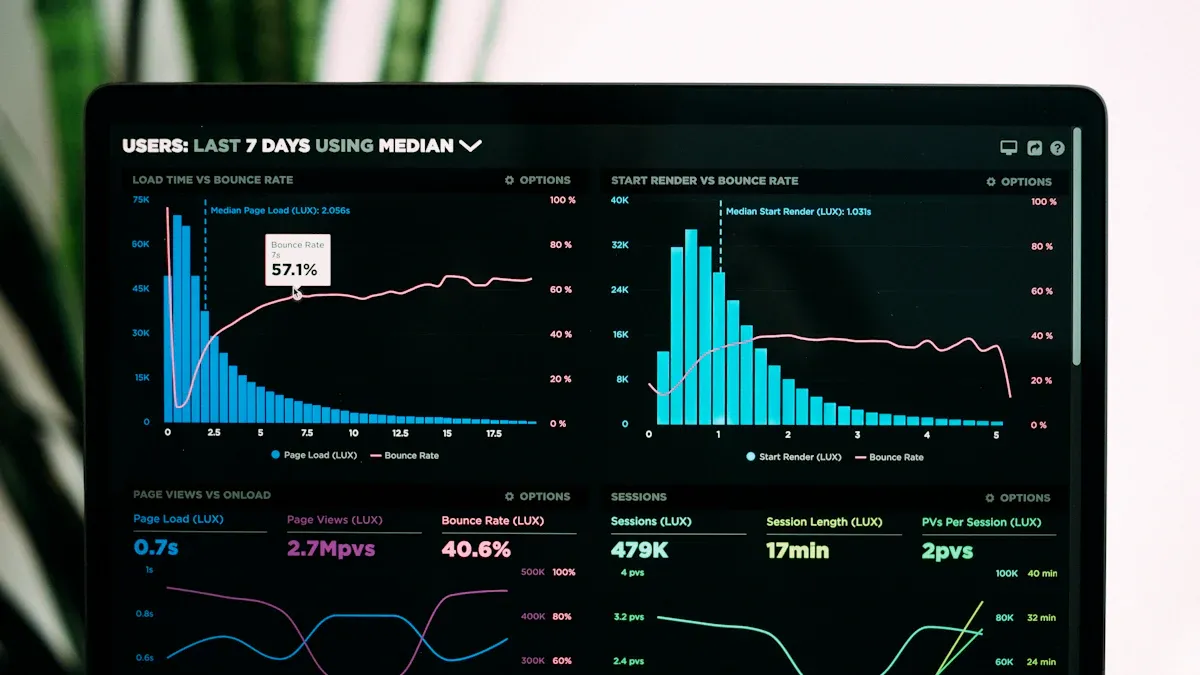
You can use ai to analyze data from many sources in real time. This includes sales trends, market conditions, weather forecasts, and customer sentiment. When you use ai-based demand planning, you get real-time insights into what affects demand in manufacturing. These insights help you spot changes quickly and adjust your plans. Studies show that companies using ai for demand planning optimize their processes at more than double the rate of others. Ai systems learn from data like historical production, supplier information, and economic indicators. This reduces forecasting errors by up to 50% and gives you a competitive edge.
Tip: Use real-time insights from ai-based demand planning to react fast to market shifts and avoid waste.
Predictive Modeling in Demand Forecasting
You can improve forecasting accuracy with predictive analytics and machine learning. Ai-based demand planning uses advanced models to find patterns in your data. Companies like Honeywell and Siemens use machine learning, neural networks, and time-series forecasting to predict demand in manufacturing. These models combine traditional methods with ai for better results. Ai predictive modeling can reach forecast accuracies of 80% to 95%. You will see fewer stockouts and less overproduction. This means you save money and resources.
| Company | Techniques Used | Description |
|---|---|---|
| Honeywell | Machine learning, neural networks, hybrid approaches | Combines ai algorithms with traditional methods for accurate production forecasts. |
| Siemens | Time-series forecasting, digital twins | Uses predictive analytics and simulations for dynamic demand forecasting in manufacturing. |
Automated Scheduling and Adjustments
You can let ai-based demand planning automate your production schedules. Ai-powered forecasting tools adjust schedules based on real-time data and demand changes. This helps you avoid overproduction and reduce downtime. Ai also supports predictive maintenance by analyzing sensor data to prevent equipment failures. You get better supply chain optimization and improved resource use. Manufacturers who use ai-based demand planning report 10-25% less waste and 15-30% lower inventory costs.
| Phase | Description |
|---|---|
| 1 | Anchor to Specific Outcomes: Focus on a key business goal and connect only the needed data. |
| 2 | Embed AI Into Existing Workflows: Add ai to your current tools for better processes. |
| 3 | Scale Iteratively: Grow your ai use step by step after seeing results in one area. |
Note: Ai-based demand planning gives you the tools to anticipate demand spikes and disruptions, so you keep your manufacturing efficient and waste low.
Implementation Steps and Success Stories
Steps to Adopt AI Demand Forecasting
You can start your AI journey in manufacturing by following three clear steps:
- Anchor to Specific Outcomes: Choose a business goal that matters most. You might want to cut waste or improve on-time delivery. Connect only the data you need to reach this goal.
- Embed AI Into Existing Workflows: Add AI tools to your current systems. You do not need to change every process at once. This makes it easier for your team to learn and use AI.
- Scale Iteratively: Grow your AI use step by step. Once you see results in one area, connect more parts of your business. For example, link sales and operations for better forecasting.
Tip: Start small and focus on one outcome. You will see value faster and build support for more AI projects.
Overcoming Common Challenges
Many manufacturers worry about data quality and change management. You can solve these problems by cleaning your data before you start. Train your team on new tools and show them how AI makes their jobs easier. Work with partners who know AI in manufacturing. They can help you avoid mistakes and get the most from your investment.
| Challenge | Solution |
|---|---|
| Poor data quality | Clean and organize your data first |
| Team resistance | Offer training and clear communication |
| Integration issues | Use AI tools that fit your current systems |
Real-World Results for Manufacturers
Manufacturers see big gains when they use AI for demand forecasting. A global electronics company reduced inventory waste by 20% after connecting AI to its data systems. A food manufacturer used AI to predict demand spikes and cut overproduction by 18%. These companies also improved customer service and saved money.
Note: You can achieve similar results. Start with clear goals, use your data wisely, and let AI guide your forecasting in manufacturing.
You can transform your manufacturing by using ai demand forecasting. This tool helps you cut waste, save money, and improve your production. You gain a clear view of demand and make better decisions every day. If you want to stay ahead, start learning about ai solutions now.
Tip: Explore online guides or talk to experts to find the best tools for your business.
FAQ
What is AI demand forecasting?
AI demand forecasting uses artificial intelligence to predict what products you will need and when. You get more accurate results because AI looks at many types of data, like sales, weather, and market trends.
How does AI reduce waste in manufacturing?
You use AI to match production with real demand. This helps you avoid making too much or too little. You save money and resources by cutting down on extra inventory and overproduction.
Is AI demand forecasting hard to set up?
You can start small. Many AI tools work with your current systems. You do not need to change everything at once. Training and support help your team learn quickly.
What data do I need for AI demand forecasting?
You need sales history, inventory records, and supplier data. AI also uses outside data, like market trends or weather. The more good data you have, the better your forecasts.
See Also
Utilizing AI To Improve Production Forecasting Accuracy In 2024
Harnessing AI For Accurate Demand Forecasting During Shopping
Five Effective Strategies For Real-Time Demand Forecasting