
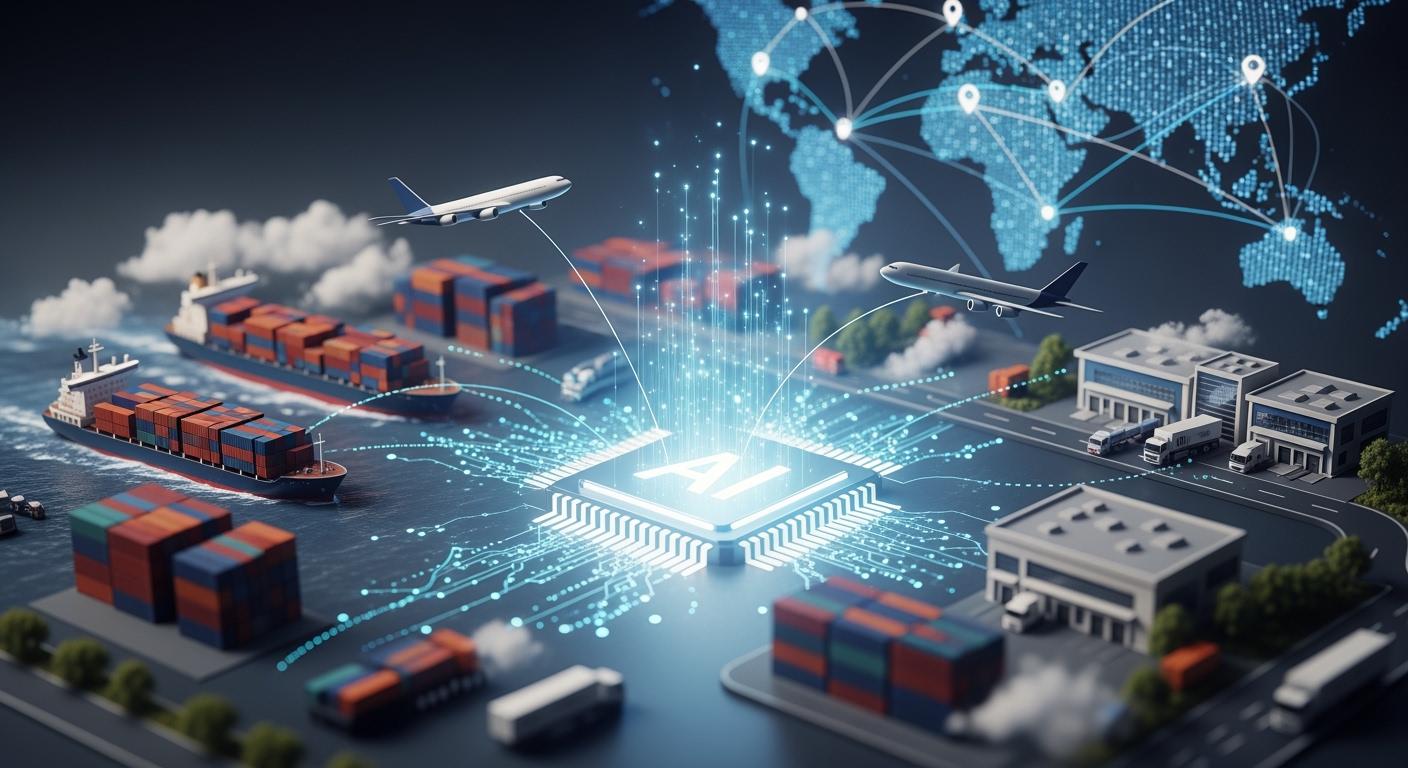
AI continues to change how you manage and operate within the global supply chain. You see adoption rates rising fast. For example:
- AI adoption among U.S. employees grew by 52% in Q2 2025, especially in supply chain and logistics roles.
- 72% of supply chain organizations now use AI for tasks like document processing and demand forecasting.
- The global AI in supply chain market is set to jump from USD 9.94 billion in 2025 to nearly USD 236.42 billion by 2035.
You need to understand how the future of AI will reshape decision-making, risk, and your role in supply chain management. These changes demand your attention and action today.
The Future of AI in Supply Chain
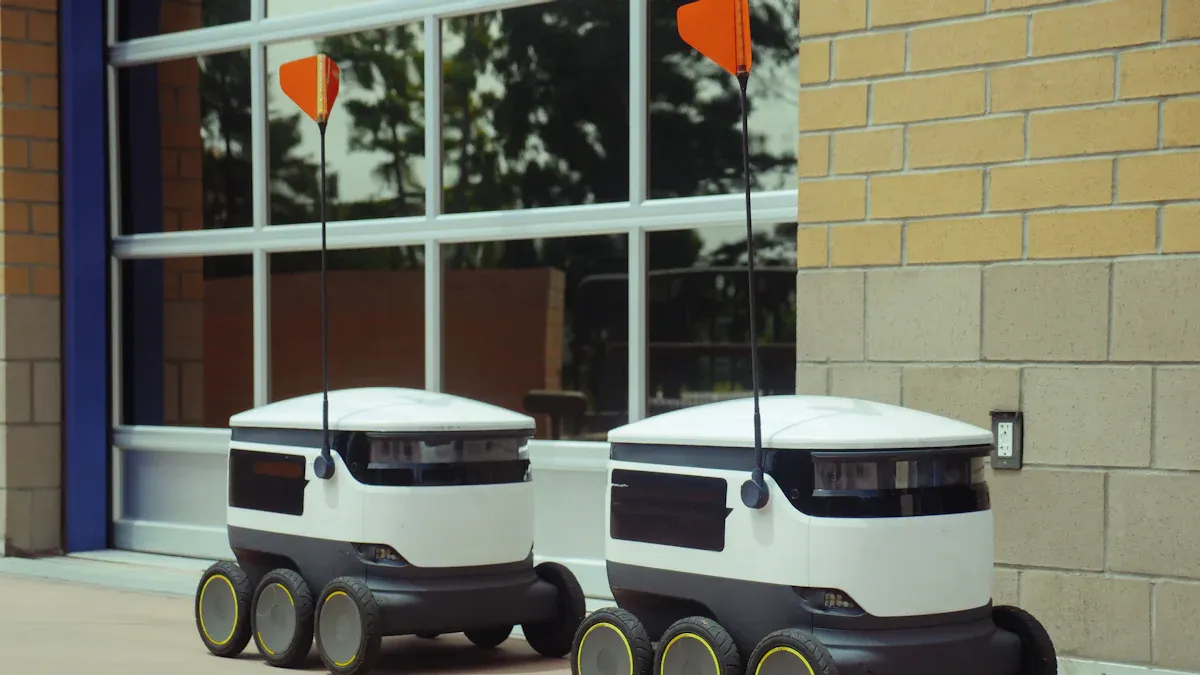
AI’s Impact on Supply Chains
You will see the future of ai in supply chain bring dramatic changes to how you manage goods, information, and decisions. AI in supply chains will give you real-time data and insights, making your operations faster and more accurate. You can expect end-to-end supply chain visibility as interconnected systems share information across every step. This means you will spot problems early and fix them before they grow.
AI in supply chains will help you with demand forecasting and planning. Machine learning tools will predict what customers want and when they want it. You will avoid stockouts and reduce waste. Automation will take over repetitive tasks, so you can focus on solving bigger problems. AI in supply chain management will also help you cut costs by reducing errors and speeding up communication.
You will notice that digitalization powered by ai in supply chains leads to better use of materials. Companies using ai-driven systems have seen waste drop by up to 26%. They also reuse and recover more materials, which supports a circular economy. As a result, you will see supply chain technology become a key part of sustainability efforts.
Here are some main ways ai in supply chains will transform your work in the next decade:
- You will gain access to massive amounts of real-time supply chain information.
- AI will manage many processes, from procurement to delivery, making supply chains more autonomous.
- You will see more sustainable practices as consumers demand greener options.
- The supplier base will change as some suppliers adopt new technology and others do not.
- Labor issues will shift as automation changes the types of jobs needed.
Tip: Embrace ai in supply chains now to stay ahead of these changes and keep your operations resilient.
Key Drivers of Change
Several forces push the future of ai forward in global supply chain operations. Automation stands out as a major driver. You will see robots and smart machines handle tasks like sorting, packing, and shipping. This reduces manual labor and speeds up the process.
Predictive analytics is another key driver. With advanced analytics, you can spot trends and risks before they happen. AI-powered systems will recommend actions to avoid delays or disruptions. For example, dynamic route optimization will help you save fuel and deliver faster. Accurate demand forecasting and planning will prevent both shortages and excess inventory.
End-to-end supply chain visibility is also changing the game. AI-powered control towers let you track goods, monitor suppliers, and respond quickly to problems. Companies using these tools have cut transportation costs by up to 10% and improved delivery reliability by 20%.
You can see these drivers in action at leading companies:
- Toro Company uses ai for real-time procurement and just-in-time inventory.
- Amazon tests generative ai to find the best delivery routes.
- UPS uses ai to improve parcel security and spot theft risks.
AI in supply chains is growing fast. The market is set to surge from $2.7 billion to $55 billion by 2029. Nearly half of all firms already use ai in supply chain operations. These tools help you make better decisions, respond to disruptions, and boost efficiency.
You will notice that automation, predictive planning, and end-to-end visibility work together to create smarter, more adaptive supply networks. This shift moves you from rigid, reactive systems to intelligent networks that learn and improve over time. As you adopt these technologies, you will see higher returns on investment and stronger risk management.
Note: The future of ai will reward those who invest early in supply chain technology and analytics. Start building your skills and systems now to lead in this new era.
AI in Supply Chain Today
Current Use Cases
You see ai changing the way you manage the supply chain every day. Many companies use ai to solve real problems and make work easier. Here are some of the most common ways you use ai in supply chain management:
| Use Case | Description | Real-World Example |
|---|---|---|
| Predictive Maintenance | ai checks data from sensors to predict when machines need fixing. | General Electric cut unplanned downtime by 40% and saved millions. |
| Autonomous Vehicles in Logistics | Self-driving trucks and drones help move goods faster and safer. | N/A |
| Improved Demand Forecasting | ai uses past data to predict what you need to stock and when. | Levi Strauss cut inventory by 10% without hurting service. |
| Enhanced Supply Chain Visibility | ai gives you real-time updates, so you see problems before they grow. | Cisco uses ai to watch its global supply chain and react fast. |
| Cost Reduction through Automation | ai does simple tasks, so you save money on labor. | Ocado runs automated warehouses that handle over 50,000 orders a week. |
| Increased Operational Efficiency | ai finds the best routes for trucks and deliveries. | DHL made deliveries 15% faster and cut fuel costs by 10% with ai route planning. |
| Better Customer Experience | ai helps you answer customer questions quickly and gives smart suggestions. | FedEx and UPS use ai chatbots for instant tracking support. |
Manufacturing leads the way in using ai, with 95% of companies using it to boost efficiency. Retail and e-commerce also use ai, but not as much as manufacturing.
Limitations and Opportunities
You face some challenges when you use ai in supply chain management. High costs for new systems and a lack of skilled workers can slow you down. You may also find it hard to move from testing ai to using it every day. Poor data quality can make ai predictions less useful.
| Limitation | Description |
|---|---|
| Lack of IT Access or Budget | High costs for tools and talent make it hard to start using ai. |
| Short-term Optimization | Focusing only on quick wins can stop you from seeing long-term gains. |
| Skill Gaps | Not enough workers know how to use advanced ai. |
| Moving from POC to Production | It gets harder to manage data as you try to use ai in real work, not just tests. |
| Lack of Quality Data | Bad data leads to bad predictions and weak results. |
You can overcome these limits by making sure your data is accurate and by training your team. You can use ai for shipment prediction, finding the best customers, and increasing profit margins. When you invest in ai and focus on long-term benefits, you set your global supply chain up for future success.
Tip: Keep improving your data and skills to get the most from ai and analytics in supply chain management.
AI-Driven Supply Chain Innovations
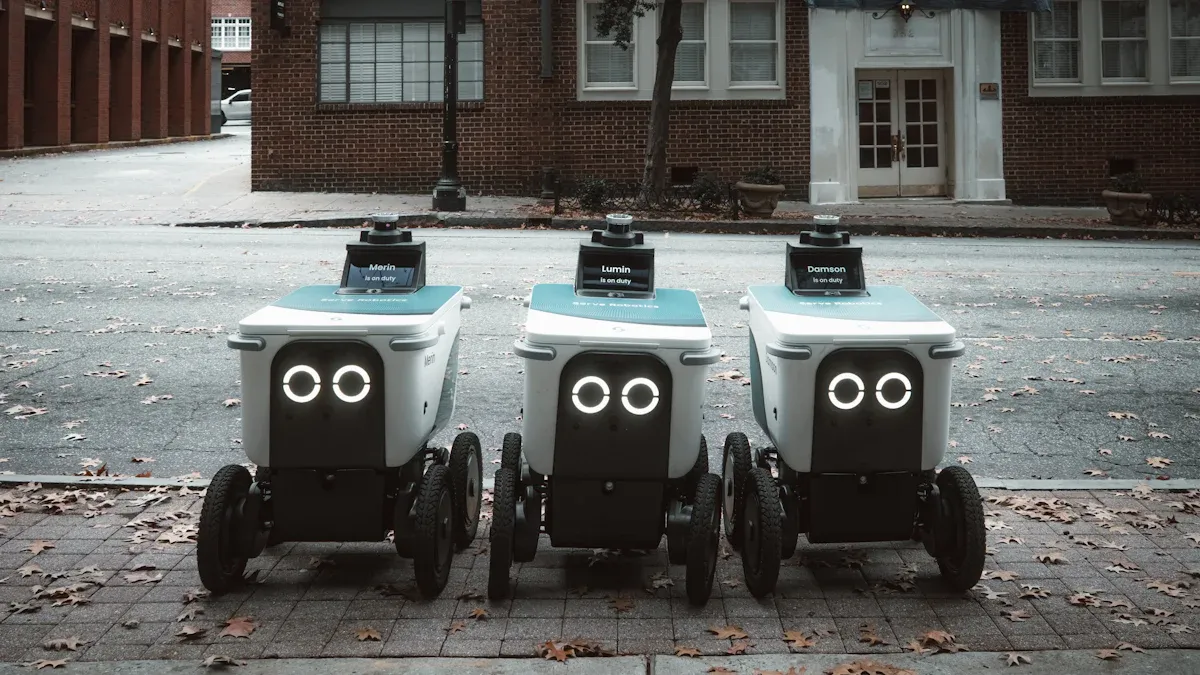
Automation and Robotics
You will see automation and robotics change the future of ai in supply chains. Robotic systems now work side by side with people. This makes your workplace safer and more efficient. You need to keep optimizing workflows and retrain your team. This helps your supply chain stay flexible and ready for new challenges. Agentic ai lets you make decisions in real time. You can fix problems before they grow.
Here are some ways automation and robotics improve your supply chain:
- Robots and humans work together to boost safety and speed.
- You can update workflows and train staff for new tasks.
- Real-time ai decisions help you manage risks and keep things running.
You can measure the gains from supply chain automation and robotics. Look at the table below:
| Efficiency Gain | Percentage/Value |
|---|---|
| Reduction in operational costs | Up to 30% |
| Minimization of lost sales | 75% |
| Shrinkage of inventories | Significant within 2-3 years |
Companies like JD Logistics cut logistics costs by 6.71%, improved delivery speed by 28.6%, and reduced travel distance by 51.5%. GXO uses ai to scan 10,000 pallets per hour, which lowers labor costs and boosts accuracy. These results show how ai-driven supply chain automation makes your operations leaner and more reliable.
Tip: Start with small automation projects. Measure results and scale up as you see success.
Predictive Analytics
You can use predictive analytics to make better decisions in your supply chain. These ai-driven tools help you see trends and risks before they happen. You can plan for changes in demand and avoid running out of stock. A regional beverage distributor improved forecast accuracy from 68% to 89% by using weather and event data. This led to fewer stockouts and less wasted inventory.
Research shows that ai-based forecasting can cut errors by 20-50% compared to old methods. You can use advanced supply chain analytics to predict disruptions and manage risks. These models look at traffic, weather, and delivery times to find the best routes. They also check supplier performance to pick the most reliable partners.
You can use predictive models to track how fast products sell and when they expire. This helps you decide when to mark down items or move them to places where they will sell faster. You waste less and serve your customers better.
Note: Predictive analytics gives you the power to act before problems start. This keeps your ai-driven supply chain strong and flexible.
Digital Twins & IoT
You can use digital twins and IoT to see your whole supply chain in real time. Digital twins create a virtual map of your supply chain using live data. This helps you spot risks and automate tasks. You can make better decisions and keep your supply chain resilient.
| Aspect | Description |
|---|---|
| Virtual Representation | Digital twins create a virtual map of the supply chain ecosystem using real-time data. |
| Risk Mitigation | They help track dependencies to mitigate risks and automate workflows. |
| Enhanced Resilience | Operationalizing digital twins improves supply chain resilience through better decision-making. |
IoT devices collect data on assets, inventory, and transport. They monitor your supply chain all the time. This helps you fix issues before they cause delays.
| IoT Role | Functionality |
|---|---|
| Real-Time Data Collection | IoT devices collect data on assets, inventory, transport, and environmental conditions. |
| Continuous Monitoring | They enable ongoing monitoring of supply chain elements to optimize operations and anticipate issues. |
You can use digital twins to test different scenarios. This lets you prepare for problems without stopping your operations. Toyota cut inventory costs by 35% and responded to disruptions 42% faster using these tools. The US Military saved over $2 billion by planning smarter with digital twins.
- Digital twins let you see your supply chain from end to end.
- You can model the impact of disruptions before they happen.
- You can test backup plans without stopping your work.
- These tools help you meet goals like saving money or going green.
Callout: Digital twins and IoT make your ai-driven supply chain more visible and resilient.
Blockchain Integration
You can use blockchain to make your supply chain more transparent and trustworthy. Blockchain creates a permanent digital record. This record cannot be changed. Everyone in your supply chain can see the same information. This reduces fraud and errors.
- Blockchain lets you track goods in real time. Each step is recorded and time-stamped.
- You get a full trail of your product’s journey.
- The technology gives you end-to-end traceability and secure data storage.
- Regulators can check your records easily, which helps you follow the rules.
SkyCell uses blockchain in smart containers to ship medicine safely. Unilever uses blockchain to trace palm oil, which helps prove their supply chain is sustainable.
Note: Blockchain helps you build trust with customers and partners in your ai-driven supply chain.
Generative AI Applications
You can use generative ai to optimize many supply chain processes. This technology helps you forecast demand more accurately. You can adjust your inventory to match what customers want. Generative ai also helps you manage suppliers and predict when equipment needs fixing.
- Demand Forecasting: You can predict what customers will buy and when.
- Inventory Management: You keep the right amount of stock and avoid shortages.
- Supplier Relationship Management: You find reliable partners and build strong ties.
- Predictive Maintenance: You fix machines before they break down.
- Logistics Improvement: You find the best routes for delivery and save money.
- Financial Optimization: You use data to cut costs and plan budgets.
Domino’s Pizza UK & Ireland used ai to automate demand forecasting. This improved their predictions and helped them serve customers better.
Generative ai can also automate tasks like writing emails and reports. It powers chatbots that answer customer questions any time of day. You can use it to translate messages and create marketing content. Generative ai tracks emissions and helps you make your supply chain greener.
Tip: Generative ai will keep growing. Start using it now to stay ahead in the future of ai-driven supply chains.
Human Roles in the AI-Driven Supply Chain
Workforce Transformation
You will see your role in the supply chain change as ai becomes more common. In the past, companies moved repetitive tasks to other countries. Now, ai automates both simple and complex tasks. You may notice that some workers feel excited and want to learn new things, while others do only what is needed. Your skills in relationship management and negotiation will become more important. You need to stay informed about what ai can do. Regular updates and training help you adjust to new tools. The table below shows how work has changed:
| Aspect | Outsourcing Era | AI Adoption Era |
|---|---|---|
| Nature of Work | Repetitive tasks moved elsewhere | Automation of repetitive and analytical tasks |
| Employee Response | Disengagement, knowledge withholding | Mixed: eager learners, minimal compliance, specialists |
| Human Roles | Strategic oversight | Relationship management, negotiation |
| Communication | Reduced resistance with transparency | Regular updates on ai needed |
| Training | Important for transitions | Ongoing knowledge transfer |
| Trust and Clarity | Key for success | More ambiguity and tension |
| Lessons | Guide current strategies | Help navigate ai transitions |
Skills for the Future
You will need new skills to succeed in the future of ai. Data analytics helps you make better decisions and improve supply chain decision intelligence. You will use blockchain to track products and keep data safe. You will also need to understand ai and machine learning. These skills help you automate processes and predict problems before they happen.
| Technology | Benefits | Applications |
|---|---|---|
| Data Analytics | Better decisions, efficiency | Inventory optimization, demand forecasting |
| Blockchain | Transparency, security | Product tracking, supply chain visibility |
| AI/ML | Automation, predictive insights | Predictive maintenance, supply chain risk management |
Tip: Keep learning new skills. This will help you stay valuable as supply chain decision intelligence grows.
Human-AI Collaboration
You will work with ai systems every day. Clear roles help you know when to trust ai and when to use your judgment. Good communication between you and ai tools keeps the supply chain running smoothly. You need to understand how ai makes decisions. This builds trust and helps you explain choices to others. Training programs show you when to follow ai advice and when to ask questions. Continuous learning keeps you ready for new challenges.
- You will see clear roles for humans and ai in supply chain decision intelligence.
- Teams use coordination methods to work well with ai.
- You will learn how ai makes decisions and why.
- Oversight and accountability keep the system fair.
Note: Human-ai teamwork makes the supply chain smarter and more flexible.
Challenges for the Future of AI
Data Security & Privacy
You face many challenges when you use AI in your supply chain. Data security and privacy stand out as top concerns. You must protect sensitive information as you collect and share more data. The table below shows the main risks you need to watch:
| Risk Category | Specific Risks |
|---|---|
| Data Risks | Risks to training data, data lineage, data provenance, and data quality. |
| Model Risks | Model objective drift, model algorithm risk, and model testing gaps. |
| Process Risks | Lack of continuous monitoring and over-reliance on static policies. |
| Delivery Risks | Outdated environments, model drift post-deployment, and dependency insecurity. |
You need to check your data sources and update your models often. Poor data can lead to mistakes in your supply chain. Outdated controls may let unauthorized people access your information. You must keep your systems up to date to avoid these challenges.
Ethical & Regulatory Issues
You must also handle ethical and regulatory challenges as you use AI in your supply chain. Many countries now require companies to follow strict rules. You need to make sure your AI systems are fair and safe. Here are some important points:
- Governance frameworks and ethical guidelines help you follow the rules.
- You must set up clear processes for transparency and accountability.
- You should train your team to use AI tools responsibly.
- You need to focus on privacy and data governance.
Regulators want you to pay attention to these areas:
- Human agency and oversight
- Technical robustness and safety
- Transparency
- Diversity, non-discrimination, and fairness
- Societal and environmental well-being
- Accountability
- Privacy and data governance
You must build trust in your supply chain by following these guidelines. This helps you avoid legal problems and keeps your business strong.
Implementation Barriers
You will meet many challenges when you try to add AI to your supply chain. High costs can slow you down. You may find it hard to connect new AI tools with old systems. Many companies struggle with poor data quality and data silos. Some workers may resist change because they worry about losing their jobs. You need a clear AI strategy to guide your efforts. Without one, your supply chain may not reach its full potential.
Tip: You can overcome these challenges by improving your data, updating your systems, and training your team.
The future of AI in supply chains depends on how well you handle these challenges. If you address them early, you will build a smarter and safer supply chain.
Preparing for the AI Future
Strategic Planning
You need a clear plan to prepare your supply chain for the future of ai. Start by checking if your data is clean and organized. Good data helps ai work well. Set goals that you can measure. These goals should match your business needs. Choose which ai projects will help your supply chain the most. Pick tools that fit your supply chain’s needs. Train your team so they know how to use new ai tools. Keep checking how well your ai works and make changes when needed.
Here are some steps you can follow:
- Confirm data readiness by checking data quality.
- Define measurable goals for ai in your supply chain.
- Prioritize projects that bring the most value.
- Invest in tools that match your supply chain needs.
- Train your workforce on new ai systems.
- Monitor progress and adjust your plan as needed.
Tip: Mix human skills with ai insights to get the best results in your supply chain.
Building AI-Ready Teams
You need teams that can handle new ai challenges in your supply chain. Make sure your data is clean and easy to use. Set clear rules for who manages the data. Use digital twins and ai to see your supply chain from start to finish. Break down barriers between teams. Share goals and rewards to help everyone work together. Leaders should try new things and learn from mistakes. Encourage your team to work with others and keep learning.
- Clean and timely data helps your team make better choices.
- Good governance keeps your supply chain running smoothly.
- Cross-functional teams solve problems faster.
- Responsible ai use builds trust in your supply chain.
Continuous Learning
You must keep learning to stay ahead in an ai-driven supply chain. Update your skills often. Join professional groups and take new courses. Try new technologies and take on tough tasks. Stay curious and open to change. Use ai learning platforms for training that fits your pace. These tools let you practice real-world skills in a safe way. A growth mindset helps you see new technology as a chance to grow, not a threat.
Note: Continuous learning keeps you and your supply chain ready for whatever comes next.
You see the future of ai changing how you manage every supply chain. AI helps you build smarter, faster, and more sustainable supply chains. You can stay ahead by learning new skills and using ai tools. Focus on making your supply chain resilient and ethical. You shape the next wave of innovation in supply chain management. Stay ready for new ideas and keep your supply chain strong.
FAQ
What is the biggest benefit of using AI in supply chains?
You get faster decisions and fewer mistakes. AI helps you see problems early. You can plan better and save money. Your supply chain becomes more reliable.
How does AI help with supply chain risks?
AI spots risks before they grow. You can use real-time data to react quickly. This keeps your supply chain safe and running smoothly.
Will AI take over all supply chain jobs?
AI will change many jobs, but you still need people. You will work with AI to solve problems and make big decisions. Your skills will stay important.
How can you start using AI in your supply chain?
Start small. Pick one problem to solve with AI. Train your team. Check your data for errors. Measure results and improve step by step.
See Also
The Influence of AI Sensors on Fashion Supply Chains in 2025
Achieving Quick, Eco-Friendly Supply Chain Success Through Lean Logistics
Transformative Intralogistics Technologies Redefining Warehousing's Future
Understanding How Technology Enhances Supply Chain Execution Efficiency
Gaining Competitive Edge Through Strategic Supply Chain Outsourcing