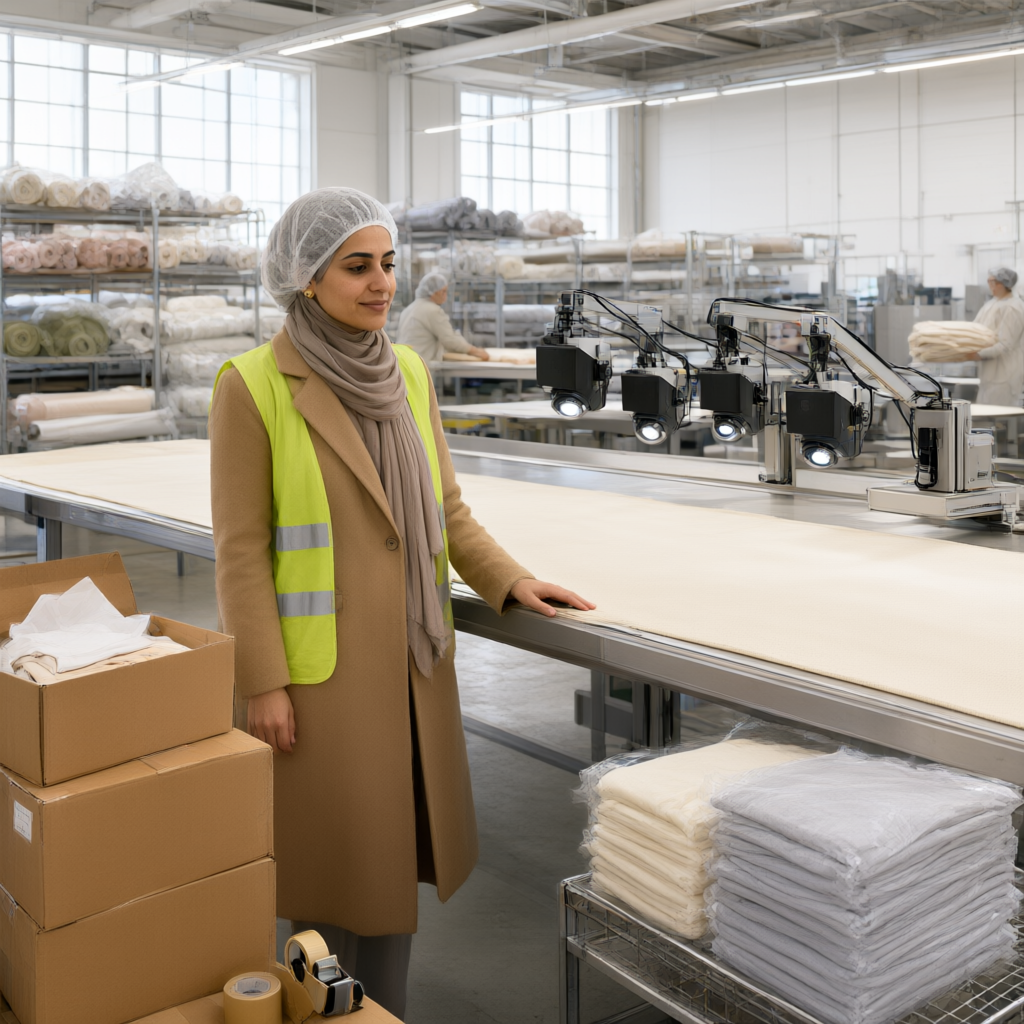
An AI business partner for factories helps a manufacturer get found, prove its claims and win direct customers, then uses market feedback to shape the next product, while the owner approves every key decision. That is what an AI business partner for factories actually does. Judge one on verifiable output, staged rollout, data handling and respect for your production team.
Key Takeaways
- An AI business partner helps a factory get found, prove its claims, reach buyers directly and use market feedback to shape the next product. It does not run the production line.
- Most manufacturers already see value in AI, and the gains reach past the defect rate into the wider business.
- The Xero AI Readiness Report found businesses that use AI daily are 2x more likely to see revenue growth than those that never use it.
- Good partners start small with one product and one market. They keep the owner approving every key decision.
- Judge a partner on verifiable output, data handling, staging, human control and fit with your production team. Ignore hype.
What does an AI business partner for factories actually do?
Many textile and garment factories have the same problem. The machines are good. The team is skilled. But most orders arrive through platforms, distributors or traders. The buyer remembers the marketplace listing, not the factory. The margin stays with the middle layer.
An AI business partner is built to change that. It is not a single app. It is a working relationship where AI tools and people help you move from being "a factory" to being a brand buyers can find and check.
In practice, the work falls into four jobs:
- Research. Find which product, market and buyer type you should go after first. Look at demand, competitors and price bands.
- Proof. Turn your real capability into facts a buyer, or an AI assistant, can verify. That means fabric, construction, testing, certification, minimum order and lead-time details.
- Channels. Build direct paths to customers, such as your own website, online stores or marketplaces under your own name.
- Feedback. Read sales, behaviour, review and competitor signals so you know which styles, specs and prices to adjust next.
WarpDriven AI offers this through its AI Business Partner Programme. It is a staged programme that starts with one product and one market, then moves from research to brand, channels and orders. The aim is that customers can verify your brand and products directly, instead of only remembering a platform listing.
Notice what is not on the list. The partner does not run your sewing lines or replace your production manager. Your team keeps making the product. The AI side handles the slow, repetitive commercial work that most factories never have time for.
What is manufacturing AI?
Manufacturing AI is the use of artificial intelligence across a manufacturing business. On the floor, it can spot defects, predict machine faults and plan production. Off the floor, it can forecast demand, write product content, handle enquiries and read market signals.
The scope is wider than most owners expect. A source from 17 January 2025 notes that the effects of AI in manufacturing are not limited to reducing the defect rate, but lead to wider gains across the business. Another source, dated 22 June 2026, says AI is actually making a difference in manufacturing, that most manufacturers already see its value, and that they look at the entire business when deciding where to use it.
For a garment or textile factory, it helps to split manufacturing AI into two zones:
Shop-floor AI
This covers the physical process. Examples include camera-based fabric inspection, machine health alerts, cutting plan optimisation and production scheduling. It is usually bought by an operations or production manager. If that is your priority, the WarpDriven Factory AI page is the place to look at that side.
Commercial AI
This covers how the business finds and keeps customers. Examples include market research, product pages, multilingual content, enquiry handling, review analysis and demand signals. It is usually bought by the owner or a sales lead. An AI business partner lives mostly here.
Why does the split matter? Because many factories already have decent production. Their weak spot is that buyers cannot see or check what they do. A perfect defect rate does not help if no direct buyer knows you exist.
What "verifiable" means for a factory
Buyers, and the AI assistants they now ask, look for facts they can check. For a garment maker that might be fibre content, fabric weight, test reports, compliance marks, sizing, minimum order quantity and realistic lead times. Vague claims like "premium quality" carry little weight. Our guide on what a factory website should show so buyers and AI assistants can verify it goes deeper on this.
How is AI helping business?
AI helps business in two broad ways. It saves time on repetitive work. And it turns scattered data into decisions you can act on.
For factories, a partner matters as much as the tools. A source from 24 June 2024 notes that AI partners help manage data issues, employee resistance and the complexity of AI implementation. Those three problems are exactly where factory AI projects tend to stall.
- Data issues. Spec sheets live in spreadsheets, emails and people's heads. A partner helps gather and clean what you need.
- Employee resistance. Production staff worry AI means job cuts. A partner keeps AI on the commercial side and away from their roles.
- Complexity. Websites, marketplaces, content, analytics and enquiries all need joining up. A partner connects them.
Measuring what is working
A source from 31 January 2025 notes that AI analytics tools are vital for monitoring website traffic, conversion rates, return on investment and social media engagement. For a factory brand, those numbers show whether direct buyers are arriving and acting.
Turning feedback into the next product
This is where a factory has an edge over a pure reseller. You can change the product. When sales, behaviour, review and competitor signals show buyers want a different fabric weight, size range or price point, you can adjust the next run. WarpDriven AI uses these signals so market and review feedback shapes which styles, specs and pricing to adjust. Related reading: how to avoid overstock by testing styles before you reorder.
Getting found by AI assistants
Buyers increasingly ask ChatGPT and similar tools to suggest suppliers. Those assistants tend to cite sources with clear, checkable facts. This is called generative engine optimisation, or GEO. The 100 clothing factories in one town article explains why one factory gets recommended over its neighbours.
Who are the big 4 of AI?
"Big 4 of AI" has no single official meaning. People use it for different groups. Some mean the largest AI model makers. Others mean the big consulting firms, often called the Big Four (Deloitte, PwC, EY and KPMG), which all run AI advisory practices. For a factory owner, the second meaning is more relevant, because these firms sell AI help to businesses.
For example, PwC describes using AI and machine learning to drive business value across supply chain, marketing and operations. Large consultancies like this suit big manufacturers with complex systems and large budgets.
There is also a growing local scene. In Australia, Antler is backing a startup called Factory AI through Antler Fund II, a registered Early Stage Venture fund. Factory AI focuses on using AI to keep manufacturing production running. That is shop-floor AI, which is a different job from building a brand.
The takeaway: "big" does not mean "right for you". A mid-sized garment factory usually needs focused, practical help with one product and one market, not a large transformation programme. Match the provider to the problem.
How should a factory judge an AI business partner?
Use these criteria. Each one comes with why it matters and how to check it.
- Verifiable output. Why: buyers and AI assistants trust checkable facts. Check: ask to see sample pages built from real specs, test reports and certifications.
- Staged rollout. Why: small starts protect production and cash. Check: ask what the first phase covers and what ends it.
- Human approval. Why: you own the brand and the risk. Check: ask which decisions need your sign-off. Pricing and claims should.
- Data handling. Why: your specs and customer data are assets. Check: ask who owns the data, where it is stored and how it leaves if you stop.
- Feedback loop. Why: the value grows when signals shape the next product. Check: ask how review and sales data reach your product decisions.
- Fit with your team. Why: a project that distracts production costs more than it earns. Check: ask how much time your staff must give each week.
- Honest promises. Why: no one can promise rankings, AI citations or sales. Check: walk away from anyone who guarantees them.
For a deeper side-by-side view of programmes, see AI business partner programme providers: what to compare.
What types of AI help can a factory choose from?
The table below compares the common kinds of help. Descriptions of the general categories are typical, not claims about any named firm.
| Option | Main focus | Suits | Does not suit |
|---|---|---|---|
| Large consultancy (e.g. Big Four firms) | Strategy and large AI transformation, generally | Big manufacturers with complex systems and budgets | Smaller factories wanting a quick, focused start |
| Shop-floor AI startups (e.g. Factory AI) | Keeping production running | Plants focused on uptime and machine health | Factories whose gap is brand and direct buyers |
| DIY tools (chatbots, writing tools) | Single tasks such as drafting text | Owners with spare time and in-house skill | Factories needing a joined-up brand and channel plan |
| Freelancers or agencies | Websites, marketing or ads, typically | Factories needing one specific deliverable | Those wanting data and feedback joined to products |
| WarpDriven AI Business Partner Programme | Staged: one product, one market, from research to brand, channels and orders | Factories with capacity that want a verifiable brand and direct path | Plants whose main need is shop-floor automation |
No one option is right for every factory. Many use more than one, for example a shop-floor tool plus a commercial partner.
How does a factory start, step by step?
- Pick one lead product. Input: your range and order history. Output: one product you make well and can supply reliably. Done when: everyone agrees which product leads.
- Pick one target market. Input: where demand and fit look strongest. Output: one country or buyer type. Done when: you can name the buyer you are aiming at.
- Gather the proof. Input: spec sheets, test reports, certifications, MOQ and lead times. Output: one clean fact file. Done when: every claim has a document behind it.
- Research the market. Input: competitor listings, prices, reviews. Output: a short brief on gaps and price bands. Done when: you know how you will stand apart.
- Build the brand pages. Input: fact file and brief. Output: product and company pages buyers can verify. Done when: the owner has approved every claim.
- Open a direct channel. Input: approved pages. Output: a live website or store under your own name. Done when: a buyer can enquire or order directly.
- Read the feedback. Input: traffic, enquiries, sales and reviews. Output: a regular report with suggested changes. Done when: one product decision has been made from real signals.
Quick checklist
- One product and one market chosen.
- Every claim backed by a document.
- Owner sign-off on pricing and published claims.
- Production team's time protected.
- Data ownership agreed in writing.
- A way to measure direct enquiries.
When is an AI business partner not the right fit?
Be honest about timing. An AI business partner is probably not right if:
- Your main problem is on the floor, such as breakdowns or defects. Start with shop-floor AI.
- You are happy as a contract maker and do not want your own brand.
- You cannot supply basic proof, such as specs or test reports, for any product yet.
- No one in the business can review and approve output each week.
- You want a hands-off system that runs with no human oversight. Good partners will not offer that.
In these cases, fix the basics first. A partner works best once there is a product worth showing and someone to steer.
What mistakes do factory owners make with AI partners?
- Starting too wide. Launching every product in every market spreads effort thin. Start with one of each.
- Publishing claims you cannot prove. Unverifiable claims hurt trust with buyers and AI assistants. Back every claim with a document.
- Pulling the production team in. Asking line staff to write content slows output. Keep AI work on the commercial side.
- Believing guarantees. No one can guarantee rankings, citations or orders. Treat such promises as a red flag.
- Ignoring feedback. Collecting reviews but never changing the product wastes your biggest edge as a maker.
- Handing over control. Letting AI set prices or publish without review creates risk. Keep owner approval on key decisions.
If you want to see how this plays out for a specific product type, see the guides for workwear and uniform factories.
WarpDriven AI connects brand content, data and automation into one accumulating loop for manufacturers and online brands. Its AI Business Partner Programme begins with one product and one market. If that sounds like your next move, bring your website, a lead product and a target market for a first conversation.
What does a typical first phase look like in practice?
It helps to picture the first phase concretely. Imagine a knitwear factory that has supplied private-label jumpers for years. It has good machines, a skilled linking team and a steady list of trade customers, but no name that buyers recognise. The owner chooses one lead product, a merino wool crew-neck the factory has made many times, and one target market where demand for natural-fibre knitwear looks healthy.
In the research step, the AI side gathers competitor listings for similar jumpers in that market. It records how sellers describe fibre content, gauge, care instructions and sizing, and notes the price bands buyers seem to accept. It also reads public reviews to find recurring complaints, such as pilling, shrinkage after washing or sleeves that run short. That gives the factory a list of problems it can show it has already solved.
In the proof step, the factory's own documents do the work. The yarn supplier's fibre declaration, any wash or pilling test reports and the factory's sizing chart go into one fact file. Where a claim has no document behind it, it stays out of the published copy until one exists. This is slower than writing marketing language, but it is what makes the page credible to a careful buyer.
In the brand step, the AI drafts a product page and a short company page from that fact file. The owner reads every line, removes anything that overstates the truth and approves the final version. Only then does the page go live on a direct channel under the factory's own name. The production team is not asked to write, photograph or post anything beyond supplying the documents they already keep.
The phase ends when there is a live, verifiable page, a way for buyers to enquire directly and a first feedback report. That is a modest finish line, and that is the point. The owner can judge real output before deciding whether to add a second product or market.
How do buyers actually check a factory's claims?
It is worth understanding the buyer's side, because it explains why proof matters so much. A professional buyer sourcing a new supplier rarely trusts a homepage alone. They look for consistency across several places: the factory's own site, marketplace profiles, certification databases, trade show listings and any third-party mentions.
Inconsistency is a warning sign. If the website says one minimum order quantity and a marketplace profile says another, the buyer wonders which is true. If a certification is mentioned but no certificate number or issuing body appears, they may assume it has lapsed. A good AI business partner helps keep these facts aligned across every channel, so a buyer who checks finds the same answer everywhere.
AI assistants behave in a similar way. When someone asks a chatbot to suggest a supplier for a particular garment, the assistant draws on what it can find and tends to favour sources that state specific, consistent facts. A factory whose specs, capabilities and contact details are clear and repeated accurately across its channels gives the assistant something solid to work with. A factory that only appears as an anonymous line in a marketplace gives it very little.
Facts worth publishing, and how to present them
- Fibre and fabric. State the fibre in plain words and, where you have it, the fabric weight from your spec sheet. Link it to the supplier declaration or test report where possible.
- Construction. Describe seam types, stitching and finishing in the terms buyers use. Specific beats general.
- Testing and compliance. Name the test or standard and the body that issued the report. Keep a copy ready to send on request.
- Order terms. Give your real minimum order quantity and a realistic lead-time range. Overpromising here causes disputes later.
- Capacity and specialism. Say what you make best rather than claiming you make everything. Focus reads as expertise.
How should data be handled when working with an AI partner?
Data handling is the criterion owners most often skip, and the one that causes the most regret later. A factory's spec sheets, costings, customer lists and order history are valuable. Before any work begins, agree in writing how they will be used.
Start with ownership. The content, fact files, product pages and customer data created for your brand should belong to you. If you end the relationship, you should be able to take them with you in a usable format, not lose access to your own website or store.
Next, consider what is shared and what is not. Costings and margin data rarely need to be published or fed into public tools. A sensible partner works with the minimum data needed for each task. Product specs may be shared openly, while supplier pricing stays private.
Finally, ask about access. Who on the partner's side can see your accounts and customer enquiries? Can you remove that access at any time? Clear answers here are a sign of a mature provider. Vague answers are a reason to slow down.
How do you keep the production team on side?
The earlier sections note that employee resistance is one of the problems AI partners help manage. In a factory, this usually shows up as quiet worry rather than open objection. Line supervisors hear "AI" and assume it means fewer jobs or new monitoring. If that worry is not addressed, it can slow down the simple things a commercial project needs, such as sharing a test report or confirming a lead time.
The most effective approach is to be specific about what is changing. Tell the team plainly that the AI work sits on the sales and brand side. Explain that it is about finding direct buyers for what they already make well. When the factory wins direct orders, that work flows back to the floor, which is good news for the people on it.
It also helps to name one person as the link between production and the commercial project. That person gathers documents, answers spec questions and passes on feedback about the product. Everyone else continues as normal. This keeps the demand on the team small and predictable, which is exactly what the "fit with your team" criterion is meant to protect.
When feedback leads to a product change, involve the production lead early. If buyers keep asking for a longer sleeve or a heavier fabric, the people who will make that change should help judge whether it is practical. That turns market feedback into a shared project rather than an instruction from outside.
How do commercial and shop-floor AI work together?
The split between shop-floor AI and commercial AI is useful for planning, but over time the two start to connect. Commercial signals tell you what buyers want. Shop-floor systems tell you what you can make, how fast and at what quality. The most valuable decisions sit where those two meet.
Consider a style that starts selling well through a direct channel. The commercial side sees enquiries rising and reviews praising the fit. Before promising larger volumes, the owner needs to know whether the line can deliver without hurting other orders. Production scheduling, whether done with software or by an experienced planner, answers that question. A good AI business partner does not need to run that scheduling, but it should present demand signals in a form the production side can use.
The same applies to quality. If reviews mention a recurring fault, that is useful information for the quality team. Passing it on quickly, with examples, can help them trace the cause. In this way the feedback loop does not just shape the next product design. It can also improve how the current product is made.
Industry coverage of AI in manufacturing increasingly makes this point: the gains come from looking across the whole business, not from treating each tool in isolation. For a factory building its own brand, that means letting what buyers say reach the people who make the product, and letting what the floor can deliver shape what the brand promises.
What should you ask in a first conversation with a partner?
A first meeting is easier to judge if you arrive with clear questions. Bring your website, your lead product and your target market, and ask the following:
- What exactly will you deliver in the first phase, and how will I know it is finished?
- Which decisions will need my approval before anything is published or priced?
- Can you show me an example of a product page built only from verifiable facts?
- Who owns the content, data and accounts you create for my brand?
- How much time will my team need to give each week, and from whom?
- How will sales, review and competitor signals be reported back to me?
- What will you not promise, and why?
Pay attention to the last question. A provider that explains honestly why it cannot guarantee rankings, AI citations or orders is usually more trustworthy than one that promises all three. The right partner should leave you with a clear, small first step, a clear owner for each decision and a realistic sense of what the work can and cannot do.
FAQ
What does an AI business partner do for a clothing factory?
It helps the factory build a brand buyers can check, reach customers directly and use feedback to plan the next product. Typical work includes market research, publishing verifiable specs, setting up direct channels and reading sales and review signals. The owner still approves key decisions. It does not replace the production team or run machines.
Is an AI business partner the same as factory automation software?
No. Factory automation software works on the shop floor, for example on machine uptime, quality checks or scheduling. A business partner works on the commercial side: brand, content, channels, orders and feedback. Many factories end up using both, but they solve different problems and are bought by different people.
How long before a factory sees results from an AI business partner?
It depends on the product, the market and how much proof the factory can already show. A staged approach keeps the first phase small, so you can judge early output before committing more. Be wary of any provider that promises fixed timelines, sales or AI citations, because no one can honestly guarantee those.
Do I need clean data before I start with AI?
You need some reliable basics, not perfect data. A lead product with accurate specs, a few certificates or test reports and recent order or review history are enough to begin. Good AI partners help with data issues as part of the work, which is one of the main reasons factories hire them.
Will AI take over decisions in my factory?
It should not. A sound AI business partner suggests and drafts, and the owner approves key decisions such as pricing, product changes and what gets published. The aim is to save time on research and content, not to remove human control from the business.
Next step
Want to see how AI Business Partner would work for you? Choose a way forward below.