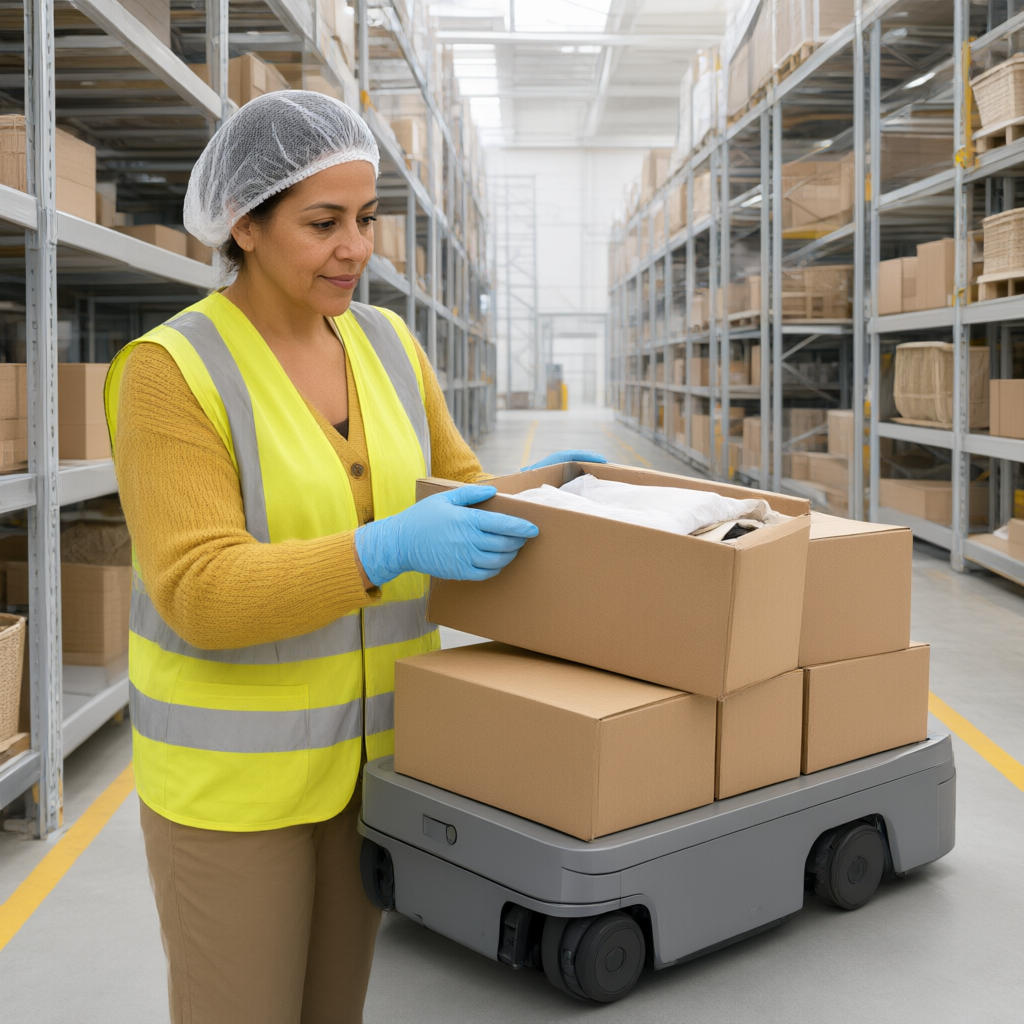
AI visual inspection for garment factories uses industrial cameras and trained AI models to check fabric and garments on the production line, then find, classify and record defects as they appear. Expect it to catch visible, repeatable faults consistently and to give you a defect record. Judge any system on your own defects, fabrics, line speed and data control.
This guide is written by WarpDriven AI. Our offer in this area, WarpDriven Factory AI, is hardware-and-software visual inspection, measurement and monitoring that runs locally on the production line. Below we explain how the technology works, what it can and cannot do, and how to test it fairly. Other approaches are covered too, so you can decide what fits your factory.
Key Takeaways
- AI visual inspection uses cameras and trained models to find, classify and record fabric and garment defects on the line, instead of relying only on end-of-line manual checks.
- It works best on repeatable, visible defects such as holes, stains, broken yarns and shade problems. Your written inspection standard decides what the system flags.
- A pilot on one line or one fabric family, using your own sample photos, shows feasibility before you scale.
- Systems that run locally on the production line keep image and defect data inside the factory, which matters to owners protecting customer designs.
- Defect records give a factory verifiable quality evidence it can show buyers. That helps a factory become a brand, not just a supplier.
What is inline inspection in the garment industry?
Inline inspection means checking quality while production is happening, at points along the line. The older habit is to wait until garments are finished and boxed. In a garment factory, inline checks usually happen at three places:
- Fabric inspection before or during cutting, to stop faulty fabric from becoming faulty panels.
- In-process checks at sewing stations, such as seam quality, stitch density, puckering or wrong attachments.
- Pre-final checks before pressing and packing, such as stains, loose threads and measurement errors.
Inline inspection matters because the cost of a defect grows at each step. A hole caught on the fabric roll costs a few centimetres of cloth. The same hole found after cutting, sewing, washing and packing wastes all that labour. If a buyer finds it, you can lose the order or the customer.
Manual inline inspection depends on people. Trained inspectors are skilled, but they get tired, attention drops late in a shift, and two inspectors may grade the same fault differently. Machine vision makes this step more consistent. One supplier of automated fabric inspection, in a listing dated 31 March 2026, describes a system that scans and analyses the fabric surface in real time through high-speed cameras and intelligent algorithms, so it can identify and record various defects. Another supplier, in a 2 July 2026 listing, describes industrial HD cameras and AI algorithms that automatically detect, classify and record defects.
The key word in both descriptions is record. Manual inline inspection often leaves little behind except a tick sheet. AI inline inspection leaves a searchable log of what was found, where and when. That log is what lets you fix root causes and show buyers your quality is real.
How is AI being used in the garment industry?
AI now appears at many points in the garment value chain. For a factory owner, the uses fall into three groups.
On the production floor
- Fabric defect detection on inspection frames or relaxing machines, before cutting.
- Garment and panel inspection at sewing or finishing stations, looking for stains, holes, skipped stitches and misaligned parts.
- Measurement, where cameras check panel or garment dimensions against the size spec.
- Monitoring of machines and line flow, so supervisors see where work is slowing or quality is slipping.
In design and development
AI is used to simulate how fabrics drape and stretch, to suggest colourways and to speed up sampling. Designers use this to cut the number of physical samples.
In sales and brand building
Factories that want direct buyers use AI to publish product pages and answer buyer questions. They also use it to show up in AI assistants like ChatGPT. If that is part of your plan, our guide on how a factory can get found by overseas buyers covers the basics.
The production-floor uses come first for most factories, because they touch cost and reputation directly. A supplier listing dated 18 August 2026 says an AI fabric inspection machine can automatically inspect fabric and identify defects during production, reducing the need for manual checking. That is the realistic promise: less repetitive manual scanning, not zero people. Owners worried about disrupting their team can read about starting with AI automation without replacing the production team.
What does AI inspection mean?
AI inspection means a computer system that looks at images of a product and decides whether it meets a quality standard. It works by learning from labelled examples, not from hand-written rules. One supplier, in its 31 March 2026 description, defines automated fabric inspection as a system based on machine vision and artificial intelligence technologies. Those two parts do different jobs:
- Machine vision is the eyes: cameras, lenses and lighting that capture sharp, consistent images of fabric or garments as they move.
- Artificial intelligence is the judgement: a model trained on many images of good and defective product. It learns what a hole, slub, oil stain or broken end looks like.
Older machine vision used fixed rules, such as "flag any dark spot larger than this size". That breaks easily on textiles. Fabric texture, prints, yarn variation and folds create endless patterns that rules cannot cover. A trained AI model copes better with natural variation because it learns from real examples of your fabric.
AI inspection does three things for each item it sees:
- Detect: is there something unusual here?
- Classify: what type of defect is it, and how serious under your standard?
- Record: save the image, location, defect type and time, so people can review and analyse it.
It does not set your quality standard. You decide what counts as a major or minor defect and what your buyers accept. You also decide what happens to flagged items. The system applies that standard consistently. This is why a clear written standard is the most important thing you bring to any AI inspection project.
How does AI visual inspection for garment factories work, step by step?
Every vendor packages it differently, but a working system on a garment line follows the same flow.
- Image capture. Cameras are mounted above or beside the fabric or garment path. Controlled lighting removes shadows and shows texture. For fabric rolls, line-scan cameras often cover the full width as cloth moves. For garments, area cameras take snapshots at a station.
- Processing at the line. Images go to a computer that runs the AI model. When this computer sits on site, decisions arrive quickly and images do not need to leave the factory.
- Detection and classification. The model marks suspected defects and labels them by type, such as hole, stain, slub, missing yarn, shade variation or skipped stitch.
- Action. The system alerts an operator, marks the spot on the roll, stops a machine or diverts a piece, depending on how you set it up.
- Human review. An inspector confirms or rejects borderline flags. Those decisions can be fed back to improve the model.
- Reporting. Defect data builds roll reports, line dashboards and trend views. You can see which supplier, machine, shift or style produces most faults.
This is how WarpDriven Factory AI is designed to run: hardware and software together, doing visual inspection, measurement and monitoring locally on the production line. Keeping the processing on site means factory data stays in the factory.
What is fabric AI used for?
"Fabric AI" is a loose term covering several technologies. It helps to separate them, because they solve different problems.
Fabric defect inspection
This is the use closest to the factory floor. As the 31 March 2026 supplier description puts it, high-speed cameras and intelligent algorithms scan the fabric surface in real time to identify and record defects. Typical targets in woven and knitted goods include:
- Holes, cuts and tears
- Oil, dirt and water stains
- Slubs, knots and thick or thin places
- Broken ends, missing picks and dropped stitches in knits
- Shade variation across the width or along the length
- Printing faults such as misregistration or smudges
Fabric simulation
This is a design tool, not an inspection tool. One source dated 4 January 2026 explains that AI fabric simulation uses advanced algorithms to replicate how fabrics behave under real conditions, including drape and stretch. Brands and factories use it for virtual samples and 3D fit checks. It can reduce physical sampling, but it does not check the fabric in front of you.
Fabric grading and reporting
Defect data from inspection can feed into grading systems that many mills and garment makers already use, such as the 4-point system. Instead of an inspector tallying points by hand, the system can total defect points per roll from its records. Your QC team stays in charge of the final grade.
For a factory owner, the practical point is this: if you want fewer faulty garments and better proof of quality, you want inspection. If you want faster sampling, you want simulation. Many vendors use "fabric AI" for both, so ask which one they mean.
What criteria should a garment factory use to judge an AI inspection system?
Use these criteria to compare any system, including ours. For each one, check it with your own products, not just a demo.
- Defect coverage for your products. Why it matters: a system tuned for plain grey cloth may struggle on prints, stripes or dark knits. How to check: send photos of your real defects on your real fabrics and ask which ones the system can reliably see.
- Fit with your inspection standard. Why it matters: buyers judge you against their standard, not the vendor's. How to check: give the vendor your written standard and ask how each defect class and severity level will be configured.
- Speed and line fit. Why it matters: inspection that slows the line will be switched off. How to check: confirm the system keeps up at your actual line or frame speed and fabric width, and see where cameras and lights physically mount.
- False alarms and missed defects. Why it matters: too many false alarms and operators ignore alerts. Too many misses and defects still reach buyers. How to check: in a pilot, count both against human inspection on the same material.
- Where the data lives. Why it matters: images show customer designs, and buyers may ask how you protect them. How to check: ask whether processing runs locally on the line, what leaves the site, and who can access it.
- Records and reporting. Why it matters: the record is what lets you fix causes and prove quality. How to check: ask for a sample roll report or line report and see if your team can understand it at a glance.
- Retraining and support. Why it matters: new fabrics and styles arrive every season. How to check: ask how new defect types or fabrics are added, who does it, and how long the process takes in practice.
How do the main inspection options compare?
The table compares the general approaches a garment factory usually weighs. Descriptions of the category options are general, not claims about any named vendor.
| Option | How it works | Suits | Does not suit |
|---|---|---|---|
| Manual inspection only | Trained inspectors on inspection frames and at line stations, recording on paper or simple apps | Small volumes, very varied short runs, tight budgets | Factories needing consistent grading across shifts or digital proof of quality |
| Dedicated automated fabric inspection machines | Category machines with built-in cameras and AI on a fabric inspection frame, as described in supplier listings | Mills and factories inspecting high volumes of rolls before cutting | Checks on sewn garments, measurement or wider line monitoring |
| Cloud-based vision software | Cameras on site send images to an off-site service for analysis | Factories comfortable sending images off site, with strong internet | Factories that must keep customer design images on site or have unreliable connections |
| WarpDriven Factory AI | Hardware-and-software visual inspection, measurement and monitoring that runs locally on the production line | Garment and textile factories wanting on-line inspection with data kept in the factory | Factories wanting a design or fabric simulation tool rather than production inspection |
No single option is right for every factory. A small workroom with very varied, short runs may get more from better manual checklists. A mill running long batches of one fabric may prefer a dedicated inspection frame. A garment factory that wants inspection, measurement and monitoring on its own line, with data on site, is the case WarpDriven Factory AI is built for.
How do you run a pilot on your own line?
A pilot tells you more than any brochure. Follow these steps and do not move on until each one is done.
- Write down your inspection standard. Input: your current QC rules and buyer requirements. Output: a list of defect types with clear severity levels. Done when: two of your inspectors would grade the same sample photo the same way.
- Collect sample photos. Input: real good and defective fabric or garments from your line. Output: a labelled photo set covering every defect type you care about. Done when: each defect type has several clear examples, including hard cases on prints and dark shades.
- Get a feasibility assessment. Input: the photos plus your standard. Output: the vendor's view of which defects are visible and which may need special lighting or are out of scope. Done when: you have a written list of what is in and what is out.
- Choose one pilot point. Input: your line layout. Output: one station or fabric family where the pilot runs. Done when: the supervisor for that area agrees and knows who reviews alerts.
- Run side by side. Input: the installed system plus your normal inspectors. Output: two sets of results on the same material. Done when: you have compared misses and false alarms over a meaningful run of production.
- Review and decide. Input: the comparison and operator feedback. Output: a go, adjust or stop decision. Done when: you know what scaling would need and who will own the system day to day.
Quick pilot checklist:
- Written inspection standard agreed by QC and production
- Labelled photos of every key defect type
- Line speed, fabric width and lighting details recorded
- One named owner for the pilot on the floor
- Clear rule for who reviews alerts and how fast
- Agreed answer on where images and data are stored
What should you realistically expect in the first months?
Set expectations early so the team does not judge the system on day one.
- A tuning period. The first weeks usually bring false alarms while thresholds and the model are adjusted to your fabrics. That is normal. It should improve with human feedback.
- Better consistency before better catch rates. The first gain is often that every roll or garment is checked the same way on every shift.
- New information. The defect log often shows patterns you did not see before, such as one supplier's fabric or one machine causing repeat faults. Fixing those causes can matter more than catching the defects.
- Changed roles. Inspectors move from scanning everything to reviewing flags and solving problems. Explain this early, because people fear replacement.
- Limits. Defects hidden inside seams, faults you cannot see from the camera angle, and feel-based issues like hand-feel still need people.
Over time, the records become an asset beyond the floor. A factory that can show buyers real inspection data, rather than a claim of "strict QC", is easier to trust. That links to building a verifiable brand, covered in what a factory website should show so buyers and AI assistants can verify it. Specialist factories may also find our pieces on denim factories and AI search and workwear and uniform factories useful when turning quality facts into published proof.
When is AI visual inspection not the right fit?
Be honest with yourself about these situations:
- No agreed inspection standard. If your team cannot agree what a defect is, the system cannot either. Fix the standard first.
- Very small or highly varied runs. If every order is a new fabric in tiny quantities, training and setup may cost more than they save.
- Defects cameras cannot see. Hand-feel, smell, internal seam faults and some fit issues need people or other tests.
- You need design simulation, not inspection. If your goal is fewer physical samples, a fabric simulation tool fits better than WarpDriven Factory AI.
- No one to own it. A system nobody reviews or maintains will drift and be ignored.
What mistakes do factories make when buying AI inspection?
- Judging on a vendor demo. Demo fabrics are chosen to look good. Always test on your own fabrics and defects.
- Skipping the written standard. Without it, nobody can say if the system is right or wrong. Write it before you buy.
- Ignoring false alarms. A system that cries wolf gets switched off. Measure false alarms as carefully as missed defects.
- Forgetting the data question. Ask where images go before installation, not after a buyer asks you.
- Leaving operators out. Involve inspectors and supervisors from the pilot onward. They know the defects best and will make or break adoption.
- Not using the records. Defect logs that nobody reviews waste most of the value. Set a weekly review of top defect causes.
If you are weighing whether AI inspection fits your line, the simplest start is low risk. Share sample photos and your inspection standard with WarpDriven AI, and we can assess feasibility for WarpDriven Factory AI on your products.
FAQ
How accurate is AI visual inspection compared with human inspectors in a garment factory?
Accuracy depends on your fabrics, lighting, defect types and the quality of the training images, so no honest supplier can quote a universal figure. The fair test is a pilot on your own line that compares the system against your current inspectors on the same rolls or garments. Ask how many real defects were missed and how many false alarms it raised.
Will AI inspection replace the quality control team in my factory?
No. AI inspection takes over the repetitive scanning work, but people still confirm borderline defects, make grading decisions and fix root causes. Most factories redeploy inspectors toward review, problem solving and supplier feedback. Owners and QC leads stay in charge of the inspection standard and every final decision.
What do I need to provide for an AI visual inspection feasibility assessment?
You mainly need clear sample photos of good and defective fabric or garments, plus your written inspection standard. The standard should name your defect types and say which ones count as major or minor. Details about line speed, fabric widths and lighting also help a supplier judge whether cameras can see your defects reliably.
Can AI inspection handle patterned, printed or dark fabrics?
Often yes, but these are the harder cases and need testing. Prints and stripes can hide defects or be mistaken for them. Dark and glossy fabrics can make defects hard to see without the right lighting. Treat these fabrics as a separate pilot item rather than assuming they behave like plain light shades.
Why does it matter that inspection data stays inside the factory?
Inspection images show your customers' designs, prints and products, so many buyers expect that data to be protected. A system that processes images locally on the production line keeps them on site rather than sending every frame to an outside server. It also keeps inspection running if the internet connection drops.
Next step
Want to see how WarpDriven Factory AI would work for you? Choose a way forward below.