
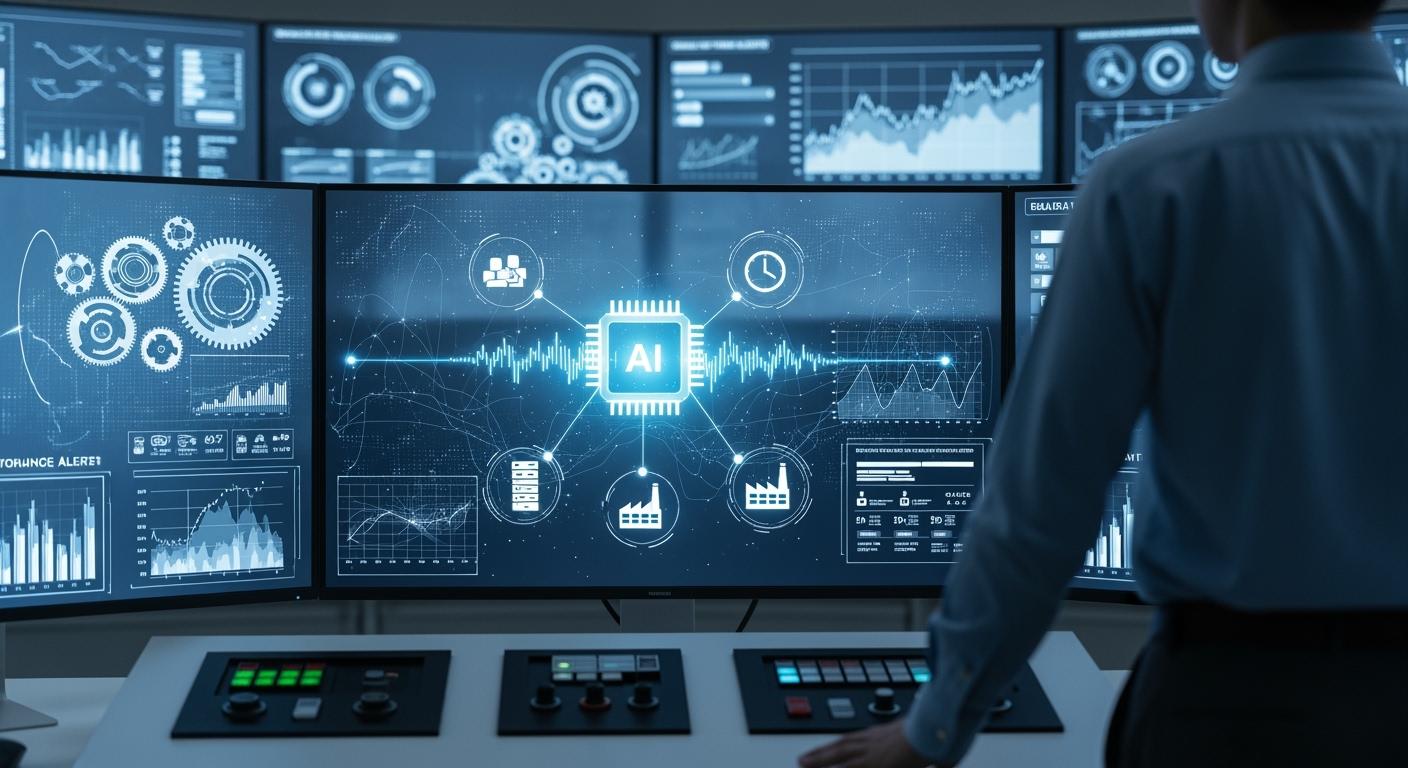
You can minimize downtime in your operations by using ai closed-loop business systems. These systems use ai to automate decisions and optimize processes in real time. Many companies have seen a 40% reduction in unplanned downtime after adding ai to their maintenance routines. When you use ai, you can predict demand changes and respond quickly. Businesses have reported lower logistics costs, fewer product losses, and a 15% drop in inventory levels. With ai, you gain more control over your data and how your business runs. This approach works for many industries and helps you keep your systems running smoothly.
What Are Closed-Loop Business Systems?
Core Components and AI Role
You can think of closed-loop business systems as smart networks that use ai to keep everything running smoothly. These systems collect data from your machines and processes all the time. Ai checks this data and helps you make quick decisions. This means you do not have to wait for problems to happen before you fix them.
Here is a table that shows how ai improves each part of closed-loop business systems:
| Component | AI Enhancement |
|---|---|
| Real-time Monitoring | Ai tracks machine performance and the environment every second. |
| Predictive Maintenance | Ai predicts when equipment might fail and tells you when to do maintenance. |
| Quality Control | Ai finds mistakes in products and fixes them right away. |
| Resource Optimization | Ai helps you use materials and energy in the best way. |
Ai also helps you spot problems early and fix them before they cause downtime. You can use ai to plan maintenance, check quality, and save resources. Ai makes sure you always have good data, so your system can learn and get better over time. With ai, you can trust your system to handle changes and keep your business moving.
Difference from Traditional Systems
You might wonder how closed-loop business systems are different from older systems. Traditional systems often wait for something to break before they react. Ai in closed-loop systems works all the time to prevent problems.
Tip: Ai does not just react. It predicts and solves issues before they stop your work.
Here is a table to help you see the difference:
| Benefit | Closed-Loop Systems | Traditional Systems |
|---|---|---|
| Reduced Downtime | Ai finds problems early and helps you fix them fast. | You wait for things to break, which takes longer to fix. |
| Improved Quality Control | Ai checks for mistakes all the time and corrects them. | You may miss mistakes until it is too late. |
| Enhanced Resource Management | Ai uses feedback to save materials and energy. | You may waste resources without real-time help. |
Ai makes closed-loop business systems smarter and faster. You get fewer delays, better products, and less waste.
How Closed-Loop AI Reduces Downtime
Real-Time Monitoring and Adjustment
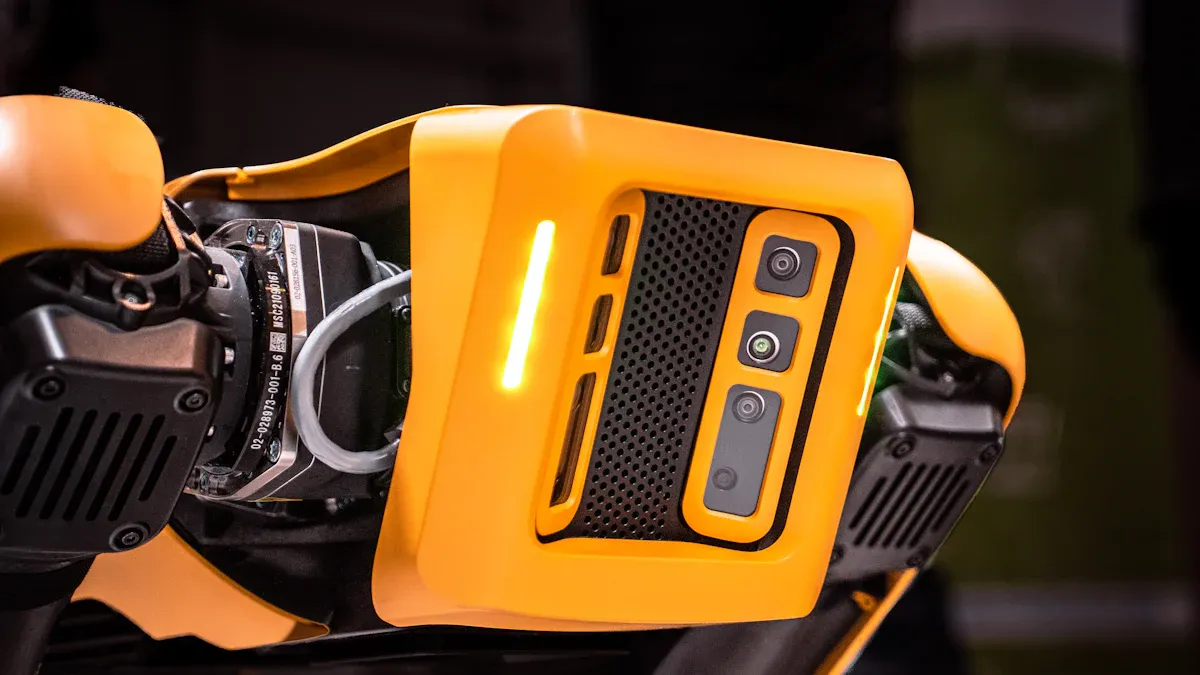
You can use ai to watch your business systems every second. This real-time monitoring helps you spot problems before they stop your work. Ai checks data from machines, sensors, and software. It looks for signs that something might go wrong. When ai finds a risk, it can adjust settings or alert you right away. This quick action keeps your machines running and your business on track.
Many companies have seen big results from using ai for real-time monitoring. For example, BMW used ai to watch their conveyor systems. They stopped over 500 minutes of assembly line delays in one year. Shell used ai to check over 10,000 machines at their refinery. They saved about $2 million by avoiding downtime and repairs. You can see how these companies used ai in the table below:
| Company | Problem | Approach | Solution and Benefits |
|---|---|---|---|
| BMW | Frequent assembly line stoppages due to conveyor system faults | Deployed an AI-driven predictive maintenance system analyzing real-time data from conveyor components | Prevented over 500 minutes of annual disruption, improving production continuity and operational efficiency |
| Shell | Unplanned downtime at the Pernis refinery | Implemented a predictive maintenance platform monitoring over 10,000 assets and analyzing 20 billion data points weekly | Avoided costly downtime and repairs, resulting in estimated savings of approximately $2 million and improved operational reliability |
Ai-driven automation lets you fix problems before they grow. You do not have to wait for something to break. Ai-driven analytics can also help you find patterns in your data. This means you can plan better and avoid surprises.
Ai predictive maintenance can cut equipment downtime by 45%. Ai-driven analytics uses both old and new data to guess when machines might fail. You can fix things before they break. This keeps your business running and saves money.
Here is how ai helps with predictive maintenance:
- Ai retrains its models using old data to spot new problems.
- When you fix a machine, ai updates its predictions for how long other machines will last.
- If ai sees its predictions are off, it retrains itself to stay accurate.
- Ai uses reinforcement learning to plan the best time for repairs, so you lose less time.
You can see that real-time monitoring and adjustment with ai makes your business stronger and more reliable.
Automated Response and Self-Learning
Ai does more than just watch your systems. It can act on its own to fix problems. This is called automated response. When ai finds a threat or a failure, it can follow a set of steps, called a playbook, to solve the issue right away. You do not need to wait for a person to step in. This fast action keeps your business safe and running.
Self-healing networks use ai to fix themselves. In the past, it could take months to solve some problems. Now, ai can do it in minutes. For example, in healthcare, ai can stop a cyberattack quickly. It blocks bad traffic and keeps patient care going. This means less risk and fewer delays.
Here is a table that shows how automated response helps self-healing processes:
| Evidence Description | Impact on Self-Healing Processes |
|---|---|
| Automated playbooks enable immediate action upon threat detection. | This leads to rapid isolation of compromised devices and blocking of harmful traffic without human intervention. |
| Self-healing networks reduce response times from months to minutes. | Ensures continuous operation and minimizes disruptions in patient care during cybersecurity incidents. |
| These systems halt the spread of threats and remove delays caused by manual intervention. | This minimizes financial risks and enhances the overall security posture of healthcare organizations. |
Ai learns from every action it takes. This is called self-learning. Each time ai solves a problem, it gets better at finding and fixing new ones. Over time, you will see less downtime and more uptime. Industry reports show that average downtime dropped from 42 hours per month in 2020 to just 19 hours in 2023. You can see this trend in the chart below:
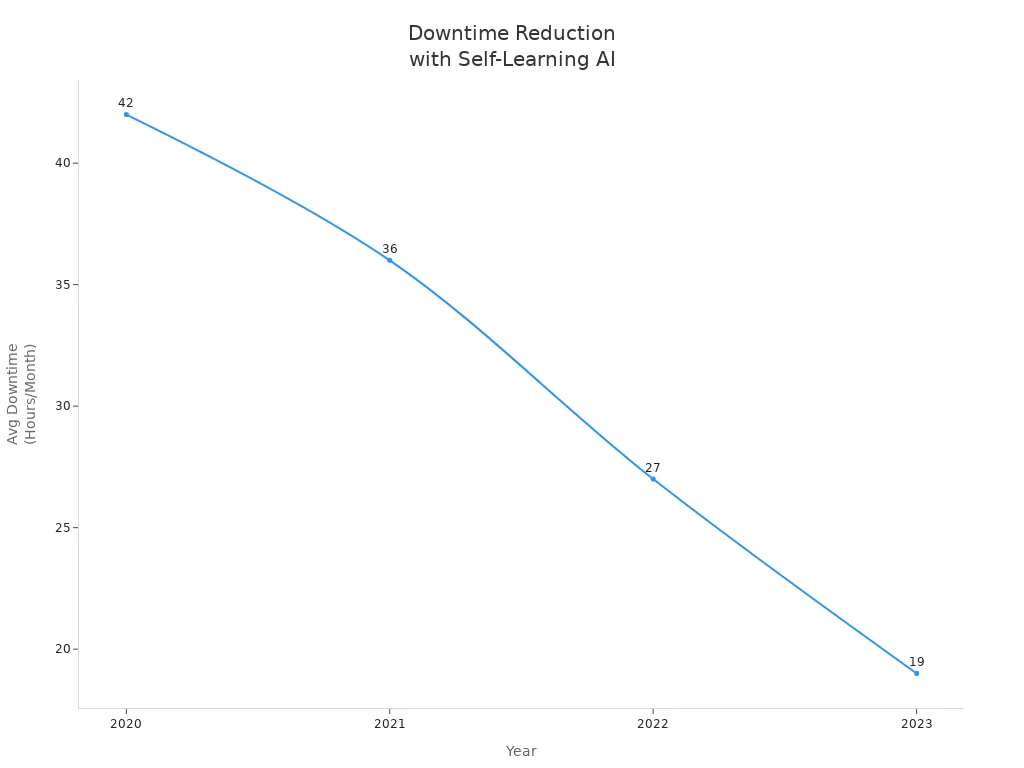
You can trust closed-loop business systems powered by ai to keep learning and improving. This means you get more work done, lose less time, and save money. Ai and enterprise ai will keep your business strong and ready for the future.
Benefits of Reduced Downtime
Productivity and Cost Savings
You can see big gains in productivity when you reduce downtime with ai. Machines stay online longer, and your team spends less time fixing problems. Many companies use ai-driven analytics to spot issues early and keep production lines moving. For example, Siemens uses ai to monitor machines and prevent breakdowns. Airlines use ai to predict part failures, which helps reduce flight delays and saves money.
Here is a table showing how much you can save:
| Metric | Reduction Percentage |
|---|---|
| Reduction in Unplanned Downtime | Up to 25% |
| Reduction in Annual Maintenance Costs | ~10% |
Oil and gas companies have seen 70% fewer maintenance errors and over 40% lower preventive maintenance costs after using ai. City governments use ai-driven analytics to plan repairs before things break, which avoids expensive emergency fixes. You can use enterprise ai to keep your operations running and cut costs at the same time.
Data Sovereignty and Control
You need to keep your data safe and follow the rules. Closed-loop business systems give you more control over your data. Ai helps you manage who can see your data and where it stays. This means you can meet legal requirements and keep your information secure.
Note: You can use hybrid strategies to store sensitive data on-site and less sensitive data in the cloud. Not all data needs the same level of protection.
Here is a table that shows how ai supports data privacy:
| Governance Capability | Description |
|---|---|
| Data residency and localization | Keeps data in the right place to follow local laws. |
| Model training and location of inference | Makes sure ai learns from data without moving it out of its home country. |
| Data access controls | Lets you decide who can use your data and when. |
| Encryption and key management | Protects your data from hackers with strong security. |
| Auditability and transparency | Tracks where your data comes from, which helps during audits. |
Enterprise ai also uses federated learning. This lets ai learn from different places without moving raw data. You can keep sensitive information private and still use ai-driven analytics to improve your business.
Customer Satisfaction
You want your customers to stay happy and loyal. Ai helps you fix problems before they affect your customers. When you use ai, you can recover from issues faster and avoid service interruptions. Ai-driven analytics gives you early warnings, so you can act before customers notice a problem.
| Evidence Type | Description |
|---|---|
| Reduced MTTR | Ai helps you fix things faster, so customers see fewer outages. |
| Proactive Engagement | Early warnings keep your customers informed and happy. |
| Cost Reduction | Lower costs mean you can offer better prices and keep more customers. |
Many companies see higher Net Promoter Scores after using ai. You can reduce customer calls by 30-40% with digital tools. Ai can also deflect up to 25% of calls, which means your customers get help faster and stay satisfied. Closed-loop business systems help you build trust and keep your customers coming back.
Implementing Closed-Loop Business Systems
Assessing Readiness and Integration
You need to check if your business is ready before you start using ai in closed-loop systems. Start by talking with your leaders to make sure everyone understands the goals for ai. Check your data to see if it is accurate and easy to use. Make sure your technology can handle new ai workloads. Your team should feel confident and curious about working with ai. You also need rules to keep ai fair and clear.
Here is a table to help you review your readiness:
| Key Factors | Description |
|---|---|
| Leadership vision | Leaders agree on what ai should achieve. |
| Data health | Data is correct, available, and well managed. |
| Technology strength | Systems can grow and support ai tasks. |
| People and culture | Teams are open to learning and using ai. |
| Ethical grounding | Rules keep ai decisions fair and easy to explain. |
You can follow these steps for intelligent integration:
- Check your current systems and see if they can support ai.
- Build strong rules for data control and privacy.
- Train your team to use ai tools and understand digital transformation.
- Plan how ai will fit into your workflows, like ai in scm or ai-supported inventory management.
- Use enterprise ai to connect your data and processes.
Tip: Intelligent integration means your ai works smoothly with your old and new systems. This helps you get the most value from ai-driven analytics.
Best Practices for Adoption
You should set clear goals for your ai project. Make sure these goals match your business needs. Invest in tools that can grow with your company, like cloud automation and enterprise ai. Choose productivity tools that work well with ai. Keep your data clean and safe, and update your rules often.
Here are some best practices:
- Use continuous monitoring to keep your ai models accurate.
- Update and retrain your ai often to match new data.
- Involve both leaders and front-line workers when making rules for ai.
- Give your team training so they can manage ai systems.
- Watch for ai drift and fix problems quickly.
If you work in a field with strict rules, like healthcare or finance, you must make sure your ai follows all laws. Your ai should be able to explain its choices, let people step in when needed, and keep records of every decision.
| Compliance Requirement | Description |
|---|---|
| Transparency | Ai explains how it makes decisions. |
| Human Oversight | People can check and change ai actions. |
| Technical Robustness | Ai is strong and safe from failures. |
| Non-discrimination | Ai treats everyone fairly. |
| Traceability | You can track every ai decision. |
| Accountability | Your business is responsible for what ai does. |
You can use ai-driven analytics to spot problems early and improve your workflows. Intelligent integration helps you connect ai with your current IT systems. This makes your digital transformation smoother and more effective.
Industry Applications and Case Studies
Manufacturing and Robotics
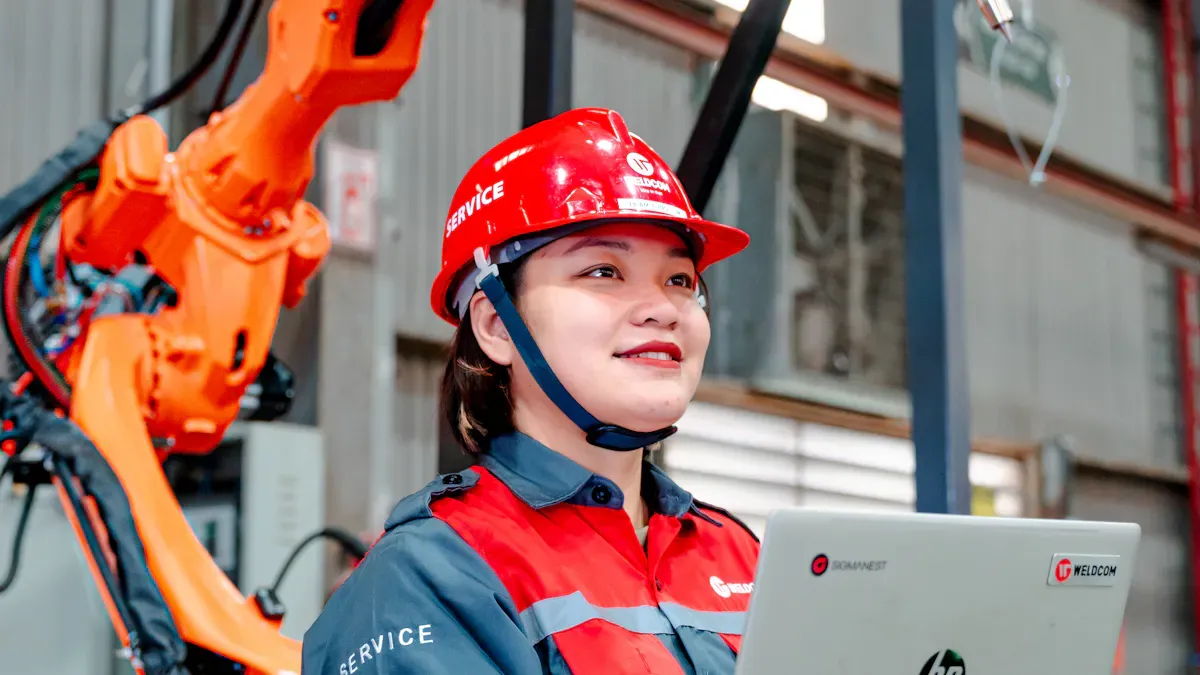
You can see the biggest impact of ai closed-loop business systems in manufacturing and robotics. These systems help you monitor machines, predict failures, and keep quality high. When you use ai, you get real-time data from sensors and control systems. This data helps you catch small problems before they become big ones.
The ai continuously collects high-resolution process data from sensors, historians, and control systems. This granularity captures subtle process fluctuations and transient events that human operators or rule-based systems miss.
Here is a table showing how companies use ai in manufacturing:
| Application Area | Example Use Case | Benefits |
|---|---|---|
| AI-driven Quality Control | AI vision systems detecting micro-defects in circuit boards at Foxconn | Improved defect detection accuracy by 35%, cut inspection time by over 60% |
| Predictive Maintenance | Siemens using AI for predictive maintenance in smart factories | Reduces operational downtime, forecasts mechanical failures before they occur |
| AI-driven Quality Control | Automotive manufacturer using AI for surface defect detection | Maintains high production standards, improves customer satisfaction, reduces waste |
You can use ai to improve quality control, manage resources, and reduce downtime. These systems also help you lower your environmental footprint by maximizing material recovery and reducing waste.
Cloud Automation
You can use ai closed-loop systems to automate cloud operations. These systems help you keep your cloud services stable and efficient. When you add ai, you can increase yield, reduce energy use, and keep your processes steady.
| Outcome | Measurement |
|---|---|
| Increase in yield | +9% |
| Enhanced process stability | Yes |
| Reduced energy consumption | Yes |
| Elimination of shift variations | Complete |
| Preservation of critical knowledge | Yes |
With ai, you do not have to worry about shift changes or losing important knowledge. The system learns and keeps improving. You can trust ai to keep your cloud running smoothly and save resources.
Supply Chain Optimization
You can use ai to make your supply chain smarter and faster. These systems help you forecast demand, manage inventory, and spot risks in real time. Most supply chain leaders say ai helps them plan better and avoid disruptions.
| Evidence Description | Source |
|---|---|
| Two-thirds of early adopters of AI in the supply chain report a significant impact in areas like supply chain planning and inventory optimization. | PwC |
| By 2026, 76% of chief supply chain officers predict improved process efficiency due to AI agents. | IBM and Oracle Survey |
| AI's strengths in pattern recognition and anomaly detection make it effective at detecting risks in real time, with three-quarters of supply chain leaders expecting high-impact disruptions to increase. | Industry Survey |
- ai enhances inventory management by improving demand forecasting and automating quality control.
- ai optimizes supply chain routing for shorter delivery times and reduced costs.
- ai enables predictive maintenance by analyzing sensor data to prevent equipment failures.
You can also use ai to support sustainability. Closed-loop supply chains help you minimize waste and conserve resources. This makes your business more responsible and ready for the future.
You can see how closed-loop business systems powered by ai help you cut downtime and improve results. Many organizations report big gains after using ai, as shown below:
| Organization | Industry | Performance Boosts |
|---|---|---|
| Siemens | Energy Management | Improved comfort by 25%, reduced energy use by over 6% |
| PepsiCo | Retail | Reduced waste by 0.15%, saved over $100,000 each year |
| AMD & Synopsys | Information Technology | Doubled designer productivity, shortened sign-off times |
You gain more than just speed. With ai, you get better decisions, faster responses, and stronger growth.
- Real-time analytics help you act quickly.
- Automation lets you adapt to market changes.
- Predictive insights keep you ready for the future.
You can trust ai to keep your business strong and ready for new challenges. Explore closed-loop ai solutions to stay ahead.
FAQ
What is a closed-loop business system?
You use a closed-loop business system to collect data, analyze it, and make automatic changes. This system uses AI to keep your operations running smoothly. You get fewer breakdowns and better results.
How does AI reduce downtime in my business?
AI watches your machines and processes in real time. It finds problems before they stop your work. You get alerts or automatic fixes. This keeps your business running and saves money.
Is my data safe with AI closed-loop systems?
You control your data with these systems. AI tools use strong security, like encryption and access controls. You can choose where your data stays and who can see it.
Which industries can use AI closed-loop systems?
| Industry | Example Use Case |
|---|---|
| Manufacturing | Predictive maintenance |
| Healthcare | Cybersecurity protection |
| Retail | Inventory optimization |
| Energy | Grid management |
You can use AI closed-loop systems in many fields. These systems help you improve quality and reduce downtime.
See Also
Understanding Technology's Role in Supply Chain Efficiency
Key Features of WarpDriven ERP for Smart Enterprise Management
Achieving Quick, Sustainable Success with Lean Logistics