
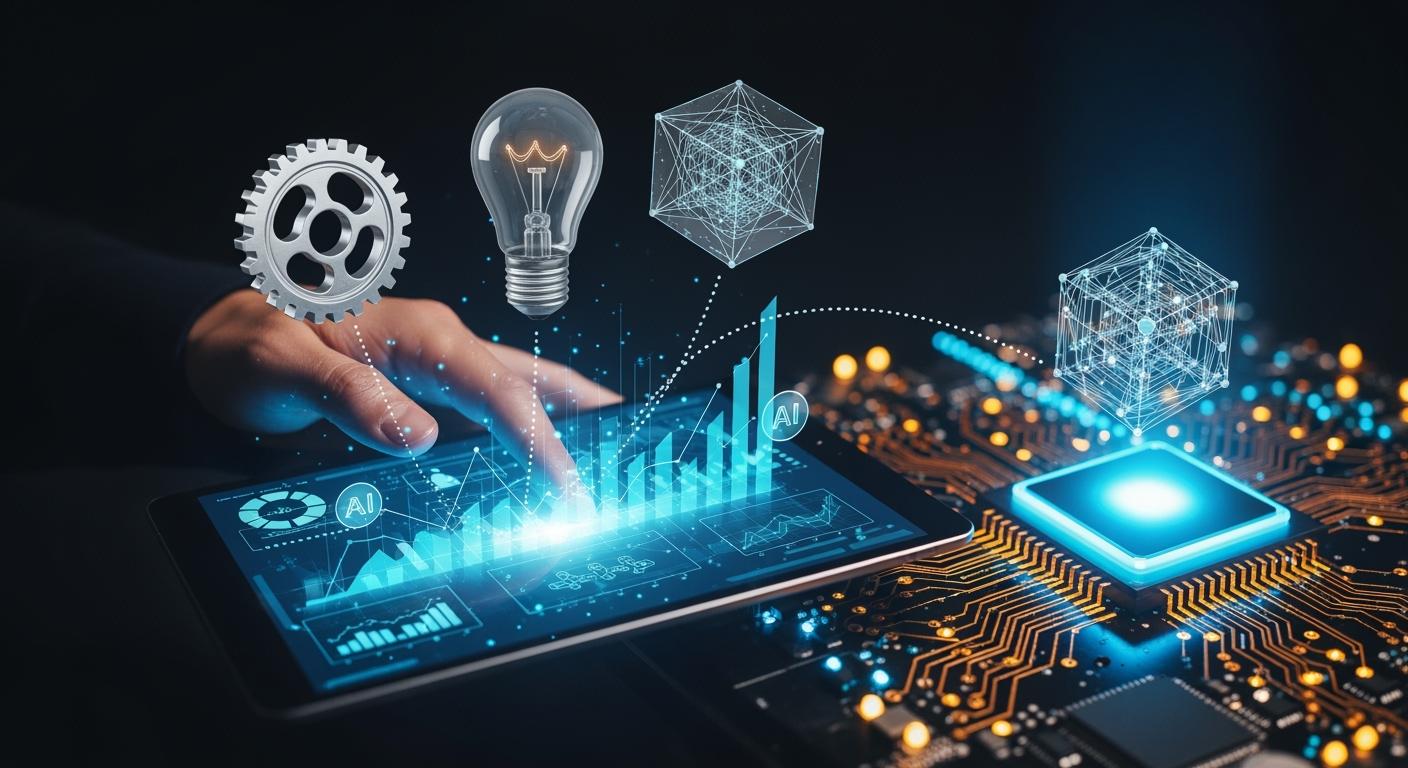
You now see ai trend forecasting transform product development. Real-time insights and predictive analytics give you the power to spot trends early and launch the right product at the perfect time. Human and ai agents work together to reduce launch risk and validate ideas against real data. This approach lets you forecast demand, plan production, and improve digital product development. With ai, you can create agile strategies, personalize campaigns, and respond fast to market shifts. The table below shows how ai impacts product development:
| Application | Description |
|---|---|
| Trend Forecasting and Early Signal Detection | Identifies emerging trends before they become mainstream, allowing brands to innovate faster and release products at peak demand. |
| Product Development Analytics That Reduce Launch Risk | Helps forecast product success and validate ideas against real-time data, minimizing costly missteps. |
| Consumer Demand Forecasting for New Products | Empowers brands to accurately forecast sales volume and product demand, aiding in effective production planning and marketing strategies. |
AI Trend Forecasting: Key Technologies

Machine Learning and Behavioral Data
You use machine learning to unlock the power of trend forecasting ai. These algorithms help you analyze huge amounts of data and spot patterns that humans might miss. You can apply regression analysis to understand what affects sales. Time-series forecasting lets you see how trends change over time. Decision trees, random forests, and neural networks help you find complex relationships in your data.
- Here are some of the most widely used machine learning methods for ai trend forecasting:
- Regression analysis
- Time-series forecasting
- Machine learning and deep learning models
- Ensemble methods
- Clustering
- Natural language processing
You collect behavioral data from many sources. Historical sales data shows what people bought before. Market research and customer feedback reveal what buyers want. Social media and online behavior give you real-time signals about demand. Economic indicators, weather data, and supply chain information also shape what people buy. Competitor analysis helps you see how others respond to trends.
You gather and analyze large amounts of consumer data, including social media, customer feedback, and market trends. Machine learning models help you identify patterns and predict future demands. You develop products that address emerging market opportunities and future consumer needs. You monitor and refine your product development process using real-time data and feedback. This approach helps you with anticipating market shifts and staying ahead of ai trends.
Real-Time Insights and Predictive Analytics
You rely on real-time forecasting to make quick decisions. AI enables real-time processing and analysis, so you can respond fast when market conditions change. Real-time data lets you see what is happening now, not just what happened before. The integration of ai and machine learning boosts predictive analytics. You use explainable AI to improve transparency and build trust in your decisions.
- Real-time forecasting is crucial for:
- Personalized marketing
- Fraud detection
- Inventory management
Predictive analytics uses ai to analyze large datasets, including sales history and real-time browsing behavior. You can forecast which products will be in demand and when. This helps you manage inventory and avoid stockouts or overstock. You move beyond instinct and base your decisions on actionable insights. Real-time learning lets you adapt quickly and anticipate market shifts. The increasing volume and complexity of data means you need advanced analytics methods. Traditional analytics often leave you behind, but ai trend forecasting helps you stay ahead.
Human-AI Collaboration
You see the best results when humans and ai work together. Human-AI collaboration gives you a dynamic partnership for innovation. AI provides real-time data-driven insights that enhance your judgment. You can anticipate trends and make proactive decisions. This shifts product development from reactive to predictive strategies.
| Collaboration Model | Description | Best Use Case |
|---|---|---|
| Human-centric | AI supports humans who retain decision authority, ideal for nuanced judgment. | High-stakes decisions requiring ethical considerations |
| AI-centric | AI leads while humans oversee, suitable when AI outperforms humans in tasks. | Tasks where machine capabilities exceed human ones |
| Symbiotic | Continuous feedback loop between humans and AI, balancing strengths of both. | Dynamic partnerships for innovation capabilities |
AI acts as a catalyst in product development. You transform your process into a data-driven ecosystem. This allows you to innovate rapidly and make informed decisions. Through effective collaboration, you use real-time data to anticipate market shifts and move from reactive to predictive strategies. AI forecasting in b2b also benefits from this approach, as teams can use trend forecasting ai to predict customer needs and respond quickly.
Tip: Combine human expertise with ai forecasting to create products that meet real customer needs and adapt to changing trends.
Impact on Product Development
Faster Product Cycles
You see ai trend forecasting speed up product development in many industries. AI tools help you move from idea to launch much faster. You can validate concepts quickly and build prototypes with less effort. AI streamlines every step, from coding to testing. You get feedback faster and adjust your product before launch. This approach lets you keep up with changing trends and consumer needs.
- Here are some real-world examples:
- Synopsys's DSO.ai tool boosts productivity by over three times and cuts power use by 25% for chip products.
- Mondelez uses an ai tool to develop recipes four to five times faster, leading to more than 70 new product SKUs.
- Early adopters of ai in product development report up to 50% shorter development cycles, 6-50% cost savings, and 30-40% higher innovation success rates.
AI-driven product cycles move faster than traditional ones. You can see the difference in the table below:
| Traditional Approach | AI-Driven Approach |
|---|---|
| Manual coding | AI-assisted coding |
| Slow testing | Automated testing |
| Guess-based decisions | Data-driven decisions |
| Linear workflow | Flexible workflow |
| Late feedback | Continuous feedback loops |
You gain accelerated time-to-market, increased efficiency, and improved customer value. AI trend forecasting helps you optimize decisions and gives you a competitive advantage. You can launch digital product development projects quickly and respond to market shifts.
Customer-Centric Design
You use ai to focus on customer expectations and consumer needs. AI trend forecasting helps you understand what customers want and when they want it. You analyze feedback, sales data, and online behavior to design products that match real needs. This approach leads to better product development and higher satisfaction.
| Impact Description | Measurable Effect |
|---|---|
| Improved demand forecasting accuracy | Significant first-mover advantages |
| Reduced overproduction and stockouts | Up to 30% improvement in efficiency |
| Accelerated design ideation | 20-30% faster design processes |
| Enhanced personalization leading to increased order value | 15-20% increase in average order value and conversion rates |
You reduce stockouts by up to 65% and decrease forecast errors by 20-50%. Your product launches become more relevant to customer needs. Coca Cola used ai to synthesize customer feedback for the Y3000 drink launch, creating a unique product that matched consumer needs and generated excitement. Global Media used an ai facilitator for rapid product ideation and testing, which led to faster launches and included diverse perspectives.
Agile Supply Chains
You improve supply chain agility with ai trend forecasting. AI models learn from data and help you predict demand changes. You adjust inventory levels quickly and avoid stockouts. You respond to market shifts and trends with flexible planning. You collaborate across the supply chain and share data for better efficiency.
- Improved accuracy in demand forecasting lets you anticipate changes.
- Reduction in inventory costs and stockouts helps you save money.
- Enhanced agility and responsiveness allow you to adapt to market shifts.
- Increased collaboration across the supply chain boosts operational efficiency.
AI separates meaningful shifts from random noise and detects anomalies early. You make real-time decisions in planning and procurement. This proactive approach reduces disruptions and improves cash flow. You align supply with real-time demand and minimize resource waste. Digital product development benefits from these improvements, making your operations smoother and more reliable.
Tip: Use ai trend forecasting to build agile supply chains that meet consumer needs and adapt to changing trends.
AI Demand Forecasting in Practice
Optimizing Supply Chains
You can use ai demand forecasting to make your supply chain smarter and more flexible. AI analyzes supply chain data and finds patterns that help you plan better. You can include market trends and weather data for more accurate forecasts. Tools like SAP Integrated Business Planning and Blue Yonder help you adapt quickly to changes. AI models detect patterns in complex datasets, which improves the accuracy and stability of your forecasts. AI-powered demand planning gives you both long-term forecasts and real-time insights.
- AI demand forecasting analyzes supply chain data to spot trends.
- It uses current factors like market trends and weather for better accuracy.
- Tools such as SAP Integrated Business Planning and Blue Yonder help you respond fast.
- AI models improve forecast stability by finding hidden patterns.
- AI-powered demand planning provides real-time and long-term insights.
You can use intelligent demand planning to automate inventory management. AI for demand forecasting lets you adjust stock levels based on real-time demand. You can monitor sales data and market conditions to keep inventory at the right level. Automation frees your team to focus on strategic planning. AI-driven logistics optimization helps you choose the best shipping routes by looking at traffic and weather. This reduces costs and improves delivery speed.
Reducing Waste and Improving Accuracy
AI demand forecasting helps you reduce waste and improve accuracy in your operations. You can simulate different stocking scenarios and adjust to market changes in real time. This leads to better inventory decisions. Many companies see a 20–50% improvement in forecast accuracy soon after using ai-based demand forecasting. You can lower costs by reducing stockouts and overstocks. This also helps you avoid overproduction, which cuts down on waste, energy use, and emergency shipping.
| Metric | Improvement |
|---|---|
| Forecast Accuracy | 20–50% better within months |
| Stockouts and Overstocks | Lower costs and better satisfaction |
| Waste Reduction | Critical for perishables |
| Response Time to Market Changes | Adjust in days, not weeks |
AI for demand forecasting lets you plan ahead and use resources wisely. AI-based demand forecasting helps you align your teams and build confidence in your business decisions. You can use collaborative forecasting to bring together data from different departments. This makes your product development process more efficient and reduces waste.
Real-World Use Cases
You can see the power of ai demand forecasting in real-world product development. Companies use ai-based demand forecasting to predict demand for both new and existing products. AI analyzes seasonal trends, weather, and consumer preferences to predict demand changes. This helps you avoid overproduction and reduce waste.
| Use Case | Description |
|---|---|
| Product Demand Forecasting | AI tools predict demand for existing and new products, providing insights into future sales and return volumes. |
| Seasonal Analysis | AI analyzes seasonal trends influenced by weather and consumer preferences to predict demand fluctuations. |
| Waste Reduction | Anticipating demand changes helps manufacturers avoid excess production and reduce waste. |
Unilever connected weather data to ice cream demand forecasting and saw a 30% sales increase in key markets. Danone improved forecast accuracy to over 90% with ai demand forecasting, which led to cost savings and higher customer satisfaction. H&M used ai for demand forecasting to reduce stock-outs and overstock, boosting both customer satisfaction and profits. These examples show how ai-powered demand planning and intelligent demand planning can transform your product development and supply chain operations.
Challenges and Considerations in AI Trends
Data Privacy and Security
You rely on ai to analyze large datasets in product development. This raises important privacy and security concerns. You must ensure consent and transparency when collecting data. Sensitive information increases the risk of data breaches. Privacy safeguards are necessary to comply with new regulations. You can address these challenges by following structured steps:
- Adopt evaluation frameworks to check ai systems against benchmarks.
- Document all ai development and deployment activities.
- Set up cross-functional reviews with privacy, security, and compliance experts.
- Monitor system performance continuously in production.
You should also minimize data collection, limit its use to intended purposes, and get explicit consent. People must have rights to access, correct, or erase their data. These steps help you protect privacy and build trust in your ai-powered product development.
Bias and Transparency
You face bias and transparency issues when using ai in product development. Many people distrust ai explanations. Some explanations are incorrect or irrelevant. You must educate your team about bias risks and create a common language to discuss them. Keep humans involved in model development. Use both process and technology to reduce bias.
Zachary Lipton, a machine learning researcher, says, "Everyone who is serious in the field knows that most of today’s explainable A.I. is nonsense."
You can use fairness-aware machine learning, fairness constraints, and audits to check for bias. The table below shows common strategies:
| Strategy | Description |
|---|---|
| Fairness-Aware Machine Learning | Algorithms consider fairness when making predictions. |
| Fairness Constraints | Apply fairness rules during model training to reduce bias. |
| Fairness Audits | Evaluate ai systems to find and fix sources of bias. |
You should also follow ethical guidelines, protect privacy, and promote transparency. Human oversight is crucial. You must align ai systems with societal values and keep humans in the loop.
Integration with Existing Systems
You may struggle to integrate ai trend forecasting into your current product development systems. Many organizations use rigid legacy infrastructure. Seamless interaction with ERP systems and data warehouses is difficult. High initial costs for software, hardware, and skilled personnel can be a barrier. Small and medium-sized enterprises may find it hard to justify these costs.
You must comply with data protection regulations and address ethical concerns. Risks include ai models repeating biases found in training data. You can overcome these barriers by making small adjustments instead of overhauling everything. Define clear objectives for ai integration. Improve data quality and involve employees in the process. Introduce governance early. Evaluate ai using a people-process-technology framework. This helps you focus on skills, workflow design, and technology.
You need to unlearn old practices and embrace new methods for transforming enterprise productivity. Address fragmented data and legacy systems. Build ai literacy and overcome resistance to change. These steps support roi-focused ai initiatives and help you unlock the full potential of ai in product development.
Opportunities and Next Steps
Personalization and Innovation
You can unlock new levels of personalization and innovation with ai trend forecasting. When you use ai, you can analyze customer feedback and market data to create products that stand out. For example, Coca Cola used ai to launch the Y3000 drink, which matched customer preferences and created excitement. Global Media used ai to speed up product ideation and include more voices in the development process. The table below shows how companies use ai for digital product development and innovation:
| Company | AI Application | Outcome |
|---|---|---|
| Coca Cola | Used AI to synthesize customer feedback for the ‘Y3000’ drink launch. | Created a unique product that engaged customers and generated buzz through innovative marketing. |
| Global Media | Implemented an AI facilitator for rapid product ideation and testing. | Accelerated product launches and included diverse perspectives in the development process. |
You can also see results at H&M, where ai improved demand forecasting and planning. This led to fewer stock-outs and higher profits. Accenture saw better forecast accuracy and saved millions. These examples show how ai-driven innovation gives you a competitive edge in product development.
Building AI-Ready Teams
You need strong teams to get the most from ai in product development. Start by finding gaps in your current process. Set clear goals for what you want to achieve with ai. Choose the right tools for your business and make sure your data is ready. Train your team to use ai and keep humans involved in every step. The steps below can help you build an ai-ready team:
- Identify your sales forecasting gaps.
- Set improvement goals.
- Choose the right ai tools.
- Provide access to quality data.
- Define performance criteria.
- Train, test, and deploy models.
- Keep humans in the loop.
- Build trust with training and communication.
- Monitor and improve your process.
When you follow these steps, you prepare your team for digital product development and keep your competitive edge.
Continuous Learning and Adaptation
You must keep learning and adapting to stay ahead in product development. Ai lets you analyze data in real time and adjust your forecasts quickly. You should combine ai with human expertise for the best results. Update your models often and set clear goals for your team. Good communication between data and product teams helps you share insights fast. Align your strategies so everyone works toward the same goal. This approach supports ongoing digital product development and helps you respond to market changes.
Tip: Make continuous learning part of your culture to keep your competitive edge and drive innovation.
You now see AI as a driving force in product development. You use machine learning to spot problems early and improve quality. Many leaders feel pressure to show results from AI projects. You build flexible systems that grow with your needs. Cybersecurity becomes more important as AI evolves. Companies use digital twins to test and protect their products. To stay ahead, you must adapt quickly and keep learning.
- AI transforms how you build and test products.
- Early detection and flexible systems give you an edge.
- Security and ongoing learning help you lead the market.
FAQ
What is AI trend forecasting in product development?
AI trend forecasting uses machine learning to predict what products customers will want. You can use it to spot new trends, plan better, and make smarter decisions.
How does AI help you reduce product launch risks?
AI analyzes data from many sources. You get early warnings about market changes. This helps you test ideas and avoid costly mistakes.
Can small businesses use AI trend forecasting?
Yes, you can use cloud-based AI tools. Many platforms offer easy setups and affordable plans. You do not need a big team or budget.
What skills do you need to start with AI trend forecasting?
You need basic data skills and curiosity. Start by learning how to collect and read data. Many tools offer guides and support for beginners.
See Also
Utilizing AI and Data for Demand Forecasting in 2025
Smart AI Solutions for Your Upcoming Shopping Forecasts
The Role of AI in Managing Fast Fashion Trends
Best Practices for Accurate Production Forecasting Using AI in 2024
Machine Learning's Impact on Fashion Trend Prediction and Sales