
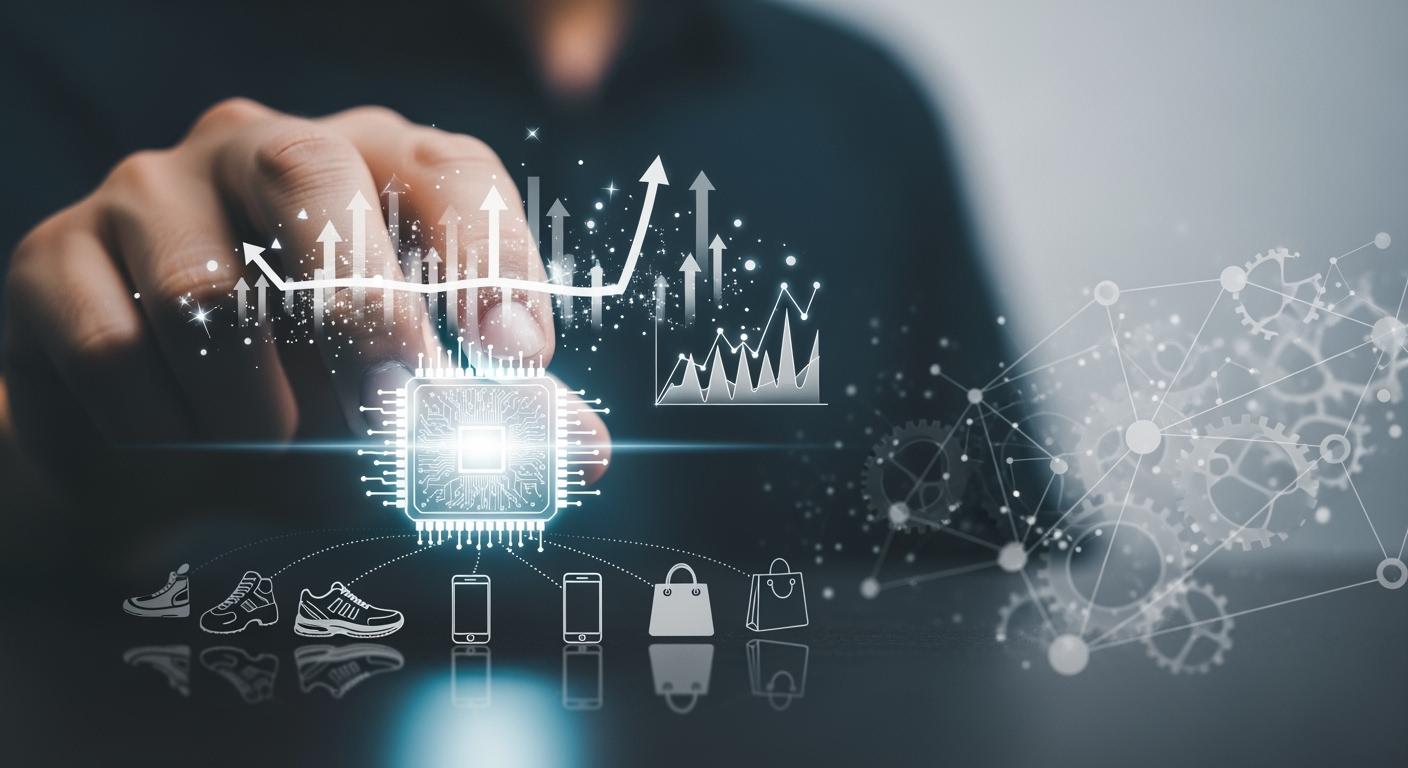
AI trend forecasting changes how you make decisions about products. You move away from slow traditional methods and choose ai-driven solutions that give you speed and accuracy. You see practical results in market responsiveness, product innovation, and actionable insights. Businesses need smarter ways to develop products. When you use ai, you get better accuracy rates—over 80% compared to 60% with old models. The financial forecasting market grows fast, showing how ai helps companies succeed.
- The financial forecasting market is projected to grow from USD 6.8 billion in 2020 to USD 13.8 billion by 2025, reflecting a Compound Annual Growth Rate (CAGR) of 12.6%.
- Traditional forecasting models have an accuracy rate of about 60%.
- AI-powered models achieve accuracy rates exceeding 80%.
AI Trend Forecasting Impact

Data-Driven Decisions
You can make smarter choices when you use trend forecasting powered by ai. This approach lets you look at huge amounts of data, so you do not miss important patterns. You can estimate demand for products and adjust your strategy before the market changes. When you analyze customer engagement, you can predict who might stop buying and find ways to keep them. Ai trends help you spot new styles and shifts in demand that people might overlook.
- Ai trend forecasting helps you:
- Estimate product demand and forecast sales.
- Spot market shifts early and adjust your plans.
- Analyze customer engagement to predict churn and improve retention.
- Find patterns in data that human analysts might miss.
- Make informed decisions about new product launches, pricing, and resource allocation.
You can see the results of your decisions by tracking key metrics. The table below shows some ways you can measure how well your trend forecasting works:
| Metric | Description |
|---|---|
| Weighted average percentage error (WAPE) | Measures forecast error weighted by sales volume, showing accuracy in actual units. |
| Mean absolute error (MAE) | Gives the average size of forecast error, making it easy to see how close your predictions are. |
| Inventory turnover | Shows how quickly you sell your inventory, which means better performance if the number is high. |
| Stockout rate | Tells you how often you run out of stock, which can mean lost sales. |
| Sell through rate | Shows how much inventory you sell over a period, helping you manage the product lifecycle. |
| Forecast bias | Reveals if your model often over or under predicts, so you can fix problems. |
Faster Market Response
When you use ai for trend forecasting, you can react to changes in the market much faster. Real-time data lets you adjust your strategy right away. You do not have to wait for old reports or slow market research. Ai trends help you launch products at the best time and keep up with what customers want.
Tip: Fast response to market changes can give you a big advantage over your competitors.
Here are some real-world examples of companies using ai trend forecasting to speed up their market response:
| Case Study | Description |
|---|---|
| Spate x Shy Bird | Uses ai data to create menus based on what customers want. |
| Spate x YUZUCO | Finds new growth chances for yuzu using ai insights. |
| Spate x Organic Valley | Builds digital media campaigns quickly by following trends. |
| Spate x Sakara | Uses TikTok insights to predict trends and fuel product innovation. |
| Spate x Reckitt | Guides trend forecasting for fragrances and flavors with ai. |
| Spate x Givaudan | Tracks fast-moving beauty and fragrance trends using timely data. |
You can also see how companies like Shein use ai to spot new trends in real time. They change their production right away to match demand. Many top marketers say their edge comes from turning data into creative ideas quickly.
Proactive Planning
Ai trend forecasting lets you plan ahead instead of just reacting to what already happened. You can use both past data and outside signals to predict what will happen next. This means you can lower your risk and make better choices for your business.
| Dimension | Traditional Forecasting | AI Predictive Analytics |
|---|---|---|
| Data Use | Historical only | Historical + external signals |
| Accuracy | Prone to bias/errors | Continuously improves with data |
| Responsiveness | Reactive | Proactive, real-time updates |
| Scalability | Limited by manual effort | Handles large SKU volumes easily |
| Business Impact | Higher risk, inefficiency | Lower risk, growth-ready decisions |
Ai trend forecasting helps you improve your planning by giving you real-time updates and better accuracy. You can see this in companies like H&M, which improved demand forecasting and reduced stock-outs. Accenture also saw a 6-8 point jump in forecast accuracy, leading to big savings and better efficiency.
Note: When you use ai for trend forecasting, you can spot demand changes early, avoid running out of stock, and keep your customers happy.
AI Trend Forecasting in Product Development
Understanding Customer Needs
You want to create products that people love. To do this, you need to understand what your customers want and how they behave. AI helps you collect and analyze feedback from many sources. You can use digital product development tools to track what customers say online, what they buy, and how they use your products. This gives you a clear picture of their needs.
AI trend forecasting lets you see patterns in consumer behavior that you might miss on your own. For example, Coca Cola used AI to study customer feedback before launching the Y3000 drink. This helped them design a unique product that created excitement in the market. Global Media used an AI facilitator to speed up product ideation and testing. They launched new products faster and included more ideas from different people.
You can use AI to make better product recommendations. When you know what your customers like, you can suggest products that fit their needs. This makes your digital product development process more effective. You can also use AI to test new ideas quickly. You do not have to guess what will work. You can use data to guide your choices.
Tip: Use AI to listen to your customers. This helps you build trust and create products that solve real problems.
You can measure how well you understand your customers by looking at campaign metrics, user engagement, and forecast accuracy. These numbers show if your product development process is working.
Anticipating Market Shifts
Markets change fast. You need to stay ahead if you want to succeed in digital product development. AI helps you spot new trends before your competitors do. You can use AI to look at real-time data from many sources. This makes your predictions more accurate.
Machine learning finds patterns in consumer behavior. It helps you see what people want now and what they might want next. AI updates its predictions as new data comes in. You do not have to wait for old reports. You can act right away.
You can move from reactive to proactive product development. Instead of waiting for problems, you can plan for the future. This helps you avoid mistakes and make smarter choices. You can use AI to improve your product recommendations and adjust your strategy as the market changes.
Here is how you can measure the effectiveness of AI in predicting market trends:
| Methodology | Description |
|---|---|
| Performance Monitoring | You can track how well AI works over time. This helps you fix problems early and keep good results. |
| Competitive Analysis | AI gives you insights into your market position and what your competitors are doing in real time. |
| Consumer Behavior Tracking | You can see how often people mention your products and what they feel about them. |
You can also follow these steps to make sure your AI works well in product development:
- Define SMART goals for your product development process.
- Set a baseline to see how you are doing now.
- Monitor the right metrics all the time.
Note: When you use AI in digital product development, you can respond to market changes quickly. You can also create better products and improve your product development process.
AI trend forecasting changes how you approach product innovation. You can use data to guide every step of your product development process. This helps you build products that meet real needs and stay ahead in the market.
AI Demand Forecasting Benefits
Improved Accuracy
You can boost your business performance with ai demand forecasting. When you use ai for demand forecasting, you see a 20–30% improvement in forecast accuracy. This means you make better decisions and avoid costly mistakes. Ai-based demand forecasting helps you reduce errors by 20–50%. You experience fewer stockouts and less overstocking. These changes lead to higher sales and happier customers.
| Improvement Type | Impact on Business Performance |
|---|---|
| Forecast Accuracy Boost | 20–30% improvement in accuracy with AI forecasting |
| Reduction in Forecast Errors | 20–50% reduction in errors leading to fewer stockouts and overstocking |
You can track key metrics like inventory turnover and stockout rate. These numbers show how well you manage your products and meet customer needs.
- Inventory Turnover: Shows how efficiently you move products.
- Stockout Rate: Measures lost sales when items run out.
Inventory Optimization
Ai demand forecasting helps you keep the right amount of stock. You use ai-powered demand forecasting tools to predict demand trends and adjust inventory levels. This leads to inventory optimization through ai forecasts. You avoid tying up money in extra stock and prevent running out of popular items. Companies using ai for demand forecasting see a 20-35% drop in carrying costs and a 15-25% savings in warehousing expenses.
| Category | Evidence Description | Percentage/Value |
|---|---|---|
| Direct Cost Savings | Inventory carrying cost reduction | 20-35% decrease |
| Warehousing expense reduction | 15-25% savings | |
| Obsolescence prevention | 30-40% reduction | |
| Emergency procurement elimination | 50-70% reduction | |
| Revenue Protection | Stockout reduction | 35% decrease |
| Service level improvement | 34% better availability | |
| Revenue capture | 5-10% sales increase |
You also see faster inventory turns and better cash flow. Ai-based demand forecasting supports product innovation by making sure you have what customers want.
Agile Supply Chains
You need agile supply chains to stay ahead in today’s market. Ai demand forecasting gives you real-time demand signals. You can respond quickly to changes and avoid costly delays. Ai for demand forecasting helps you build a solid data foundation and train models that spot true demand shifts. You can tag and analyze data to understand what drives demand.
Tip: Use intelligent demand planning to improve collaboration and focus on strategic decisions.
Companies that use ai-powered demand forecasting tools see better service levels and lower costs. You can measure success by tracking forecast accuracy, inventory turns, OTIF, and labor productivity. Intelligent demand planning helps you adapt to new trends and keep your supply chain strong. Ai demand planning in the healthcare sector also shows how fast response saves lives and resources. Demand forecasting in retail uses ai to keep shelves stocked and customers happy.
How AI Powers Demand Forecasting
Data Sources
You need strong data to make accurate forecasts. AI uses many types of information to predict demand. You can collect data from historical sales, sales pipelines, and consumer behavior. You also look at demographics, competitor activity, and seasonal trends. Weather events, holiday schedules, and economic conditions play a big role. Real-time data analysis helps you track website traffic and social media engagement. When you use diverse data sources, you improve your forecast accuracy.
- Common data sources for AI demand forecasting:
- Historical sales data
- Sales pipelines
- Consumer behavior
- Demographics
- Competitor activity
- Seasonal and market trends
- Weather events
- Holiday schedules
- Economic conditions
- Real-time data on website traffic
- Social media engagement
The quality and variety of your data matter. High-quality data gives you better results. Poor or limited data can lead to mistakes. You want to use many types of data, like sales, marketing, and weather, to help your AI model learn more.
| Aspect of Data Quality | Impact on AI Forecasting Accuracy |
|---|---|
| High-Quality Data | Enables accurate forecasts by providing comprehensive demand patterns |
| Poor Quality Data | Leads to inaccuracies and unreliable predictions |
| Insufficient Data | Can produce AI 'hallucinations' that reduce forecast value |
Machine Learning Models
AI uses advanced machine learning models to find patterns in your data. You can use models like ARIMA, ETS, STL, and regression models. These models help you understand trends, seasonality, and other factors that affect demand.
| Technique | Description | Use Case |
|---|---|---|
| ARIMA | Handles time series data with autoregressive and moving average components. | Website traffic forecasting over the next 3 months. |
| ETS | Decomposes time series into error, trend, and seasonality components. | Sales forecasting for a retail store. |
| STL | Decomposes time series into seasonal, trend, and residual components using LOESS. | Sales forecasting in a region with seasonal variations. |
| Regression Model | Estimates relationships between dependent and independent variables. | Marketing ROI analysis to identify effective strategies. |
You can also use neural networks and deep learning for complex problems. These models work well when you have little historical data, like during a new product launch. AI learns from your data and gets better over time.
Real-Time Analytics
Real-time analytics lets you see what is happening right now. You can use real-time data analysis to sense demand changes by the hour or minute. This helps you adjust your inventory and supply chain plans quickly. You can monitor sales and consumer behavior as they happen. If a marketing campaign does not work, you can change it right away.
Tip: Real-time analytics helps you react fast to market changes and customer feedback.
A global company used real-time analytics during a major sporting event. They adjusted inventory in real time and avoided stockouts. You can use real-time data analysis to give customers a better experience and boost sales. AI makes it possible to process large amounts of data instantly, so you always stay ahead.
Integrating AI into Product Workflows
Implementation Best Practices
You can set your product team up for success by following best practices when you add ai to your workflow. Start by defining your purpose and scope. Stay curious and open-minded as you explore new solutions. Encourage creativity and innovation in your team. Make sure your actions are strategic and lead to real results. Work together and communicate clearly. Involve all stakeholders in the process and share your findings with everyone.
- Define your purpose and scope
- Stay curious and open-minded
- Encourage creativity and innovation
- Take strategic and actionable steps
- Collaborate and communicate
- Involve stakeholders
- Share your findings
You should also measure the success of ai integration. Use key performance indicators to track your progress:
| KPI Type | Description |
|---|---|
| Operational Efficiency | Measures improvements in process times, error rates, and automation levels due to AI. |
| Customer Satisfaction | Assesses response times, service quality, and customer retention rates influenced by AI tools. |
| Revenue Growth | Tracks new leads generated, upsell rates, and sales contributions directly linked to AI. |
Overcoming Challenges
You may face challenges when you bring ai into your product workflows. Some common issues include unclear strategies, resistance to change, and unrealistic expectations. Data silos and ethical concerns can also slow you down.
| Challenge Type | Description |
|---|---|
| Lack of Clear AI Strategy | Companies often lack a well-defined strategy for AI, leading to isolated projects that do not align with business goals. |
| Resistance to Change | Employees may resist changes brought by AI, fearing job loss or devaluation of their roles. Clear communication and involvement in the process are essential to overcome this. |
| Unrealistic Expectations from Management | Management may have inflated expectations about AI's capabilities, leading to pressure for quick results and potential disappointment when projects do not meet these expectations. |
| Data Silos and Interdepartmental Issues | Many organizations face challenges with data silos, which hinder collaboration and data sharing necessary for successful AI implementation. |
| Ethical and Regulatory Considerations | Companies must navigate ethical issues and regulatory compliance, which can be complex and resource-intensive, potentially leading to legal risks and reputational damage if not addressed properly. |
To overcome these obstacles, you should develop a clear strategy, align ai projects with your business goals, and choose tools that fit your needs. Build a skilled team and track your results to improve over time.
Team Alignment
You need strong team alignment for ai to work well in your product workflows. Start by understanding your current processes and finding areas for improvement. Prioritize where ai fits best with your company’s goals. Select the right tools and build a team with both technical and product knowledge. Measure the return on investment to see what works and refine your approach.
Tip: When everyone works together and shares information, you can use ai to make better decisions and create products that customers love.
Getting Started with AI Trend Forecasting
Tool Selection
You need the right tools to start with ai trend forecasting. Look for platforms that fit your business size and goals. Some tools offer easy dashboards. Others give you deep data analysis. Make sure the tool connects with your current systems. Check if it can handle real-time data. You want a tool that grows with your needs. Ask for demos before you decide. Read reviews from other users. Compare features, costs, and support options.
Tip: Choose a tool that lets you test on a small scale before you invest more.
Here are some things to check when you pick an ai tool:
- Data integration options
- User-friendly interface
- Customization features
- Security standards
Building the Right Team
You need a strong team for ai success. Start with people who know your products and your customers. Add data analysts who can work with numbers. Bring in ai specialists who understand machine learning. Make sure everyone can talk and share ideas. You want a team that learns fast and adapts to change.
A good team for roi-focused ai initiatives often includes:
| Role | Main Skill |
|---|---|
| Product Manager | Business understanding |
| Data Analyst | Data interpretation |
| AI Engineer | Model building |
| IT Specialist | System integration |
Note: Teamwork helps you solve problems and reach your goals faster.
Measuring ROI
You must track results to see if your ai project works. Set clear goals before you start. Use numbers to measure success. Look at sales growth, cost savings, and customer feedback. For roi-focused ai initiatives, compare the money you spend with the value you gain. Review your results often. Change your plan if you do not see progress.
Here are some ways to measure ROI:
- Track forecast accuracy
- Monitor inventory levels
- Check customer satisfaction scores
Remember: Measuring ROI helps you make better choices for future projects.
Real-World Applications
Success Stories
You can see the power of ai trend forecasting in many real-world examples. Companies have used ai to boost their product strategies and reach new goals. Here are some results you might find inspiring:
- Businesses saw revenue growth after using ai-powered personalization. Customers bought more and stayed loyal.
- Forecastio’s platform helped teams improve sales forecasting accuracy by up to 95%. This meant fewer surprises and better planning.
- Sales qualified leads increased by 20%. Teams found it easier to focus on the right customers.
- Companies noticed a 30% drop in churn rate. More customers returned and kept using their products.
- Customer satisfaction reached 90% for those who interacted with the ai platform. Happy customers often share their good experiences.
You can use these examples to guide your own ai journey. When you use ai in your product strategy, you can see real changes in sales, planning, and customer loyalty.
Lessons Learned
You can learn a lot from both wins and challenges with ai trend forecasting. Some organizations made mistakes by focusing only on technology. For example, DiagnosAI failed because they ignored important things like involving stakeholders and following rules. You should remember that success with ai needs more than just good tools.
- You need to think about people, processes, and company culture, not just technology.
- Involve end-users and experts early. Their ideas help you build better ai solutions.
- Be ready to change how you work. Even the best ai tools will not help if your team does not adapt.
Tip: When you plan for ai, look at the big picture. Make sure everyone is ready to learn and grow with new workflows.
You can avoid common mistakes by taking a balanced approach. This helps you get the most value from ai in your product strategy.
You have seen how ai trend forecasting changes product strategies. You gain faster insights, better accuracy, and stronger market positions with ai. You can use ai to improve your planning, boost customer satisfaction, and drive growth. Start exploring ai tools and build your team’s skills. When you use ai, you prepare for a future where smart product development leads the way.
FAQ
What is AI trend forecasting?
AI trend forecasting uses machine learning to analyze data and predict future trends. You can use it to spot changes in customer behavior, market demand, and product popularity.
How does AI improve product strategy?
You get faster insights and more accurate predictions with AI. This helps you launch products at the right time and meet customer needs better.
Can small businesses use AI trend forecasting?
Yes! Many AI tools work for small businesses. You can start with simple platforms that fit your budget and grow as your needs change.
What data do I need for AI trend forecasting?
You need sales data, customer feedback, and market trends. You can also use social media activity and website traffic. More data helps AI make better predictions.
Tip: Start with the data you have. Add more sources as your AI system grows.
See Also
Using Machine Learning To Forecast Fashion Trends And Increase Sales
Maximizing Production Forecasting Accuracy With AI Strategies For 2024
AI's Role In Managing Viral Trends Within Fast Fashion
Predicting Demand With AI For Your Upcoming Shopping Experience
Achieve Precise Fashion Predictions Using Sales Data Insights