

You see a dramatic boost in efficiency when you use Closed-Loop Business Systems. These systems give you control over your data and keep your information private. They use real-time monitoring and continuous feedback to spot problems early and adjust tasks on the fly. With predictive analytics, you can make better decisions and avoid costly mistakes. You also benefit from intelligent task distribution, resource optimization, and predictive maintenance, all of which help your business run smoothly.
Closed-Loop Business Systems Explained
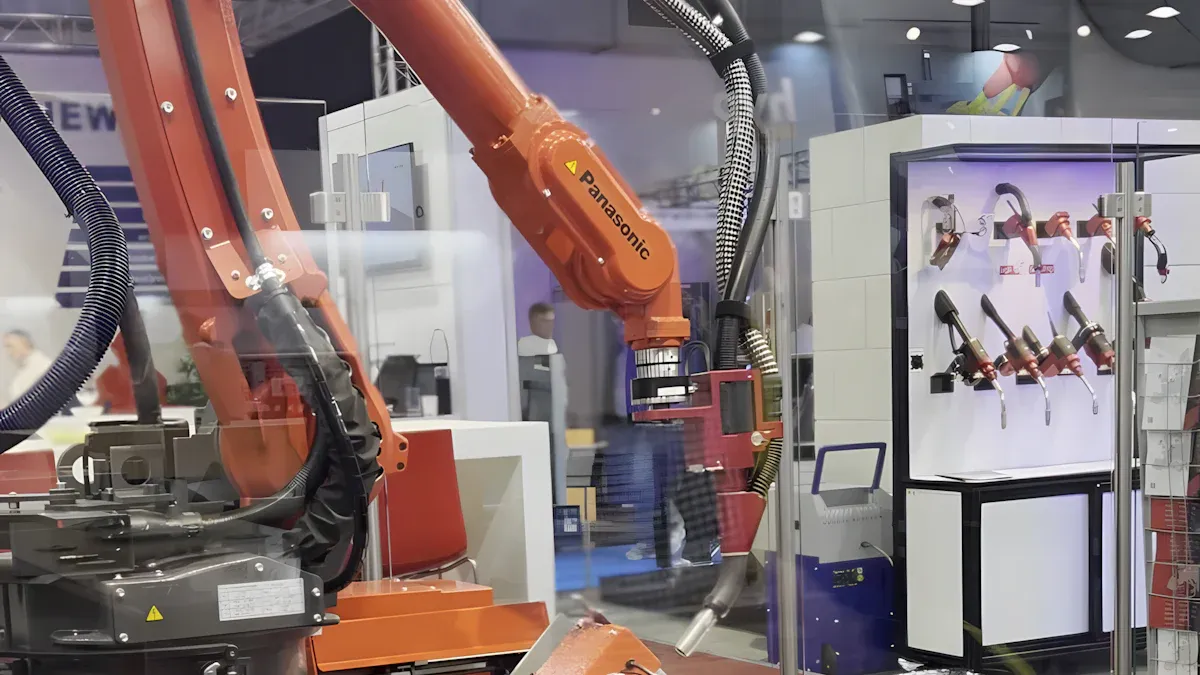
Core Features and Data Control
You can think of Closed-Loop Business Systems as smart networks that use feedback to improve every step of your business. These systems help you manage resources, reduce waste, and keep your data safe. Many experts describe closed-loop models as part of a sustainable approach. They focus on better production and consumption to address environmental and social challenges. You see these systems in supply chains that use reverse logistics and in business models that care about the environment.
“Verification regimes work best when they serve everyone’s interests. The reporting company wants a process that does not impose too many burdens or interrupt workflow while allowing it to demonstrate compliance. Oversight bodies want hard data that is difficult to fake and indicates adherence to the regime. Finally, these systems need to be simple enough to be sustained over time.”
You gain strong data privacy and sovereignty with these systems. Over 80% of IT leaders say data sovereignty is a main reason for choosing new cloud setups. You can use zero-trust data gating, in-region keys, and audit trails to control and protect your information.
Here is a table that shows how these systems help you keep control:
| Feature | Description |
|---|---|
| Stability | Keeps output steady, even when things change, using feedback. |
| Automation | Runs with little human help, perfect for automated tasks. |
| Efficiency | Watches and adjusts output to cut waste and save resources. |
| Adaptability | Changes with new conditions, so you stay ready for anything. |
| Self-regulation | Works on its own, reaching goals with less effort from you. |
Differences from Traditional Systems
You will notice some clear differences between Closed-Loop Business Systems and traditional systems.
- Closed-loop systems work inside a set network, like a university or a transit system.
- Traditional systems (open-loop) let you do business with many merchants, but you lose some control.
- Closed-loop systems process transactions faster and give you better control with feedback.
- You get cost savings, customer loyalty, and more control over your data.
- Traditional systems often have third-party fees and less data control.
You also see better performance with closed-loop models. For example, in manufacturing, these systems use real-time feedback to spot errors early and fix them fast. You get improved quality control, better resource management, and less downtime. Insights from feedback loops help you innovate faster and keep your business ahead.
Key Drivers of Efficiency
Real-Time Data and Feedback
You gain a major advantage when you use real-time data and feedback in your business. These tools help you spot problems early and fix them before they grow. You can monitor your operations every second, which means you do not have to wait for reports or reviews. This approach leads to better quality, less waste, and happier customers.
Here is a table that shows how real-time data and feedback improve your business:
| Benefit | Description |
|---|---|
| Improved Quality Control | Continuous monitoring helps you find defects early, which reduces waste and keeps customers happy. |
| Enhanced Resource Management | Feedback loops help you use materials wisely, so you waste less and get more from your resources. |
| Reduced Downtime | Predictive analytics warn you about equipment problems, so you can fix them before they stop work. |
| Faster Innovation Cycles | Insights from feedback help you design better products and get them to market faster. |
You can see these benefits in action every day:
- Real-time monitoring lets you catch mistakes in production right away.
- Quick action keeps small issues from becoming big problems.
- You can use both past data and live updates to make smart choices.
A closed-loop customer feedback system makes sure you use all the data you collect. You can respond to customer concerns quickly and spot trends that help you improve your business.
Many technologies make these feedback loops possible. You can use AI-powered tools to collect data from many sources and bring it together. Natural language processing helps you understand customer opinions. Machine learning finds patterns and spots problems. Automated rules let you take action right away, and self-learning systems keep getting better over time.
Tip: When you set up real-time feedback, you create a system that learns and improves every day. This helps you stay ahead of problems and keep your business running smoothly.
Automated Process Optimization
You can make your business much more efficient with automated process optimization. AI helps you find slow steps and fix them. You can automate tasks that take a lot of time, so your team can focus on creative and important work.
Industry experts have found that these drivers boost efficiency the most:
| Driver | Description |
|---|---|
| Automation | AI handles repetitive tasks, so your team can work on strategy and new ideas. |
| Predictive Maintenance | AI checks equipment and warns you before something breaks, which reduces downtime. |
| Demand Forecasting | AI looks at big data sets and market trends to predict what you will need in the future. |
| Process Optimization | AI finds weak spots in your process and helps you copy what works best. |
You can see the results in many industries. For example, mining companies report big gains from automated process optimization. Manufacturing, chemicals, and oil & gas also see strong improvements.
| Industry | Reported Gains from Automated Process Optimization |
|---|---|
| Mining | Significant gains through Closed-Loop AI |
| Manufacturing | Mentioned, but specific gains not detailed |
| Chemicals | Mentioned, but specific gains not detailed |
| Oil & Gas | Mentioned, but specific gains not detailed |
You can measure the impact with numbers. Small and medium businesses that use AI for workflow analysis see a 30% jump in productivity. Automation tools can cut manual work time in half. Many companies save money by using automation in their daily operations.
| Evidence Type | Description |
|---|---|
| Workflow Analysis | SMBs using AI for workflow analysis report a 30% increase in productivity metrics. |
| Time Savings | Automation tools have led to reductions in manual processing time by up to 50%. |
| Cost Efficiency | Implementing automation strategies can yield tangible cost reductions across various operations. |
You can also look at the big picture. Studies show that organizations using AI closed-loop business systems see much better results than those using old methods. Here is a chart that shows how much companies improve after using these systems:
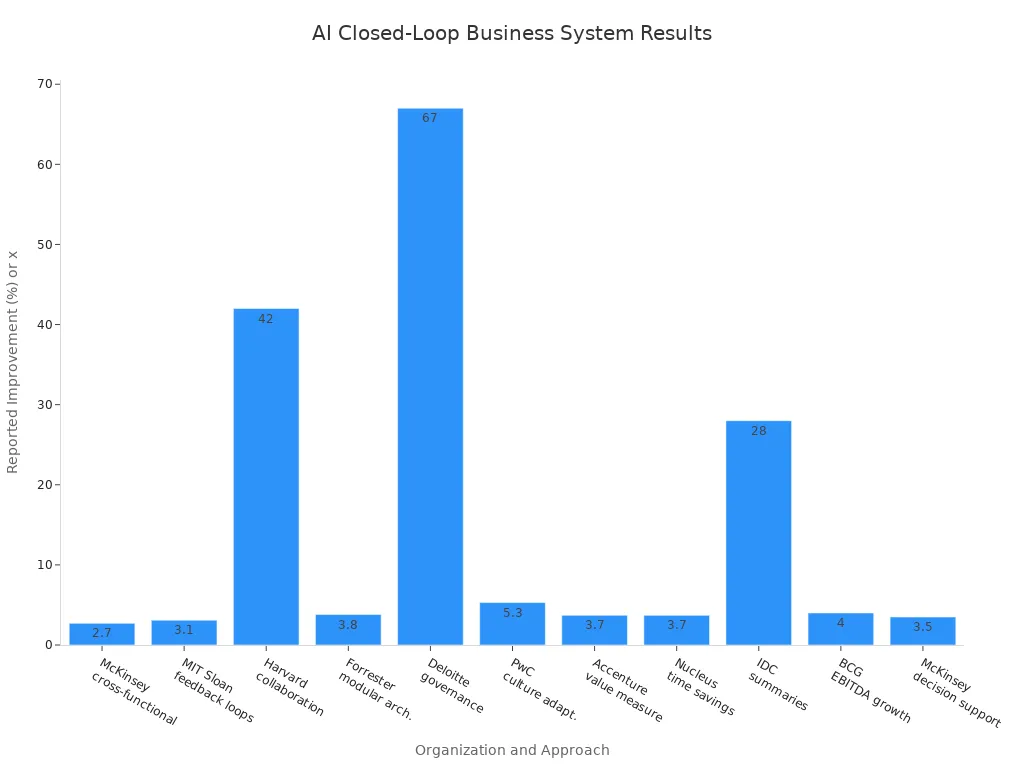
You can see that teams working together with AI are more successful. Feedback loops make AI systems perform over three times better than static systems. Human-AI teams make decisions with 42% more accuracy. Companies with strong AI rules have fewer security problems. On average, users save almost four hours a week. Businesses also see higher profits and better decision quality.
Closed-Loop Business Systems give you the tools to automate, learn, and improve every day. You can use real-time data, feedback, and automation to make your business faster, smarter, and more efficient.
Business Benefits
Faster Decisions and Fewer Errors
You can make decisions much faster when you use AI-powered systems. These tools handle routine tasks and give you real-time data. You do not have to wait for reports or manual checks. The system learns from each outcome and gets better over time. This means you spot problems early and fix them before they grow. You also reduce mistakes because the system checks your work as you go.
- AI automates many steps, so you spend less time on slow, manual processes.
- You get instant updates, which helps you react quickly to changes.
- The system learns from past results, so your decisions improve every day.
Here is a table that shows the most common business benefits:
| Business Benefit | Description |
|---|---|
| Improve Efficiency | AI streamlines processes, saving time and costs, especially during labor shortages. |
| Enhance Decision-Making | AI analyzes data to find trends, helping you make better business choices. |
| Boost Customer Service | AI tools like chatbots automate responses and improve customer interactions. |
| Cost Savings | AI optimizes operations, reducing costs and making your business more competitive. |
| Automate Repetitive Tasks | AI handles routine work, so your team can focus on important activities. |
| Create Business Content | AI helps generate marketing materials and manage social media, increasing your reach. |
Resource and Cost Optimization
You can save money and use your resources better with these systems. In finance, AI can cut processing time by up to 75%. Some companies have lowered their costs by 10% or more. Retailers find hidden costs and save money in the first year. You can also see fewer mistakes in payments and happier customers.
| Sector | Evidence |
|---|---|
| Finance | Claims processing time drops by 75%. Costs go down by 30–40%. Payment accuracy rises by 20%. |
| Retail | AI finds 5% in hidden costs. Support costs drop by up to 20%. First-year savings can top 10%. |
- McKinsey says AI could add up to $1 trillion each year in banking.
- Over a third of financial companies have cut costs by at least 10% with AI.
- On average, AI lowers expenses in finance by 22–25%.
Enhanced Customer Experience
You can make your customers happier with Closed-Loop Business Systems. These systems listen to feedback and analyze it right away. You learn what your customers want and fix problems quickly. The system also predicts what issues might come up, so you can solve them before they become big.
| Metric | Improvement |
|---|---|
| Net Promoter Score (NPS) | Improved by 30 points |
| Customer Complaints | Decreased by 20% |
| Customer Satisfaction | Enhanced |
- AI-powered feedback tools help you understand customer feelings.
- You can respond to concerns faster and improve your service.
- Many companies see higher satisfaction scores and fewer complaints.
You build trust and loyalty when you use these systems to improve your business every day.
Industry Use Cases

Manufacturing and Robotics
You see big changes in manufacturing when you use AI-powered systems. Many factories now use smart robots and sensors to watch every step of production. These tools help you find problems early and fix them fast. In 2025, over half of manufacturers will use AI in some way. This shows how important these systems have become for making things better and faster.
AI helps you keep machines running smoothly. In the automotive industry, you can use sensors and AI to check each car as it moves down the line. This reduces mistakes and improves the quality of every vehicle. Pharmaceutical companies use AI to control the environment in their labs. This keeps each batch of medicine safe and the same every time. You also meet strict rules and waste less.
Here is a table that shows how different industries use these systems:
| Industry | Use Case Description | Benefits |
|---|---|---|
| Automotive | Integration of AI and IoT sensors for real-time monitoring and maintenance. | Fewer production errors and better vehicle quality. |
| Pharmaceutical | Autonomous systems monitor and control environmental conditions for product quality. | Consistent batch quality, less waste, and better compliance with regulations. |
| Financial | AI-powered FinOps for data-driven cloud spending decisions. | Balanced costs, fewer alerts, and less wasted budget. |
Tip: AI is now a key part of making factories stronger and more profitable for the future.
Service and Supply Chain
You can make your service and supply chain work better with AI. These systems help you automate many tasks, so you save time and money. You get real-time updates that show you where things are and what needs attention. This means you can fix problems before they slow you down.
Here is a table that shows how AI helps in service and supply chain management:
| Evidence | Description |
|---|---|
| Automation of Processes | AI automates tasks, making your service and supply chain more efficient. |
| Enhanced Decision-Making | AI looks at data and helps you make better choices. |
| Real-Time Insights | You get instant information, which helps you keep things moving and avoid delays. |
| Improved Quality Control | AI checks products and services for quality, so you deliver better results. |
| Better Customer Service | Faster and more accurate service leads to happier customers. |
| End-to-End Visibility | You can see every part of your supply chain, which helps you manage logistics and buying. |
You gain better control and can respond quickly to changes. Closed-Loop Business Systems give you the tools to keep your business running smoothly and your customers satisfied.
Implementation and Challenges
Integration Steps
You can start building Closed-Loop Business Systems by following a clear set of steps. First, assess your current processes. Look for areas where you see inefficiencies or gaps. Next, invest in training. Teach your team how to use AI-driven tools and help them understand new workflows. Deploy IoT devices to collect real-time data from your operations. Develop machine learning models using historical data to improve predictions. Begin with pilot programs. Test your system on a small scale to find and fix any issues. Plan for scalability so you can expand the system across your business.
Here is a simple list to guide your integration:
- Assess current processes and set baseline metrics.
- Train your workforce on AI tools and workflows.
- Deploy IoT sensors for real-time data collection.
- Develop machine learning models for predictive analytics.
- Launch pilot programs to test and refine the system.
- Create a plan to scale the solution across more areas.
Tip: Establish a clear AI strategy and form a governance committee. Define policies for data privacy, bias, and transparency. Conduct regular quality checks and encourage continuous improvement.
Overcoming Common Obstacles
You may face several challenges when you implement AI closed-loop systems. Failing to develop internal AI talent can create a skills gap. Deploying AI without strong cybersecurity leaves your system open to threats. Investing in tools that cannot scale may limit your progress.
To overcome these obstacles, streamline actions by integrating AI with your existing systems. Build feedback loops for continuous learning. Conduct risk assessments and limit data collection. Seek and confirm consent before using data. Follow security best practices and protect sensitive information.
Here is a table with proven solutions for data integration and privacy:
| Solution Type | Description |
|---|---|
| AI-driven compliance automation | Automates consent tracking, data access requests, and compliance reporting for privacy management. |
| Transparency in data practices | Communicate clearly about data processing and use explainable AI techniques. |
| Regular privacy audits | Identify compliance gaps through data inventory, risk assessment, and policy review. |
You can build a strong foundation by training employees, setting clear policies, and fostering a culture of improvement. These steps help you manage risks and keep your business running smoothly.
You see how Closed-Loop Business Systems help you work smarter and faster. These systems give you control over your data and support ongoing improvement. Industry leaders recommend that you focus on strong leadership, openness to change, and teamwork. Build trust by showing your team how AI can help their work. Involve everyone in the process and set clear goals for your AI projects. When you follow these steps, you set your business up for success.
FAQ
What is an AI closed-loop business system?
You use an AI closed-loop business system to collect data, analyze it, and make changes automatically. The system learns from results and keeps improving your business processes.
How does AI protect my data in these systems?
You control your data with strong privacy tools. The system uses encryption, access controls, and audit trails. You decide who can see or use your information.
Can I use closed-loop systems with my current software?
You can connect most closed-loop systems to your existing tools. Many companies offer easy integration options. You may need some training or support to get started.
What results can I expect after using these systems?
You see faster decisions, fewer mistakes, and lower costs. Your team spends less time on manual work. Customers notice better service and quicker responses.
See Also
Understanding Technology's Role in Supply Chain Efficiency
Enhancing Warehouse Efficiency with Innovative Ecommerce Solutions
Achieving Quick, Sustainable Supply Chain Success with Lean Logistics