
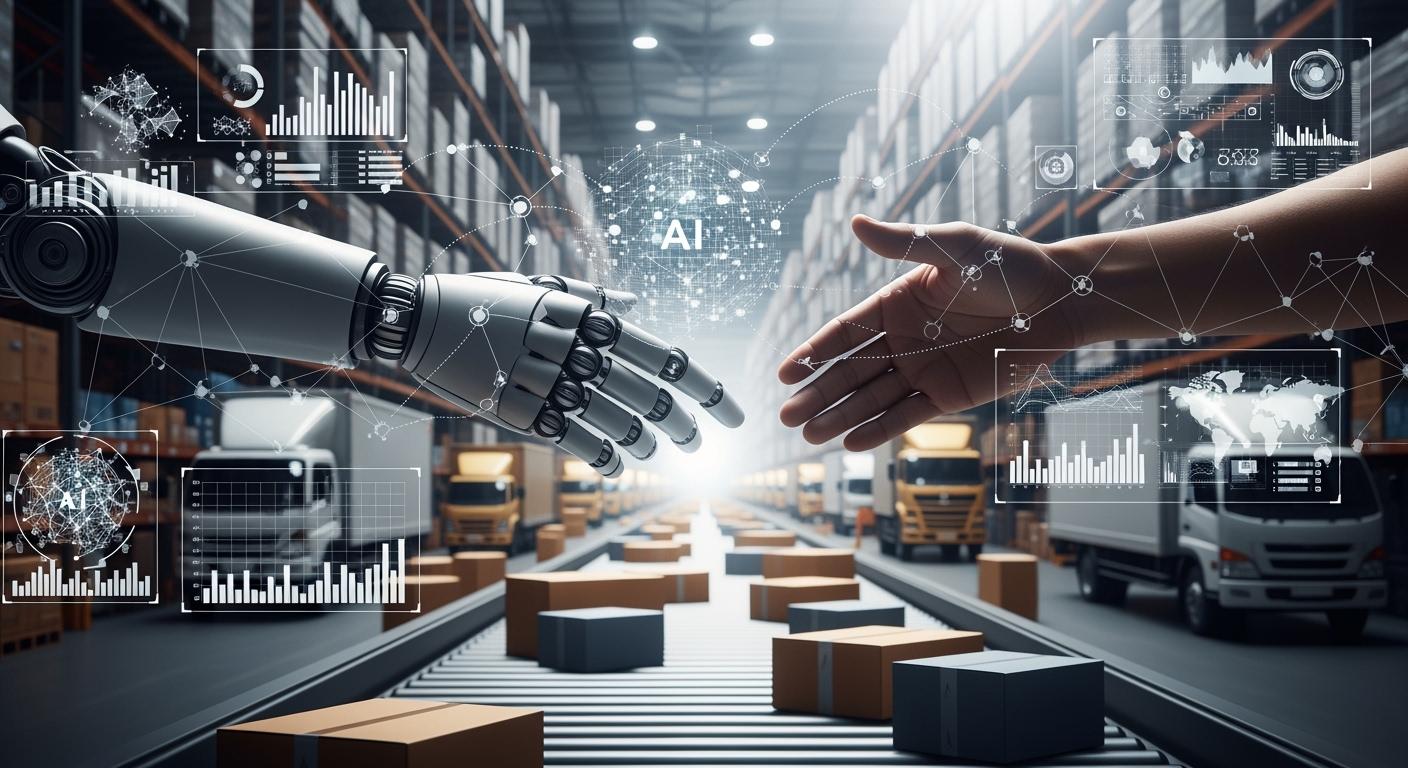
You see the difference when you use AI in Supply Chain Automation. Generative AI, machine learning, and AI agents help you make smarter and faster decisions. Check out these results:
| Metric | AI-Powered Supply Chain | Traditional Supply Chain |
|---|---|---|
| Reduction in forecasting errors | Up to 50% | N/A |
| Reduction in inventory levels | 35% | N/A |
| Improvement in service levels | 65% | N/A |
- AI helps you cut logistics costs by 15%.
- You can improve inventory management by 35%.
- Industry leaders say AI makes your supply chain more efficient and competitive.
AI in Supply Chain Automation

Machine Learning Impact
You can see the power of machine learning in Supply Chain Automation every day. Machine learning helps you predict what will happen next in your supply chain. It looks at past sales, market trends, and even outside events. This technology helps you respond quickly to changes and customer needs.
- Machine learning algorithms process huge amounts of data to create accurate forecasts.
- These systems automate inventory replenishment, so you avoid running out of stock or having too much.
- AI tools help you plan smarter routes for deliveries and choose the best way to move goods.
- You can use machine learning to pick the best forecasting model for each product and region.
- This technology improves real-time decision-making and makes your supply chain more efficient.
You can measure the impact of machine learning with real numbers:
| Improvement Type | Measurable Result |
|---|---|
| Reduction in carrying costs | 40% |
| Accuracy in demand forecasting | 95% |
| Improvement in stockout prevention | 60% |
| Reduction in raw material carrying costs | 55% |
| On-time production delivery | 98% |
| Improvement in supplier performance | 70% |
| Annual savings through optimized planning | $12M |
| Improvement in order fulfillment speed | 65% |
| Reduction in shipping costs | 50% |
| Accuracy in inventory allocation | 90% |
| Increase in customer satisfaction | $8.5M |
You can see that machine learning does not just make predictions. It saves money, improves accuracy, and helps you deliver on time.
Generative AI Advancements
Generative AI brings new possibilities to Supply Chain Automation. You can use generative AI for demand planning and procurement. It helps you standardize processes and optimize last-mile delivery. Generative AI tools can sort and classify information from many sources. They analyze real-time data and adjust strategies as things change.
- Generative AI creates content automatically, so you get faster responses.
- These tools summarize large amounts of data and give you key insights.
- You can retrieve important information quickly with generative AI.
Supply chains now use generative models to simulate disruptions. You can test different scenarios and see how your supply chain will react. Generative AI helps you design better loading plans and find new sourcing strategies. You can even use it to draft negotiation strategies with suppliers or create backup plans for deliveries.
Note: Companies like Unilever use generative AI to simulate demand in different markets. This helps them make quick decisions about buying, storing, and making products.
Generative AI does not just react to problems. It helps you manage them before they happen. You move from watching your supply chain to actively shaping it.
AI Agents in Operations
AI agents work behind the scenes to keep your supply chain running smoothly. They process real-time data and give you up-to-the-minute visibility. You can make decisions right away because AI agents analyze what is happening now.
- AI agents help you follow rules and manage risks. They check for problems and suggest ways to fix them.
- These agents handle common disruptions on their own, so your team can focus on bigger tasks.
- They monitor demand changes and spot bottlenecks. When something goes wrong, they adjust plans quickly.
You can see how AI agents help in different areas:
| Application Area | Description |
|---|---|
| Demand Forecasting | AI agents use past data and real-time signals to adjust inventory and production plans. |
| Supplier Monitoring | They watch supplier performance and suggest other options if there are risks or delays. |
| Production Scheduling | AI agents optimize schedules and change plans when unexpected events happen. |
| Logistics Management | They track shipments and recommend new routes if there are disruptions. |
| Risk Management | AI agents look for possible issues and propose ways to manage uncertainty. |
Most supply chain leaders see the value of AI agents. They say these agents help them act faster and grow revenue. Early users report lower logistics costs and smaller inventory levels. By 2024, many logistics companies used AI for risk management, making their supply chains stronger.
You can trust AI agents to spot problems early and help your team adjust before issues grow. This makes your supply chain more resilient and ready for anything.
Key Benefits of AI Automation
Efficiency & Speed
You can see big improvements in efficiency and speed when you use AI in your supply chain. AI tools help you finish tasks faster and with less effort. Many companies report that 74% of users saw revenue grow within just three months. You can avoid out-of-stock problems, with 96% fewer shortages. Teams spend up to 50% less time on buyer tasks, which means you can focus on more important work. AI also helps you reduce future staffing needs by 89%.
- AI applications cut forecasting errors by up to 50%.
- Lost sales drop by as much as 65%.
AI agents take over repetitive jobs, so your team can make better decisions and boost productivity. This shift leads to faster order processing and better stock management.
| Benefit | Description |
|---|---|
| Predict Delays | AI spots disruptions from weather or traffic before they cause problems. |
| Streamline Purchase Orders | Automated workflows speed up order processing and reduce mistakes. |
| Enhance Delivery Planning | AI creates the best routes and adjusts to real-time changes. |
| Key Results | Companies see up to 50% lower operating costs and 96% fewer stockouts. |
Error Reduction
AI automation helps you avoid costly mistakes. It learns from patterns and improves forecasting and logistics planning. You get fewer errors in inventory management and order fulfillment. AI processes data from many sources, so you can respond quickly to changes and customer needs.
| Metric | Improvement Rate |
|---|---|
| Forecasting Errors | Up to 50% |
| Lost Sales | Up to 65% |
| Operating Costs | Up to 50% lower |
| Stockouts | 96% fewer |
AI automation means fewer human errors in data entry and order processing. This leads to smoother operations and happier customers.
Real-Time Decisions
You can make better decisions when you have real-time data. AI gives you instant updates on shipments, inventory, and supplier performance. This visibility helps you act fast and avoid problems. AI improves operational efficiency and cuts logistics costs by up to 20 percent. You also see better customer satisfaction because you can meet demand and deliver on time.
- Real-time AI analytics help you adapt quickly to market changes.
- Automated decision-making lets you adjust your supply chain right away.
- Continuous monitoring helps you spot risks early and find solutions.
Supply Chain Automation with AI gives you the power to stay ahead and keep your business running smoothly.
Supply Chain Automation Success Stories

Inventory Optimization Case
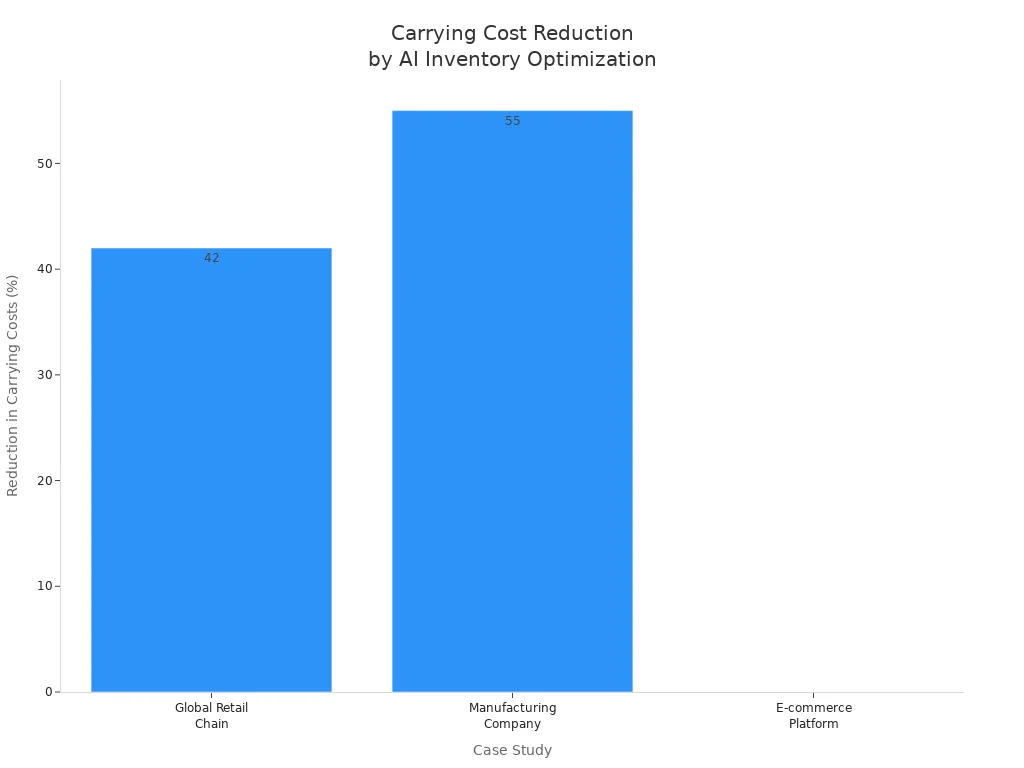
You can see how AI transforms inventory management with real results. Many companies use AI to solve problems like stockouts, overstock, and slow order fulfillment. The table below shows how different businesses improved their operations with AI-powered solutions:
| Case Study | Challenge | AI Solution | Results |
|---|---|---|---|
| Global Retail Chain | Lost $50M yearly from stockouts and overstock. | Demand forecasting, automated replenishment, seasonal and channel optimization. | 42% lower carrying costs, 89% fewer stockouts, 35% better turnover, $38M saved. |
| Manufacturing Company | Needed to balance raw material inventory and production schedules. | Production-driven forecasting, supplier integration, JIT enhancement. | 55% lower carrying costs, 98% on-time delivery, 70% better supplier performance, $12M saved. |
| E-commerce Platform | Managed inventory across many warehouses for fast delivery. | Multi-location optimization, dynamic allocation, returns integration. | 65% faster fulfillment, 50% lower shipping costs, 90% allocation accuracy, $8.5M more satisfaction. |
You can also find benefits in many industries. Automotive parts makers use predictive analytics and automated replenishment to keep parts in stock. Fashion retailers use AI to predict trends, but sometimes face challenges with fast-changing styles.
Predictive Logistics Case
AI changes how you manage logistics. Companies use AI to predict maintenance needs, optimize routes, and speed up deliveries. Here are some real-world examples:
| Company | Application Description | Outcome |
|---|---|---|
| General Electric (GE) | Predictive maintenance in aviation and energy. | 40% less unplanned downtime, millions saved each year. |
| Maersk | AI predicts maintenance for cargo ships. | Fewer disruptions, better servicing schedules. |
| UPS | Autonomous trucks for long-haul routes. | Better fuel efficiency, improved delivery schedules. |
| Amazon | Drone delivery for small packages. | Packages delivered in under 30 minutes, faster last-mile fulfillment. |
| Walmart | AI manages inventory in thousands of stores. | Fewer overstocks, better shelf availability. |
| DHL | AI-optimized global freight management. | 15% more on-time deliveries, lower operational costs. |
- Walmart’s route optimization saved 30 million driver miles and cut 94 million pounds of CO2.
- Ocado’s AI-powered robots fill 50-item orders in minutes, speeding up order fulfillment.
- Amazon and Walmart use AI to forecast demand and move inventory to the right place.
- FedEx and UPS use AI for dynamic route planning, making last-mile delivery faster.
You can see that Supply Chain Automation with AI leads to faster deliveries, lower costs, and better customer satisfaction.
Implementing AI Automation
Readiness Assessment
You need to check if your organization is ready for AI automation. Start by looking at your current digital maturity. Make sure your data systems work together and leaders support innovation. Build a strong data foundation by keeping your data clean, complete, and in the same format. Break down silos between departments so everyone can share information.
Here are the main factors to review:
| Key Factor | Description |
|---|---|
| Data Quality | Check if your data is clean, accurate, and updated often. |
| Alignment with Business Strategies | Make sure your AI goals match your business objectives. |
| Evaluation of Existing Workflows | Look at your current processes to find where AI can help. |
| Tools and Technology | Confirm you have the right tools and technology for AI. |
You should also find team members who understand both technology and business. Train your teams on new tools and create a plan to talk about changes with everyone.
Tool Selection
Choosing the right AI tools is important. Define your goals first. Pick tools that solve your main business needs. Make sure the tools work well with your current systems. Look for platforms that can grow with your business and adapt to new needs.
| Criteria | Description |
|---|---|
| Alignment with Business Goals | The tool should help you reach your main objectives. |
| Integration Capabilities | The tool must connect with your current software. |
| Scalability and Flexibility | The tool should grow and change as your business does. |
| Ease of Use | Pick tools that are simple for your team to use. |
| Security and Compliance | Choose tools with strong security and industry compliance. |
| Vendor Support and Reputation | Work with vendors who have a good track record and offer support. |
Test the tool in one area before using it everywhere. This helps you see value and reduce risk.
Overcoming Challenges
You may face some challenges when you start using AI. High costs and lack of skilled workers can slow you down. Poor data quality can cause problems. Moving from a small test to full use can be hard.
Here are some ways to solve these problems:
| Challenge | Solution |
|---|---|
| Data Quality | Use regular audits and AI tools to clean and standardize your data. |
| System Integration | Use middleware and roll out AI in steps to fix issues early. |
| High Implementation Costs | Do a cost-benefit analysis and use automated monitoring to control costs. |
| Resistance to Change | Explain the benefits clearly and train your team. |
| Data Security | Use encryption and secure access controls. |
| Lack of Clear AI Strategy | Make sure your AI plans match your business goals and check your readiness first. |
Tip: Involve your team early and keep communication open. This helps everyone feel part of the change and makes the process smoother.
You gain many advantages when you use AI in your supply chain. The table below shows how companies benefit:
| Advantage | Result |
|---|---|
| Revenue Growth | 74% saw higher revenue in 3 months |
| Fewer Stockouts | 96% drop in out-of-stock issues |
| Efficiency | 89% less need for extra staff |
| Time Savings | 50% less time spent on buyer tasks |
Generative AI and AI agents help you predict demand, manage risks, and automate tasks. To get started, you should check your data, set clear goals, and choose the right tools for your needs.
FAQ
What is supply chain automation with AI?
You use AI to automate tasks in your supply chain. AI helps you predict demand, manage inventory, and plan deliveries. You get faster results and fewer mistakes.
How does AI improve inventory management?
AI tracks sales and stock levels. It predicts what you need and when you need it. You avoid running out of products or having too much.
Can small businesses use AI in their supply chains?
Yes! Many AI tools work for small businesses. You can start with simple solutions like demand forecasting or automated ordering.
What are the main challenges when starting with AI automation?
You may face issues with data quality, high costs, or team training. Start small, clean your data, and train your team for better results.
How do AI agents help in daily operations?
AI agents watch your supply chain in real time. They spot problems and suggest fixes. You make quick decisions and keep your business running smoothly.
See Also
Efficient Logistics Drive Quick And Eco-Friendly Supply Chain Success
Impact Of AI Sensors On Fashion Supply Chains By 2025
Key Features That Distinguish WarpDriven ERP For Smart Management
Understanding Technology's Role In Enhancing Supply Chain Efficiency