
You face new challenges in 2026. Closed-loop business systems powered by ai help you solve them. These systems use real-time data to optimize your operations. You see better results because ai learns from every decision. The closed-loop approach keeps your data safe and private. You gain more control, faster responses, and stronger security. With these tools, you stay ahead of your competitors.
What Are Closed-Loop Business Systems?
AI Integration and Self-Learning
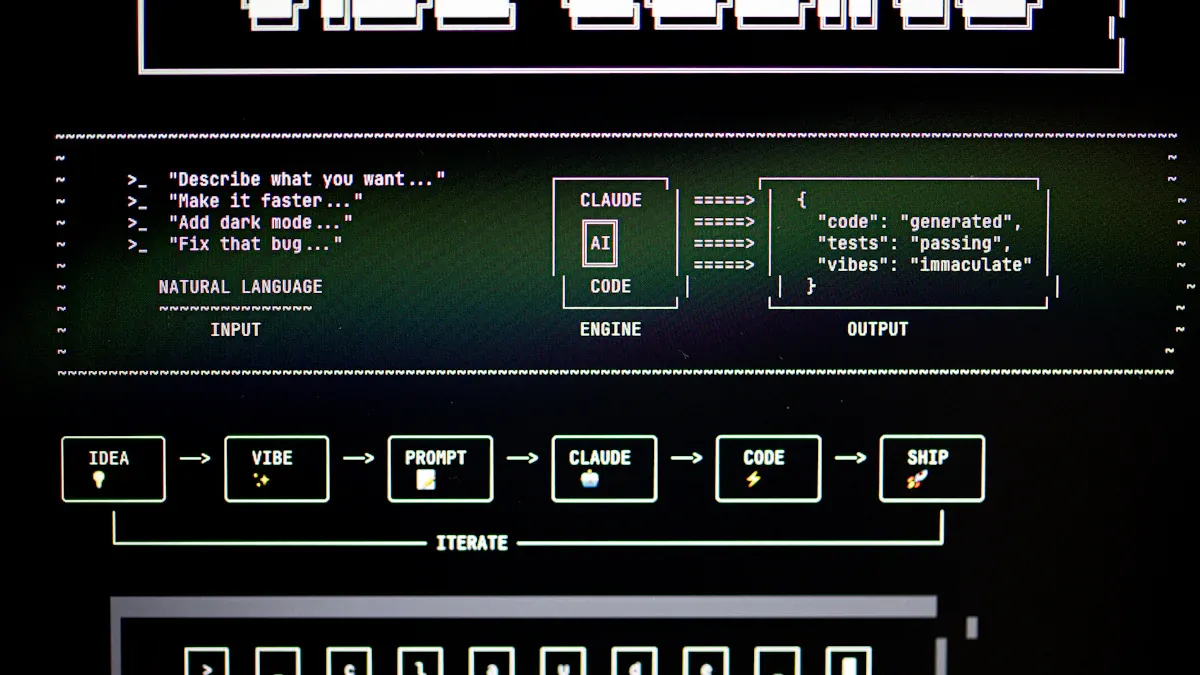
You can transform your business by using closed-loop business systems. These systems use ai to observe, decide, act, and learn from every outcome. When you connect real-time data and machine learning, you create a continuous optimization loop. This loop helps your business respond quickly to changes. You see the system monitor outputs and refine processes, which improves predictive accuracy. With closed-loop solutions, you do not need to make every adjustment yourself. The system learns from data analytics, finds problems, and suggests ways to fix them. You can focus on important decisions while the ai handles routine improvements. Your team will need to learn new skills to work with these systems, but you will spend less time on manual tasks.
- Closed-loop solutions:
- Continuously monitor and analyze data.
- Learn from every action and outcome.
- Automate routine adjustments.
- Help you find and solve bottlenecks faster.
Core Features and Benefits
You get many advantages when you use closed-loop business systems. These systems stand out because they use feedback to adjust actions and keep your business stable. You can see the main differences between closed-loop and open-loop systems in the table below:
| Characteristic | Closed-Loop Systems | Open-Loop Systems |
|---|---|---|
| Feedback Mechanism | Incorporates feedback to adjust control actions | Lacks feedback; operates on predetermined settings |
| Accuracy | More accurate due to continuous monitoring | Less accurate; does not adjust based on output |
| Adaptability | Can adapt to changes in conditions | Cannot adapt; fixed operation |
| Stability | Maintains stability despite disturbances | May become unstable if conditions change |
| Automation | Self-regulating, requires less human intervention | Requires manual control and intervention |
| Efficiency | Operates efficiently by reducing waste | Less efficient; may waste resources |
You can also see how closed-loop solutions help your business improve over time:
| Mechanism | Benefit |
|---|---|
| Feedback Integration | Enables adaptive systems that continuously improve and evolve. |
| Real-time Data Analysis | Allows for proactive monitoring and optimization of business processes. |
| Automation of Adjustments | Reduces manual effort, allowing teams to focus on higher-value tasks. |
| Continuous Improvement | Transforms improvement from a reactive exercise into a proactive, ongoing process. |
With closed-loop ai, you gain cost optimization, faster decision cycles, and better compliance. You can reduce fixed costs, make quick decisions, and manage risks more easily. Closed-loop solutions let your team focus on creative and strategic work, while the system handles routine tasks. This approach prepares your business for the future and helps you stay ahead.
Closed-Loop vs. Open-Loop AI
Security and Data Privacy
You need to protect your business from growing digital threats. Closed-loop business systems give you stronger security and better data privacy than open-loop systems. With closed-loop ai, you keep your data inside a controlled environment. This setup lowers the risk of outside attacks and data leaks. You also get real-time threat detection and automatic responses. Open-loop systems, on the other hand, often depend on people to spot and fix problems. This delay can leave your business open to attacks.
Here is a table that shows the main differences in security between closed-loop and open-loop ai systems:
| Feature | Closed-Loop AI Systems | Open-Loop AI Systems |
|---|---|---|
| Security Control | Enhanced security with controlled infrastructure | Relies on human-mediated incident response |
| Threat Detection | Integrated automated threat mitigation | Performs threat detection but requires manual remediation |
| Response Mechanism | Real-time remediation without human approval | No automatic corrective action occurs |
| Data Security | Data remains within vendor’s secure environment | Higher risk of external breaches |
| Complexity | Higher verification and validation burden | Lower complexity with simplified verification |
You can see that closed-loop systems use a controlled infrastructure. This means all ai actions happen in a secure space. Some companies use self-hosted large language models (LLMs) to keep data on their own servers. This step gives you more control and reduces the chance of data theft. Open-loop systems often send data outside your network, which increases the risk of breaches.
Open-loop ai systems also bring other risks:
- Vulnerabilities in input handling can let attackers slip in harmful data.
- Too much freedom for ai can cause it to make bad choices.
- Overreliance on ai outputs can spread wrong information.
- Model theft can hurt your business and give rivals an edge.
- Catastrophic risks can happen if ai acts on its own without checks.
Tip: You should always check if your ai system keeps your data private and responds to threats right away.
Efficiency and Automation
You want your business to run smoothly and save time. Closed-loop ai helps you reach this goal. These systems watch your operations, make decisions, and fix problems without waiting for you to step in. Open-loop systems need more manual work. You must check results and make changes yourself, which slows things down.
Look at this table to see how closed-loop and open-loop systems compare in reducing manual intervention:
| Evidence Type | Closed-Loop System | Open-Loop System |
|---|---|---|
| Global Score | 34.3 | 42.2 |
| Overshoot Rate | 14.7% | 18% |
| Time-in-Range | 68.7% | 66.7% |
Closed-loop systems score better in key areas. They keep your business on track and reduce mistakes. You spend less time fixing errors and more time on important work. Automation in closed-loop systems means you can handle more tasks with fewer people. This boost in efficiency helps you cut costs and respond faster to changes.
Closed-loop ai also helps you follow rules in industries with strict laws. You must:
- Stay updated on new ai laws like GDPR and CCPA.
- Create clear policies for fairness and transparency.
- Check your ai for risks like bias or privacy issues.
- Keep your data organized and accurate.
- Assign clear roles for ai oversight in your team.
When you use closed-loop business systems, you get better security, more privacy, and smoother operations. You can trust your ai to handle routine tasks and keep your business safe.
Real-World Impact of Closed-Loop AI

Industrial Optimization
You can see the power of closed-loop solutions in modern manufacturing. Many factories use ai and digital twin integration to collect real-time data and predict equipment needs. This approach helps you reduce costs and improve efficiency. For example, predictive maintenance in a bottling plant cut unplanned downtime by 18%. In an automotive parts factory, compressed air optimization reduced energy waste by 12%. Pharmaceutical companies use prescriptive quality control to keep yields consistent.
You also benefit from connected quality systems. A toilet paper manufacturer used vision inspection systems to spot defects. This led to better quality control and smoother operations. In one case, ai-driven inspection found a 22% failure rate on a production line. The company took action and improved overall quality.
Closed-loop solutions help you prevent problems before they happen. These systems monitor sensor signals and predict trends. You can make real-time adjustments and avoid costly outages. Machine learning-driven predictive maintenance lets you plan ahead. You detect failures early and keep your lines running. Many companies report double-digit drops in downtime, which means more revenue and less waste.
IT and Network Operations
You can use closed-loop solutions to boost your enterprise IT and network reliability. These systems support better decision-making by using data analytics to spot risks and act fast. For example, ai models help you detect fraud by scoring risks and stopping losses. You can forecast demand at the store level and make smart choices about inventory. Churn prediction lets you reach out to customers before they leave. Equipment failure prediction helps you schedule maintenance and avoid service breaks.
Closed-loop solutions also improve network operations. The table below shows how these systems help you:
| Benefit | Description |
|---|---|
| Quick response time | Automated remediation enables near real-time responses to network issues, minimizing downtime. |
| Improved efficiency | Eliminates manual handoffs, streamlining the workflow for faster resolution. |
| Consistent improvement | Analyzing historical data helps you fix issues before they grow. |
| Minimal human error | Following workflows reduces mistakes and ensures accurate actions. |
You can measure the success of closed-loop solutions with key performance indicators. These include task completion rate, accuracy, user satisfaction, and cost savings. When you use closed-loop solutions, you build a smarter, more reliable business.
Gaining a Competitive Edge in 2026
Future-Proofing Business
You want your business to stay strong in a fast-changing world. Closed-loop solutions help you adapt quickly to new market demands. These systems use ai to give you deep insights into your customers and markets. You can create products that match what people really want. You also get the power to adjust your marketing, packaging, and pricing to fit changing trends. This approach helps you outperform your competitors.
- You understand your market and customer needs better than others.
- You use insights to design products that solve real problems.
- You take a complete approach to marketing and support, which helps you win more customers.
Closed-loop solutions also boost your operational efficiency. You can respond to market changes faster. Your employees can shape their roles and work with ai to solve new challenges. This way, your team becomes more creative and resilient. Job crafting lets your staff find better ways to work, which helps your business grow.
You can also use closed-loop solutions to support sustainable growth. These systems help you use resources wisely and reduce waste. You get better visibility into your supply chain, which makes your business more sustainable. You can even support circular economy models and drive innovation that helps the environment.
| Benefit | Description |
|---|---|
| Optimizing resource use | Closed-loop solutions help businesses use resources more efficiently, reducing waste. |
| Enhancing supply chain transparency | They provide better visibility into supply chains, allowing for more sustainable practices. |
| Enabling circular economy initiatives | These systems support the development of circular economy models, promoting sustainability. |
| Accelerating sustainable innovation | They drive innovation in product design and business practices that align with environmental goals. |
Building Trust and Compliance
You need to build trust with your customers and partners. Closed-loop solutions help you follow important rules and standards. These systems make it easier to protect privacy and keep your data safe. You can meet the latest compliance standards in your industry.
| Compliance Standard | Key Features |
|---|---|
| EU AI Act | Risk-based approach emphasizing transparency, safety, and accountability. |
| UK AI Framework | Focuses on fairness and transparency, adapting existing regulatory bodies. |
| US AI Bill of Rights | Highlights privacy, transparency, and protection against algorithmic discrimination. |
| GDPR | Critical for protecting data privacy, especially for AI systems handling personal data. |
| ISO/IEC AI Standards | Sets guidelines for responsible AI development and use. |
Closed-loop business systems give you the tools to meet these standards. You can show your customers that you care about their privacy and safety. This trust helps you build long-term relationships and keeps your enterprise ready for the future.
You need to prepare your business for the future. Closed-loop business systems with ai give you better security, higher efficiency, and a real competitive advantage. Many leaders now focus on business change and clear measurement of results, not just model accuracy. You see new trends where these systems use real-time data to fix problems and improve operations without waiting for human input. Start reviewing your current processes and invest in closed-loop solutions today to stay ahead.
FAQ
What is a closed-loop business system?
A closed-loop business system uses feedback to improve itself. You see the system collect data, make decisions, and adjust actions. This process helps your business run better and fix problems quickly.
How does a closed-loop system help with compliance?
You can meet industry rules more easily. The system tracks changes and keeps records. This helps you show proof of compliance during audits or reviews.
Can small businesses use closed-loop solutions?
Yes, you can use closed-loop solutions even if you run a small business. Many providers offer tools that fit different budgets. You start small and add more features as your business grows.
What role does ai play in closed-loop systems?
ai helps you analyze data and make smart decisions fast. The system learns from every action. You get better results with less manual work.
See Also
Utilizing AI to Improve Production Forecasting in 2024
AI-Driven Dynamic Safety Stock Solutions for Fashion Retail 2025
Impact of AI Sensors on Fashion Supply Chains in 2025