
You can use ai for scaling to help your brand grow and connect with people around the world. Many global brands already use ai to automate tasks and improve customer experiences.
| Statistic | Percentage |
|---|---|
| Executives using AI for customer communication | 84% |
| Improved consumer service | 69% |
| Streamlined workflows | 54% |
When you use ai, you do more than just add technology. You change how your company works and how your team connects with customers.
- AI adoption shapes strategy, process design, and company culture.
- A clear framework helps your business move from small trials to real value.
Smarter Connections for Global Brands
Scaling Challenges
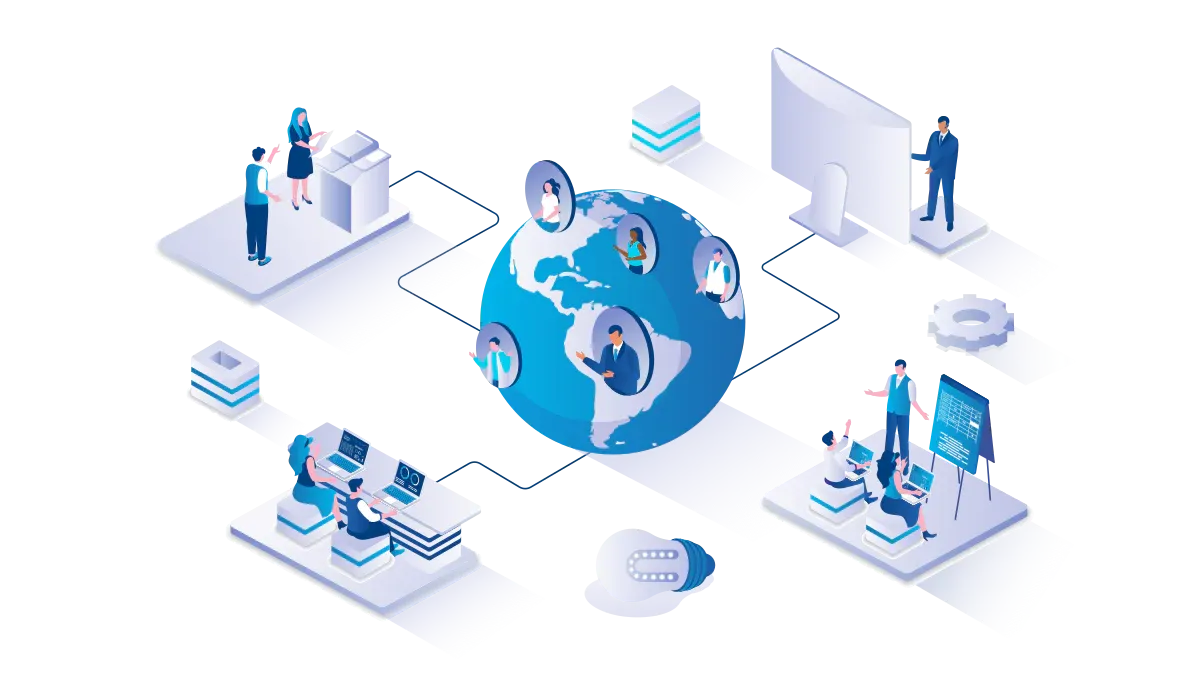
When you try to grow your brand across countries, you face many challenges. You must understand local customs and avoid mistakes that can hurt your reputation. You also need to manage complex operations, like supply chains and logistics, which can become expensive and difficult. Financial risks, such as currency changes, can affect your profits. Finding the right talent in each region is not easy because skills and cultural fit vary. Technology access is different in every country, so you may struggle to set up digital tools. Political and economic instability can create risks for your business.
- Cultural Differences: Misunderstanding local customs and practices can lead to significant issues, such as reputational damage from cultural misinterpretations.
- Operational Complexity: Managing logistics, supply chains, and distribution networks across borders can be intricate and costly.
- Financial Considerations: Expanding internationally requires substantial financial resources and poses risks related to currency fluctuations.
- Talent Acquisition: Finding and managing local talent can be challenging due to varying cultural fits and skills.
- Technology Infrastructure: Access to reliable technology can differ by region, complicating digital strategy implementation.
- Risk Management: Operating in foreign markets introduces various risks, including political and economic instability.
For example, P&G learned about customer expectations when launching Febreze in Japan. At first, the product did not do well because Japanese consumers have different sensitivities to odors. After changing the design and fragrance to match local preferences, Febreze became popular.
Why Smarter Connections Matter
You need smarter connections to overcome these challenges. Artificial intelligence helps you build these connections by making your business more responsive and efficient. When you use ai in business, you can organize better, reach more customers, and lower costs. You can adapt quickly to changes and disruptions in the market. Support from your organization helps you use connectivity to foster creativity and respond faster.
| Evidence Description | Source |
|---|---|
| New connectivity enhances organizing effectiveness, global reach, and capability enhancement, driving down costs and creating new markets for MNEs. | Manyika et al., 2016 |
| Connectivity competence helps MNEs adapt to disruptions, enhancing their ability to reorganize global operations effectively. | Pedersen & Ritter, 2020 |
| Organizational support is crucial for leveraging connectivity competence, fostering creativity and responsiveness in MNEs. | Fainshmidt et al., 2017 |
When you use ai for scaling, you create smarter connections that help global brands build trust and loyalty. Ai in business lets you personalize experiences and keep communication consistent. Engaged customers spend more and become brand advocates. You build emotional connections through proactive support and localized interactions.
- Smarter connections enhance customer loyalty and retention by localizing interactions and maintaining consistent communication.
- Engaged customers tend to spend more and become advocates for the brand, which is crucial for long-term success.
- Personalized experiences and proactive support are essential for building trust and emotional connections with customers.
AI for Scaling: Key Enablers
Customer Insights & Personalization
You can use ai for scaling to understand your customers better and create experiences that feel personal. When you use ai in business, you gain access to powerful tools that analyze customer data quickly. These tools help you see patterns in what people like, how they shop, and what they need. You can then use this information to offer products and services that match each customer’s preferences.
- 91% of customer experience leaders say ai has improved their ability to customize experiences.
- 75% of consumers prefer ai-assisted customer service because it is faster and more accurate.
- Ai-powered chatbots can answer questions and give recommendations in real time.
- Ai segmentation lets you send the right message to the right group, making customers feel valued.
Spotify uses artificial intelligence to study listening habits and create playlists like Discover Weekly. This keeps users engaged and shows how ai can personalize experiences. Other global brands have seen big results from ai for scaling. Netflix uses recommendation algorithms to keep users interested, saving about $1 billion each year by reducing customer loss. Starbucks increased its return on investment by 30% and boosted engagement by 15% with personalized suggestions from its Deep Brew ai engine. Amazon’s ai-driven recommendations make up 35% of its online sales, helping shoppers find what they want and increasing basket size. Nike uses predictive ai to suggest products, leading to more repeat purchases and higher engagement.
Multilingual Engagement
When you expand into new countries, you need to talk to customers in their own language. Ai in business makes this possible with real-time translation and multilingual ai agents. These tools let you support customers 24/7, no matter where they live or what language they speak. You can also use language-agnostic analytics to study customer feedback from around the world.
- Real-time translation helps your team and customers communicate smoothly, lowering costs and boosting satisfaction.
- Multilingual ai agents provide self-service support at any time, making your brand always available.
- Language-agnostic analytics ensure you do not miss important insights, even when customers speak different languages.
Ai-driven multilingual engagement can increase international sales by 30%. Response times improve by 50%, and customer satisfaction scores rise by 25%. Most customers want support in their native language, and multilingual ai helps you meet this need. These tools also adapt to local cultures, changing tone and formality to build trust. Real-time sentiment analysis lets ai adjust responses, making conversations feel more natural. When you use ai for scaling, you reach more people and create stronger connections.
Operational Efficiency
Ai in business helps you work smarter by automating routine tasks and improving decision-making. You can use ai-powered business analytics to predict trends, manage inventory, and optimize supply chains. This leads to fewer mistakes and lets your team focus on important work.
Lineage Logistics improved efficiency by 20% across 400 warehouses with ai. They also saved $4 million in energy costs and improved inventory accuracy. Many executives use ai for customer communication, better service, and streamlined workflows. Revenue can rise by 34%, and customer ratings can improve by 40% when you use ai for scaling.
- Ai optimizes inventory management and purchasing.
- Sales strategies and ERP systems become more effective with ai.
- Ai helps forecast demand and maintain supply chains.
- Predictive maintenance and customer service get better with ai.
- Routine tasks become automated, freeing up time for creative work.
Ai enhances demand forecasting, reduces lost sales, and improves procurement. IBM saved $160 million with ai-driven supply chain solutions. By streamlining business processes, you can achieve higher efficiency and stay ahead of competitors.
AI Marketing Automation
You can use ai in business to automate marketing and content creation. Ai-powered content tools help you design campaigns, create images, and write messages faster than ever. These tools allow you to test ideas quickly and reach your audience with the right message at the right time.
| Brand | AI Technologies Used | Channels | Results |
|---|---|---|---|
| Pedigree | Machine learning | Out-of-home, digital media | 6x more shelter visits, 50% of dogs adopted in 2 weeks, 4 Cannes Lions awards |
| Nike | Computer vision, generative AI | YouTube, social media | 4.2 million views in 48 hours, 1082% more organic views, multiple Cannes Lions |
| Heinz | Generative AI, computer vision | Social media, PR, digital | 1 billion impressions, 2500% ROI, 38% higher engagement rate |
| Virgin Voyages | Generative video, voice synthesis, AR | Social media, microsite | 2 billion impressions, 25,000 personalized videos |
| British Council | Design automation | Programmatic ads, social media | 70% lower content creation costs, 50% faster turnaround |
| Coca-Cola | Generative AI, language models | Microsite, digital, social | High user-generated content, strong PR coverage |
Luxury brands like Zara and Louis Vuitton use generative ai to create marketing images, keeping their brand consistent and launching campaigns quickly. Unmade, a fashion brand, uses generative design for customized products, blending creativity with efficiency. A global e-commerce company used predictive analytics to understand customers, increasing engagement by 30% and repeat purchases. Another retailer saw a 20% rise in order value with real-time ai product recommendations.
Ai-powered branding strategies offer faster data analysis, better audience segmentation, and higher engagement rates than traditional methods. You can analyze large amounts of data, personalize marketing, and see better returns on investment. Ai-powered content creation tools help you launch campaigns quickly and keep your messaging fresh.
Tip: Use ai for scaling to automate content creation and marketing. This saves time, increases reach, and helps you connect with customers in new ways.
By embracing artificial intelligence and ai-powered business analytics, you can unlock new levels of operational efficiency, personalization, and creativity. Ai for scaling is not just about technology—it is about enhancing efficiency, building smarter connections, and helping global brands grow.
AI Scaling Examples

Retail Personalization
You can see how global brands use ai to make shopping more personal. When you walk into a McDonald’s drive-thru, the menu changes based on the time of day and what you like to order. Walmart uses ai in business to help you find products faster, both online and with voice assistants. Nike sends you special offers and product suggestions that match your style. These brands use ai to increase sales and keep you coming back.
| Brand | AI Application | Outcome |
|---|---|---|
| McDonald’s | Personalized Drive-Thru Menus | Increased average order value through relevant upsell suggestions, deployed in over 12,000 locations. |
| Walmart | Personalization in Voice & E-commerce | Enhanced online conversion rates and customer satisfaction through tailored shopping experiences. |
| Nike | Personalized Experiences & Retention | Improved customer engagement and doubled digital sales through individualized content and recommendations. |
You get better deals and more useful suggestions because ai learns from your shopping habits. Companies that focus on customer experience see three times more revenue growth. Most CEOs believe personalization is key for success. You will notice higher conversion rates, bigger orders, and more value every time you shop.
| Metric | Description |
|---|---|
| Conversion Rates | Higher conversion rates are achieved through tailored content and offers based on customer behavior. |
| Average Order Value | Personalization leads to increased basket size, which can be tracked against a baseline. |
| Revenue per Visitor | Metrics can be compared between personalized experiences and control groups to measure impact. |
- Personalizing offers improves conversion rates.
- Predictive modeling helps brands spend money wisely.
International Content Creation
You can reach people in many countries with the help of ai-powered content. Global brands use ai to speed up content creation from the first idea to the final post. Ai helps you come up with new ideas, organize stories, and improve search results. You can also check how well your content works in each market.
- Ai makes content creation faster and helps you test ideas quickly.
- You can use ai to translate and localize content for different cultures.
- Ai-powered content tools work best when you combine them with human creativity.
When you use ai for scaling, you can launch campaigns in many languages at the same time. Ai tools translate large amounts of content while keeping the meaning clear. Natural language processing lets you match the tone and style to each region. You get better results when you let people check and improve what ai creates. Over time, ai learns your brand’s voice and gets better at making content that fits your style.
- Ai speeds up translation so you can launch everywhere at once.
- Ai adapts content to fit local cultures and preferences.
- Human review ensures quality and cultural fit.
- Ai keeps learning to make your content more consistent.
Supply Chain Optimization
You can make your supply chain smarter and more reliable with ai. Many companies use ai to predict demand, manage inventory, and cut costs. For example, OYAK Cement saved $39 million by using ai to improve fuel use. CVS Health used ai to deliver over 60 million vaccines quickly and safely. Lenovo Brazil improved how they predict what products to make and ship. Walmart and Tesla use ai to manage logistics and keep shelves stocked.
| Company | Impact on Supply Chain | Results |
|---|---|---|
| OYAK Cement | Optimized grinding processes and increased alternative fuel usage | Reduced costs by approximately $39 million, improved alternative fuel usage from 4% to 30% |
| CVS Health | Efficient COVID-19 vaccine distribution | Administered over 60 million vaccines, 20% of nationwide vaccines, 90% return for second dose |
| Lenovo Brazil | Improved prediction accuracy for supply and demand of laptops and computers | Enhanced modeling speed and accuracy, optimized inventory management |
| Global Fiberglass | Replaced outdated ERP system with AI-driven forecasting solution | Improved forecast accuracy by 30%, reduced excess inventory by 25%, disruptions down by 20% |
| Walmart | Leveraged AI for logistics optimization and inventory management | Achieved significant cost savings and improved operational efficiency |
| Tesla | Utilized AI for supply chain management and production efficiency | Enhanced production timelines and reduced operational costs |
You can see big improvements when you use ai in your supply chain. Forecasting errors drop by 50%. Logistics costs go down by 15%. Inventory levels improve by 35%. Service reliability jumps by 65%.
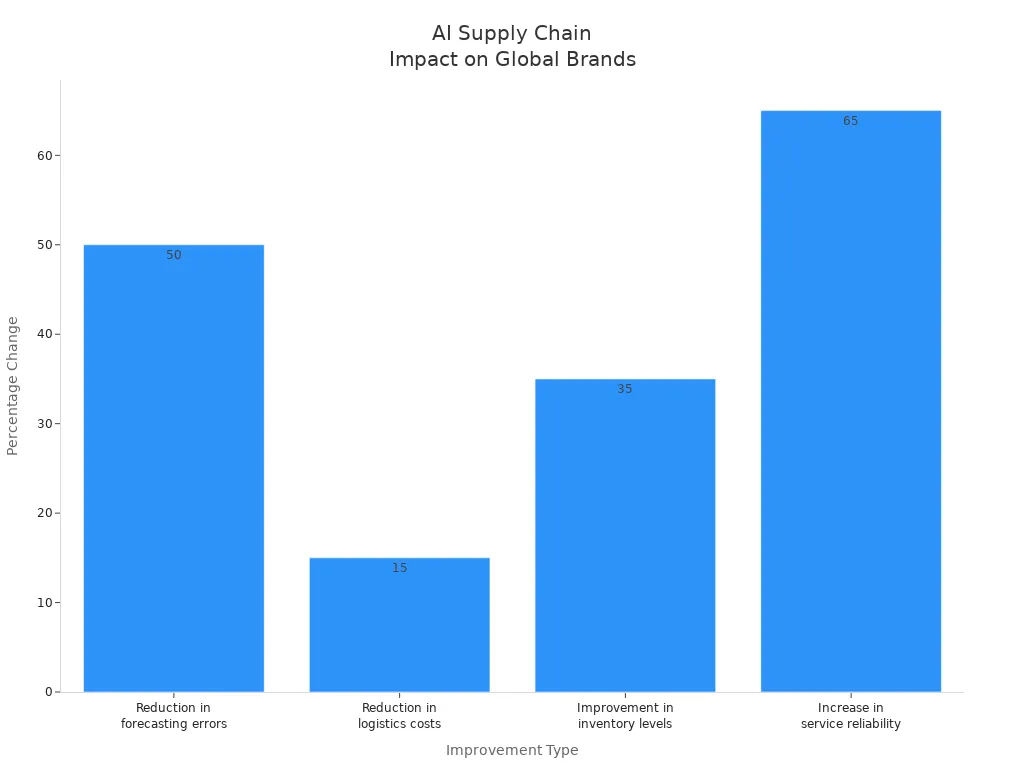
One global retailer saved $400 million each year and made their deliveries more accurate by using ai. You can expect lower costs, fewer mistakes, and faster service when you use ai for supply chain optimization.
Scaling Challenges & Best Practices
Data Privacy & Security
When you use artificial intelligence to grow your brand, you must protect customer data. Many companies face challenges with data privacy and security.
- AI systems trained on personal data make it hard to honor requests for data deletion under laws like GDPR.
- 40% of organizations have seen AI-related data breaches, often involving personal information.
- Using third-party AI models can create risks if vendors use your data without consent.
- Employees sometimes use free AI tools outside company rules, which can lead to leaks.
- AI tools may process sensitive data without users knowing, risking violations of rules like HIPAA.
- Hackers can trick AI models into sharing confidential information.
You can follow global frameworks to help keep data safe and stay compliant:
| Framework/Regulation | Description | Key Features |
|---|---|---|
| EU AI Act | First full set of AI rules | Classifies risk, sets strict rules, enforces penalties |
| OECD AI Principles | Global agreement on responsible AI | Focuses on fairness, transparency, accountability |
| NIST AI RMF | Risk management for AI | Helps secure and manage AI systems |
Cultural Relevance
You need to make sure your AI in business fits each market. Brands use AI to study what people like in different places.
- A streaming service used AI to learn what shows people watch in each country, raising subscriber retention by 20%.
- A cosmetics company made ads in many languages with AI, reaching more people.
- A fast-food chain changed its menu based on local tastes, increasing sales by 12%.
- AI chatbots helped a tech brand answer 40% more customer questions on the first try.
- AI-powered marketing solutions let you adapt campaigns for each region while keeping your message clear.
AI helps you connect with customers by making experiences personal and available at every stage. When you use culturally adapted AI, you see more engagement and loyalty.
Building AI-Ready Teams
You need teams who understand AI and can use it well. Companies like Salesforce, Microsoft, and Unilever train thousands of employees on AI tools.
Many use short, focused lessons—just 10 to 15 minutes—which lead to higher completion and better skill retention.
"People, not prompts, are what matters most in the AI era."
Ongoing education keeps your team ready as technology changes. You can use different training programs:
| Training Program | Description |
|---|---|
| Foundational AI Literacy | Basics, ethics, and job impact in a 2-hour workshop |
| Tool-Specific Training | Hands-on sessions for each AI tool |
| Advanced Skills | Courses on prompts, data, and model evaluation |
Set clear goals, check skill levels, and create safe spaces for questions. Design learning paths for each role and explain how to use AI responsibly.
Actionable Scaling Tips
To succeed with scaling and AI in business, follow these steps:
- Start with people who know data.
- Gather the right data.
- Involve business teams early.
- Keep your data updated.
- Use MLOps for smooth operations.
- Build cross-functional teams.
- Choose early projects you can win.
- Treat governance as protection.
- Pick tools your team will use.
Automate routine marketing solutions, but keep people involved in key moments. Let automation free up creativity and focus on building real connections. Always measure both efficiency and emotional impact.
You can use ai to help your brand grow and connect with people worldwide. When you use ai, you find hidden patterns in customer feedback, spot new market trends, and save time on research.
- You get real-time insights into what customers want.
- You can personalize messages for each person.
- You discover new ways to stand out from other brands.
| Future Trend | What It Means for You |
|---|---|
| AI as a Predictive Tool | Make better decisions using future-focused data |
| Personalization at Scale | Reach each customer with the right message |
| Responsible AI Practices | Build trust and follow important rules |
Start building your own AI framework today. Balance smart automation with real human connection to lead your brand into the future.
FAQ
What is AI for scaling global brands?
AI helps you grow your brand by automating tasks and analyzing data. You can reach more customers, improve service, and make smarter decisions. AI lets you adapt quickly to new markets and challenges.
How does generative ai in business improve content creation?
Generative ai in business creates new content fast. You can use it to write posts, design images, and translate messages. This tool helps you launch campaigns in many languages and keeps your brand voice consistent.
Why is personalized advertising important for global brands?
Personalized advertising lets you show the right message to each customer. You can use AI to study what people like and send offers that match their interests. This builds trust and increases sales.
How can AI help with multilingual engagement?
AI translates messages in real time. You can support customers in their own language and answer questions faster. This makes your brand more welcoming and helps you connect with people everywhere.
What are the main risks when using AI for scaling?
You must protect customer data and follow privacy rules. AI can sometimes make mistakes or misunderstand local cultures. You need to train your team and check your systems often to avoid problems.
See Also
Innovative Distribution Systems Helping Brands Achieve Growth
Revolutionizing Apparel: Strategies for Manufacturing to Branding Success
AI Innovations in Fashion for Sustainable Environmental Impact