

An AI digital transformation roadmap gives you a clear plan to use ai for real business growth. You move past just using technology. You start to use ai to make smarter choices and get better results. Many companies now shift from digital transformation to intelligence-first thinking. You need to connect ai projects to your main goals and handle risks from new ai tools like generative ai. This roadmap helps you solve common problems and see true value. Ask yourself if your team and strategy are ready for ai change.
What Is an AI Digital Transformation Roadmap?
Defining Digital Transformation Roadmap
A digital transformation roadmap gives you a step-by-step plan to guide your organization through change. You use it to set clear goals, track progress, and adjust actions as needed. This plan helps you stay focused on your company’s main objectives, even when things change. Leading industry experts break down the ai digital transformation journey into several phases. You start by checking your readiness, then align your strategy with business needs, and pick the right use cases. You build a strong data and technology foundation, run pilot projects, and then scale successful solutions. The final step is to keep improving and governing your ai systems.
| Phase | Description |
|---|---|
| 1 | Assess Readiness: Evaluate data maturity and system architecture to understand current capabilities. |
| 2 | Strategy and Business Alignment: Define the business problem the AI initiative addresses. |
| 3 | Use Case Portfolio and Prioritization: Prioritize use cases based on feasibility and impact. |
| 4 | Data and Platform Foundation: Establish a reliable infrastructure for AI systems. |
| 5 | Pilot Prove Value Fast: Conduct pilots with clear performance metrics. |
| 6 | Scale Across Teams and Workflows: Standardize governance for broader deployment. |
| 7 | Operate, Govern, and Optimize: Ensure long-term success through continuous monitoring and governance. |
Role of AI in Digital Transformation
AI plays a key role in digital transformation. You use ai to automate tasks, improve customer experiences, and make better decisions. For example, ai can help you analyze data, predict trends, and personalize services for each customer. You can use ai to speed up product development and make your IT systems more flexible. In your daily work, ai can handle repetitive jobs, freeing up your team for more important tasks. You also create a culture where people adapt quickly and use ai as a tool for growth.
Tip: Treat ai as an augmentation tool, not just software. This mindset helps you get the most value from your digital transformation.
Business Value and Benefits
When you follow an ai digital transformation roadmap, you unlock many business benefits. You can automate complex operations, speed up innovation, and create more sustainable processes. AI helps you deliver hyper-personalized experiences, which keeps your customers happy and loyal. You also make faster, smarter decisions using real-time data. Many companies see cost savings, better resource use, and improved employee satisfaction.
| Benefit | Description |
|---|---|
| Hyper-automation of Operations | Automates complex business processes, enhancing efficiency and accuracy across various operations. |
| Innovation & Product Development | Accelerates product development through rapid prototyping and AI-driven quality control, leading to faster time-to-market and cost savings. |
| Sustainable Operations | Reduces carbon emissions and optimizes resource allocation through AI-enabled predictive maintenance and logistics. |
| Hyper-personalization Experience | Increases customer engagement and satisfaction by delivering personalized experiences based on data analysis. |
| Better Decision-Making | Supports faster and more accurate strategic decisions through real-time data analysis. |
| Enhanced Customer Experiences | Improves customer interactions through AI-driven sentiment analysis and personalized service. |
| Innovation Acceleration | Shortens the time from idea to execution, allowing for quicker testing of new products and strategies. |
You gain a clear path to real results when you use ai digital transformation as your guide.
Assessing Readiness for AI Transformation
You need to check if your organization is ready for ai transformation before you start your roadmap. This step helps you avoid wasted effort and ensures you build a strong foundation for digital transformation. You must look at people, skills, culture, processes, technology, and data. Each area plays a key role in successful ai initiatives.
People, Skills, and Culture
Your team is the heart of ai transformation. You must have the right mix of technical and soft skills. Many organizations find gaps in leadership and prompt writing skills. Effective prompt writing is now a core skill for ai projects. Leadership skills are also important. About 72% of IT leaders rate their teams' leadership skills as medium or low, showing a need for more training.
You must build a culture that supports innovation and ai adoption. Organizations that align purpose, strategy, and culture see revenue growth of 44.5% over three years. Adaptable cultures drive business performance and help you reach your goals faster. If your culture does not match your strategy, you may see lower or negative growth. Leaders agree that culture change is slow but essential for ai transformation.
Tip: Encourage your team to learn new skills and support each other. This helps you build a culture that welcomes ai and drives innovation.
Common Skill Gaps in AI Transformation
- Effective prompt writing
- Leadership skills
- Technical and soft skills
Impact of Culture on AI Success
- Alignment of purpose, strategy, and culture leads to higher revenue growth
- Adaptable cultures drive business performance
- Misalignment can cause negative growth
- Leaders stress the importance of the right culture for ai adoption
Process and Workflow Review
You must review your processes and workflows before starting ai initiatives. Many companies try to use ai on processes that are not documented. This leads to inefficiencies and confusion. You need to map out your workflows and identify areas where ai can add value.
Employees often do not understand the importance of ai transformation. This can cause resistance and slow down adoption. You must explain the benefits of ai and involve your team in the process. Clear communication helps you overcome barriers and build support.
Note: Document your processes and involve your team early. This makes ai integration smoother and helps you achieve data-driven decision making.
Common Process Inefficiencies
- Applying ai to undocumented processes
- Assuming data is adequate without checking quality
- Lack of employee understanding about ai initiatives
- Resistance to change
Technology and Data Audit
You must audit your technology and data before launching ai transformation. Many organizations discover data quality issues when they start machine learning or predictive analytics projects. About 64% of organizations report data quality as their main challenge. Nearly 75% of UK underwriters say poor data is the biggest barrier to ai transformation.
You need clean, structured data for ai systems to work well. Common problems include incomplete sources, inconsistent data, lack of validation, and unclear ownership. Quality issues are the leading technical barrier to successful ai transformation. You must check your technology stack and make sure it supports ai and predictive analytics.
Alert: Poor data quality can lead to unreliable ai outputs. Make data quality a top priority in your roadmap.
Technology and Data Challenges
- Incomplete or inconsistent data sources
- Lack of validation processes
- Unclear ownership of data accuracy
- Quality issues as main technical barrier
Change Readiness and Barriers
You must assess your readiness for change and identify barriers to ai transformation. Data quality issues, cultural resistance, and integration challenges are common obstacles. Employees may see ai as a threat and resist its adoption. Legacy systems can make it hard to integrate new ai technologies.
Many organizations lack a clear strategic vision for ai initiatives. This can lead to disconnected projects and wasted resources. You need a clear roadmap and governance framework to guide your ai transformation. The rise of 'shadow ai'—uncoordinated use of ai tools—poses risks if you do not have proper oversight.
Most Significant Barriers to AI Transformation
- Lack of strategic vision
- Data quality, availability, and complexity
- Skills shortage
- Cultural resistance to change
- Integration with legacy systems
Tip: Build a clear strategy and governance framework. This helps you manage risks and ensures your ai transformation delivers real business value.
Frameworks for Assessing AI Readiness
You can use proven frameworks to assess your readiness for ai transformation. These models help you benchmark your capabilities and plan your next steps. The table below shows popular frameworks used by leading organizations.
| Framework Category | Representative Frameworks | Key Features |
|---|---|---|
| Big 4 / MBB Methodology | McKinsey Rewired, BCG AI@Scale, Deloitte Trustworthy AI, Accenture Total Enterprise Reinvention | Comprehensive playbooks addressing strategy, operating model design, talent, technology, and organizational scaling. |
| Vendor Platform Methodology | AWS Cloud Adoption Framework for AI, Microsoft AI Adoption Framework, Google Cloud AI Adoption Framework | Focus on infrastructure, data quality, governance, culture, and talent for AI readiness. |
| AI Readiness Maturity Stages | Pacesetters, Chasers, Followers, Laggards | Maturity tiers to benchmark capabilities and plan steps for AI integration. |
You must choose a framework that fits your organization’s needs. This helps you measure progress and identify areas for improvement in your ai transformation journey.
Callout: Assessing readiness across people, process, technology, and culture helps you build a strong foundation for ai initiatives. Avoid common pitfalls by using proven frameworks and focusing on data-driven decision making.
Aligning Vision and Strategy
Setting AI Transformation Goals
You need clear goals to guide your enterprise ai transformation roadmap. Start by making sure everyone understands the benefits of ai. Use education, motivation, and support to help your team see how ai can help them. Set goals that are easy to understand and possible to reach. When you invest in change management, you are 1.5 times more likely to meet your ai transformation goals.
- Communicate the value of ai to your workforce.
- Make goals relevant and achievable for all teams.
- Build a bold, company-wide plan led by top leaders.
- Align your ai strategy with your main business goals and analytics.
A strong ai digital transformation roadmap gives you a clear direction. You can measure progress and adjust your approach as you learn.
Linking AI to Business Priorities
You must connect your ai initiatives to your business priorities. Start with clear outcomes like cost savings or revenue growth. Use these outcomes to guide your ai projects. Map each project to executive KPIs so you stay focused on what matters most. This keeps your ai business transformation roadmap on track and ensures your analytics support real business needs.
Leadership plays a big role. When your CEO and CFO get involved, it shows that ai is a top priority. This helps everyone see the value of your ai digital transformation roadmap. Build a culture that encourages curiosity and accountability. Let teams experiment and learn quickly. This approach drives innovation and helps you reach your goals.
Executive Buy-In and Stakeholder Alignment
You need executive support for your enterprise ai transformation roadmap to succeed. Link ai projects to strategic goals like supply chain strength or customer satisfaction. Show that ai is an augmentation tool, not a replacement for people. Sponsor quick wins to build excitement and trust.
- Focus on business problems leaders already recognize.
- Choose projects with low complexity for fast results.
- Measure outcomes with clear analytics.
- Pick projects that improve productivity and service.
Research shows projects with active executive sponsorship are 3.5x more likely to succeed.
When you align your ai digital transformation roadmap with leadership and business needs, you set the stage for long-term success.
Building AI Infrastructure and Governance
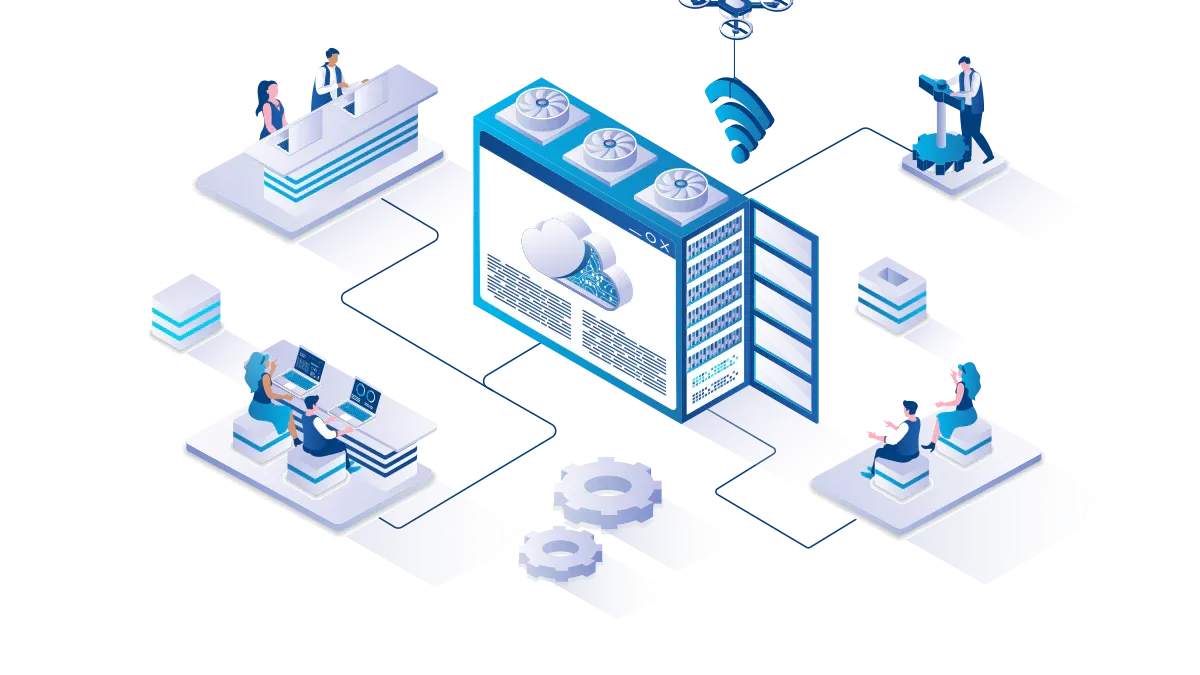
You need a strong foundation to make ai work for your business. Good data, the right technology, and clear rules help you use ai safely and at scale. This is key for ai-powered digital transformation and for unlocking new innovation.
Data Foundations for AI
Your ai projects depend on high-quality data. In large organizations, data often sits in different systems and uses many formats. This can cause problems for ai-powered customer support and other ai capabilities. You must make sure your data is accurate, complete, and easy to use.
Data governance is critical. Poor data quality leads to poor ai decisions. You need a framework that keeps data quality high but still lets you innovate.
| Attribute | Description |
|---|---|
| Accurate | Data must be correct and free from errors. |
| Complete | All necessary data should be present. |
| Deduplicated | No duplicate entries should exist. |
| Consistent | Data should be uniform across sources. |
| Context-rich | Data should provide relevant context for use. |
| Governed | Data must be managed under a governance framework. |
| Accessible | Data should be easily retrievable and usable. |
You should also profile your data, clean it, and assign ownership. This helps you build strong ai capabilities.
Technology Stack Selection
Choosing the right technology stack is important for ai-driven automation and ai-powered customer support. Look for tools that fit your needs and can grow with your business. Your stack should work well with your current systems and be easy to develop on.
| Criteria | Description |
|---|---|
| Performance | Handles workloads as your project grows. |
| Ease of Integration | Works smoothly with your existing systems. |
| Ease of Development | Makes building ai solutions easier. |
| Scalability | Grows with your needs over time. |
| Cost | Balances price and features, including open-source options. |
| Community Support | Has good documentation and active user groups for help. |
AI Governance and Ethics
You need clear rules to guide your ai use. Good governance links ai to your business goals and builds trust. Set up a team from different departments to create policies and manage risks. Watch for problems like bias or model drift.
| Best Practice | Description |
|---|---|
| Align Governance with Business Objectives | Tie ai rules to your main business goals. |
| Assemble a Cross-Functional Governance Team | Get input from many departments. |
| Develop Governance Policies and Standards | Make clear rules for everyone to follow. |
| Establish Risk Management Processes | Monitor for risks like bias or errors. |
| Implement Compliance and Audit Mechanisms | Check your ai systems regularly for problems. |
Good governance helps you adapt to new rules and keeps your ai safe and trustworthy.
Security, Privacy, and Compliance
You must protect your ai systems and follow the law. Many places have strict rules for data privacy and ai use. For example, GDPR and HIPAA require strong controls and regular checks. The EU AI Act and state laws in California and Colorado set rules for high-risk ai systems.
- Build an inventory of your ai systems and check their risk.
- Do privacy and impact checks for high-risk uses.
- Design privacy into your data from the start.
- Make sure people can oversee and explain ai decisions.
- Protect your ai from security threats.
- Update contracts and vendor rules as needed.
Tip: Strong security and compliance keep your ai transformation safe and help you avoid fines.
Identifying and Prioritizing AI Use Cases
Mapping Business Challenges to AI
You need to start by understanding your business problems before you bring in ai. Effective ai integrations work best when you redesign your workflows, not just add ai on top. Begin by mapping out your current workflows. This helps you see where ai can help with decisions and actions. Look at how information moves through your company. This step is important for successful ai deployment.
- Define clear objectives. Know what problems you want to solve and make sure they match your business goals.
- Build a roadmap. Prioritize projects that meet real needs and set up a data strategy.
- Share your ai strategy with your team and leaders. Get everyone on board.
- Train your teams and encourage learning about ai.
- Set up ethical guidelines for responsible ai use.
- Keep checking and updating your approach as ai changes.
Design ai into your workflows from the start. Map the full process, including decision points and information flow. Always keep human judgment at the center.
Selecting High-Impact Use Cases
You want to focus on ai projects that bring the most value. Not every idea will have the same impact. Use a simple framework to help you choose the best ones.
| Criteria | Description |
|---|---|
| Business Value | Pick use cases that give clear results, like saving money or improving productivity. |
| Technical Feasibility | Check if your current systems can support ai and if it is easy to add new tools. |
| Data Readiness | Make sure you have the right data, and that it is complete and accurate. |
| Strategic Alignment | Choose projects that match your company’s main goals. |
| ROI Calculation | Look at the costs and benefits to see if the project is worth it. |
| Scoring Matrix | Use a scoring system to compare use cases by impact, complexity, and risk. |
When you use ai analytics, you can measure which projects will help your business the most.
Avoiding Siloed AI Initiatives
You should avoid letting different teams run ai projects on their own without coordination. Siloed ai efforts can cause problems, such as:
- Leaders cannot see all the risks across the company.
- Teams use different ways to judge risks, which leads to confusion.
- Departments may repeat the same work, wasting time and resources.
- It becomes hard to use your budget and tools well.
- You might miss new risks that show up in more than one area.
Tip: Set up a central team to manage ai projects. This helps you share knowledge, avoid wasted effort, and spot risks early.
By mapping business challenges, picking high-impact use cases, and working together, you can make ai a real driver of success in your organization.
Piloting and Proving AI Value

Designing AI Pilots and MVPs
You need to start small when testing new ai solutions. Pilots and minimum viable products (MVPs) help you see if your idea works before you invest more. Follow these steps to design an effective ai pilot:
- Define the core problem and hypothesis. Know what issue you want the ai to solve and who will use it.
- Identify the minimum ai functionality. Focus on one key feature that shows the value of your solution.
- Gather and prepare a small but high-quality dataset. Good data helps your ai learn and perform better.
- Choose the right ai model. Pick a model that fits your problem, or sometimes use no model if rules work better.
- Build a simple, usable prototype. Make sure users can test the MVP easily.
Tip: Start with a clear goal and keep your pilot simple. This helps you learn quickly and avoid wasted effort.
Measuring Success and KPIs
You must measure how well your ai pilot works. Use key performance indicators (KPIs) to track progress and results. These KPIs show if your ai is solving the problem and adding value.
| KPI Type | Description |
|---|---|
| Leading Indicators | Show how well the ai works, like self-service resolution rate. |
| Lagging Indicators | Measure business impact, such as customer satisfaction scores. |
| Accuracy and Reliability | Check if the ai gives correct and useful answers. |
| Completion Time | Track how long the ai takes to finish a task. |
| User Satisfaction | Collect feedback on how easy and helpful the ai is. |
| User Adoption | Count how often people use the ai and how many problems it solves. |
| Engagement Metrics | Look at session length and the number of tasks users try. |
| Cost Savings Potential | Estimate how much money the ai could save if used fully. |
| Resolution Rates | Find the percentage of issues the ai solves without help. |
| Self-Service Adoption | See how often customers or employees use the ai on their own. |
| Average Resolution Time | Measure how fast the ai fixes problems. |
| First Contact Resolution | Check if the ai solves issues on the first try. |
| Customer Satisfaction | Use surveys like Net Promoter Score (NPS) to see how happy users are. |
Note: Pick KPIs that match your business goals. This helps you prove the value of your ai pilot.
Iteration and Learning
You should always learn from your ai pilots. Gather feedback from users and watch how the ai performs. Make changes to improve results. Many organizations use feedback loops to keep improving their ai tools.
- Monitor progress and collect feedback during the pilot phase.
- Adjust training data and improve the user interface as needed.
- Keep feedback channels open so employees can share ideas and problems.
- Use KPIs like accuracy and efficiency to guide your changes.
- Analyze user feedback to understand what works and what needs fixing.
Open communication and regular updates help you build better ai solutions. This approach prepares you for scaling ai across your business.
Scaling AI Transformation
Enterprise Integration
You need to connect your ai solutions across your whole company to see real results. Many organizations face challenges when scaling ai, such as:
- Competition for top ai talent makes it hard to build strong teams.
- Vendor solutions may not fit your business needs.
- Scaling ai across departments can be difficult.
- Different teams may have their own ways of working, which slows down adoption.
- High costs can limit your progress.
- Poor data quality leads to unreliable ai results.
You should check your data and systems before you start. Legacy systems can make integration harder. Budget limits can also slow down your plans. Make sure your ai projects match your business goals so you can show real value.
Change Management and Adoption
Getting your team to use ai is just as important as building it. Projects with active executive support are much more likely to succeed. You should link ai projects to your main business goals. This helps everyone see why ai matters.
- Show your team that ai helps them do their jobs better, not replace them.
- Start with teams that are excited to try new things.
- Let employees help shape how you use ai.
In banking, teams used ai for fraud detection by setting clear rules and training staff. This led to better results and more trust from customers. When you communicate clearly and involve your team, you build a culture that supports ai.
Sustaining Momentum
You need to keep your ai transformation moving forward. Try these steps:
- Create learning paths for different roles and set clear goals.
- Develop ai champions who can help others learn.
- Share quick wins to show progress and keep people motivated.
- Involve leaders in regular ai discussions.
- Give employees time to try new ai tools.
Tip: Celebrate small successes and keep learning. This helps your team stay excited about ai and keeps your projects on track.
Scaling ai takes effort, but with the right steps, you can make ai a lasting part of your business.
Optimizing and Governing AI Operations
Continuous Improvement
You need to keep your ai systems up to date. Continuous improvement helps you get better results as your business changes. Start by defining your business problems and preparing your data. Run small pilots to test your ideas. When you see what works, expand and improve your ai solutions. This cycle lets you adapt quickly and keep your ai models accurate.
| Key Benefits of Continuous Improvement in AI Frameworks | Use Cases at Xebia |
|---|---|
| Higher model accuracy through ongoing monitoring and retraining | Retail: Refining recommendation engines as customer preferences evolve |
| Faster adaptation to new data, trends, and business conditions | Financial Services: Continuously updating fraud detection models with new transaction patterns |
| Reduced risk of bias and drift by detecting performance issues early | Manufacturing: Improving predictive maintenance models as equipment behavior changes |
| Lower operational costs by automating updates and maintenance | Healthcare: Adapting diagnostic models to new clinical data and patient populations |
| Improved stakeholder trust with transparent and reliable AI systems | Marketing: Optimizing campaign targeting through iterative model learning |
| Long term scalability through frameworks designed for evolution | Supply Chain: Enhancing demand forecasting accuracy with seasonal and external data |
You build trust and save costs when you use continuous innovation in your ai operations.
Performance Monitoring
You must watch your ai systems closely. Deploying an ai model is just the start. You need to check its performance all the time to catch problems early.
Deploying an AI model is not the end of the journey; it is the beginning of its lifecycle in a dynamic, real-world environment. Continuous monitoring helps catch performance degradation early, ensuring that AI models remain effective over time.
Set up a team with clear roles. The ai project manager runs daily operations. The Chief AI Officer keeps your ai goals on track. Data scientists check technical results. Ethicists make sure your ai follows laws and rules. Use tools to explain how your ai works and keep good records. Automate checks to spot issues fast and keep your ai safe.
Fostering Innovation
You drive growth by making continuous innovation part of your ai strategy. Encourage your teams to share ideas and test new approaches. Use feedback from users to improve your ai tools. When you support learning and open communication, you help your business stay ahead. Continuous innovation lets you respond to new trends and keep your ai valuable.
- Create a safe space for new ideas.
- Reward teams for trying new solutions.
- Review and update your ai systems often.
You make your ai operations stronger and more flexible when you focus on continuous innovation.
You now have a clear roadmap for AI digital transformation. Each phase helps you align AI with your business goals and measure real value. Start by assessing your readiness, then set goals, build strong foundations, and choose the right use cases. Keep improving your AI systems and work with teams across your company.
Tip: Take small steps, learn from each phase, and adjust your plan as you grow. Begin your AI journey today for lasting success.
FAQ
What is the first step in starting an AI digital transformation?
You should assess your current skills, data, and technology. This helps you find gaps and set clear goals.
Tip: Use a readiness framework to guide your assessment.
How do you measure success in AI transformation?
Track key performance indicators (KPIs) like cost savings, user adoption, and customer satisfaction.
| KPI Example | What It Shows |
|---|---|
| Cost Savings | Lower expenses |
| User Adoption | Team engagement |
| Customer Satisfaction | Happy customers |
Why is data quality important for AI projects?
Good data leads to better AI results. Poor data can cause errors and reduce trust in your AI systems.
Always clean and validate your data before using it for AI.
How can you get executive buy-in for AI initiatives?
Show how AI supports business goals. Share quick wins and clear results. Involve leaders early and keep them updated.
- Link projects to company priorities
- Communicate benefits clearly
See Also
Utilizing AI to Improve Production Forecasting in 2024
Using AI and Data for Demand Forecasting in 2025
Effective Ecommerce Strategies for 2025: A Practical Guide
Sustainable Fashion Solutions Through AI for a Greener World
Transforming Traditional Apparel: Strategies from Production to Branding