
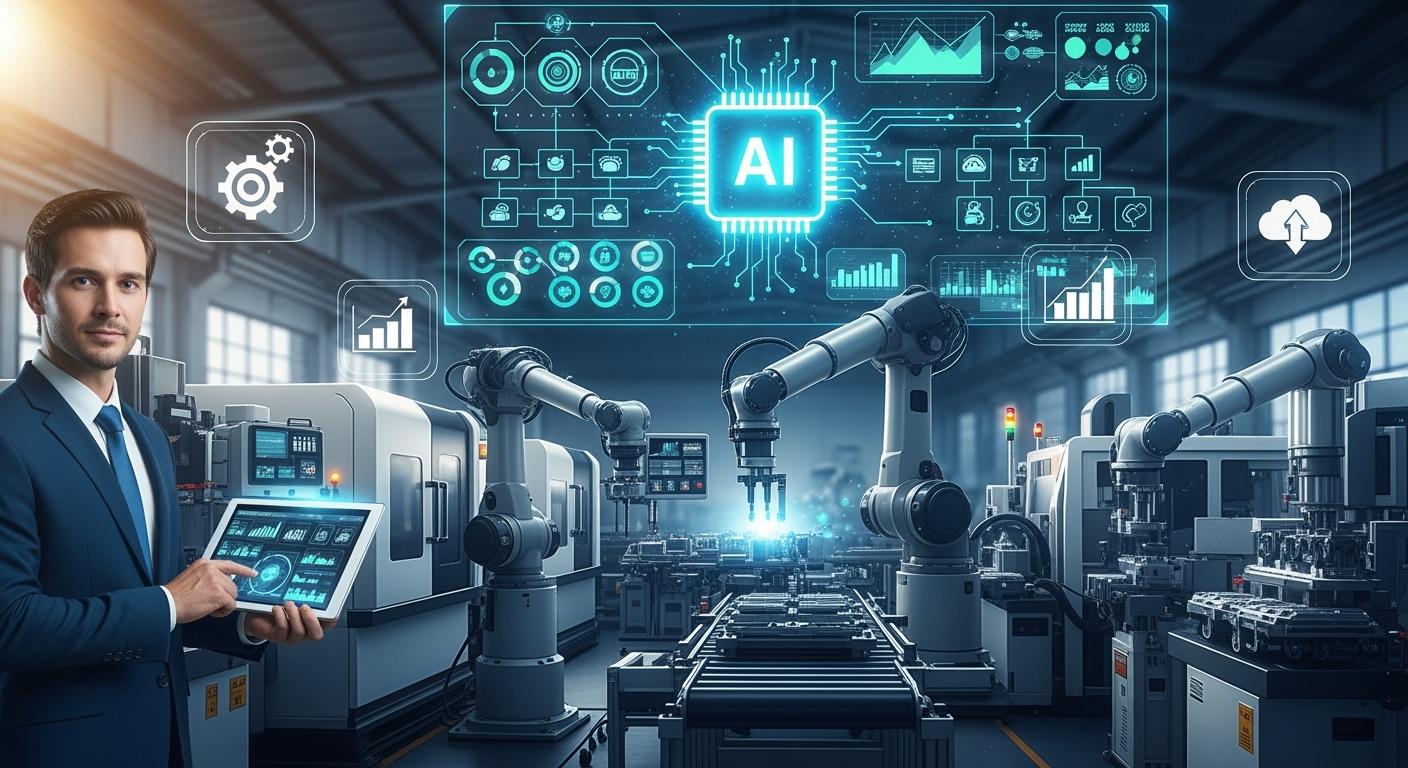
You face strong competition in manufacturing today. To stay ahead, you must use advanced technology that drives efficiency. AI ERP Platforms now change how you manage your business. With these tools, you streamline processes and gain real-time insights for better planning. Automation in erp software helps you cut costs and predict equipment issues before they happen. When you use these innovations, you reduce expenses and lead in industrial progress.
Top AI ERP Platforms for Manufacturing
SAP S/4HANA Manufacturing
You can transform your manufacturing operations with SAP S/4HANA Manufacturing. This platform uses Joule AI copilot to act as an intelligent business advisor. You receive context-aware assistance that helps you make better decisions. The system automates data extraction from invoices and purchase orders, which reduces manual entry and increases accuracy. You can use predictive analytics to forecast demand and spot supply chain disruptions before they happen. Machine learning algorithms improve your planning and optimize business processes. You can ask questions in natural language and get business insights quickly. SAP S/4HANA also gives you real-time insights into work center and resource capacity. The live MRP engine lets you respond fast to changes in demand and supply. These AI features make SAP S/4HANA one of the best manufacturing erp software options for the manufacturing industry.
Oracle Fusion Cloud SCM
Oracle Fusion Cloud SCM helps you optimize your manufacturing operations with advanced AI tools. Oracle AI Apps for ERP automate transactional processes and give you smart insights. These features help you streamline operations and improve efficiency. Oracle Cloud Infrastructure AI Services provide predictive analytics and anomaly detection, which support better decision-making. Generative AI services, such as natural language processing and computer vision, help you interpret data and boost operational efficiency. Oracle Fusion Cloud ERP enhances enterprise-wide planning and cross-functional visibility. You gain more flexibility and integration on the shop floor. This makes Oracle Fusion Cloud SCM a strong choice for manufacturing erp software and supply chain management software.
Microsoft Dynamics 365 Supply Chain Management
Microsoft Dynamics 365 Supply Chain Management stands out among manufacturing erp systems. You benefit from AI-driven personalization, automation, and real-time insights. These features help you improve customer experiences and increase operational agility. You can unify your data and workflows, which leads to better decisions and faster responses to market changes. This platform supports your need for reliable erp software in production planning erp systems.
Infor CloudSuite Industrial
Infor CloudSuite Industrial uses AI to help you stay competitive in the manufacturing sector. The platform analyzes big data to make precise predictions about future trends and production needs. You can make data-driven decisions that adapt to market changes. AI integration automates many manufacturing processes and improves collaboration between people and machines. You can use predictive maintenance and supply chain optimization to boost performance. Infor CloudSuite Industrial is a top choice for manufacturing erp software and cloud erp.
Epicor Kinetic
Epicor Kinetic brings advanced AI to your manufacturing operations through the Epicor Prism AI engine. You get real-time insights and prescriptive recommendations that improve efficiency. The system helps you manage inventory, set competitive prices, and plan maintenance cycles. You can also track energy use and carbon emissions, which supports your sustainability goals. Epicor Kinetic is one of the best erp software options for manufacturers who want to align with modern standards.
IFS Cloud
IFS Cloud supports you with AI-powered erp systems that cover every step from product development to shipment. You can use the platform for engineer-to-order, configure-to-order, and make-to-stock manufacturing. IFS Cloud automates inventory restocking, schedules predictive maintenance, and manages quality control. The system integrates Industrial IoT to collect data and trigger automated responses, which reduces downtime. You can forecast demand, predict equipment failures, and find inefficiencies. Real-time visibility and data-driven decisions help you improve production throughput and customer service. IFS Cloud is a leading cloud erp for the manufacturing industry.
QAD Adaptive ERP
QAD Adaptive ERP uses machine learning to analyze your data and forecast production needs. Natural language processing automates data entry and lets you interact with the system using voice commands. Robotic process automation handles repetitive tasks, which increases speed and reduces errors. Agentic AI uses human instructions to automate tasks more naturally. Predictive analytics helps you anticipate demand and optimize inventory, reducing waste. These features make QAD Adaptive ERP a smart choice for manufacturing erp software and enterprise resource planning solutions.
Sage X3
Sage X3 enhances your manufacturing erp software with AI-powered features. You receive predictive insights and autonomous workflow management. The system automates tasks and addresses challenges faced by mid-market manufacturers. Real-time insights help you spot supply chain issues and operational risks. You can identify and solve problems before they affect your revenue. Sage X3 is a reliable cloud erp that supports your growth and efficiency goals. Many erp vendors recommend Sage X3 for its strong AI integration.
Tip: When you choose the best manufacturing erp, look for platforms that combine AI, automation, and real-time analytics. These features help you stay ahead in the fast-changing world of manufacturing.
Why AI ERP Platforms Matter in Manufacturing
Enhanced Decision-Making with AI
You need to make smart choices every day in the manufacturing industry. AI erp platforms help you analyze data from production, supply chain, finance, and quality management. These tools let you see patterns and trends that you might miss on your own. With better demand forecasting and production scheduling, you can plan ahead and avoid costly mistakes. AI-powered erp systems also help you spot risks in your supply chain and improve product quality. When you use manufacturing erp software with AI, you make decisions faster and with more confidence.
- AI in erp software supports smarter decisions across all business areas.
- You can improve planning outcomes by using real-time data.
- AI helps you forecast demand and optimize resources.
- These systems strengthen your supply chain by finding risks early.
Process Automation and Efficiency
You want your business to run smoothly and save time. Manufacturing erp software with AI automates routine tasks, so you spend less time on manual work. This automation speeds up workflows in finance, procurement, and operations. You get more accurate results and fewer errors. Many companies have seen big improvements after using AI-driven erp software.
| Improvement Type | Percentage Change |
|---|---|
| Reduction in empty miles | 12% |
| Decrease in fuel spend | 9% |
| Improvement in on-time delivery | 20% |
A midmarket food and beverage producer used AI in their logistics and saw these results. Another manufacturer improved picking productivity with a warehouse management system that uses AI. When you choose cloud erp or production planning erp systems, you can expect similar gains.
Predictive Analytics and Maintenance
You want to avoid equipment breakdowns and costly downtime. AI erp platforms use real-time data from sensors to watch your machines. These systems predict when something might go wrong, so you can fix it before it stops your production. They schedule maintenance based on how much you use your equipment and the environment it works in. This keeps your operations running and saves money. When you connect erp software with manufacturing execution systems, you get even better results.
Supply Chain Optimization
You need a strong supply chain to stay competitive. AI in manufacturing erp software helps you forecast demand and manage inventory. It also improves logistics and route planning, so you deliver products faster and at lower costs. AI finds risks with suppliers and helps you respond quickly. You use supply chain management software to plan production and use resources wisely.
| Evidence Type | Description |
|---|---|
| Demand Forecasting Accuracy | AI-enabled forecasting can cut supply chain errors by up to 50%. |
| Cost Reduction | AI reduces overhead by minimizing waste and optimizing logistics. |
| Increased Resilience | AI detects risks early, so you can avoid disruptions. |
Note: The shift from old systems to AI erp platforms gives you a real advantage. You lower costs, deliver faster, and reduce risks. Many erp vendors now see digital transformation as key for leadership in manufacturing.
Key Features of Leading Manufacturing ERP Software

AI and Machine Learning Tools
You gain a real advantage when you use manufacturing erp software with advanced AI and machine learning tools. These tools help you solve problems faster and make better decisions. Many ai erp platforms include:
- Predictive analytics
- Natural language processing
- Robotic process automation
- Machine learning
- Chatbots and virtual assistants
- Image recognition
You can use solutions like Augury for predictive maintenance or Avathon for industrial operations. These tools address challenges in the manufacturing industry and help you keep your equipment running smoothly.
Real-Time Analytics and Reporting
You need to see what happens in your business right away. Modern erp software gives you real-time analytics and reporting. With in-memory computing and live dashboards, you can view data from every department. This helps you spot problems and act quickly. You get alerts when something changes, so you can respond fast. Real-time dashboards and alerts help your team understand what is happening. You make better decisions because you see the facts as they happen. This is one of the most important erp features in the best manufacturing erp.
Integration and Customization
You want erp software that fits your business. Leading manufacturing erp systems let you build custom AI agents and workflows. Many platforms offer open APIs and low-code tools. Here is a table showing some options:
| ERP Platform | Integration and Customization Options |
|---|---|
| Infor CloudSuite | Custom AI agents and workflows via platform APIs |
| Epicor ERP | Custom AI agents through Automation Studio and RESTful APIs |
| Acumatica Cloud ERP | Low-code/no-code AI Studio for designing AI workflows |
| Microsoft Dynamics 365 Business Central | Custom AI agents via Copilot Studio |
| NetSuite ERP | Custom AI integrations through SuiteScript and SuiteFlow |
| Oracle ERP Cloud | Role-based AI agents with integration capabilities |
| IFS.ai | AI embedded into operational workflows |
You can choose cloud erp or on-premise deployment. Many erp vendors support industry-specific customizations, so your system matches your needs.
Industry-Specific Capabilities
You face unique challenges in manufacturing. Manufacturing erp software uses AI to solve these problems. AI can analyze large data sets, automate routine tasks, and give you smart recommendations. You get solutions designed for your production methods, not just generic tools. Manufacturing sectors now expect advanced AI in enterprise resource planning solutions. By 2026, these features will become standard in production planning erp systems and supply chain management software. You stay ahead when you use ai-powered erp systems that fit your industry.
Tip: Choose the best erp software that offers strong cloud erp options, deep integration, and industry-specific tools. This helps you improve supply chain management and grow your business.
Platform Comparison: AI ERP Systems for Manufacturing
Feature Comparison Table
You want to see how the best manufacturing erp software stands out. AI erp platforms offer unique features that help you run your business better. The table below shows key differences in erp software features:
| Feature | Description |
|---|---|
| Predictive Analytics | Analyzes historical trends to forecast demand, inventory needs, and cash flow with accuracy. |
| Intelligent Automation | Automates repetitive tasks like invoice processing and inventory replenishment. |
| Personalized Decision Support | Provides recommendations for pricing strategies and workforce allocation. |
| Enhanced Customer Experiences | Anticipates customer needs through predictive order fulfillment and personalized offers. |
| Competitive Edge | Offers lower operational costs and faster market response. |
You gain these advantages when you use ai-powered erp systems. These erp features help you improve supply chain management and production planning erp systems. You also get real-time insights that support your growth in the manufacturing industry.
Suitability for Different Manufacturing Needs
You need erp software that fits your sector. Different manufacturing erp systems work best for specific industries. For example, textiles, food, automotive, metal, and electronics require tailored workflows. Industry-specific templates in enterprise resource planning solutions can reduce erp implementation time.
- You can choose cloud erp or on-premise erp based on your business size.
- Cloud-based system options support fast scaling and easy updates.
- On-premise erp gives you more control over data and customization.
Here is a quick look at how some platforms compare:
| Platform | Scalability | Customization |
|---|---|---|
| NetSuite ERP | Supports growth from 10 to 100 users | Industry-specific editions available |
| IFS Applications | Designed for asset-intensive industries | Tailored for specific sectors |
You find that erp vendors offer solutions for every need. The best erp software gives you flexibility and strong supply chain management software. You can match your erp software to your business goals and industry requirements.
Tip: When you select manufacturing erp software, look for platforms that fit your sector and scale with your growth. This helps you stay competitive and ready for new challenges.
How to Choose the Right Manufacturing ERP Software
Assessing Business Needs
You should start by understanding your goals before choosing manufacturing erp software. Set measurable objectives so you can track your progress and know when you succeed. Check if your team is ready for a new system and if you have the resources to support the project. Review your current processes to find areas that need improvement. Make a list of must-have features, such as a bill of materials that matches your assembly needs, workflows that fit your shop floor, accurate costing, and detailed inventory tracking. This approach helps you find erp software that fits your business.
- Define clear objectives for your project.
- Make sure your organization is ready for change.
- Document your current processes.
- List the features you cannot do without.
Evaluating AI Features
When you look at ai erp platforms, focus on how they use artificial intelligence to solve real problems. Good manufacturing erp software can automate accounting tasks, detect fraud, and forecast cash flow. You can use predictive analytics to plan your budget and improve supplier selection. AI can also help you create purchase orders, predict supply chain issues, and generate demand forecasts. Over time, machine learning makes these forecasts more accurate. AI tools can optimize inventory, improve warehouse space, and make logistics more efficient. You also get real-time shipment tracking and automated supplier communication. These features help you manage risk and keep your business running smoothly.
Industry Fit and Scalability
You need manufacturing erp systems that match your industry. Look for erp software with preconfigured tools for your segment. These tools should fit your operations and help you scale as your business grows. Customization is important because every manufacturer has unique needs. Choose a cloud erp or on-premise erp that adapts as your business changes. Industry-specific workflows and tools can make your operations more efficient and give you an edge over competitors.
- Check if the system fits your industry segment.
- Look for prebuilt industry models.
- Make sure the software can grow with your business.
- Choose solutions that offer customization for your needs.
Cost and Vendor Support
You must consider the total cost of ownership when selecting erp software. Costs include licensing, implementation, training, maintenance, customization, data migration, and infrastructure. Use the table below to help you compare options:
| Cost Factor | Description |
|---|---|
| Licensing Fees | Initial cost to acquire the software. |
| Implementation Costs | Expenses for setup and consulting. |
| Training Costs | Money spent to train your staff. |
| Maintenance Costs | Ongoing support and system upkeep. |
| Customization Costs | Extra charges for tailored features. |
| Data Migration Effort | Resources needed to move your data. |
| Infrastructure Costs | Hardware or cloud services required for the system. |
Vendor support is just as important as cost. Good erp vendors help you integrate the system, maintain it, and adapt it as your needs change. Strong support reduces risk and helps you get the most from your investment.
Implementation and User Adoption
A successful erp implementation depends on clear roles and responsibilities. Assign key performance indicators to track progress. Set up a data governance plan to keep your information accurate. Manage change by preparing your team for new ways of working. Get support from your leaders and explain why the change matters. Offer ongoing training so everyone feels confident using the new system. These steps help you get the most from your enterprise resource planning solutions, whether you use a cloud-based system or production planning erp systems. You will see better results in supply chain management software and daily operations.
Tip: Take time to plan each step. The right erp software will help your business grow and stay competitive.
You gain real advantages when you adopt AI-powered manufacturing erp software. Many manufacturers see improved forecasting, predictive maintenance, and smarter scheduling. You also benefit from process automation and a better user experience. Comparing different platforms helps you understand erp system benefits and choose the right fit for your needs. To get the most from manufacturing execution systems, follow expert advice:
| Recommendation | Description |
|---|---|
| Build a Solid Data Foundation | Keep your data accurate and unified for reliable AI insights. |
| Evaluate Legacy System Readiness | Check if your current systems support AI or need upgrades. |
| Invest in Skills and Change Management | Train your team and communicate clearly for smooth adoption. |
| Balance Cost and ROI | Measure gains against costs and start with pilot projects. |
Take the next step toward digital transformation by consulting with trusted vendors or experts.
FAQ
What is an AI ERP platform?
You use an AI ERP platform to manage your business with smart technology. It combines traditional ERP functions with artificial intelligence. This helps you automate tasks, analyze data, and make better decisions.
How does AI improve manufacturing ERP software?
AI helps you predict demand, automate routine work, and spot problems early. You get real-time insights and faster responses. This leads to fewer errors and better use of resources.
Is AI ERP software hard to use?
Most AI ERP platforms have user-friendly dashboards and guides. You can learn basic features quickly. Many vendors offer training and support to help you get started.
What should you look for when choosing an AI ERP platform?
Tip: Focus on these key points:
- Industry fit
- AI features
- Customization options
- Vendor support
- Cost
You should pick a platform that matches your business needs and goals.
See Also
Why WarpDriven ERP Is Essential for Smart Enterprise Management
Top 10 E-commerce Platforms That Integrate With Accounting
Using AI to Improve Production Forecasting Accuracy in 2024
AI-Driven Dynamic Safety Stock Solutions for Fashion Retail in 2025
Strategies to Ensure Your B2B Order Fulfillment Is Future-Ready