
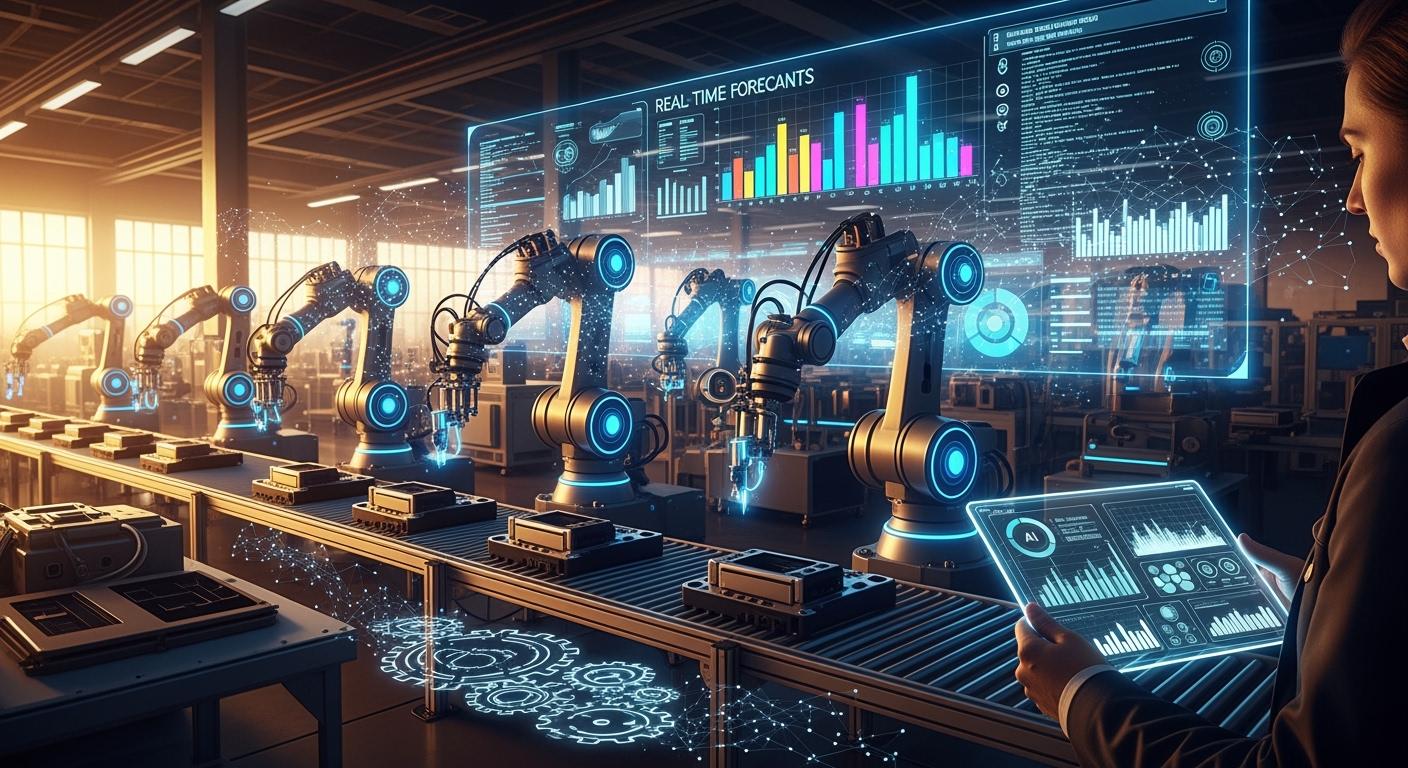
AI-powered demand forecasting changes how you manage manufacturing efficiency. You can now use AI to analyze data from sales, supply chains, and even outside market trends. This technology predicts demand with much greater accuracy than traditional methods. Many companies have already started to adopt these solutions:
- 45% of companies currently use AI-powered demand forecasting.
- 43% plan to adopt these tools within the next two years.
Studies show that AI can reduce forecasting errors by 20-50%. As a result, you see less waste, better planning, and a higher return on investment. Manufacturers who use ai demand forecasting stay ahead in a fast-changing market.
AI Demand Forecasting Benefits

Improved Forecast Accuracy
You can boost your forecast accuracy by using ai demand forecasting. This technology uses advanced data analysis to predict customer demand with much greater precision. When you use ai-powered demand forecasting, you can see a 30-40% reduction in forecast variance and a 25% improvement in demand planning precision. You also identify changes in demand trends 50% faster than before.
When you improve forecast accuracy, you save money. The Institute of Business Forecasting found that each 1% gain in accuracy can save your company between $0.97 million and $3.5 million. For example, Eurocell Group used ai to forecast over 43,000 SKUs and improved product availability by 6.7%. They also freed up £1.86 million in working capital.
You can see how these improvements look in the table below:
| Benefit Type | Improvement Metrics |
|---|---|
| Forecast Accuracy Improvements | 30-40% reduction in forecast variance |
| 25% improvement in demand planning precision | |
| 50% faster identification of demand trend changes |
When you use ai, you can shift your supply chain team from reacting to problems to planning ahead. You can make better decisions about production and inventory. This helps you match your production to real customer demand and avoid costly mistakes.
Reduced Waste and Costs
You can cut waste and lower costs by using ai demand forecasting. Accurate forecasting helps you keep the right amount of inventory. You do not need to hold extra stock, and you avoid running out of products. This means you spend less on storage and reduce the risk of lost sales.
Here is how ai helps you save money:
| Metric | Before AI | After AI (9 months) | Improvement |
|---|---|---|---|
| Forecast accuracy (weekly/SKU) | 58% | 87% | +29 points |
| Excess inventory | $112M | $78M | -30% |
| Stockout rate | 8.2% | 4.8% | -41% |
| Revenue lost to stockouts | $18M/year | $10.6M/year | -41% |
You can also see big savings in maintenance and operations. Many companies report a 40% reduction in unplanned downtime and 70% fewer emergency repairs. You can save $150,000 or more per facility each year. Large companies can save up to $3.2 million every year. Most companies see a return on investment of 200-400% within 12 to 18 months.
- AI tools automate stock replenishment and spot products that are about to expire. This is very helpful for perishable goods.
- Predictive analytics help you inspect raw materials for defects before production. You can reduce scrap and leftover materials.
McKinsey & Company found that businesses using ai-powered data analytics outperform their competitors by 68%. You can also avoid drastic markdowns on surplus stock and improve your pricing strategies.
Streamlined Operations
You can make your operations smoother with ai demand forecasting. AI automates many manual forecasting tasks. Your team can spend less time on spreadsheets and more time on strategic planning. This leads to faster and better decisions.
| Operational Efficiency Metrics | Improvement |
|---|---|
| Time spent on manual forecasting tasks | 60% reduction |
| Quote-to-order cycle times | 35% faster |
| On-time delivery rates | 45% improvement |
AI helps you optimize procurement, production, and inventory. You can reduce inventory holding costs and minimize stockouts. This means you can deliver products on time and keep your customers happy.
- AI gives you real-time insights into stock levels across all warehouses. You can manage inventory proactively and reduce lost sales.
- AI can adjust production toward products with higher expected demand. You avoid overstocking and stockouts, which improves warehouse capacity planning and production alignment.
When you use ai, you can align your production with actual market needs. You can maximize machine use and minimize excess inventory. This makes your entire operation more efficient and profitable.
Limitations of Traditional Demand Forecasting
Manual Processes and Errors
You face many challenges when you rely on manual demand forecasting. Most traditional systems depend on spreadsheets and legacy tools. These methods often lead to mistakes and missed opportunities. Manual processes increase the risk of human error. You may enter incorrect numbers or overlook important data. Teams often work in silos, which means you miss insights that could improve your forecasts. Incomplete or unstructured data can distort your results.
Here are some common errors caused by manual demand forecasting:
- Siloed teams miss valuable insights.
- Unstructured or incomplete data distorts forecasts.
- Manual errors from spreadsheets increase mistakes.
- Reliance on legacy systems leads to inaccuracies.
- Lack of real-time data integration creates gaps in information.
You can see how error rates compare between manual and ai systems:
| Method | Error Rate (%) | Accuracy (%) |
|---|---|---|
| Manual Systems | Up to 50 | N/A |
| AI Systems | 0.1 | Up to 99.9 |
Manual demand forecasting often results in lost revenue opportunities. You may experience stockouts, which cause customers to turn to competitors. Excessive holding costs tie up your capital and increase storage expenses. Frequent unavailability can damage your brand reputation. Supplier relationships may suffer due to inconsistent order volumes.
Inflexibility to Market Changes
Traditional demand forecasting methods struggle to adapt to rapid changes in the market. These systems rely heavily on historical data. When demand shifts quickly, your forecasts become outdated. You often need to make manual adjustments, which increases your workload and adds subjectivity.
Here is a table showing the main limitations:
| Limitation | Description |
|---|---|
| External disruptions | Cannot account for unexpected events that change demand year-over-year. |
| Rapid shifts in demand | Fail to detect sudden changes in consumer demand within days. |
| Anticipating retailer orders | Cannot predict retailer orders after initial pipeline fills for planned events. |
| Dependence on Historical Data | Rely on past sales patterns, which may not reflect current market conditions. |
| Slow Reaction to Demand Changes | Lag behind actual demand shifts, leading to outdated forecasts. |
| Ignoring External Drivers | Overlook factors like pricing, promotions, and supply constraints. |
| Need for Manual Intervention | Require frequent adjustments, increasing workload and subjectivity. |
As demand becomes more volatile, traditional methods struggle to deliver reliable forecasts. You may lose revenue, face higher holding costs, and damage your brand. You need ai to respond quickly and accurately to market changes. With ai, you can integrate real-time data and adapt your forecasts to new trends. This helps you stay competitive and avoid costly mistakes.
AI-Powered Demand Forecasting in Manufacturing
Real-Time Data Analysis
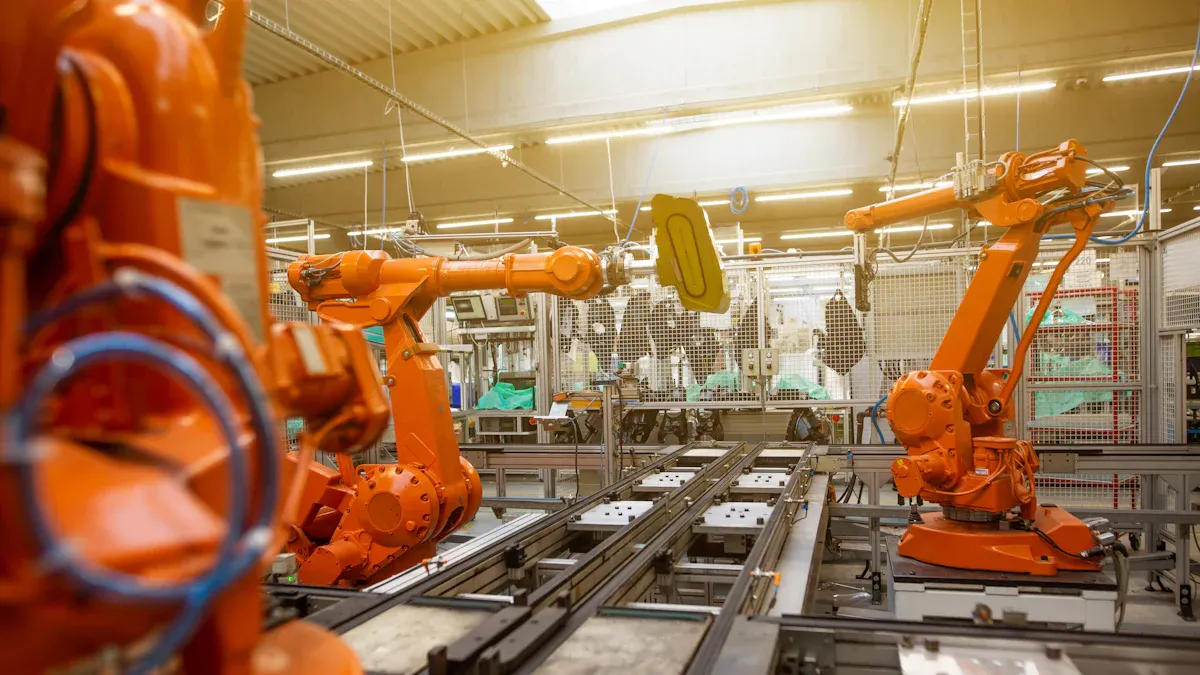
You can use artificial intelligence to analyze data from many sources in real time. AI demand forecasting systems pull in past sales, current promotions, consumer trends, and even weather events. These systems also track social media engagement and website traffic. By connecting all this data, you spot patterns that help you make quick decisions. For example, when you see a spike in online searches for a product, you can adjust your strategy right away. AI also lets you react to sudden changes in demand, such as a shift caused by a new trend or a weather event. This fast response helps you stay ahead of the market.
- AI links online search trends to in-store sales, so you can act fast.
- You can use external signals, like weather or social media, to predict customer demand.
Predictive Analytics and Machine Learning
AI-powered demand forecasting uses predictive analytics and machine learning to boost forecast accuracy. These tools study large amounts of data, including historical sales and economic conditions. Machine learning models find complex patterns that older methods miss. They keep learning and updating as new data comes in. This means your forecasts get more accurate over time. You can reduce inventory by 25% and still meet customer demand. Machine learning also helps you avoid stockouts and extra inventory. Some models, like digital twins, let you test changes in production planning before you make them.
- Predictive analytics helps you plan production and cut waste.
- Machine learning improves forecast accuracy by 20-30% over traditional forecasting.
Handling Volatility and Disruptions
AI demand forecasting helps you manage sudden changes in demand and supply chain disruptions. Artificial intelligence reviews huge data sets to spot patterns that humans might miss. You can prevent overstocking and stockouts, which saves money and keeps customers happy. Research shows that AI-driven forecasting cuts errors and boosts efficiency. Many companies have seen real results:
| Company | AI Implementation Details | Results |
|---|---|---|
| Kraft Heinz | Used AI to improve demand forecasting precision | 8% higher forecast accuracy, 25% less excess inventory, 10% less food waste |
| Agribusiness (C3 AI) | Switched to daily AI-driven forecasts for 88 SKUs | 8% better forecast accuracy, $30 million more in gross margin |
| Church Brothers Farms | Used AI for seasonal produce demand forecasting | 40% higher short-term forecast accuracy, less spoilage and excess inventory |
You can see how AI-powered demand forecasting leads to real improvements in forecast accuracy, production planning, and cost savings.
Implementing AI Demand Forecasting
Assessing Current Systems
You need to start by looking at your current forecasting process. Many manufacturers use legacy systems that limit accuracy and speed. You should recognize these limits and shift your mindset about data readiness. Instead of waiting for perfect data, focus on where you can create momentum with ai.
"The reality of getting started with AI is no one’s data is ever ready. We encourage leaders to shift their mindset from ‘How do I fix my data?’ to ‘Where can I create momentum?’"
You can follow these steps to assess your systems:
- Identify where legacy systems slow down forecasting.
- Find workflows where ai can make an immediate impact.
- Review how you use data for sales, production, and inventory.
- Look for gaps in quoting accuracy, customer prioritization, and inventory optimization.
Choosing AI Tools and Partners
Selecting the right ai tools and partners is important for success. You should match your business needs with the right solution. Use the table below to compare key criteria:
| Criteria | Description |
|---|---|
| Data Volume and Quality | Large, clean data sets support complex models. Smaller sets need simpler tools. |
| Forecasting Horizon | Short-term needs may use basic models. Long-term planning benefits from ai. |
| Demand Volatility | High or seasonal demand works best with adaptive ai models. |
| Business Use Case | Choose tools for inventory, sales, or production planning. |
| Resources and Skill Sets | Some tools need experts. Others work for business users with no-code options. |
You should also consider use case scope, data availability, accuracy needs, time and budget limits, scalability, complexity, expertise, integration, and adaptability.
Change Management for Manufacturers
You must prepare your team for ai adoption. Involve leadership to show support for new forecasting tools. Engage employees early and find change champions. Offer training for different roles so everyone feels confident using ai. Redesign your processes to blend human skills with ai capabilities. This helps you get the most from your investment and improves production planning.
Avoiding Common Pitfalls
Many manufacturers face challenges when starting with ai demand forecasting. You can avoid these pitfalls by following best practices:
- Create a clear ai strategy that matches your business goals.
- Improve data quality with strong data governance.
- Modernize legacy systems step by step. Cloud-based ai platforms can help.
- Start with scalable solutions to manage costs.
- Upskill your team and work with outside ai experts if needed.
By following these steps, you can unlock the full value of ai in forecasting, sales, and production.
You gain real advantages when you use AI demand forecasting. Manufacturers report faster production, lower costs, and better customer satisfaction. Many see a return on investment within two years. The table below shows key improvements:
| Efficiency Gain | Percentage Improvement |
|---|---|
| Production Throughput | 10–15% |
| EBITA | 4–5% |
AI helps you plan smarter and respond quickly to market changes. To get started, follow these steps:
- Audit your current forecast accuracy.
- Check your data quality.
- Pilot AI planning software.
- Track your results and improve.
AI-powered forecasting sets you up for long-term growth and a stronger business.
FAQ
What is AI demand forecasting?
AI demand forecasting uses artificial intelligence to predict how much of a product you will need. It looks at data from sales, trends, and outside factors. You get more accurate forecasts than with manual methods.
How does AI improve forecast accuracy?
AI studies large amounts of data quickly. It finds patterns that people may miss. You get better predictions and can plan your production and inventory more effectively.
Can small manufacturers use AI demand forecasting?
Yes, you can use AI even if you run a small business. Many AI tools work with smaller data sets. Some solutions do not need advanced technical skills.
Tip: Start with a pilot project to see how AI fits your needs.
What data do I need for AI demand forecasting?
You need sales history, inventory levels, and production data. You can also use outside data like weather or market trends. The more data you have, the better your results.
- Sales records
- Inventory reports
- Market trends
See Also
Utilizing AI To Improve Production Forecasting Accuracy In 2024
Harnessing AI For Better Demand Forecasting During Shopping
Using AI And Data For Demand Forecasting In 2025