
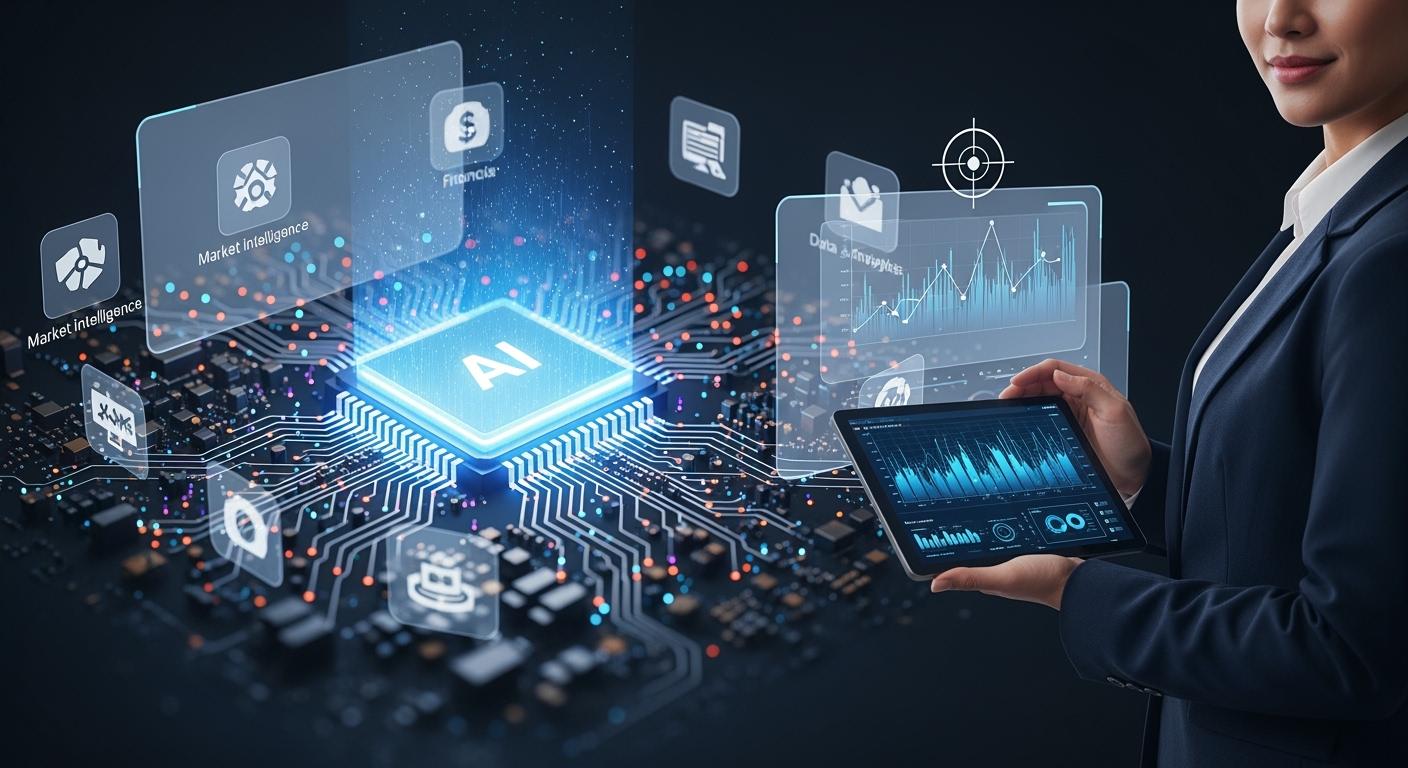
You stand at the edge of a new era in ai market intelligence. By 2026, the market will rise to $375.93 billion, showing how fast ai changes marketing. You see ai market intelligence platforms give you insights that drive better decisions. You act faster and more accurately because ai helps find patterns and trends in marketing data. Today, companies use ai to improve marketing efficiency, uncover insights, and predict customer needs. You gain a competitive advantage when you let ai transform digital market intelligence and data-driven marketing. Insights from ai market intelligence help you visualize data and plan your next move with confidence.
AI Market Intelligence in 2026
Evolving Platform Capabilities
You see ai market intelligence platforms changing fast. By 2026, these platforms will offer new tools that help you make better decisions. You notice ai-powered marketing intelligence gives you actionable insights that help you understand your market and customers. These platforms use ai-powered search and recommendations to show you content and products that fit your needs. You interact with conversational ai interfaces that answer your questions and support your team.
You rely on predictive analytics to forecast demand and track user behavior. These platforms help you spot trends and patterns in marketing data. You use automated workflows that follow ai-driven decision rules. This saves you time and lets you focus on important tasks. Data-driven personalization becomes standard across web and mobile apps. You see platforms adapt to your preferences and deliver insights that match your goals.
You benefit from standardized benchmarks in industries like healthcare and finance. These benchmarks make sure platforms give you accurate and reliable insights. You trust the platforms because they follow rules and keep your data safe. Multimodal ai lets platforms understand different types of input, like text, images, and voice. This makes ai interactions more responsive and helps you get deeper insights.
Agentic ai systems gather and analyze large amounts of data for you. You get actionable insights quickly and make precise business decisions. These platforms help you stay ahead in the market and respond to changes faster than your competitors.
You gain confidence when you use platforms that deliver actionable insights and help you plan your next move.
User Experience and Integration
You notice user experience improving in ai market intelligence platforms. You interact with immersive ai experiences that use AR, VR, and voice interfaces. These platforms create engaging interactions and boost user engagement. You receive personalized recommendations and dynamic experiences that keep you interested.
| Anticipated Improvement | Description |
|---|---|
| Immersive AI Experiences | AI combines with AR, VR, and voice to create seamless and engaging interactions. |
| Accelerated Innovation Cycles | AI speeds up product design, testing, and refinement, leading to frequent improvements. |
| AI-Augmented Decision-Making | AI provides data-driven insights and simulations for better strategic planning. |
You see platforms speeding up innovation cycles. You get new features and improvements more often. These platforms help you test and refine products quickly. You rely on ai-augmented decision-making to plan your strategies. You use simulations and insights to reduce risks and make smarter choices.
You experience platforms evolving into unified engagement and workflow orchestration layers. These platforms connect with CRM and collaboration tools. Ai agents manage routine tasks for you and improve operational efficiency. You see examples like Salesforce's Agentic Contact Center, which combines ai and CRM in one platform. Zoom Communications uses ai to automate workflows across communication channels. These platforms make human and ai collaboration easier.
You trust platforms that integrate smoothly with your existing systems. You see platforms helping you manage data, automate tasks, and deliver actionable insights. You rely on ai market intelligence platforms to guide your marketing strategies and improve your business outcomes.
Marketing Intelligence Tools: Current Challenges
Data Quality and Reliability
You face many challenges when you use marketing intelligence tools. The quality of data shapes your results. If you use inaccurate or incomplete data, your marketing decisions can miss the mark. You see outdated or duplicate data confuse your analysis. Badly integrated data across systems leads to errors and slows your work. You need reliable data to trust ai insights and improve your market strategies.
| Data Quality Issue | Description |
|---|---|
| Inaccurate data | Errors in data lead to wrong business decisions. |
| Incomplete data | Missing information causes missed insights. |
| Duplicate data | Multiple records create confusion and inefficiency. |
| Outdated data | Old information misleads your decisions. |
| Inconsistent data | Differences across sources cause errors in analysis. |
| Unstructured data | Hard-to-use data slows data analysis. |
| Dark data | Unused data means lost opportunities. |
| Orphaned data | Isolated data gives incomplete views of clients. |
| Irrelevant data | Unrelated data complicates decision-making. |
| Fraudulent data | False data affects operations. |
| Decaying data | Data quality drops over time, leading to outdated insights. |
| Non-compliant data | Data that breaks rules risks your business. |
| Badly integrated data | Poor integration causes inconsistencies and errors. |
You see that poor data quality leads to wasted resources and missed market opportunities. When you use ai for data analysis, you need clean and reliable data to get actionable insights.
Scalability and Customization
You want marketing intelligence tools that grow with your business. You need ai to handle large amounts of data and adapt to new market trends. You look for tools that support unified data aggregation and harmonization of metrics. You use built-in models for data analysis and decision-ready dashboards. You see platforms like Improvado help agencies and multi-brand teams with flexible data pipelines. You rely on integrated crm and marketing intelligence to optimize your planning and performance.
Privacy and Ethics
You must protect data privacy when you use ai in marketing. You see concerns about how ai collects and uses consumer data. Data repurposing and spillovers can happen without consent. Data persistence can conflict with changing privacy preferences. You notice that ai models trained on biased data can cause unfair results. This bias affects industries like healthcare and finance. You need transparency in data practices and human oversight to build trust. You see new rules like the White House AI Bill of Rights and California's regulations guide ethical ai use. The European Union's AI Act focuses on accountability and safety. You use competitive intelligence automation to stay ahead while respecting privacy and ethics.
You improve your market strategies when you harmonize data and follow ethical standards in ai-powered marketing.
AI Market Research Tools and Emerging Technologies

Generative AI and Synthetic Personas
You see ai market research tools changing how you understand your customers. Generative ai creates synthetic personas that act like real users. These personas help you test marketing strategies before you launch them. You use ai market research to build data-driven profiles that update as new data arrives. These personas simulate real-time decisions and show you how different users might react to your campaigns. You can:
- Simulate user navigation on your website.
- Run A/B tests with virtual customers.
- Design marketing for inclusivity and reach more people.
You get deeper insights into customer behavior and preferences. Ai market research tools help you predict what your audience will do next.
Real-Time Analytics and Automation
You rely on ai market research tools for real-time analytics and automation. These tools speed up data analysis and help you make decisions faster. You use automated data collection to gather information from many sources. Ai market research tools let you:
- Collect, ingest, and integrate data quickly.
- Analyze data and get real-time insights.
- Automate actions based on analytics.
You see platforms like Displayr, Alida, aytm, CivicScience, Qualtrics, Fuel Cycle, Enumerate AI, Forsta, and Zappi lead in real-time analytics. These ai market research tools give you centralized access to insights. You focus on strategic planning while automation handles routine tasks. You notice that ai market research tools foster collaboration across your marketing team.
Natural Language Processing Advances
You use ai market research tools with advanced natural language processing. NLP helps you understand customer opinions at scale. You get insights from social media, reviews, and surveys. Ai market research tools use sentiment analysis for social listening. You track brand mentions and user opinions in real-time. Platforms like Improvado, Market Logic, and Comparables.ai use NLP to enhance ai market research. You interact with data using natural language interfaces. Large language models provide context-aware insights for your marketing team.
| Aspect | Description |
|---|---|
| Sentiment Analysis | NLP tools analyze large volumes of text to find customer sentiments across platforms. |
| Natural Language Interfaces | Marketers interact with data using natural language, making analysis easier. |
| Integration with LLMs | Large Language Models offer context-aware sentiment analysis and can be customized for your needs. |
You see ai market research tools transform how you gather, analyze, and act on insights. You stay ahead in the market with real-time, automated, and intelligent marketing analytics.
Industry Trends and Predictions

Adoption Across Sectors
You see ai market intelligence platforms spreading across many sectors. Banking, insurance, manufacturing, retail, healthcare, life sciences, education, and government all play a significant role in ai adoption. You rely on ai to analyze data and deliver insights that help you make better marketing decisions. The table below shows how each sector leads in using ai for market intelligence.
| Sector | Role in AI Adoption |
|---|---|
| Banking | Significant |
| Insurance | Significant |
| Manufacturing | Significant |
| Retail | Significant |
| Healthcare | Significant |
| Life Sciences | Significant |
| Education | Significant |
| Government | Significant |
You notice key drivers behind sector-specific adoption rates. Technological innovation, cross-industry adoption, regional growth, sustainability and regulatory compliance, and cybersecurity all push ai market intelligence forward. You see marketing teams in each sector use ai to track trends, manage data, and gain insights faster.
Proactive Intelligence Approaches
You shift from reacting to market changes to anticipating them. Ai and machine learning help you foresee trends and emerging issues. You use proactive analysis to identify trends before competitors do. Early warning systems alert you to potential threats. You encourage innovation by exploring new marketing ideas. This proactive approach lets you avoid missed opportunities and competitive blind spots. You improve your market positioning by acting on insights from ai-driven data.
You measure outcomes from proactive intelligence strategies. You reduce customer effort by solving root causes of inquiries. You enhance customer satisfaction with operational insights. You optimize costs by removing friction points. You improve resolution times with outcome-based KPIs. You monitor journey-level satisfaction to keep improving customer experiences.
| Measurable Outcome | Description |
|---|---|
| Reduced Customer Effort | Addressing root causes minimizes customer effort. |
| Enhanced Customer Satisfaction | Insights improve customer experience and satisfaction. |
| Optimized Costs | Eliminating friction points leads to sustainable cost optimization. |
| Improved Resolution Times | Outcome-based KPIs track and speed up issue resolution. |
| Higher Journey-Level Satisfaction | Monitoring performance ensures continuous improvement. |
Human-AI Collaboration
You work with ai agents to handle structured marketing tasks. Ai shifts workflows from manual to automated, freeing you to focus on strategic planning and creative development. New roles like ai prompt engineers and ai campaign strategists emerge, showing how human-ai collaboration grows. Research shows ai can reduce evidence synthesis time by over 50%, leading to a labor reduction of more than 75% compared to manual processes.
You see productivity gains in market research tasks. Software developers contribute 19% to total labor productivity gains from ai. Market research analysts and marketing specialists account for 5%. Human-ai collaboration enhances productivity and quality in marketing research. Programmers using ai tools finish tasks faster. Mental health counselors using ai chatbots give more empathetic responses. Customer service employees collaborating with ai show greater creative performance. You use ai to analyze data, generate insights, and track trends in marketing, making your work more efficient and impactful.
Business Impact and Strategic Implications
Enhanced Planning and Risk Management
You use ai to transform your planning and risk management. Ai platforms automate risk scoring and help you focus on the most important threats. You see ai turn large amounts of security data into business intelligence. This helps you make better decisions and protect your marketing operations. Ai lets you model different scenarios and measure their impact. You plan for the future with more confidence.
- Ai improves coordination across your teams.
- You automate scenario planning and forecasting.
- Ai increases the accuracy and speed of your planning.
- You work better with other departments because ai connects your data.
You see real results. Ai systems reduced successful phishing attacks by 35% in some companies. You can measure risks more clearly and use your resources where they matter most. Ai also helps you detect threats faster and manage your data more efficiently.
Ai-driven tools help you stay ahead of risks and improve your marketing performance.
You can learn from other companies. The table below shows how different organizations use ai to manage risks and improve performance.
| Company | AI Application Description | Impact on Risk Mitigation |
|---|---|---|
| UniCredit | Connected bankers with M&A specialists using ai | Better risk management in mergers and acquisitions |
| Feedzai | Real-time machine learning for fraud detection | Stopped fraudulent transactions before they happened |
| MindBridge | Machine learning for financial data analysis | Reduced audit cycles and found hidden errors |
| HSBC | NLP and ML for compliance monitoring | Improved audits and stronger controls |
Gaining Competitive Edge
You gain a competitive edge when you use ai market intelligence platforms. These tools give you real-time data so you can react quickly to changes in the market. You get actionable insights that help you improve your marketing strategies and boost performance. Ai helps you understand user behavior, so you can predict trends and make smart decisions.
| Evidence Type | Description |
|---|---|
| Real-time Data | Ai gives you up-to-date information to adapt your marketing fast. |
| Actionable Insights | You use insights from ai to optimize your marketing and improve performance. |
| User Behavior Understanding | Ai tools help you see what your customers want and plan your next move. |
Early adopters of ai market intelligence report big advantages. You can automate routine tasks and focus on creative work. Ai improves security and keeps your data safe. You see better returns on your marketing investments. Ai analyzes trends and forecasts outcomes, so you make informed decisions.
- Ai-powered predictive analytics help you respond to market changes.
- Generative ai systems study large datasets to predict what your competitors will do.
- You track campaign performance and adjust your marketing for the best results.
Ai market intelligence gives you the tools to lead your industry and improve your marketing performance every day.
You see ai market intelligence platforms changing how you make decisions. By 2026, you will use ai to analyze data, automate workflows, and predict market trends. You gain faster insights and improve your strategies with ai-powered tools. You measure the ROI of ai by linking ai projects to business outcomes, tracking productivity, and focusing on quality interactions. You notice tangible benefits like cost savings, time savings, error reduction, risk mitigation, and efficiency.
You stay ahead when you adapt to ai advancements and keep your data reliable.
Actionable Steps for Businesses:
- Develop a clear roadmap for ai integration.
- Modernize data foundations to support advanced analytics.
- Strengthen security and compliance frameworks.
- Redesign operating models to use ai capabilities.
- Invest in talent that connects technology with business goals.
- Adopt portfolio thinking for quick wins and long-term value.
- Select partners that offer comprehensive ai services.
| Tangible Benefits | Description |
|---|---|
| Cost Savings | Productivity gains from ai. |
| Time Savings | Ai frees up professionals for higher-value tasks. |
| Error Reduction | Ai automation reduces manual errors. |
| Risk Mitigation | Ai prevents fraud and reduces litigation risks. |
| Efficiency | Ai streamlines workflows and speeds up response times. |
You future-proof your business by staying agile and informed. You use ai to transform your marketing, manage data, and lead your industry.
FAQ
What is an AI market intelligence platform?
You use an AI market intelligence platform to collect, analyze, and visualize market data. These platforms help you spot trends, understand your competition, and make better business decisions.
How does AI improve market research?
AI helps you process large amounts of data quickly. You get real-time insights and predictions. This lets you react faster to changes in your market.
Are AI market intelligence tools safe for my data?
You can trust most platforms to protect your data. They use strong security and follow privacy laws. Always check a platform’s privacy policy before you share your information.
Can small businesses use AI market intelligence?
Yes! Many platforms offer tools for small businesses. You can start with basic features and grow as your needs change.
What skills do I need to use these platforms?
You do not need to be a tech expert. Most platforms have simple dashboards and guides. You learn as you use the tools.
See Also
Utilizing AI and Data for Demand Forecasting in 2025
Best Practices for Accurate Production Forecasting Using AI in 2024
Impact of AI Sensors on Fashion Supply Chains in 2025
Using Predictive Analytics for Retail Re-stocking in 2025
AI Solutions for Dynamic Safety Stock in Fashion Retail 2025