
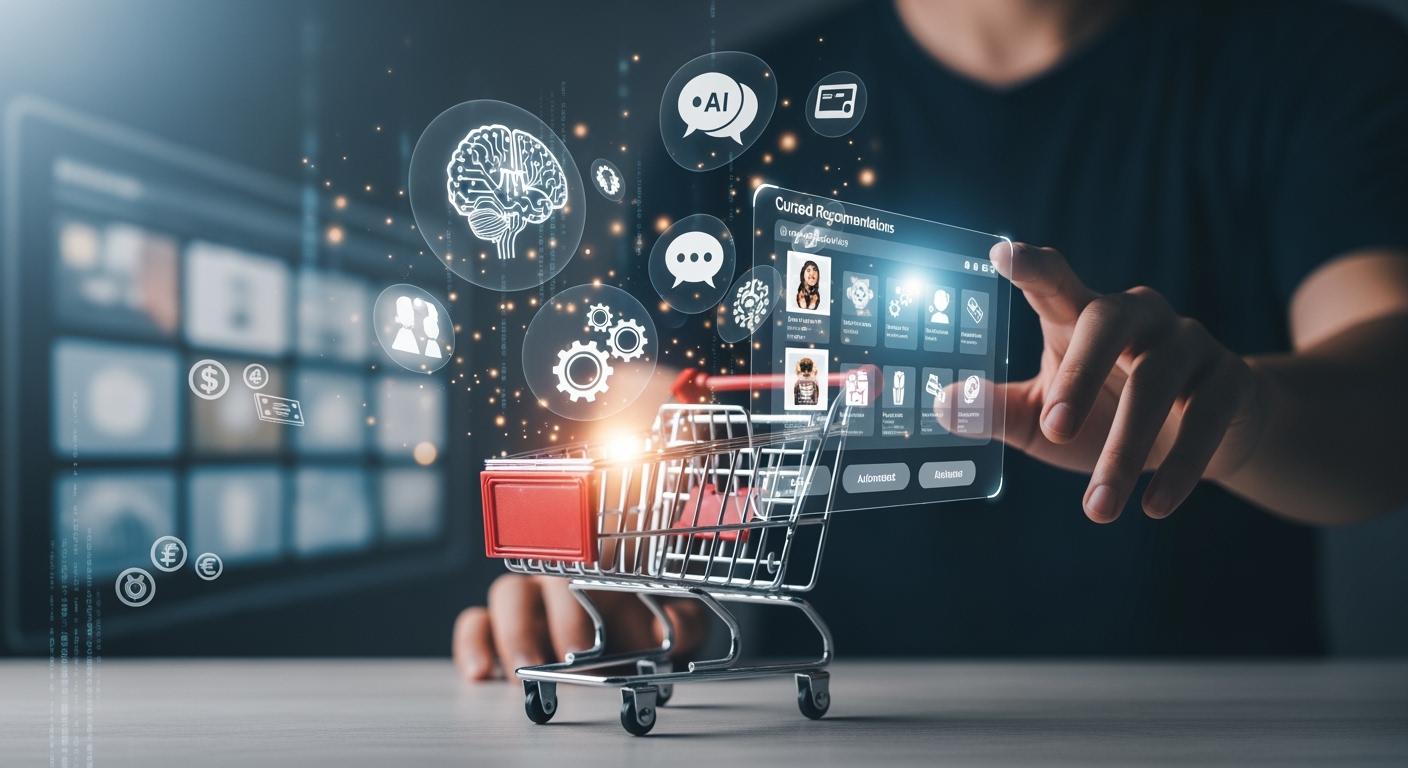
You see ai agents growing fast in ecommerce. Deloitte says most companies use physical ai now, and soon almost everyone will. IDC predicts a huge jump in ai agent activity and much higher inference demands by 2027. You need to get ready because this new technology will change your experience as a brand and for shoppers. Think about how these shifts might affect your business plan. You will find practical steps in this blog.
- Deloitte reports 58% of companies use physical ai, rising to 80% in two years.
- IDC expects a tenfold increase in ai agent usage and a thousandfold growth in inference demands by 2027.
AI Agents in eCommerce

Customer Experience
You want your customers to feel special every time they shop. AI agents make this possible. These agents act like personal shoppers, giving recommendations that match each shopper’s style. You see chatbots ready to answer questions at any hour. They help with order updates and even suggest alternatives if something is out of stock. Agents reach out to let customers know about sales or new offers. They also make payments safe and easy. With ai, you can automate follow-ups and wrap up conversations quickly. This means your customer service never sleeps, and every shopper gets help right when they need it.
- Personal shopper recommendations
- 24/7 chatbots for instant answers
- Order updates and substitutions
- Proactive outreach about deals
- Secure payment support
Operations & Logistics
Running an ecommerce business gets easier with ai agents. These agents monitor your systems and spot problems before they grow. They check inventory levels and delivery times, so you can fix issues fast. If a product is almost out of stock, the agent alerts your team and updates delivery estimates. You save money, forecast better, and keep your customers in the loop. Agents also help with warehouse robots, plan delivery routes, and even handle customs paperwork. This makes your supply chain stronger and more reliable.
- Reduces costs and boosts forecasting
- Improves transparency for customers
- Strengthens risk management
Product Data
Accurate product data keeps your ecommerce store running smoothly. AI agents scan and organize product details like color and size. They spot missing or wrong information before it causes trouble. Agents learn from new data and adjust as your market changes. They also help you adapt product info for different languages and regions, keeping your brand consistent everywhere.
| Functionality | Description |
|---|---|
| Attribute Standardization | AI agents classify product features, reducing manual work and errors. |
| Real-time Monitoring | Agents alert you to missing or inconsistent data before it goes live. |
| Adaptability | Agents learn from new formats and update logic as your needs change. |
Sales & Marketing
AI is changing how you create content and reach shoppers. Generative ai lets you build personalized shopping experiences fast. You can keep your brand voice strong while automating product descriptions and ads. Chatbots filter search results based on what each customer wants, like price or style. Agents even understand voice or image searches, making shopping easier. If your product details are clear and consistent, you keep more sales. In fact, over half of shoppers leave if they see bad or missing info. With ai agents, you make sure your content is always on point and your marketing hits the mark.
- Hyper-personalized content
- Consistent product data across channels
- Smarter search with chatbots and agents
Understanding AI Agents
Definition & Functions
You might wonder what makes an agent different from other tools. In ecommerce, ai agents handle complex workflows. These agents can see what’s happening, think about it, remember details, and act on their own. You get more than just automation. Agents turn raw data into actions that help your business. They connect to your store, learn about your products, and keep track of customer preferences. You see agents working in layers:
| Layer | Function |
|---|---|
| Data Layer | Connects to ecommerce platforms and gathers real-time and historical info. |
| Intelligence & Reasoning Layer | Uses ai models to spot patterns and create insights. |
| Memory & Personalization Layer | Remembers customer likes for better personalization. |
| Automation & Action Layer | Starts workflows based on what the agent learns. |
Agents operate independently. They make decisions and adapt without needing you to tell them every step.
AI vs. Traditional Automation
You may ask how agents compare to old automation tools. Traditional automation follows fixed rules. It does not learn or change unless you update it. Agents use ai to learn from new data and make smart choices. They understand context and predict what comes next. You get workflows that respond to changes, not just repeat the same steps. Here’s a quick look:
| Feature | AI Agents | Traditional Automation |
|---|---|---|
| Learning Capability | Learns from data | Needs human updates |
| Decision Making | Makes smart choices | Follows set rules |
| Adaptability | Changes with situations | Stays the same |
| Context Understanding | Knows what’s happening | Misses context |
| Responsiveness | Reacts quickly | Limited to set actions |
Importance for eCommerce
You need agents to keep up with fast changes in ecommerce. Agents manage inventory and act as shopping assistants. They speed up tasks that would take humans much longer. Agents can browse, compare, and buy items for you. They boost personalization by predicting what customers want. This leads to stronger relationships and more sales. You get a smarter, faster business that adapts to every shopper’s needs.
Tip: Start using agents now to stay ahead. They help you build a flexible and customer-focused ecommerce store.
Six Essential AI Agents
You see many types of ai agents changing how you work in ecommerce. Each agent has a special job. Some handle simple tasks. Others plan, help you make decisions, or even work together as a team. Here’s a quick look at the main types you’ll find:
| Type of AI Agent | Unique Role in eCommerce |
|---|---|
| Reflex Agents | Handle routine tasks with simple condition-action rules. |
| Goal-Based Agents | Plan and adapt strategies to achieve specific goals. |
| Utility-Based Agents | Evaluate options against criteria to optimize decisions. |
| Multi-Agent Systems | Manage complex, cross-departmental work collaboratively. |
| Copilots | Assist humans by providing suggestions and insights. |
| Autonomous AI Agents | Execute tasks independently within defined parameters. |
Let’s break down how each essential agent helps you win in ecommerce.
Customer Service Agent
You want your customers to get answers fast. A customer service agent does this for you. This agent uses ai to reply to questions right away. You don’t need to worry about long wait times. The agent handles routine questions and lets your team focus on tough problems. You get support all day and night. The agent can talk to thousands of people at once, even during busy times like Black Friday. It also remembers what each customer likes and gives personal answers.
| Benefit | Description |
|---|---|
| Instant Inquiry Handling | AI agents can respond to customer inquiries instantly, reducing wait times significantly. |
| Automation of Routine Questions | They automate responses to common questions, freeing human agents for complex issues. |
| 24/7 Availability | AI agents provide support around the clock, ensuring customers receive help whenever needed. |
| Personalization | They can tailor responses based on customer data, enhancing the overall experience. |
| Improved Time-to-First-Response | For example, HelloPrint improved their response time by 90% using an AI agent. |
| Handling High Volumes | AI can manage thousands of inquiries simultaneously, especially during peak times like Black Friday. |
You see better customer satisfaction and faster service. Your brand feels more helpful and friendly.
Personalization Agent
You want every shopper to feel special. A personalization agent makes this happen. This agent studies what each customer likes and suggests products they will love. It uses ai to show the right items at the right time. You see higher conversion rates and bigger orders. The agent can boost your sales by making smart recommendations. It also helps you earn more revenue and keeps shoppers coming back.
| Metric | Impact |
|---|---|
| Conversion Rate Increase | 4X (12.3% vs 3.1%) |
| Revenue Increase | Up to 40% |
| Conversion Boost from Recommendations | 150% |
| Average Order Value Increase | 50% |
You get more sales and happier customers. Personalization is the secret to growing your business.
Inventory Agent
You need to keep your shelves full but not overstocked. An inventory agent helps you do this. This agent uses ai to study past sales, spot trends, and predict what you’ll need next. It checks vendor lead times and even looks at outside factors like holidays. The agent can reorder products before you run out. You avoid lost sales and save money by not buying too much.
- Forecasts demand using sales data and trends
- Automates reordering based on predictions
- Considers vendor lead times and logistics
- Reduces out-of-stock incidents
You get a smoother supply chain and fewer headaches.
Product Content Agent
You want your product pages to shine. A product content agent keeps your info accurate and fresh. This agent uses ai to check your product details, fix mistakes, and update keywords for search engines. It helps you show up higher in search results. The agent also watches trends and updates your content to match what shoppers want. You see more traffic and better discoverability.
Tip: Teams using ai for product content see more revenue and lower costs. Most service teams say ai agents help them work faster and smarter.
You can trust your product data to stay sharp and up to date.
Sales Agent
You want to grow your sales without extra effort. A sales agent does the heavy lifting for you. This agent uses ai to find the best leads and reach out at the right time. It studies data to spot who is ready to buy. The agent can chat with customers in real time and answer questions. It also helps you target your campaigns for better results.
| Metric | Impact |
|---|---|
| Conversion Rate Increase | Doubled |
| Revenue Increase | 7-25% |
| Operational Cost Reduction | Up to 30% |
| Customer Satisfaction Score | Above 90% |
- Automates data analysis to find top prospects
- Uses predictive analytics for outreach
- Runs chatbots for real-time sales help
- Improves campaign targeting
You see more sales, lower costs, and happier customers.
Marketing Agent
You want your marketing to work smarter, not harder. A marketing agent uses ai to run campaigns that hit the mark. This agent studies your CRM data and creates messages that fit each shopper. It can change your ad budget on the fly and score leads for your team. The agent also writes and updates content to keep it fresh.
- Runs personalized campaigns at scale
- Uses real-time data for hyper-personalization
- Adjusts ad budgets for best results
- Scores leads and creates content automatically
You get better ROI and more engagement. Your marketing feels personal and powerful.
With these six essential ai agents, you can transform every part of your business. You see faster service, smarter personalization, better inventory, stronger content, more sales, and sharper marketing. The future of ecommerce belongs to brands that use ai agents well.
AI Agent Usage Trends

Adoption Timeline
You see ai agent usage growing every year. By 2030, almost every ecommerce store will use ai agents to help shoppers. These agents will change how you shop and sell. You might notice ai chatbots helping you find products or answering questions. Experts say ai-powered shopping assistants could drive $190 billion to $385 billion in ecommerce sales. That’s about 10% to 20% of the whole market. You don’t want to miss out on this wave. If you start now, you can get ahead of your competition and boost your revenue.
- Widespread ai agent usage in ecommerce by 2030
- Shopping assistants could drive up to $385 billion in revenue
- Market share could reach 20%
Agentic Commerce Shift
You will see a big shift toward agentic commerce. This means agents will do more of the work for you and your customers. Ecommerce ai will need better tools and systems to keep up. You must focus on data quality, automation, and real-time updates. If your data is messy, agents can’t make smart choices. You also need strong APIs and structured data so agents can find and compare products. Here’s what you need to upgrade:
| Requirement Type | Description |
|---|---|
| Data Quality | You need clean data for agents to make good decisions. |
| Automation | Automate inventory, pricing, and merchandising for better efficiency. |
| Real-time Synchronization | Keep data fresh so agents and chatbots don’t use old info. |
| Comprehensive APIs | Build APIs for product discovery, pricing, and availability to support agent interactions. |
| Structured Data Management | Use structured data markup so agents can find and compare your inventory easily. |
You may need to change your systems. Some merchants block agents by mistake, thinking they are bots. You should learn to spot real agents and let them work. You also need to watch for new fraud signals and protect payment data.
Impact on Sales
You will see big changes in revenue as ai agent usage grows. Ecommerce ai and ai chatbots will help you reach more customers and close more sales. Agents will boost ai personalization, making every shopper feel special. You can use ai chatbots to answer questions, suggest products, and guide buyers. This leads to higher revenue and happier customers. If you use ai personalization and agents well, you can double your revenue and keep shoppers coming back.
Tip: Start using ecommerce ai and ai chatbots now. You will see more revenue and stronger customer loyalty.
Preparing for AI Adoption
Data Infrastructure
You need strong data infrastructure to make ai adoption work in ecommerce. Clean and organized data helps agents make smart decisions. Start by mapping your product, customer, and sales data. Build systems that update information in real time. Use structured data so enterprise ai agent platforms can find what they need. Set up an agent registry and change management processes. These steps help you track agent activity and keep your data safe. You should also run capability audits to check if your ai tools for ecommerce are ready for new agents.
Tip: Keep your data fresh and secure. This makes personalization easier and improves customer trust.
Technology Upgrades
You must upgrade your technology to support ai adoption. Look for platforms that offer deep integration and support open standards. Choose vendors who help you avoid high exit costs. Make sure your systems can handle multi-agent orchestration and connect with agent orchestration platform tools. Address security challenges early. Many companies report ai-related security incidents, so you need strong incident response procedures. Test your enterprise ai agent solutions before scaling up.
| Upgrade Area | What to Do |
|---|---|
| Integration | Pick platforms with deep integration options |
| Security | Set up incident response and monitor agents |
| Open Standards | Choose vendors who support open standards |
| Scalability | Test enterprise ai agent tools for growth |
Skills & Talent
You need new skills and talent for successful ai adoption. Train your team in ai literacy and business workflows. Create hybrid roles like prompt engineers and agent operators. Upskill employees so they can work with enterprise ai agent coworkers. Redesign roles to fit digital agents. Teach prompt engineering, agent evaluation, and multi-agent orchestration. Encourage your team to experiment and learn.
- Train teams in ai literacy
- Create new hybrid roles
- Upskill employees for agent collaboration
- Redesign jobs for digital coworkers
Innovation Culture
You should build an innovation culture to speed up ai adoption. Generative ai is changing ecommerce fast. Companies that invest in ai adoption find new ways to grow and stay ahead. Keep your team open to trying new ideas. Align ai projects with your company goals. Leadership must manage change and support innovation. This helps your enterprise ai agent teams feel confident and ready for new challenges.
- Invest in ai adoption for growth
- Encourage experimentation and learning
- Align ai projects with business goals
- Support change management
Note: A strong innovation culture helps you get the most from ai agents and keeps your business competitive.
Risks of Delayed AI Adoption
Competitive Disadvantage
You might think you can wait to bring in ai agents, but your competitors are not waiting. When you delay, you lose ground fast. Other ecommerce brands use ai to boost conversion rates and lower cart abandonment. They keep customers coming back with smart personalization. If you do not keep up, you risk losing your shoppers to brands that know what each customer wants.
- Lower conversion rates mean fewer sales.
- More shoppers leave their carts without buying.
- You struggle to keep customers loyal.
- You cannot keep up with dynamic pricing.
- Brands that personalize win more customer engagement.
Personalization is now the baseline. If you do not use ai, you lose customers to brands that do.
Operational Inefficiency
When you skip ai, your business slows down. Outdated workflows make your team work harder for less. You miss out on the speed and accuracy that agents bring. Poor data management makes it tough to make smart choices. You spend more money fixing mistakes and cannot adapt when the market changes.
| Aspect | Explanation |
|---|---|
| Process Optimization | ai agents help you streamline workflows for better efficiency. |
| Inventory Management | ai agents prevent stock problems by analyzing data and predicting needs. |
| Customer Experience | ai agents give you insights to deliver on-time and keep customers happy. |
- Outdated workflows create bottlenecks.
- Bad data slows down decision-making.
- High costs come from not adapting fast enough.
If you rush into ai without a plan, you might automate broken processes. This can make things worse, not better. Take time to build a smart strategy for your agents.
Customer Expectations
Your shoppers expect more every year. They want easy, fast, and personal service. If you do not use ai agents, you fall behind on customer engagement. Shoppers get confused, lose trust, and feel like they have to work too hard.
A customer visit revealed that the actual struggles were not with the product features but with confusion, trust, and effort. This disconnect emphasizes that understanding customer experiences is crucial for meeting their expectations.
You need agents to meet these new standards. If you do not, you risk losing engagement and falling behind in the ecommerce race.
You face a big moment in ecommerce. Early adoption of ai agents brings huge benefits. You get hyper-efficiency, better customer insights, and global reach. Sales teams using ai see more revenue and growth. The future belongs to brands with a smart strategy. If you focus on strategy, you build a strategy that scales. You need a strategy for data quality, system interoperability, and governance. A strong strategy means you respond fast, personalize better, and create long-term value. The future rewards brands that make strategy their top priority. Start your strategy now and secure your future.
FAQ
What is an AI agent in eCommerce?
You see an AI agent as a smart helper. It uses data to make decisions, automate tasks, and improve shopping. It works on its own and learns from your store’s activity.
How can AI agents boost my sales?
AI agents find patterns in your data. They suggest products, target ads, and help customers. You get more conversions and higher revenue.
Tip: Personalization drives repeat purchases.
Are AI agents safe for my business?
You can trust AI agents if you set up strong security. Choose vendors with good track records. Monitor agent activity and update your systems often.
Do I need special skills to use AI agents?
You don’t need to be a tech expert. Most platforms offer easy tools. You can train your team with basic AI skills.
| Skill | Benefit |
|---|---|
| AI Literacy | Faster adoption |
| Prompting | Better results |
| Data Handling | Improved decisions |
See Also
The Evolution of Ecommerce Services in the Coming Years
Effective Ecommerce Strategies for 2025: A Practical Guide
Utilizing AI and Data for Demand Forecasting in 2025
Impact of AI Sensors on Fashion Supply Chains in 2025
The Role of Micro Fulfillment Centers in E-Commerce Expansion