
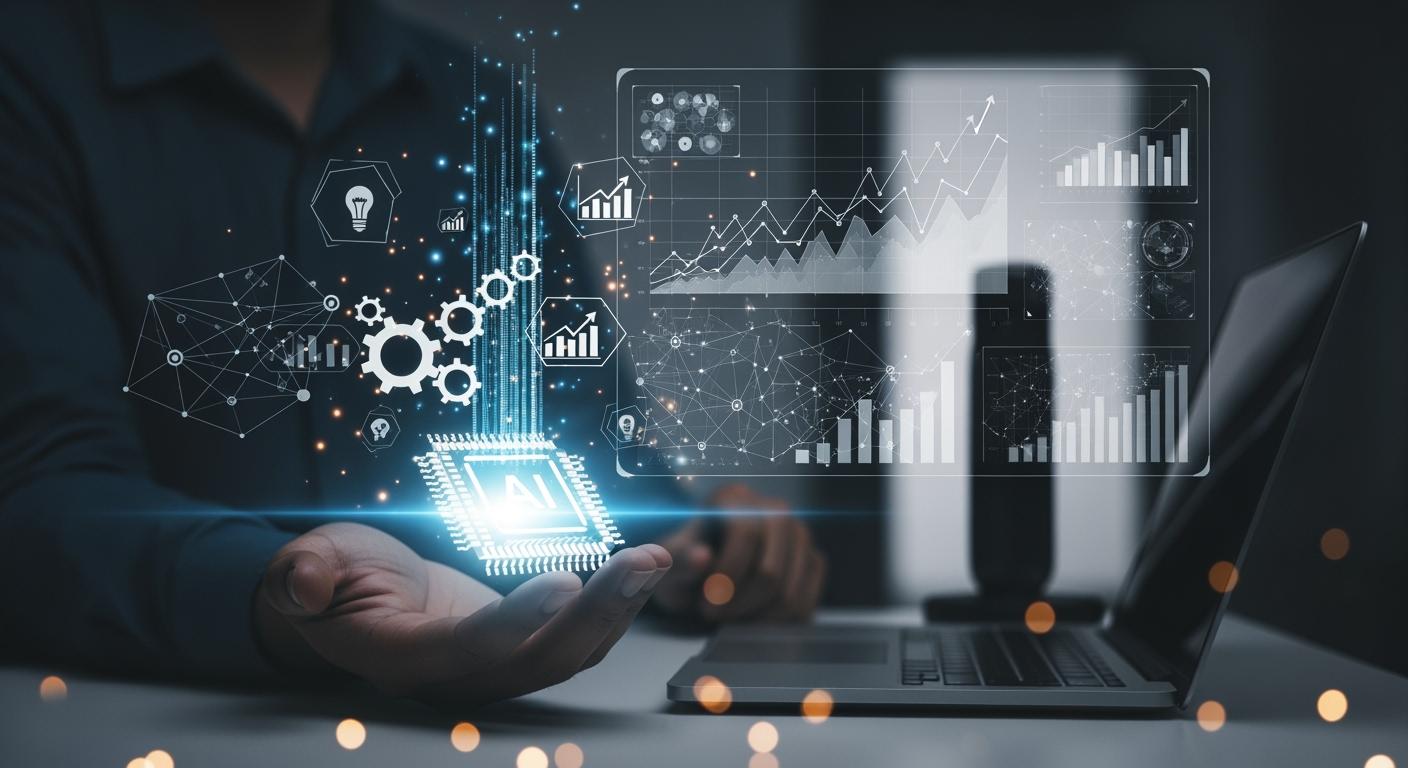
You see ai trend forecasting change the way you approach product development in 2026. The shift from traditional methods to ai-driven demand forecasting brings more accurate results. Companies now use ai to simulate product outcomes, analyze customer feedback, and spot market gaps.
| Metric | Value |
|---|---|
| Financial Forecasting Market Growth | USD 6.8 billion in 2020 to USD 13.8 billion by 2025 |
| AI Model Accuracy | Over 80% |
Businesses like Unilever and Nestlé have compressed product cycles and launched new products faster with ai. You can start integrating ai into your workflow to match real-time market needs.
AI Trend Forecasting’s Impact on Product Development
Real-Time Insights for Product Teams
You can now use ai trend forecasting to transform how your product teams work. In 2026, you do not have to wait for monthly reports or slow manual analysis. Real-time data analysis gives you instant access to demand signals, so you can make decisions quickly. This helps you spot changes in consumer demand and adjust your product development plans right away.
Here is a table that shows how ai trend forecasting tools support your team:
| Trend | Description | Impact on Product Teams |
|---|---|---|
| Adoption Frameworks | Structures for integrating AI tools | Helps teams prioritize AI investments |
| ROI Benchmarks | Metrics for evaluating AI effectiveness | Guides decision-making on AI adoption |
| Implementation Timelines | Schedules for rolling out AI tools | Ensures timely integration into workflows |
You can also use tools like NoimosAI to boost your market intelligence. These tools help you find new demand signals and act before your competitors do. If you still rely on manual data processes, you risk falling behind. Companies that use real-time data analysis can see trends as they happen and respond to demand changes faster.
Tip: Use ai trend forecasting to track demand signals and adjust your product recommendations in real time. This will help you meet consumer demand and increase sales.
Some companies have already seen big results. Mondelez used an ai tool to speed up snack creation. They developed over 70 new product SKUs, including the Gluten-Free Golden Oreo, and saw a 5.4% increase in organic sales. Waitrose used a GenAI platform to spot food trends and created the Basque cheesecake, which became a top-selling dessert. These examples show how real-time insights can lead to better product development and higher sales.
Accelerating Product Innovation
You can use ai trend forecasting to speed up product innovation. Traditional demand forecasting methods often miss early demand signals and slow down your response to market changes. With ai, you get real-time data analysis that helps you spot new trends and adjust your product development process quickly.
- Real-time data analysis lets you make immediate changes to your product lineup.
- Ai models detect early demand signals, so you can act before your competitors.
- Less manual work means your team can focus on creating new products.
A US department store used ai to forecast a heatwave. They adjusted their inventory and captured sales that would have been missed with old forecasting methods. This shows how ai can help you predict demand trends and respond to demand signals faster.
You also gain a competitive edge when you use ai for demand forecasting. Reliable forecasts help you make better decisions about product development, inventory, and sales strategies. Ai can reduce up to 25% of produce waste by giving you real-time information on shelf-life estimates. It can also cut R&D timelines and lower resource use, such as water and electricity.
Mondelez International used ai to speed up recipe development by 4–5 times. This allowed them to launch new products quickly and increase sales. Waitrose used real-time consumer insights to create a dessert that matched current demand, leading to strong sales growth.
Note: When you use ai trend forecasting, you can respond to demand signals faster, reduce waste, and boost sales. This makes your product development process more efficient and helps you stay ahead in the market.
Evolution of Demand Forecasting with AI
From Manual to Machine Learning Models
You see demand forecasting change as you move from manual methods to machine learning models. Manual demand forecasting often relies on historical averages. This approach can miss sudden market shifts and lead to errors. Machine learning models use real-time data and spot patterns that humans might overlook. You gain better accuracy and efficiency when you use ai for demand forecasting.
Here is a table that shows the differences between manual demand forecasting and machine learning models:
| Aspect | Manual Demand Forecasting | Machine Learning Models |
|---|---|---|
| Accuracy | Prone to bias and slow to adapt | Captures subtle patterns and adapts quickly |
| Efficiency | Labor-intensive and slow | Automates data tasks and speeds up forecasting |
| Adaptability | Rigid and slow to change | Learns and adjusts over time |
Machine learning models outperform traditional forecasting methods by 20% or more. Hybrid models show even greater improvements. You see a 66% better performance than ARIMA and a 90% improvement over FFNN, with a 50% reduction in error metrics. You can trust ai-driven accuracy to help you make better decisions about demand.
Human-AI Collaboration in Forecasting
You improve demand forecasting when you combine human expertise with ai tools. You play a key role in preparing and cleaning demand data. Product managers use ai insights to plan new products. IT specialists integrate ai tools with business systems. Operations leads adjust inventory based on ai forecasts.
To get the best results, follow these steps:
- Assess readiness for ai adoption.
- Organize and validate your data.
- Select tools that fit your business needs.
- Pilot test in a controlled environment.
- Train your team and promote collaboration.
You see demand forecasting become more accurate when humans and ai work together. You focus on strategic analysis while ai handles data processing. This partnership helps you respond to demand changes faster and optimize forecasting for your business.
Key Benefits for Product Development
Faster Innovation Cycles
You can speed up product development by using ai-driven demand forecasting. Ai analyzes real-time data from many sources, so you get accurate insights fast. This helps you spot new trends and adjust your product recommendations quickly. Teams no longer wait for slow reports. Instead, you use instant analysis to guide your next steps. This approach leads to faster innovation and better product launches.
| Benefit | Description |
|---|---|
| Improved Accuracy | Ai enhances prediction accuracy by analyzing real-time data from multiple sources. |
| Proactive Decision-Making | Enables teams to plan for future trends rather than react to past data, reducing mistakes. |
| Enhanced Responsiveness | Allows for quick adjustments to product strategies based on market changes and consumer behavior. |
Market Responsiveness
You respond to changes in consumer behavior with speed and confidence. Ai-powered demand forecasting lets you adjust your product strategies as soon as you see shifts in demand. You use data-driven insights to make decisions that match what consumers want. This means you can launch products that fit current trends and meet consumer needs.
Tip: Use ai to track consumer behavior and update your product recommendations in real time. This keeps your products relevant and boosts sales.
Inventory Optimization
You improve inventory management by using ai-based demand forecasting. Companies that use ai in their supply chains have reduced forecasting errors by up to 50%. Retailers with ai-driven inventory systems see fewer stockouts and better inventory turnover. Ai uses advanced analysis, like LSTM networks, to predict demand and align stock levels with real-time data. This reduces waste and ensures you always have the right products available.
- Ai-driven demand forecasting cuts stockouts by 20–30%.
- Inventory turnover improves by 25% on average.
- Real-time data helps you avoid overstocking and shortages.
Risk Management
You lower risks in product development by using ai trend forecasting. Ai gives you predictive analytics to anticipate market trends and consumer preferences. This proactive approach helps you avoid overproduction and financial losses. You can analyze historical sales data and forecast the success of new products before you start production. When ai spots a trending color or feature, you can act early and secure better deals with suppliers. This strategy lets you manage budgets wisely and reduce unsold inventory.
- Ai-validated designs give you confidence in your product recommendations.
- Data-driven analysis helps you focus on products with higher sales potential.
- You use insights to make smarter decisions and reduce risk.
| Metric | Improvement Percentage |
|---|---|
| Forecast Accuracy | Up to 30% |
| Operational Costs | Up to 25% reduction |
| Forecast Errors | 20–50% reduction |
AI Trends Shaping Product Innovation in 2026
Predictive Quality Assurance
You see ai trends change how you approach quality assurance in digital product development. Predictive quality assurance uses ai-powered testing and machine learning algorithms to analyze historical defect patterns. This helps you predict failures before they happen. You focus on high-risk areas and improve product reliability. Ai tools update test scripts automatically when user interfaces change. This reduces maintenance efforts and prevents unexpected failures. Mid-sized manufacturers now use ai-driven predictive maintenance to boost asset reliability and output quality. You move from reactive maintenance to proactive strategies, which increases efficiency and customer satisfaction.
Digital Twins in Development
You use digital twins to transform digital product development. Ai trends make it possible to create virtual replicas of products and production systems. You simulate operations and test vulnerabilities in a controlled environment. Real-time simulation and predictive analysis cut design validation time by up to 50%. You boost efficiency by 40% through predictive maintenance. Digital twins help you optimize operations and evaluate advanced security measures. You rely on ai to make your product development faster, more adaptable, and data-driven.
Tip: Digital twins let you test new features and security measures before launching your product. This reduces risk and speeds up innovation.
Hyper-Personalization
You deliver hyper-personalization in digital product development by using ai and machine learning. Ai trends allow you to analyze real-time data from customer behavior, preferences, and context. You adapt messaging and experiences for each user. Continuous data collection and real-time decision-making enhance customer engagement and satisfaction. You tailor products to individual needs, which increases loyalty and drives product innovation.
Real-Time Analytics
You rely on real-time analytics to improve digital product development. Ai trends give you instant access to demand signals and product performance data. You measure time savings, task completion acceleration, and ai suggestion acceptance rates. Engineers using ai tools complete tasks 20–40% faster and merge more pull requests each week. You track productivity and isolate the impact of ai on your product development process. Real-time analysis helps you make better decisions and respond quickly to market changes.
| Metric | What to measure | Target benchmark |
|---|---|---|
| Self-reported time savings | Hours saved weekly via ai | 2–3 hrs average |
| Task completion acceleration | Time reduction for development | 20–40% speed improvement |
| AI suggestion acceptance rate | % of ai code suggestions retained | 25–40% acceptance rate |
You use ai trends to shape product innovation and digital product development in 2026. You gain faster analysis, improved reliability, and higher customer engagement. You respond to demand and market shifts with confidence.
Integrating AI Trend Forecasting into Workflows
Best Practices for Implementation
You can make ai trend forecasting a core part of your product development process by following proven best practices. Start by building a strong foundation for data collection. Use IoT devices and sensors to gather data from every step of your product workflow. This gives you a steady stream of information for your ai models. Next, use ai algorithms to analyze this data. These tools help you spot patterns and trends that humans might miss.
You should combine different forecasting methods. Mix qualitative insights with quantitative models to get a full picture of future demand. Segment your demand forecasts for each product line. This approach improves accuracy and helps you meet customer needs. Machine learning algorithms can boost your forecasting by finding complex patterns in historical data. Bring in external data sources, such as market trends and competitor activity, to add context and improve your predictions.
Set a regular schedule for updating your forecasts. This keeps your product development plans in sync with the latest market changes. Always include risk management strategies. Prepare for disruptions by using ai to predict possible issues before they affect your product.
| Best Practice | Description |
|---|---|
| Use Multiple Forecasting Methods | Combine qualitative and quantitative techniques for a complete view. |
| Segment Demand for Precision | Tailor forecasting for each product line to improve accuracy. |
| Leverage Machine Learning | Use ML models to find complex patterns in your data. |
| Incorporate External Data Sources | Add outside data for better context and predictions. |
| Establish Forecasting Cadence | Update forecasts regularly to stay current. |
| Integrate Risk Management | Use ai to spot risks and plan for disruptions. |
You may face challenges like data privacy, integration with old systems, and high costs. Address these early to make your ai-driven solutions successful. Focus on actionable insights that help your team make better decisions every day.
Tip: Follow the 10-20-70 rule for ai adoption. Spend 10% on algorithms, 20% on technology and data, and 70% on people and processes. This balance ensures your ai projects deliver real value.
Team Skills and Collaboration
Your team plays a key role in making ai trend forecasting work for product development. Start with ai literacy programs. Teach everyone the basics of ai and how it helps your product. Offer technical training for those who will use new ai systems. Keep your team updated with ongoing education as ai technology changes.
Encourage clear communication between technical and business teams. This helps everyone understand how ai fits into your product workflow. Blend ai-generated insights with human judgment. Your team’s experience adds value to the data-driven recommendations from ai.
- Measure the impact of ai on your results.
- Develop strong evaluation methods to track benefits and spot areas for improvement.
- Build leadership skills that help your team balance ai insights with real-world experience.
Keep training your team. Make sure everyone knows how to use trend forecasting technology and can work together to solve problems. When you combine technical skills with teamwork, you get better results from your ai initiatives.
Tool Selection and ROI
Choosing the right tools for ai trend forecasting shapes the success of your product development. Look for platforms that support multiple forecasting models. This gives you flexibility as your needs change. Automated model selection and tuning save time and reduce manual work. Real-time data integration keeps your forecasts up to date.
You need tools that offer scenario planning and what-if analysis. These features let you test different demand situations before making big decisions. Make sure your tools work with your current business systems. A user-friendly interface helps everyone on your team use the platform with ease.
| Essential Features | Description |
|---|---|
| Multi-Model Forecasting Engine | Supports different forecasting models |
| Automated Model Selection & Tuning | Reduces manual setup |
| Real-Time Data Integration | Keeps forecasts current |
| Scenario Planning & What-If | Tests different demand scenarios |
| Seamless ERP Integration | Works with your business systems |
| User-Friendly Interface | Easy for all team members |
| Explainability & Transparency | Shows what drives your forecasts |
| Collaboration & Role-Based Access | Supports teamwork |
| Scalable Architecture | Grows with your business |
| Security & Compliance | Meets high security standards |
When you select a tool, consider your data volume, forecast horizon, and business complexity. If your team has strong technical skills, you can choose advanced ai-driven solutions. If not, look for no-code platforms that are easy to use. Integration requirements also matter. Make sure your new tools fit with your existing systems to avoid delays and extra costs.
| Evaluation Criteria | Description | Impact on Success |
|---|---|---|
| Data Volume | Amount of historical data available | Higher volumes improve accuracy |
| Forecast Horizon | Time range for predictions | Longer horizons need better models |
| Business Complexity | Number of variables and relationships | Advanced ML helps complex cases |
| Technical Expertise | Internal AI/ML skills | Guides tool selection |
| Integration Needs | Fit with current tech stack | Affects timeline and costs |
You want to see a strong return on investment from your ai trend forecasting tools. Companies using ai-powered personalization have seen revenue growth and a 20% increase in sales qualified leads. Sales forecasting accuracy can improve by up to 95%. Many businesses report a 30% drop in churn rate and customer satisfaction rates as high as 90%. These results show that roi-focused ai initiatives can drive real business value and support ongoing innovation in your product development.
Note: Focus on roi-focused ai initiatives that deliver measurable gains. Track your results and adjust your approach to maximize the benefits of ai trend forecasting.
You see AI trend forecasting reshape product development in 2026. Companies like BMW and PepsiCo cut development times and speed up innovation. You can follow practical steps, such as adopting AI-powered tools and improving team skills, to boost efficiency. Common challenges include data quality and integration complexity. You measure success by tracking operational efficiency, customer satisfaction, and revenue growth.
| KPI Type | Description |
|---|---|
| Operational Efficiency | Faster processes and fewer errors with AI |
| Customer Satisfaction | Better service and higher retention |
| Revenue Growth | More leads and sales from AI-driven products |
Evaluate your current workflow and explore AI-driven solutions for future growth.
FAQ
What is AI trend forecasting?
AI trend forecasting uses artificial intelligence to predict market trends. You analyze data from many sources. AI helps you spot patterns and changes faster than manual methods.
How does AI improve product development?
AI gives you real-time insights. You make decisions quickly. AI helps you find new demand signals and adjust your product lineup before competitors.
What skills does your team need for AI trend forecasting?
You need basic AI literacy. Your team should know how to use AI tools. Technical training helps you understand data and models. Collaboration improves results.
How can you measure the success of AI in product development?
You track key performance indicators. Use a table to monitor progress:
| KPI | What to Measure |
|---|---|
| Efficiency | Faster workflows |
| Customer Satisfaction | Higher retention rates |
| Revenue Growth | Increased sales |
See Also
Utilizing AI And Data For Demand Forecasting In 2025
Best Practices For Accurate Production Forecasting Using AI In 2024
Using Machine Learning To Anticipate Fashion Trends And Increase Sales
Retail Re-stocking Strategies Using Predictive Analytics In 2025