
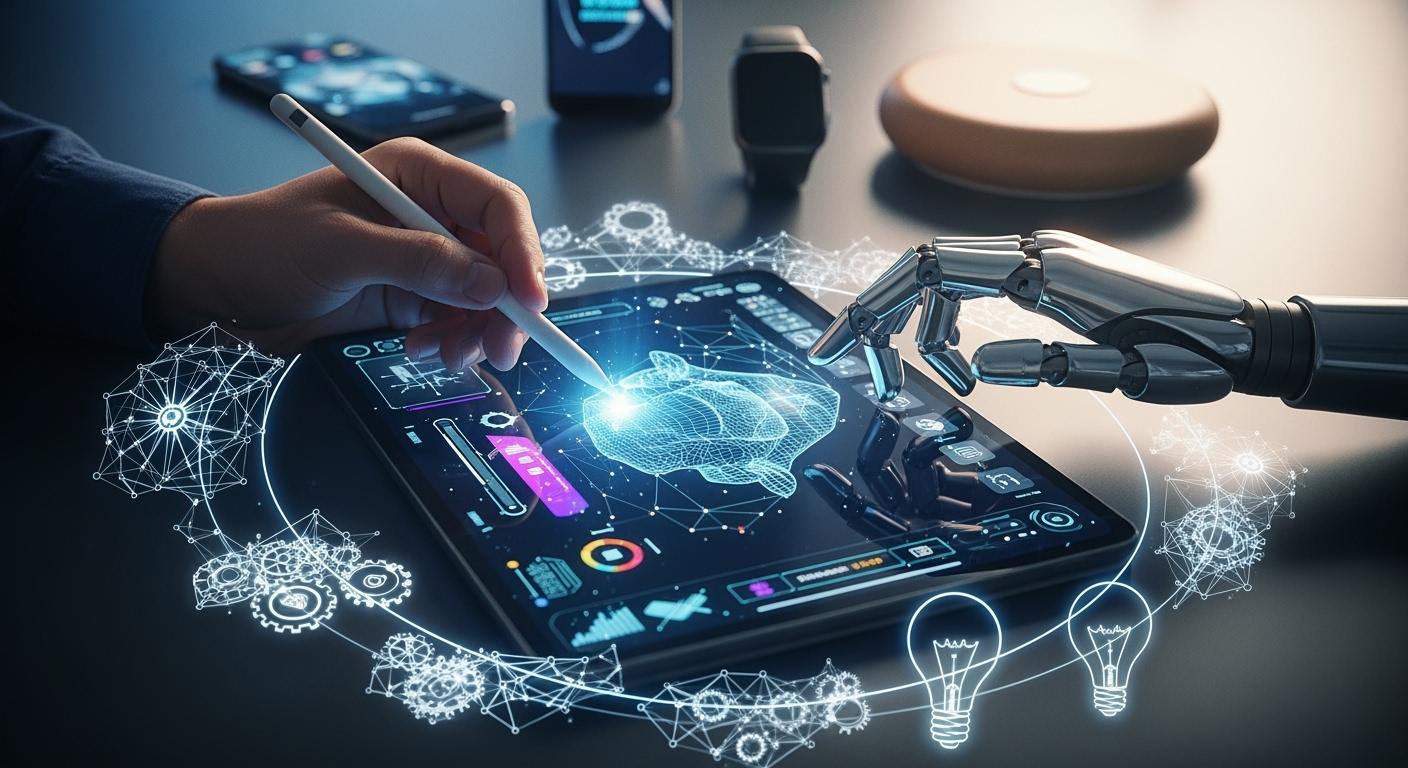
You see generative ai changing the way you create products. This technology helps you automate ideas, speed up your work, and make better choices using data. When you connect generative ai tools with expert knowledge and strong datasets, you boost your results. Many organizations already use these tools to stay ahead in AI Product Design. The table below shows how fast companies adopt generative ai and ai for product development:
| Statistic | Value | Year |
|---|---|---|
| Global adoption in product development | 46% | 2026 |
| Organizations increasing GenAI investments | 67% | N/A |
| Organizations using generative AI | 32% | N/A |
| Organizations reporting increased competitiveness | 52% | N/A |
You can see that more teams invest in these solutions to improve performance and stay competitive.
Generative AI in Product Design Today
Accelerating Ideation and Prototyping
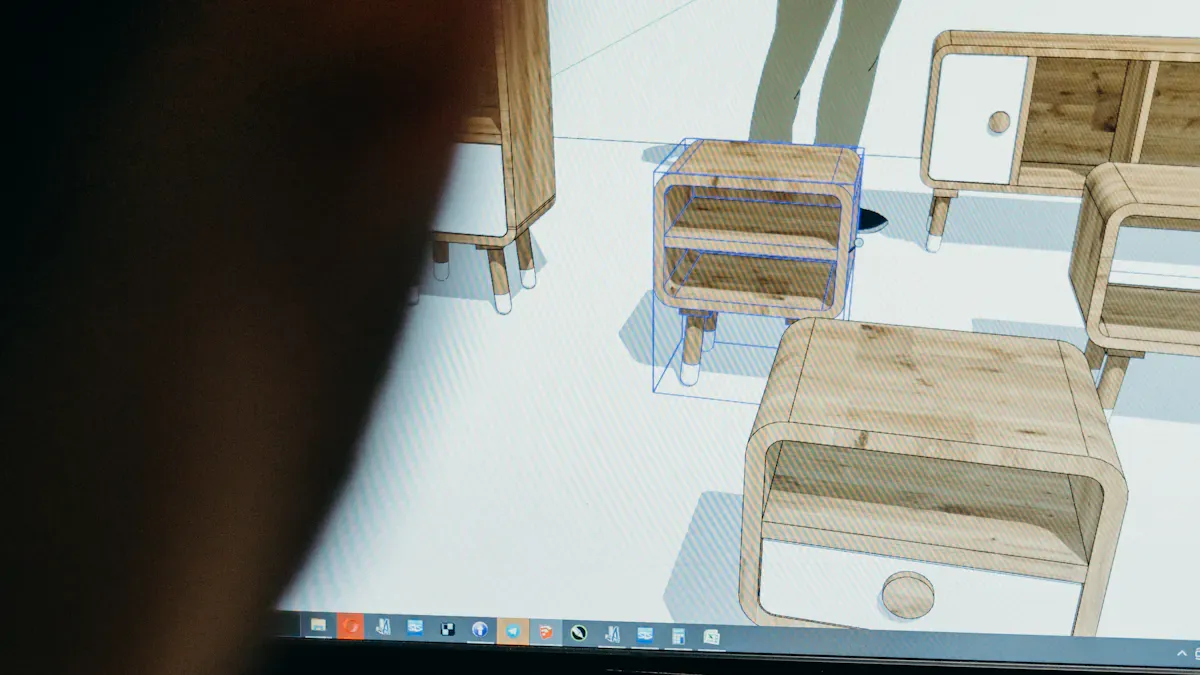
You can speed up your work as a product designer with generative AI. This technology helps you create wireframes and mockups in less time. You do not have to wait days to see your ideas come to life. You can visualize your product ideas quickly and share them with your team.
- Generative AI lets you explore many design options fast.
- You can test and change your ideas without starting from scratch.
- You see what works and what does not, which helps you make better choices.
Recent studies indicate that generative AI tools can enhance divergent thinking by quickly expanding the conceptual space available to designers, thus fostering creativity.
You can use prompts to get high-quality visuals. This gives you more creative ideas and helps you find the best solution for your customer. You do not need to stick to one idea. You can try many options and pick the one that fits your goals.
Data-Driven Decision Making
You can make smarter choices in product design when you use data. Generative AI uses large datasets to help you understand what your customer wants. You can see patterns and trends that you might miss on your own. This helps you create products that match user needs and improve usability.
- Adidas used generative design for the Futurecraft 4D shoe. They explored many designs quickly and made a unique midsole that improved performance and comfort.
- Autodesk used generative AI to automate complex tasks. Engineers could focus on making the design better, which helped streamline product design.
- Subaru used Neural Concept technology to cut die face shape design time from 48 hours to 2 minutes. This made production faster.
- Danfoss reduced design iteration time from hours to seconds and improved mass flow rate by 10%.
You can see that the AI market for product design is growing fast. Experts say it will reach almost $25 billion by 2029. Business leaders believe generative AI can bring $60 billion in productivity improvements. You can use these tools to create more value for your customer and your company.
Relevant datasets help you make better decisions. You can align your product with what users want. You can also make changes quickly, which is important in fast-moving industries. Generative AI can look at a lot of data and give you new ideas that improve usability and user experience.
Expert Knowledge and Collaboration
You need expert input to get the best results from generative AI. Product designers bring their knowledge to guide the AI. You can set goals, give feedback, and make sure the design fits your needs. High-quality datasets also help you get better outcomes.
| Key Application Scenarios | Description |
|---|---|
| Scenario 1 | Overview of generative AI's role in design optimization. |
| Scenario 2 | Comparison of traditional and generative methods. |
| Scenario 3 | Visual examples illustrating inputs and outputs. |
| Scenario 4 | Classification of design and analysis data types. |
| Scenario 5 | Efficiency improvements in complex design problems. |
| Scenario 6 | Overcoming limitations of traditional optimization. |
| Scenario 7 | Practical applicability of generative AI approaches. |
| Scenario 8 | Integration of various AI models for optimal design. |
You can work with AI as a creative partner. Generative AI lets you generate many ideas quickly. You can focus on strategy and creativity while the AI handles the manual work. This teamwork helps you find new solutions and streamline product design.
- You can create many concepts fast.
- You can change and improve your ideas easily.
- Large language models help you think of new ways to solve problems.
Generative AI helps you and your team work together better. You can share ideas, test them, and pick the best ones. This makes you a stronger product designer and helps you deliver more value to your customer.
The Generative AI Design Process
Six Key Stages: Generate to Integrate
You can follow a clear process when you use generative ai in product design. This process has six main stages. Each stage helps you move from an idea to a finished product that brings value to your users.
- Generate: You start by creating many ideas. You use rapid visual ideation to see different options. This step helps you think outside the box.
- Analyze: You look at each idea. You check if it meets your goals and fits your needs as a product designer.
- Rank: You sort the ideas. You pick the ones that work best for your project.
- Evolve: You improve your top ideas. You make changes and test new versions.
- Explore: You try out the improved ideas. You see how they work in real situations.
- Integrate: You choose the best solution. You add it to your product and make sure it fits with everything else.
Studies show that when you use this process, you can improve both the quality and the results of your designs. You see better outcomes because you test and change your ideas many times.
As a product designer, you can use ai to speed up each stage. You do not have to do everything by hand. You can focus on creativity and usability while ai handles the heavy work. This teamwork helps you deliver more value to your users.
Customization and Personalization
You can use generative ai to create personalized user experiences. This means you can make products that fit each person’s needs. You do not have to guess what your users want. You can use data to guide your choices.
| Application Area | Description | Example |
|---|---|---|
| Hyper-Personalization | Analyzes customer data to generate personalized recommendations and offers. | Netflix & Spotify recommend content based on user history. |
| AI-Powered Chatbots & Virtual Assistants | Provides human-like responses to customer queries, enhancing support. | JPMorgan’s COIN automates legal document analysis. |
| Real-Time & Predictive Support | Predicts customer issues and offers proactive solutions. | Amazon’s Alexa anticipates user needs. |
| Automated Content Creation & Marketing | Generates personalized marketing content tailored to customer segments. | Coca-Cola uses AI for engaging ad campaigns. |
| AI-Driven Sentiment Analysis | Analyzes customer feedback to understand sentiment and adjust strategies. | Zappos tweaks support responses based on emotions. |
| Seamless Omnichannel Experience | Integrates interactions across channels for a unified experience. | Sephora’s AI chatbots provide product recommendations. |
| Real-Time Customer Feedback Insights | Gauges sentiment from reviews and feedback to improve service. | Zappos & Starbucks monitor sentiment for strategy adjustments. |
| AI-Enabled Fraud Detection & Security | Detects anomalies in transactions to prevent fraud. | HSBC & JPMorgan Chase use AI for fraud detection. |
You can see how companies use ai to make products that feel unique to each user. As a product designer, you can use these tools to improve usability and make your users happy.
- You can use generative ai to check if your designs follow brand rules. This helps you keep your product consistent.
- You can simulate how users will use your product. This lets you predict what they need and want.
- You can make new prototypes fast. You can use market trends and user feedback to guide your work.
You can give your users a better user experience by making sure your product matches their needs. This approach helps you stand out in ai product design.
Role of Machine Learning
Machine learning plays a big part in the generative ai design process. You can use it to make smarter choices and improve your designs.
- Machine learning helps you look at large datasets. You can find patterns and learn what users like.
- You can get new ideas for your product. The system suggests creative solutions based on what it has learned.
- You can move from old ways of designing to new, ai-powered methods. This helps you work faster and smarter.
As a product designer, you can use machine learning to make your designs better at every stage. You can learn from past projects and make changes that improve usability and value.
- Machine learning lets you learn from each version of your design. You can see what works and what does not.
- You can use algorithms to test many options. You can find the best solution for your users.
- You can use tools like genetic algorithms and neural networks. These tools help you explore many ideas and pick the best one.
- You can use ai to create designs that are already optimized for your needs.
Tip: You can get the best results when you combine ai with your own skills as a product designer. You should always check the ai’s work and make sure it fits your goals.
You should also follow best practices when you add generative ai to your product design system:
| Best Practice | Description |
|---|---|
| Start With Low-Risk Use Cases | Test ai on tasks that are not critical first. |
| Maintain Review & Approval Checkpoints | Always check ai outputs before using them. |
| Train Teams on Prompting & AI Literacy | Teach your team how to use ai tools well. |
| Combine AI Insights With Human Expertise | Use both ai and your own knowledge for the best results. |
| Monitor & Measure | Track how ai affects your work and make changes as needed. |
| Provide Human Override | Let users change or review ai outputs to keep control. |
You should also think about ethics. You need to make sure your ai is accurate, fair, and respects privacy. You should keep checking your system to make sure it stays safe and trustworthy.
As a product designer, you can use generative ai and machine learning to create products that are smarter, faster, and more useful. You can give your users a better experience and bring more value to your company.
Future Trends in AI Product Design

Integration with Design Systems
You will see big changes as generative ai becomes part of design systems. As a product designer, you can use ai to boost creativity and speed up your work. You can connect design tools with IoT devices to make products that respond to users in real time. Quantum computing may soon give you even more power to create and test ideas. You can also expect ai to help you predict what users need before they ask.
| Trend | Description |
|---|---|
| Enhancement of Creativity | AI helps you think of new ideas and work faster. |
| Integration with IoT | Products can change based on real-world data. |
| Real-time Generative Design | You can see changes as you make them. |
| Anticipatory Design | AI predicts what users want next. |
| Increased Personalization | Products fit each user better than ever before. |
| Ethical AI Integration | You build trust by making AI fair and clear. |
| Democratization of AI Tools | Anyone can use AI, not just experts. |
You can use these trends to add more value and improve usability for your users.
Real-Time Collaboration
You can work with your team in new ways using real-time collaborative design. As a product designer, you get instant feedback from ai-driven platforms. You can change shapes, sizes, and features while your team watches. This makes the design process faster and more fun. You can plan sprints and manage your backlog with help from ai. Teams can work together better and deliver products faster.
- You get quick feedback on your ideas.
- You can adjust designs right away.
- Teams can solve problems together.
You will find that ai product design helps you focus on creativity and usability, not just manual tasks.
Adaptive User Experiences
You can now create products that change for each user. Generative ai lets you move from static screens to smart companions. As a product designer, you can build journeys that fit each person, not just a group. You can use ai to learn from every user and make the product better over time.
- Interfaces respond to what users do.
- Each user gets a unique experience.
- You can use feedback to improve usability and value.
Note: You can unlock new markets by making products that fit more people. You can also save time and money by automating tests and updates.
As a product designer, you will lead the way in making smarter, more useful products. You can use ai to make sure your designs match what users want and need.
Strategic Actions for Leaders and Teams
Proactive Adoption of Generative AI
You can lead your team to success by taking clear steps to adopt generative AI in product design. Start by matching your AI projects with your main business goals. This helps you focus on what matters most for your company and your customer. Build a set of pilot projects to test new ideas and learn quickly. Use these pilots to create a feedback loop that helps you improve over time. Treat AI as a way to show your brand’s unique style and deliver more customer value. Make sure you design your process so people and AI work together. Upskill your team so they can use AI tools well. Set up strong rules for ethics and safety to protect your company and your customer. Start small, measure your results, and grow your efforts as you see success.
- Align AI projects with business challenges.
- Test ideas with pilot projects and measure results.
- Use AI to boost your brand and create personalized experiences.
- Train your team for human-AI teamwork.
- Build a system that responds to market changes and customer needs.
Upskilling and Continuous Learning
You can help your team grow by focusing on learning. As a product designer, you should start with simple tasks to test AI tools. Always check AI results with human experts. Teach your team how to use AI and prompt it for the best results. Mix AI insights with your own skills to make smart choices. Work with both AI specialists and other product designers to share knowledge. Set up a feedback loop to keep improving.
| Method | Description |
|---|---|
| Start With Low-Risk Use Cases | Try AI on easy tasks first to learn and adjust. |
| Review & Approval Checkpoints | Have experts check AI work to avoid mistakes. |
| Train on Prompting & AI Literacy | Teach your team how to use AI tools well. |
| Combine AI & Human Expertise | Use both AI and your skills for better decisions. |
You can see that teams who learn together work faster and make fewer mistakes. This helps you deliver more value and a better user experience.
Building a Culture of Innovation
You can accelerate innovation by building a culture that supports new ideas. As a product designer, you should try new AI tools and share your results with your team. Use design thinking to focus on your customer and their needs. Add user-friendly tools to make it easy for everyone to join in. Use AI models like variational autoencoders and reinforcement learning to create new designs and improve them over time. When you work with both AI and people, you finish tasks faster and make fewer errors. You also get better ideas for your product design. Teams that use AI report higher engagement and learn new skills quickly. This leads to accelerated time-to-market and more customer value.
Tip: Support from leaders helps your team try new things and work together across departments. Set clear goals and measure your progress to keep improving.
As a product designer, you play a key role in making your company ready for the future of ai product design.
You now see how generative AI changes product design. This technology helps you create many ideas quickly and test them with less effort. You can improve your products using data and real-time feedback. Teams work faster and bring products to market sooner.
- Generative AI boosts creativity and helps you find the best solutions.
- You can use AI to automate tasks and focus on innovation.
- Start learning new AI skills.
- Work with both AI and experts.
- Review your process and look for ways to improve.
Stay curious and lead your team into the future of AI product design.
FAQ
What is generative AI in product design?
Generative AI helps you create, test, and improve product ideas using smart algorithms. You can use it to speed up design work and find new solutions.
How does generative AI improve creativity?
You can use generative AI to explore many ideas quickly. The tool suggests options you might not think of on your own. This helps you find creative solutions.
Do you need expert knowledge to use generative AI?
Yes, you need your own design skills. Generative AI works best when you guide it with your goals and feedback. You make the final choices.
Is generative AI safe to use in product design?
You should always check AI results for accuracy and fairness. Use strong data and review outputs with your team. This keeps your designs safe and trustworthy.
See Also
Exploring AI's Role in Fast Fashion Trend Management
Innovative AI Approaches to Sustainable Fashion Practices
Utilizing Machine Learning to Anticipate Fashion Trends Effectively