
You now live in a world where autonomous commerce is transforming how you shop and run a business. AI agents handle product recommendations, streamline tasks, and manage inventory in real time. The shift from headless to autonomous creates smarter, faster, and more personal shopping for everyone.
| Metric | Percentage |
|---|---|
| Companies using or testing AI | 89% |
| Companies with fully implemented AI | 33% |
| Companies with fully scaled deployment | 7% |
Autonomous Commerce Explained
What Is Autonomous Commerce
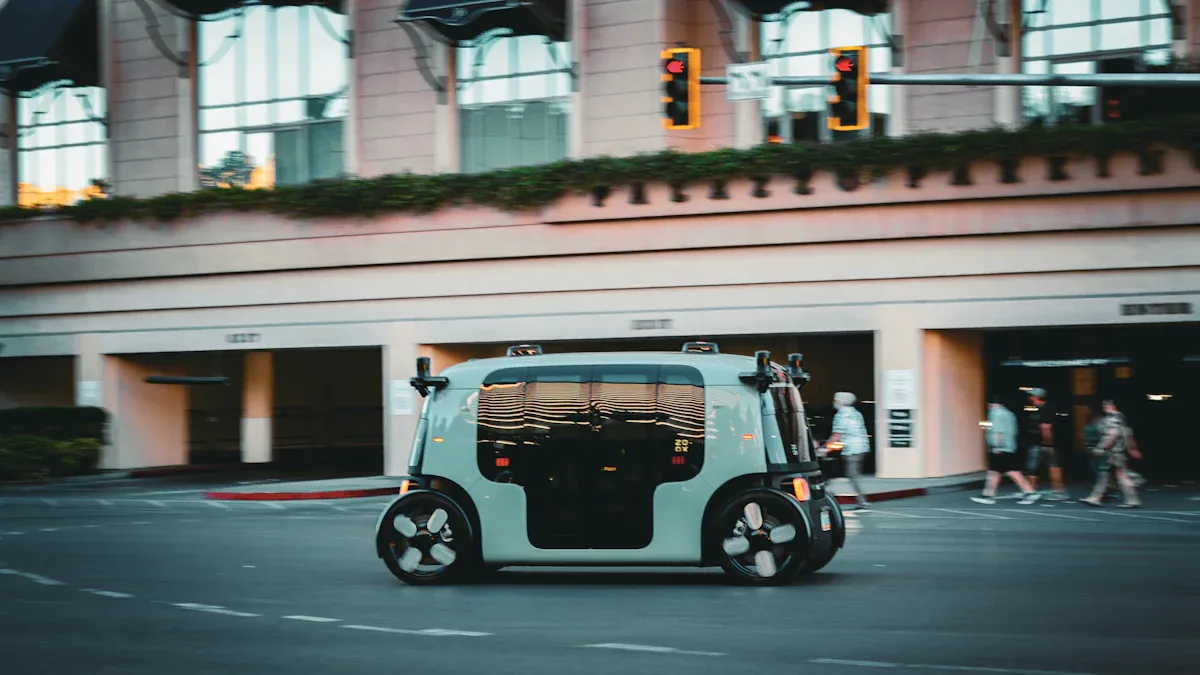
You may wonder what autonomous commerce means. This new approach uses advanced AI agents that act like smart helpers. These agents understand your needs, make decisions, and complete tasks without waiting for you to click or type. This is called agentic commerce. It marks a big change from the old way of shopping, where you had to do everything yourself.
Note: Autonomous commerce does not just automate one step. It connects many parts of the shopping process, so you get a smooth and fast experience.
Here is how leading analysts define agentic commerce:
| Term | Definition |
|---|---|
| Agentic Commerce | A type of advanced AI that functions like an agent, capable of understanding environments, making decisions, and taking actions independently, thus transforming traditional commerce interactions into automated processes. |
| Agentic Commerce | Represents a significant shift in commerce, particularly in payments, emphasizing the need for consumer trust, merchant readiness, and infrastructure evolution to scale effectively. |
You see the difference when you compare traditional commerce to agentic commerce:
| Attribute | Traditional Commerce | Agentic Commerce |
|---|---|---|
| User Interaction | Manual searches and selections | AI agents act autonomously based on intent and context |
| Personalization | Rules-based suggestions | Predictive, real-time, context-aware recommendations |
| Customer Support | Human or chatbot-driven | Autonomous agents resolving tasks end-to-end |
Why It Matters for Ecommerce
Autonomous commerce changes how you shop and how businesses run. You no longer need to search for products or wait for help. AI agents can find what you want, suggest the best options, and even solve problems for you. This makes shopping easier and more personal.
You see these changes in the core technologies that power autonomous commerce:
- Artificial Intelligence and Machine Learning: These tools predict what you want and help run operations.
- Internet of Things (IoT): Sensors collect data and respond in real time.
- Robotics and Autonomous Vehicles: Machines move products and handle tasks without human help.
- Blockchain: This technology keeps transactions safe and clear.
- 5G and Edge Computing: Fast networks make everything work quickly.
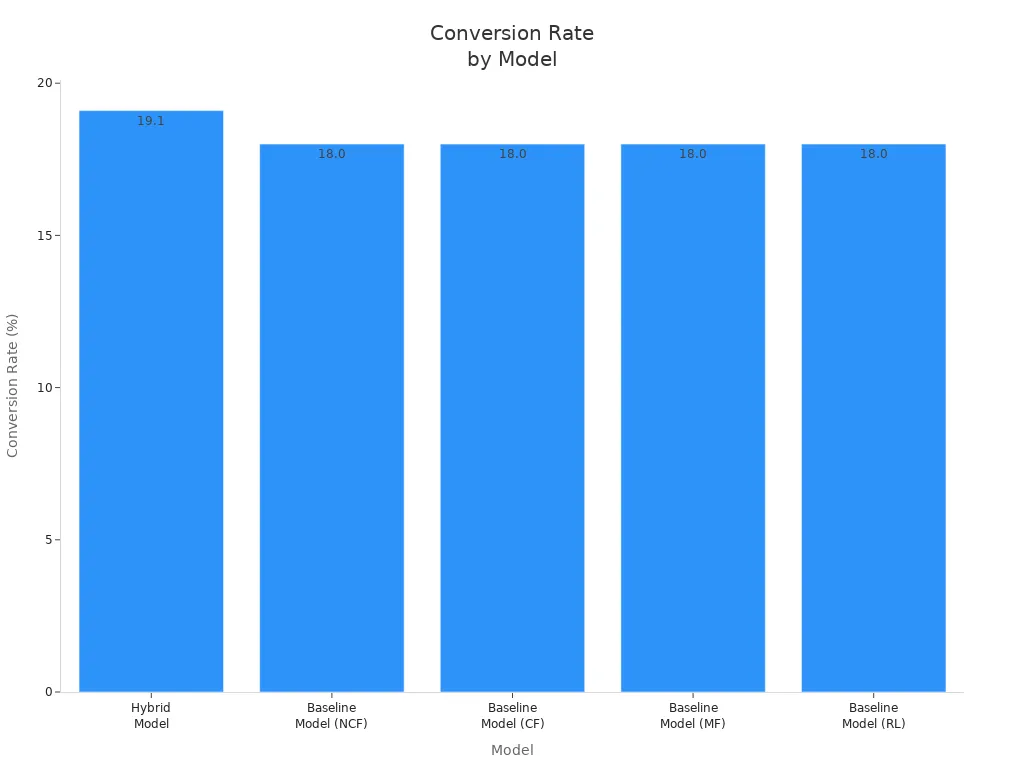
You can see the impact of autonomous commerce in ecommerce results. Businesses using these systems see higher conversion rates, better customer retention, and more profit. Here is a table that shows the difference:
| Metric | Hybrid Model | Baseline Model (NCF) | Baseline Model (CF) | Baseline Model (MF) | Baseline Model (RL) |
|---|---|---|---|---|---|
| Conversion Rate | 19.1% | 18.0% | 18.0% | 18.0% | 18.0% |
| Customer Retention | 28.5% | 25.0% | 26.0% | N/A | N/A |
| Profitability Increase | 6.3% | N/A | N/A | N/A | N/A |
| RMSE | 1.05 | N/A | N/A | N/A | N/A |
| MAE | 0.27 | N/A | N/A | N/A | N/A |
You notice that autonomous commerce does not just help businesses. It also makes your shopping journey smoother. You get real-time recommendations and faster support. You spend less time searching and more time enjoying your purchases.
Ecommerce now moves from manual steps to smart, automated flows. You benefit from a system that learns and adapts to your needs. Businesses gain more sales and keep customers coming back. This is why autonomous commerce matters for the future of ecommerce.
Headless Commerce Overview
Headless commerce gives you more control over your online store. You can separate the frontend and backend systems. This means you build the customer-facing side and the backend independently. The two parts communicate through APIs. You do not need a graphical interface for the backend. The frontend connects to the backend using APIs. This setup lets you change one part without breaking the other. You gain flexibility and reduce errors when you make updates.
Benefits of Headless Commerce
Headless commerce helps you create unique shopping experiences. You can customize your site for different devices. You get faster page load times and improved performance. You can scale your business easily. You can use headless cms to manage content across channels. You can personalize offers for each customer. You can adapt quickly to market changes. You can build full headless solutions that work with any technology stack. You can design workflows that fit your needs.
- Flexibility
- Personalization
- Omnichannel experiences
- Improved performance
- Cost efficiency
- Easy scalability
- More customization
- Front-end & technology agnostic
- Faster page load times
- Unique user experiences
| Metric | Improvement Percentage/Time |
|---|---|
| Load Time Reductions | 20% to 50% |
| Median Mobile LCP | 1.5 seconds (38% faster) |
| Conversion Rate Increase | 2% per 1-second improvement |
| Direct Revenue Growth | 80% of businesses report |
| Conversion Rate Improvement | 12% to 18% (up to 42% for B2B) |
| Content Agility | 77% report faster changes |
Limitations of Headless Commerce
Headless commerce also brings challenges. You need technical skills to set up and maintain full headless systems. Custom programming can cost a lot. Smaller brands may struggle with these costs. You must secure customer data when using third-party services. You face risks with data privacy. You need to integrate many systems. This can be complex and require extra resources. You must monitor performance and make adjustments often. Headless cms can help, but you still need careful planning.
- Technical complexity
- Setup and maintenance costs
- Securing customer data
- Integration complexity
- Performance optimization
Shift from Headless to Autonomous
The journey from headless to autonomous commerce marks a major change in how you experience online shopping. You see more than just a flexible storefront. You get a system that learns, adapts, and acts for you. This shift brings together the best parts of headless architecture and the power of AI, automation, and unified data.
Key Technologies
You need to understand the main technologies that drive the move from headless to autonomous. These tools work together to create smarter and faster shopping experiences.
- API-first commerce architecture forms the base for headless systems. Over half of large retailers use composable storefront frameworks. This lets you build and change your store quickly.
- Modern headless setups improve how you launch new features. You can deploy updates 45% faster and cut customization costs by 28%.
- GraphQL APIs, edge computing, and microservices make your storefront more responsive. You notice pages load faster and features work smoothly.
- AI-driven personalization stands out as a top priority. Nearly half of big brands use AI-powered recommendation engines. These engines show you products you want to see.
- AI-enabled commerce agents reduce manual work. You spend less time managing catalogs because these agents handle tasks for you.
- Headless CMS with unified data layers boosts system performance. You get better results when your data connects across all channels.
- Real-time search engines support AI personalization. You find what you need faster because the system learns from your actions.
When you combine these technologies, you move from simple headless setups to advanced autonomous commerce. You get a shopping experience that feels personal and instant.
Building on Headless Commerce
You see how autonomous commerce builds on the strong foundation of headless. The modular structure of headless lets you add new tools and features without breaking your store. This means you can bring in automation and AI quickly.
- Headless to autonomous commerce removes data silos. You get a single view of your products, prices, and inventory. This helps you make better decisions and gives your customers a smoother journey.
- Unified product discovery creates one smart layer for search and product intelligence. You and your sales team always see the latest data. This makes shopping and selling easier.
- Event-driven architecture lets your store process data all the time. Your system responds to changes right away. This is key for real-time personalization and automation.
- Headless to autonomous commerce supports rapid testing. You can try new ideas and launch new digital experiences fast. You do not need to rebuild your backend.
- Brands use headless to adopt new business models. You can automate these models with separate modules. This gives you more control and flexibility.
- The decoupled setup of headless gives you power over customer experiences. You can set up automated engagement strategies that keep shoppers interested.
You see that headless to autonomous commerce is not just about technology. It is about creating a system that works for you. You get tools that help you adapt to changes and meet customer needs. You can add new features, automate tasks, and personalize every step of the shopping journey.
| Feature | Headless Commerce | Autonomous Commerce |
|---|---|---|
| Frontend Flexibility | High | High |
| Backend Independence | Yes | Yes |
| AI Personalization | Limited | Advanced |
| Automation | Basic | Full Process |
| Unified Data | Partial | Complete |
| Real-Time Response | Some | Always |
You can see how the shift from headless to autonomous gives you more power and speed. You do not just manage a store. You run a smart system that learns and grows with you. This is the future of ecommerce.
Headless vs Autonomous
Main Differences
You see big changes when you compare headless and autonomous e-commerce. Headless e-commerce gives you control over the look and feel of your store. You can change the frontend without touching the backend. This setup lets you build unique shopping experiences. Autonomous e-commerce takes things further. You get smart systems that learn from your actions. These systems use AI to make decisions and automate tasks. You do not need to manage every step. The system handles product recommendations, inventory, and support.
Here is a table that shows the main differences:
| Feature | Headless E-commerce | Autonomous E-commerce |
|---|---|---|
| Customization | High | High |
| Automation | Limited | Full |
| Personalization | Basic | Advanced |
| Data Integration | Partial | Complete |
| Real-Time Response | Some | Always |
You notice that headless e-commerce gives you flexibility, but autonomous e-commerce delivers speed and intelligence.
Real-World Examples
You can see headless e-commerce in brands like Nike. Nike uses headless systems to create fast and flexible online stores. You get a smooth shopping experience on any device. Autonomous e-commerce appears in companies like Amazon. Amazon uses AI to suggest products and manage inventory. You receive real-time recommendations and quick support. Shopify offers headless solutions for small businesses. These businesses can build custom stores. Alibaba uses autonomous e-commerce to automate logistics and personalize offers. You benefit from faster delivery and smarter product choices.
You see that e-commerce evolves from headless to autonomous. You get more power and better results. The future of e-commerce brings smarter shopping for everyone.
Business Impact
Efficiency Gains
You see big changes in your business when you move to autonomous commerce. Digital tools and AI agents now handle many tasks that once needed people. You can expect AI agents to automate between 15% and 50% of your business tasks by 2027. By 2029, these agents will solve 80% of common customer service issues on their own. This shift in digital commerce means you spend less time on manual work and more time on growth.
Here are some ways you gain efficiency:
- You process orders with 70% fewer manual touches.
- Cycle times drop by 80%, so you deliver faster.
- You launch new digital commerce solutions in months, not years.
- Automated customer ticket systems resolve issues 52% faster.
These improvements help you focus on growth and create a better digital experience for your customers. High-performance solutions in digital commerce let you scale quickly and meet new demands.
Preparing for Autonomous Commerce
To get ready for autonomous commerce, you need to change your workflows and invest in the right digital solutions. Start by fixing any slow or manual steps in your digital processes. Make sure your workflows are clear so AI agents can work well. As your business grows, keep your digital operations simple and easy to manage. You must also follow rules and keep your data safe.
Here are steps you can take:
- Build your investment plan around AI and mobile-first digital commerce.
- Test how AI agents work with your digital commerce platforms before using them everywhere.
- Move from simple transactions to digital experiences that build strong customer relationships.
- Keep all your customer data in one place for better AI personalization.
- Invest in API-ready digital systems for flexible digital commerce.
- Focus on core digital commerce trends and avoid spreading your investments too thin.
- Watch for fast changes in AI and act early to stay ahead in digital commerce.
You may face challenges like old digital systems, messy data, and new security risks. Here is a table that shows some of the main challenges:
| Challenge | Description |
|---|---|
| Architectural Friction | Old systems block clean APIs and real-time digital data sharing. |
| Data Readiness | AI agents need organized digital data, but many businesses have scattered information. |
| Security and Trust | New digital commerce risks mean you must build trust and keep digital transactions secure. |
By preparing now, you set your business up for digital growth and a better commerce experience.
Consumer Experience

Personalization in Ecommerce
You now see how personalization shapes every part of your shopping. AI-driven personalization has moved far beyond simple product suggestions. Today, advanced engines use machine learning, natural language processing, and deep learning to create personalized experiences for each customer. These systems collect real-time behavioral signals and demographic profiles. You get recommendations that match your style, needs, and habits. This level of personalization improves customer satisfaction and helps you make better choices.
- AI-driven personalization adapts to your actions as you shop.
- Personalization engines remember your preferences and past purchases.
- You receive personalized experiences across every device and channel.
- AI-driven personalization automates recurring tasks, making your journey smoother.
You notice that platforms now compete to offer the best user experience by maintaining conversational continuity. They remember your choices and automate tasks, so you spend less time searching. The result is a customer experience that feels unique and helpful. Personalization also boosts conversion rate, as customers find what they want faster.
| Technology | Function |
|---|---|
| Headless architecture | Exposes every product, price, and checkout as real-time APIs. |
| Dynamic pricing agents | Adjust prices in real time based on competitor prices, demand, stock levels, and margin targets. |
| Autonomous inventory agents | Forecast demand and trigger replenishment orders automatically. |
| Campaign and promotion agents | Automatically select audience and launch campaigns while measuring performance in real time. |
| Personalization engines | Adapt storefronts and content for each visitor based on live behavioral signals. |
| Fulfillment routing agents | Select optimal warehouse and route for orders in real time, adjusting for disruptions. |
New Shopping Journeys
Your shopping journey has changed. AI agents now guide you through every step, from comparing products to making payments. You no longer need to handle each stage alone. The customer journey feels shorter and more direct. AI-driven personalization helps you focus on what matters most—validating your choices instead of searching endlessly.
- AI agents manage multiple stages of the journey, saving you time.
- You expect a consistent customer experience across voice assistants, chatbots, and websites.
- The journey is compressed, letting you move from discovery to purchase quickly.
- 75% of retail customers now prefer autonomous shopping, showing that customer expectations have shifted.
- Autonomous stores let you pick up items and leave without waiting in line.
- AI-driven personalization removes pain points, such as long waits and confusing steps.
You see that the new customer journey centers on convenience and satisfaction. Personalized experiences meet customer expectations at every touchpoint. The future of shopping puts you in control, with AI-driven personalization making every customer experience better.
You see commerce moving from headless to autonomous systems. Businesses must adapt quickly and focus on agility. Consumers expect personalized offers and faster buying cycles. AI will drive pricing, safety, and productivity.
- 73% of B2B buyers want tailored experiences.
- The market will exceed $45 billion by 2030.
| Lesson | Description |
|---|---|
| Community Engagement | Ongoing dialogue builds trust and success. |
FAQ
What is composable commerce and how does it help you?
Composable commerce lets you build your store with flexible parts. You use APIs to connect systems. You get faster updates and better real-time experiences. You manage data easily.
You can use composable commerce to personalize your store. You connect real-time search engines. You improve digital growth. You keep your data organized. You make changes quickly.
How does real-time search improve your shopping experience?
Real-time search gives you instant results. You find products faster. You see updates as you type. You use data from all channels. You get personalized suggestions.
- Real-time search uses data to show you what you want.
- You see real-time changes in inventory.
- You get real-time recommendations.
- You use composable commerce to connect real-time search.
- You improve your digital growth with real-time search.
Why is data important in autonomous commerce?
Data helps AI agents learn your needs. You get real-time personalization. You use real-time search to find products. You manage inventory with real-time data. You improve composable commerce.
| Benefit | How Data Helps You |
|---|---|
| Personalization | Data gives real-time suggestions |
| Inventory | Data tracks real-time stock |
| Search | Data powers real-time search |
| Growth | Data supports digital growth |
| Flexibility | Data improves composable commerce |
See Also
Ecommerce Evolution: The Future of Service Innovations
Advantages of Blind Shipping for Today's E-commerce Businesses
Blind Shipping Explained: Essential Tactic for E-commerce Growth