
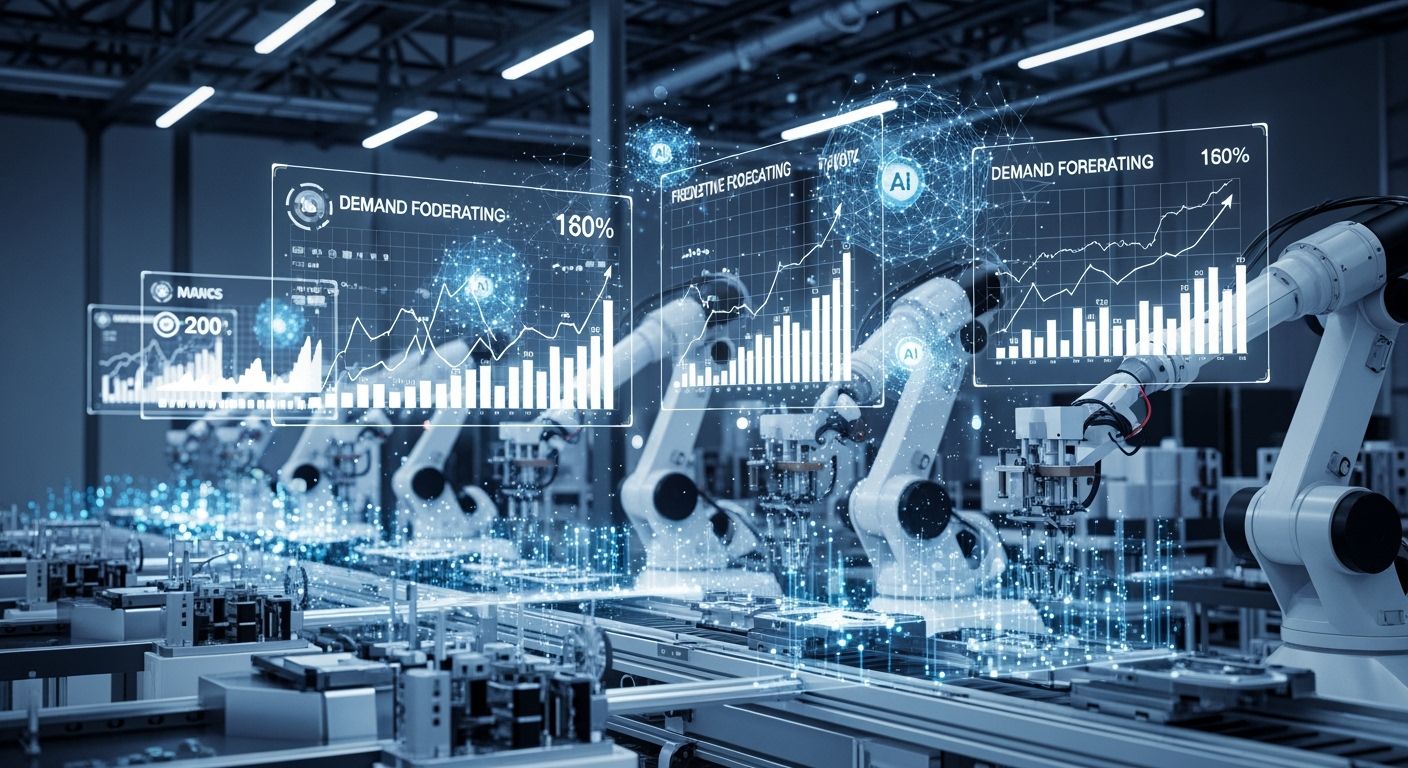
You must revolutionize supply chain forecasting to dominate in 2026.
Modern ai-powered demand forecasting replaces historical calculations with predictive models. Implementing ai demand forecasting helps you balance live market demand with production planning. This smart ai optimizes inventory management using fresh operational data across every supply chain link. Ultimately, dynamic actions prevent stockouts and enhance your value chain agility.
Operational Benefits of AI Demand Forecasting
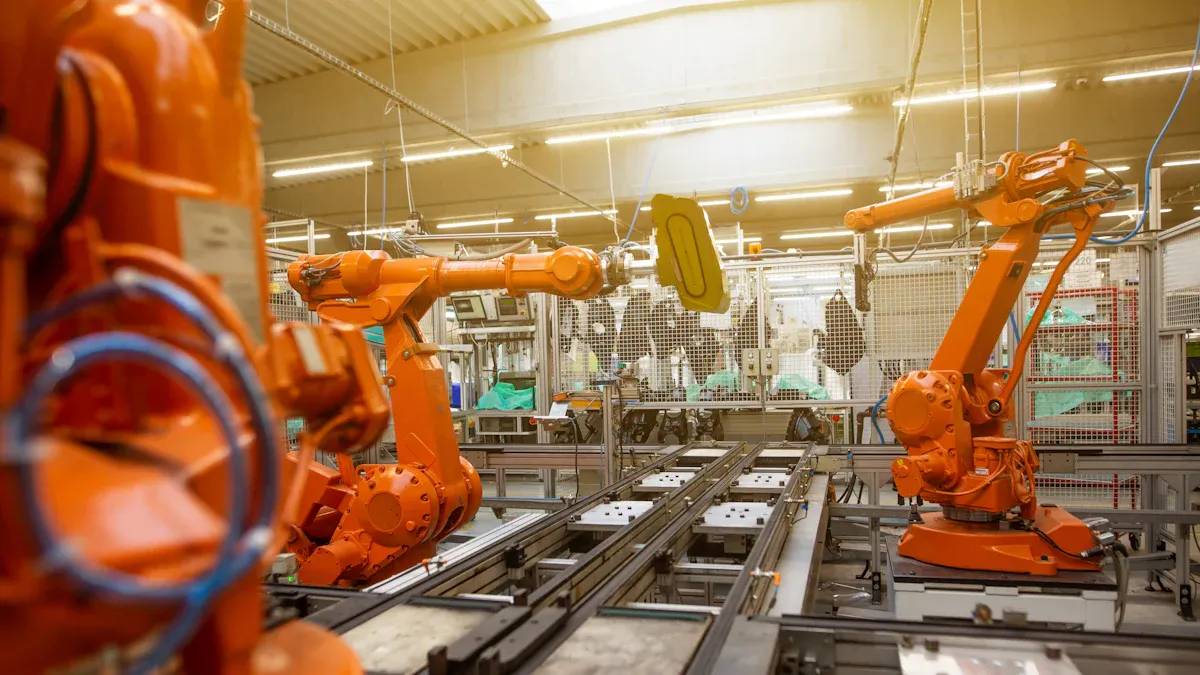
Smart factory leaders deploy ai demand forecasting to transform traditional supply operations. Modern algorithms analyze market shifts instantaneously. You gain enhanced agility and responsiveness across your entire supply chain network.
Optimized Inventory and Working Capital
Poor inventory management drains valuable working capital and harms corporate balance sheets. Ineffective stocking practices trigger a direct loss of 12% of annual profits for modern enterprises. Holding excess inventory costs your business between 15% and 30% of its total inventory value every year.
You need advanced solutions to protect financial capital. Utilizing ai-based demand planning eliminates raw material overstocking. Modern ai tools analyze sales signals and align purchase orders instantly. This proactive approach delivers a sustained reduction in inventory costs while unlocking liquid cash.
💡 Executive Takeaway: Deploying real-time predictive models converts locked working capital into liquid strategic assets.
| Performance Metric | Traditional/Baseline Standard | Real-Time/AI-Driven Demand Modeling | Net Operational Impact |
|---|---|---|---|
| Forecast Accuracy | Standard baseline | Improved by 31% to 42% | Significantly higher precision in predicting demand |
| Forecast Error Rate | 30% – 40% error rate | Reduced to 10% – 15% error rate | Substantial reduction in overstock and stockouts |
| Manual Order Placement Time | Standard operational time | Decreased by 76% | Major reduction in labor time and administrative cost |
Precision Production Planning
Legacy planning models rely on static schedules. These old methods fail during sudden market spikes. Modern demand forecasting in inventory management solves these operational bottlenecks through data-driven precision.
AI engines stream live plant data directly into your scheduling software. You align machine runs with actual operational demand quickly. This smart integration delivers improved accuracy in demand forecasting across production lines.
- You eliminate expensive equipment idling on factory floors.
- You streamline raw material arrivals for production runs.
- You optimize batch sizes through accurate forecasting models.
Your factory floor achieves higher forecast accuracy when evaluating weekly throughput. Automated workflows coordinate direct material delivery to your supply chain nodes seamlessly.
Reduction of Excess Safety Stock
Traditional safety buffers tie up critical warehouse space. Plant managers store excess product to absorb unexpected supply chain disruptions. Modern predictive algorithms calculate real-time lead times accurately.
You remove surplus safety stock without risking product stockouts. Intelligent dynamic calculations balance your inventory management parameters daily. The algorithm continuously monitors regional logistics delays across the global supply chain.
Your logistics team shifts from reactive firefighting to proactive management. Automated workflows process raw material orders faster than human planners. You lower holding overhead while securing full supply chain reliability.
Practical Applications in Supply Chain Forecasting
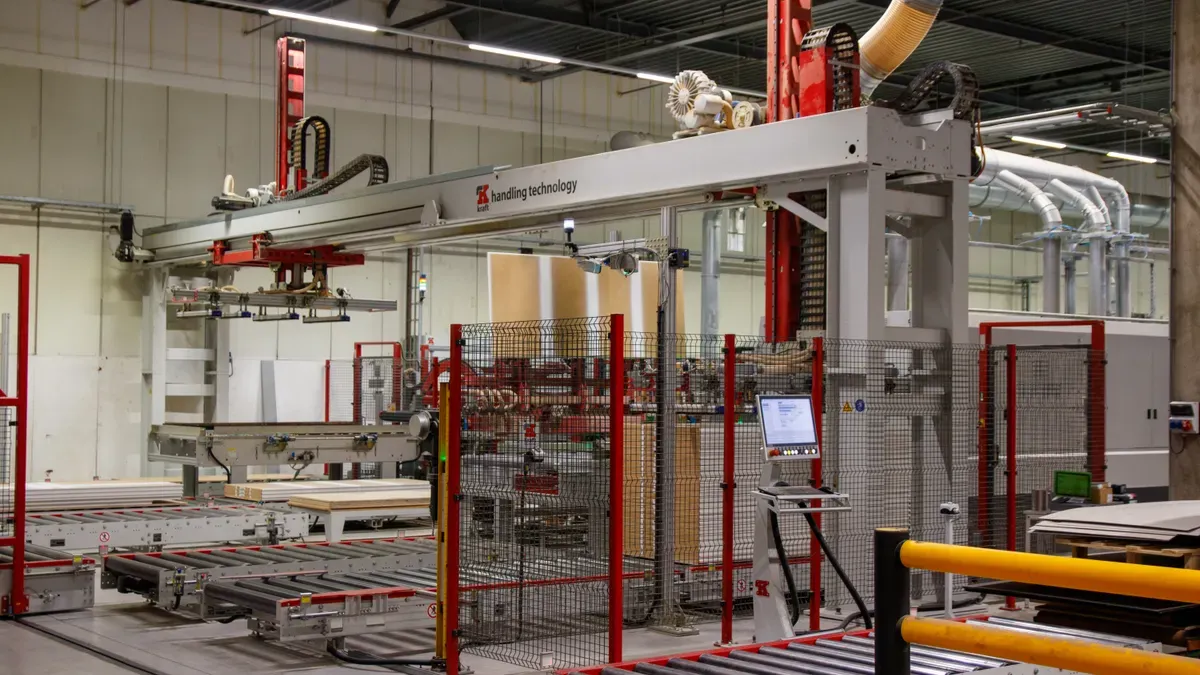
Modern global production environments require advanced digital tools. You can apply ai in supply chain forecasting to transform daily factory operations. Smart algorithms connect disparate commercial signals into one predictive network. This unified visibility strengthens your supply chain link by link.
Multi-Signal POS and Marketing Integration
Traditional sales planning relies heavily on historical shipment figures. Modern retail environments change rapidly. You capture shifting market demand instantly by linking live point-of-sale data with corporate marketing feeds.
AI engine algorithms process cash register scans from retail storefronts. These tools analyze promotional spends and social media trends simultaneously. You align factory production lines directly with live shopper behavior.
💡 Operational Impact: Combining retail demand forecasting with direct marketing data removes order distortion across your commercial supply chain nodes.
Leading global brands prove the high value of automated supply chain forecasting.
| Company | AI Forecasting & Integration Application | Supply Chain Efficiency Gains |
|---|---|---|
| Amazon | Fulfillment center AI automation and dynamic demand forecasting based on purchase history, regional trends, and seasonal data | • 25%–40% increase in productivity • Up to 90% reduction in operational errors • Precise inventory control and optimized pricing |
| DHL | Advanced analytics integration (in partnership with BCG) | • Faster generation of customer proposals • Enhanced ability to convert massive datasets into actionable operational insights |
You can evaluate the financial return of your software deployment through clear operational metrics. You establish a production-normalized baseline first. You track target variables against total factory throughput for three months before deployment. This measurement method proves that efficiency gains stem directly from ai in supply chain forecasting rather than product mix changes.
| Performance Metric | Observed Improvement Range | Valuation Approach |
|---|---|---|
| Stock Carrying Expenses | 18% - 30% lower | Measure baseline vs. post-implementation average stock value |
| Freight & Logistics | 12% - 22% lower | Track shipping costs per individual dispatched item |
| Workforce Productivity | 15% - 40% efficiency gain | Evaluate dedicated task hours before and after deployment |
| Scrap & Waste Material | 20% - 35% reduction | Calculate changes in discarded material volume and disposal fees |
| Machine Downtime | 35% - 55% reduction | Assess overall equipment effectiveness (OEE) improvements |
| Expedited Delivery Fees | 40% - 60% reduction | Monitor spend changes in emergency shipping and rush fees |
- Standard ROI Calculation Formula: The financial return is derived using
Annual ROI = ((Total Annual Benefits - Total Annual Costs) / Total Investment) × 100. - Quantifiable Annual Benefits: Aggregates monetary value generated from reduced holding costs, freight savings, labor optimization, scrap minimization, downtime prevention, and lowered rush shipping expenditures.
- Operational Annual Costs: Consists of recurring expenditures such as software licenses, cloud/infrastructure fees, maintenance, and dedicated internal staffing allocation.
- Initial Capital Investment: Encompasses upfront deployment costs including enterprise system integration, organizational change management, and employee training.
Managing Perishable Inventory and Waste Reduction
Food and chemical production plants face strict product freshness timelines. Traditional safety stock methods create high spoilage waste. Deploying ai demand forecasting solves these inventory management challenges.
Smart software tracks product degradation factors dynamically. The system integrates inputs across the entire supply chain network:
- Data-Driven Pattern Recognition: Machine learning algorithms analyze historical and incoming data patterns adaptively without needing predefined physical or algorithmic rules.
- Environmental & Sensory Inputs: Models like Support Vector Machines (SVM) classify spoilage progression by training on factors such as storage temperature, humidity, light exposure, and sensory attributes.
- Physiological & Chemical Monitoring: Algorithms (e.g., Backpropagation Artificial Neural Networks) evaluate biochemical shelf-life markers like free fatty acids (FFA), acid values (AV), and peroxide values (PV) across varying storage temperatures.
- Computer Vision & Image Analysis: Convolutional Neural Networks (CNN) process visual inspection data automatically to identify surface defects, color changes, and quality grades.
- Non-Destructive Sensor Integration: Inputs from non-destructive monitoring tools—including electronic noses, spectroscopy, and ultrasonic sensors—feed real-time quality parameters directly into deep learning models to refine prediction accuracy.
You ship fresh stock quickly to retail outlets. Precision planning minimizes spoiled inventory. You protect company profit margins while boosting retail partner satisfaction.
Disruption Simulation and Automated ERP Replenishment
Unplanned port delays disrupt regular shipping routes. Machine learning algorithms protect factory schedules during sudden supply chain bottlenecks.
IoT sensors continuously monitor live inventory measurements and stock quantities. When levels drop below specific pre-set limits, the system automatically translates these readings into actionable restocking requests sent straight to the ERP platform, thereby averting inventory depletion and sustaining continuous operations.
You run advanced risk simulations instantly. Deep learning engines model potential shipping delays and raw material shortages. The platform evaluates alternative regional suppliers automatically.
Automated replenishment workflows generate purchase requisitions inside your ERP platform. You secure necessary raw components before market prices rise. Advanced ai-powered demand forecasting turns sudden logistical obstacles into smooth operational adjustments.
Implementing AI in Modern Manufacturing
Data Quality and System Integration
You must establish high data quality standards before deploying modern enterprise tools. Successful teams focus on Clean, Accurate, and Compliant inputs. You scrub historical record archives to eliminate errors. You assign data stewardship roles across key operational departments. You standardize data definitions across software systems.
💡 Core Strategy: Integrating ai in forecasting requires clean datasets to deliver accurate factory insights.
Smart execution prevents algorithmic failures. You connect predictive ai engines directly with enterprise software. Modern demand forecasting tools process clean operational metrics instantly.
Breaking Down Operational Data Silos
Isolated teams hurt modern supply chain networks. You must connect procurement, sales, and warehouse management platforms. Modern manufacturers build real-time system connectivity. Smart ai software drives automated planning workflows.
- You establish integrated Sales and Operations execution.
- You automate data aggregation across legacy systems.
- You validate incoming records to maintain high accuracy.
Unifying systems builds increased collaboration across the supply chain. Your logistics managers track inventory movements easily. You improve overall supply chain visibility. Automated operational checks secure reliable demand predictions across every value chain node.
Workforce Upskilling and Governance
Your workforce needs new technical capabilities. Planners transition from manual data entry to strategic decision-making.
| Skill Layer | Core Capabilities & Toolset |
|---|---|
| Technical Fluency | Navigation of ERP systems, SQL queries, and basic visualization software. |
| AI Interaction | Model output validation, prompt handling, and automated tool management. |
You must establish strict governance frameworks. Organizations deploy responsible ai policies using NIST guidelines, the EU AI Act, and ISO/IEC 42001 standards. Data lineage tracking supports regulatory audits without disrupting production. Your managers adopt modern demand forecasting tools confidently. You secure your supply chain parameters while protecting corporate privacy.
Modernizing Demand Forecasting in 2026
Real-Time Edge IoT Analytics
Edge devices capture real-time data directly from your factory floor. You process live inputs instantly to empower smart forecasting models. Modern manufacturing networks use emerging ai solutions to master supply chain forecasting:
- Real-time Demand Forecasting: Processes sales figures, meteorological info, and market indicators to foresee demand fluctuations proactively.
- Generative AI Demand/Supply Models: Evaluates historical trends, customer habits, and broader market conditions to increase forecast precision.
- AI-driven Supply Chain Forecasting: Assesses external variables and historical metrics to predict supply and demand disruptions, helping manufacturers balance stock levels.
- Predictive Modeling and Analytics Tools: Simulates operational scenarios, evaluates potential outcomes, and enhances visibility to spot supply risks and adapt production schedules dynamically.
Sensors collect real-time data at every machine station. You eliminate reporting delays across the value chain. Consequently, ai in supply chain forecasting turns raw factory signals into immediate actions.
Autonomous Scenario Planning
Unforeseen disruptions threaten your global chain constantly. You need flexible production planning systems to maintain steady operations. Autonomous software simulates unexpected market shifts without manual delays.
Advanced ai-powered demand forecasting evaluates regional carrier delays instantly. These systems recalculate production schedules automatically. You protect your primary factory floor from operational bottleneck risks. Intelligent algorithms run continuous stress tests on your logistics chain. Your leadership team receives accurate real-time forecasting reports before material shortages happen. This proactive approach strengthens your entire network against market volatility.
Strategic Integration of AI-Powered Demand Forecasting
You must align your software deployments with corporate targets. Executive teams deploy ai-powered demand forecasting to unlock measurable growth. You achieve peak operational efficiency by connecting software outputs with enterprise targets.
You can follow a clear four-step process to deploy demand forecasting tools effectively:
- Define Target Metrics: Tie forecasting objectives directly to quantifiable business results, such as reducing prediction error rates or minimizing inventory overhead costs.
- Prepare Data Infrastructure: Clean, standardize, and organize historical sales and transactional records.
- Incorporate External Drivers: Merge external market factors—including promotional campaigns, weather patterns, and competitive dynamics—into the forecasting models.
- Execute Phased Rollout: Launch ai models through controlled pilot projects, scaling up operations only after proving accuracy enhancements.
💡 Strategic Alignment: Implementing ai demand forecasting with disciplined metrics protects your operational working capital.
You master dynamic production planning using organized data records. Your teams apply ai in supply chain forecasting across every production chain node successfully.
💡 Executive Takeaway: Modernize your operations now to convert supply chain risks into long-term growth.
You turn reactive cost centers into proactive competitive advantages with ai-powered demand forecasting. Deploying ai demand forecasting converts dynamic operational signals into direct factory decisions. Implementing ai in supply chain forecasting optimizes inventory management across every supply chain network. Modern ai solutions protect your value chain easily. Audit your operational data architecture using a four-week maturity scorecard today to strengthen your retail supply chain link.
FAQ
How fast can you deploy AI forecasting tools in an existing supply chain?
You can deploy cloud-based solutions within eight to twelve weeks. Your team must connect clean ERP data streams first. Phased rollouts allow you to validate model accuracy across primary distribution nodes without disrupting current plant operations.
How does predictive modeling reduce excess safety stock?
Traditional safety buffers rely on static historical calculations. Predictive engines analyze real-time market demand signals alongside live shipping metrics. You adjust stock parameters automatically, eliminating dynamic lead-time uncertainty across your entire supply chain network.
What data inputs optimize AI demand models?
You achieve peak precision by combining internal operational records with external datasets.
💡 Key Data Sources: Point-of-sale transactions, promotional calendars, raw material lead times, weather patterns, and macroeconomic market trends.
Integrated systems process these diverse signals continuously to protect your business bottom line.
How do automated workflows prevent unexpected supply chain bottlenecks?
Automated tools run continuous scenario simulations across your logistics network. When system algorithms spot potential port delays or material shortages, your ERP software automatically places alternative vendor purchase requisitions before cost spikes occur.
See Also
How Artificial Intelligence And Data Predict Future Market Demand
Top Enterprise Strategies For Accurate Manufacturing Predictions Using AI
Optimizing Smart Factory Production Schedules Based On Consumer Demand
Using Smart Technology To Predict Customer Retail Shopping Trends
Advanced Predictive Tools For Managing Store Inventory Next Year