
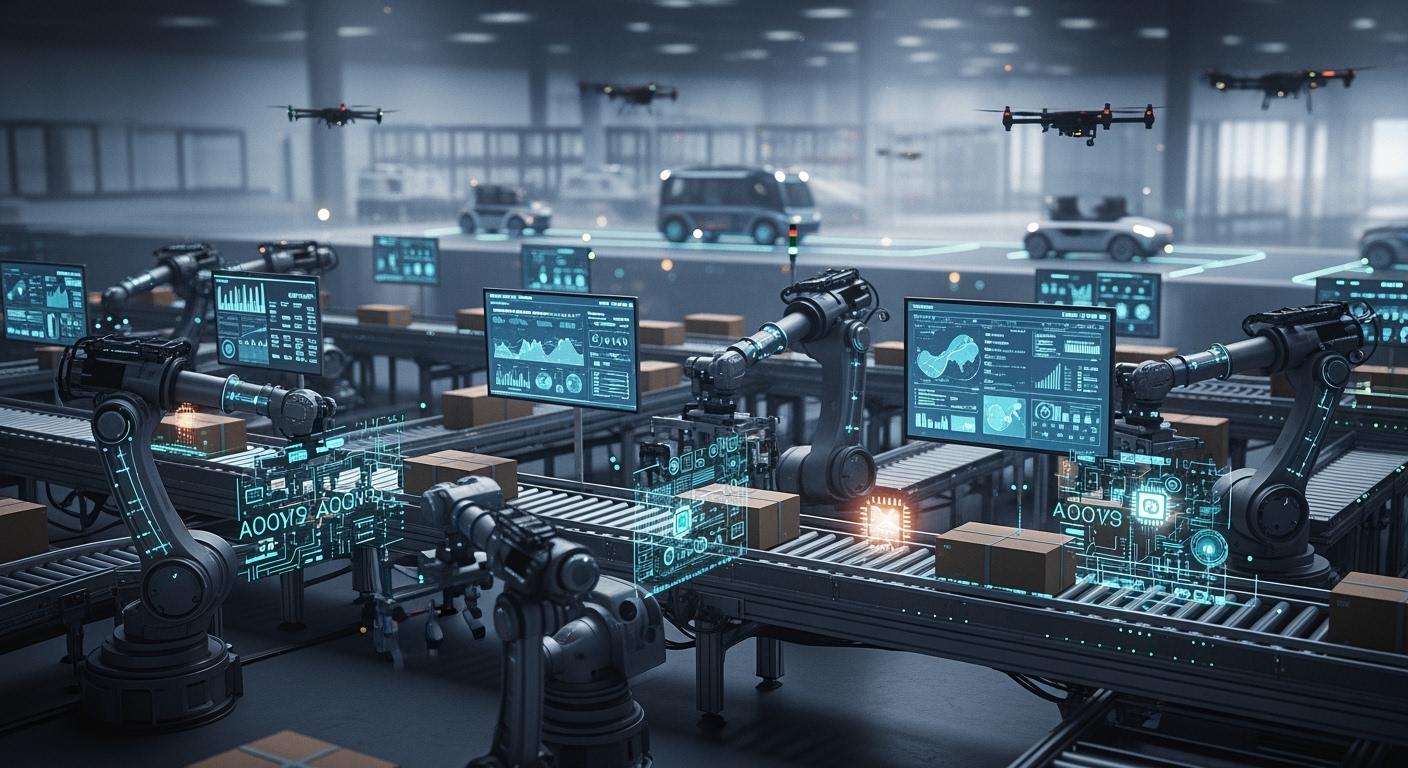
You face rapid change in supply chain automation as 2026 approaches. Many companies now use ai to cut logistics costs, improve efficiency, and boost resilience. Early adopters of ai in supply chain management have reduced costs by up to 15% and improved service levels by 65%. See how adoption rates look today:
| Year | Region | AI Adoption Rate | Planned Increase by 2026 |
|---|---|---|---|
| 2024 | U.S. Manufacturing | 78% of firms | 53% |
| 2024 | European Union | 13.5% of all enterprises, 41% of large firms | 12 pp growth in large firms |
You can reflect on your current strategies and ask if you use these tools fully.
AI in Supply Chain Automation
AI in supply chain automation changes how you make decisions and manage risks. You gain more accurate demand forecasts, reduce inventory carrying costs, and respond faster to supply disruptions. AI gives you real-time visibility into inventory levels and helps optimize logistics routes. You avoid overstock and stockout situations and improve on-time, in-full delivery.
Predictive Analytics
Predictive analytics lets you shift from reactive to proactive supply chain management. AI-driven forecasting can reduce errors by up to 50%. You see fewer lost sales from stockouts and lower warehousing costs. In 2026, predictive analytics helps you assess and handle risks in transportation and logistics. You use digital twins to simulate supply chain scenarios and low-touch planning to automate routine tasks. Supply chain control towers integrate data for centralized visibility.
Research shows that machine learning algorithms can reduce forecast errors by 20–50%. You improve accuracy in demand forecasting, optimize inventory management, and increase agility in supply chain operations. Cost reductions happen through dynamic adaptation to real-time data.
Real-Time Data Integration
You connect systems like ERP, WMS, and TMS to achieve real-time data integration. This approach improves inventory accuracy and speeds up delivery. For example, Laverne Group in Saudi Arabia reached 100% inventory accuracy and 2-3 hour delivery windows in Riyadh. Aramex scaled operations across 100+ dark stores with real-time inventory visibility. You prioritize direct API connections for real-time data exchange and use GPS, RFID, and scanners to monitor every step. Regular data audits keep your supply chain responsive.
- Real-time visibility lets you track shipments and assets.
- You identify issues quickly and streamline processes.
Generative AI Applications
Generative AI brings new tools to supply chain automation. You use virtual assistants for policy inquiries and automatic generation of training material. Onboarding becomes faster as AI centralizes knowledge for new planners.
| Application Type | Description |
|---|---|
| Agentic supply chain systems | AI systems autonomously place orders and reroute shipments. |
| Multimodal supply chain intelligence | AI analyzes images, video, and sensor data for deeper insights. |
| Tighter ERP integration | Generative AI enhances planning workflows and reduces tool fragmentation. |
| Supply chain digital twins + generative AI | AI simulates disruptions for high-fidelity risk analysis. |
| Collaborative AI across partners | AI synthesizes shared data for joint planning while protecting privacy. |
| Increased focus on explainability | AI provides clear audit trails to meet regulatory requirements. |
You monitor supplier risks, run stress test simulations, and receive external event alerts. AI helps you quantify impacts and suggest response options, making your supply chain more resilient.
Autonomous Logistics
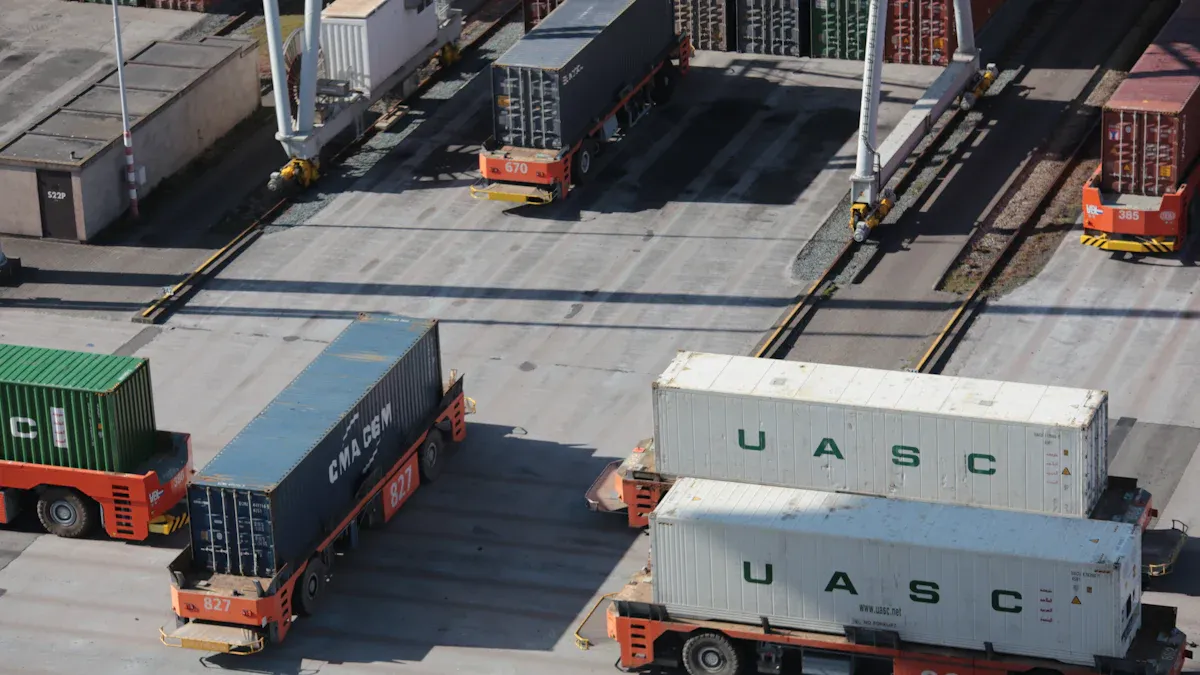
The world of supply chain automation keeps changing. Autonomous logistics will play a big role in 2026. You will see more self-driving vehicles, drones, and smart routing powered by ai. These tools help you move goods faster and safer.
Self-Driving Vehicles
Self-driving vehicles are changing how you handle freight. You can use autonomous trucks to reduce human error. These trucks improve fuel efficiency and help you save money. They also make roads safer and cut down on delivery times. You get more reliable and faster shipments. Many companies now trust ai in supply chain operations to manage these vehicles. This technology helps you meet customer needs and keep your supply chain management strong.
By 2026, the market for autonomous logistics solutions will reach $13.81 billion. You can expect more growth as companies look for ways to boost efficiency.
- Self-driving vehicles:
- Lower human error in freight transport
- Improve fuel efficiency
- Enhance road safety
- Shorten delivery times
Drone Delivery
Drones are becoming a common sight in supply chain automation. You can use drones to deliver packages to hard-to-reach places. Drones help you speed up last-mile delivery. They also reduce the need for large delivery fleets. Ai helps drones plan routes and avoid obstacles. You can track each delivery in real time. This makes your supply chain more flexible and responsive.
Smart Routing
Smart routing uses ai to find the best delivery paths. You can avoid traffic jams and delays. Ai systems look at weather, road conditions, and delivery windows. They help you choose the fastest and safest routes. You save fuel and reduce costs. Smart routing also helps you lower your carbon footprint. You can keep your customers happy with on-time deliveries.
Autonomous logistics will shape the future of supply chain automation. You can use these tools to stay ahead and build a stronger, more efficient network.
Intelligent Inventory Automation
Intelligent inventory automation changes how you manage supply chain automation. You use ai to streamline warehouse management and improve supply chain management. Automated systems help you track inventory, reduce errors, and save money. You gain real-time insights and make better decisions. See the main benefits in the table below:
| Benefit | Description |
|---|---|
| Enhanced Efficiency and Productivity | Automation streamlines operations like inventory management and order processing, improving agility. |
| Cost Reduction | Reduces operational expenses by optimizing resources and minimizing errors. |
| Improved Accuracy and Real-time Insights | Provides accurate insights into inventory and order statuses, aiding in decision-making. |
| Sustainability and Environmental Impact | Optimizes routes and reduces waste, contributing to lower carbon footprints. |
| Better Risk Management | Enhances resilience by allowing businesses to anticipate disruptions with real-time data. |
Automated Warehousing
You use automated warehousing to boost inventory accuracy and cut labor costs. Advanced tracking systems keep inventory accuracy above 99.5%. Automated systems work better than manual processes, which often lead to mistakes. You optimize resources and lower expenses. Manhattan SCALE WMS Technology gives you real-time inventory management and system-directed workflows. You save money on labor, storage, and transportation.
- Automated warehousing:
- Maintains high inventory accuracy
- Reduces human error
- Lowers operational expenses
- Improves warehouse management
Robotics in Inventory
Robotics play a key role in inventory management. You use robots to store, pick, and ship products. Automated storage and retrieval systems let you use high-density storage. Good-to-person robots deliver inventory directly to workers for faster picking. Automated guided vehicles move pallets without help, increasing efficiency and accuracy.
- Robotics in inventory:
- Enhance storage and picking operations
- Enable high-density storage
- Deliver inventory to workers
- Transport pallets autonomously
Dynamic Replenishment
Dynamic replenishment uses ai to keep stock levels just right. You rely on automated reorder systems to refill inventory on time. Ai-driven demand forecasting helps you adjust inventory before sales change. IoT tracking finds problems and manages stock effectively. Warehouse automation reduces errors and labor costs. Dynamic allocation sends products where demand is highest.
- Automated reorder systems ensure timely replenishment.
- Ai forecasts demand and adjusts inventory proactively.
- IoT tracks inventory and detects anomalies.
- Warehouse automation boosts efficiency.
- Dynamic allocation optimizes distribution.
You use ai in supply chain to make inventory smarter and more responsive. Warehouse management becomes easier and more accurate. You build a supply chain that adapts quickly and stays resilient.
End-to-End Visibility
AI Tracking
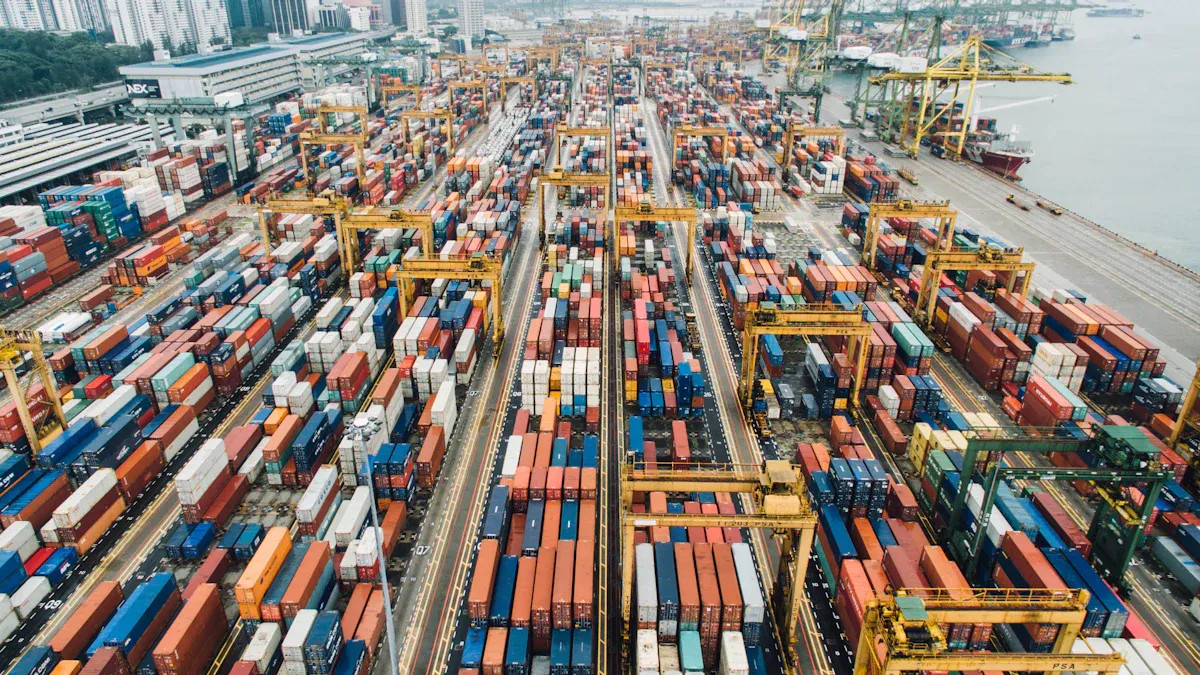
You need clear supply chain visibility to manage risks and meet customer expectations. AI tracking technology helps you see every step in your supply chain. You can follow products from the source to the final delivery. This makes it easier to spot problems and fix them quickly. AI automates the checking of documents and maps the journey of materials. This is important as rules about sustainability and human rights get stricter. You can find compliance risks before they become big issues.
AI tracking also helps you keep your data accurate and up to date. You can use real-time tracking to know where your goods are at any moment. AI algorithms help you make better decisions and improve efficiency. You can also track your carbon footprint and make sure your sustainability claims are true. AI helps you pick the best routes for delivery, which saves fuel and time.
| Aspect | Description |
|---|---|
| Real-time Tracking | AI tracking technology provides real-time visibility into the supply chain, enhancing transparency. |
| Automated Decision-Making | AI algorithms optimize processes, improving efficiency and traceability. |
| Carbon Footprint Tracking | AI optimizes tracking of carbon footprints, ensuring sustainability claims are verified. |
| Compliance Automation | AI simplifies compliance with regulations by automating verification of supply chain documentation. |
Tip: Regular use of AI tracking tools helps you stay ahead of new regulations and customer demands.
Blockchain Integration
Blockchain makes your supply chain management more secure and transparent. You can use blockchain to store records that cannot be changed. This helps you prove where your products come from and stops counterfeits. When you combine AI with blockchain, you get even better supply chain automation.
- AI-powered traceability systems use machine learning and blockchain for real-time tracking and better transparency.
- Smart contracts use AI to check and carry out transactions automatically. This reduces mistakes and saves time.
- Product authentication solutions use blockchain’s records and AI to make sure products are real and safe.
Blockchain also protects your data. You can trust that the information in your supply chain is correct. This builds trust with your customers and partners. You can use these tools to make your supply chain stronger and ready for the future.
Risk & Resilience
Disruption Prediction
You face many risks in supply chain management. Disruptions can come from weather, political changes, or sudden demand shifts. In 2026, you use ai to predict these disruptions before they happen. Ai helps you spot problems early and respond quickly. You rely on advanced analytics and agentic ai systems to improve forecasting accuracy. These tools use real-time data and machine learning to make predictions. You gain double-digit efficiency gains and reduce decision latency.
Ai transforms supply chain operations by enabling predictive analytics and real-time decision-making. You see fewer delays and lower costs.
You use decision intelligence to optimize your supply chain. Ai algorithms adapt to new environments and improve demand forecasting. Traditional methods are now supplemented by ai-enabled approaches. Ai learns and adapts, making your supply chain more agile.
| Method | Description |
|---|---|
| Advanced Analytics | Enhances forecasting accuracy and operational efficiency using real-time data and machine learning. |
| Agentic AI Systems | Enables active intervention, allowing organizations to achieve efficiency gains and reduce decision latency. |
| Decision Intelligence | Supports real-time decision-making and autonomous optimization across supply chain operations. |
Adaptive Networks
You build adaptive networks to make your supply chain resilient. Ai helps you respond to disruptions from pandemics, trade policy changes, and socio-political imbalances. You keep a close eye on dependencies and minimize risks. You create contingency plans to address potential disruptions.
- You invest in digital technologies to enhance visibility and control.
- You restructure your supply base to prioritize resilience and efficiency.
| Strategy | Impact on Resilience |
|---|---|
| Implementing digital technologies | Enhances visibility and control over the supply chain, streamlining processes and improving efficiency. |
| Restructuring the supply base | Prioritizes resilience while maintaining efficiency, allowing for better management during disruptions. |
Investing in supply chain resilience software shortens product development cycles and speeds up time to market. You stay competitive even when global disruptions occur. Ai gives you the tools to adapt and recover faster.
Tip: Use ai-driven adaptive networks to keep your supply chain strong and ready for any challenge.
Human-AI Collaboration
Augmented Decision-Making
You see a new era in supply chain management as you work with ai. This partnership helps you make smarter decisions and solve problems faster. Ai gives you real-time visibility into inventory levels, so you avoid overstock and stockout situations. You use ai to predict delays and prioritize shipments. Teams now collaborate with ai as a trusted partner, amplifying your capability rather than replacing it.
- Human-AI collaboration enhances operational efficiency.
- It fosters innovation by combining human creativity with ai's analytical power.
- Decision-making improves when you use both human insight and ai.
Ai-enabled control towers increase fill rates by 5–8%. You reduce inventory by 20–30% through better forecasting and proactive stock management. Nearly two-thirds of businesses using ai-driven control towers report full end-to-end visibility. You develop new digital and analytical skills, and roles are redesigned around augmented decision-making. Ai helps you anticipate disruptions and improve supply chain performance.
Ai is increasingly embedded in supply chains. You invest in ai tools to create value and improve operations. Over half of companies already use ai to mitigate disruptions.
Workforce Transformation
You need a skilled workforce that understands ai. Continuous upskilling is essential if you want to use ai tools fully. The demand for workers skilled in ai technologies, data analysis, and cybersecurity will surge. Human workers take on more supervisory roles, ensuring accuracy and ethical standards.
- You see the rise of an augmented connected workforce, where ai handles routine decisions.
- Ai systems reduce decision latency, making operations more efficient.
- Organizations using agentic ai achieve double-digit efficiency gains.
- Ai can cut decision-making time from days to seconds.
You build teams that work alongside ai, creating new career pathways. Workers focus on strategy and oversight, while ai manages routine tasks. This transformation helps you stay competitive and resilient in supply chain management.
Implementation Challenges
When you bring new ai technologies into your supply chain management, you face several challenges. You must connect new systems with old ones, protect your data, and help your team adjust to new ways of working.
System Integration
You often find it hard to connect modern ai tools with legacy systems. These older platforms may not support real-time data sharing or advanced analytics. You can use API-based integration to let old and new systems talk to each other. Data mapping and cleansing help you match data formats and remove errors. A phased rollout lets you test changes in small steps, so you avoid big problems. End-to-end testing helps you catch issues before you go live.
- API-based integration for smooth data flow
- Data mapping and cleansing to fix mismatches
- Phased rollout to reduce risk
- End-to-end testing for quality control
High upfront costs and a lack of skilled workers also make integration tough. You need to plan for training and support.
Data Security
You must keep your data safe as you use more ai in your supply chain. Start by using container security and strong CI/CD protections. Continuous monitoring helps you spot risks early. Use agentless SBOM visibility to find supply chain risks. Rotate API keys and passwords often, and use secrets managers to keep credentials safe. Set clear rules for code reviews and use multi-factor authentication. Make sure everyone knows who is responsible for security.
- Use container security and CI/CD protections
- Monitor systems all the time
- Rotate credentials and use secrets managers
- Set strict rules for authentication and code reviews
Work closely with your partners and vendors. Real-time communication tools help you respond to threats quickly.
Change Management
Change can be hard for your team. You need to help them learn new skills and understand why ai matters. Offer comprehensive training so everyone knows how to use new tools. Communicate the benefits of automation clearly. This helps your team accept new workflows and reduces resistance.
| Strategy | Description |
|---|---|
| Comprehensive Training | Teach your team how to use new technologies and adapt to new workflows. |
| Change Management | Explain the benefits of automation to encourage acceptance. |
You should focus on upskilling, open communication, and teamwork. When your team sees how ai helps both the company and their own growth, they will support the change.
You see major trends shaping supply chain automation in 2026.
- Omnichannel automation boosts growth and resilience.
- Teleoperations let remote workers manage logistics.
- Port and warehouse automation uses robotics and ai for better accuracy.
- IoT-driven real-time monitoring gives you control and visibility.
- Automated guided vehicles streamline transport.
To prepare, follow these steps:
- Assess your supply chain management processes.
- Set clear automation goals.
- Focus on high-impact areas.
- Choose the right technologies.
- Roll out changes in phases.
- Train your team.
- Monitor and adjust.
Keep innovating and use ai to build a resilient supply chain. Ongoing strategy helps you stay competitive.
FAQ
What is supply chain automation?
Supply chain automation uses machines and software to handle tasks like tracking shipments and managing inventory. You save time and reduce mistakes. Automation helps your business run smoothly and keeps customers happy.
How does ai technology for logistics improve supply chains?
You use ai technology for logistics to plan routes, predict demand, and track shipments. AI helps you make faster decisions and lowers costs. You see fewer delays and better delivery times.
Can small businesses use supply chain automation?
Yes, small businesses can use automation tools. You start with simple systems like barcode scanners or inventory apps. Automation helps you grow and compete with larger companies.
What are the main risks of supply chain automation?
You face risks like cyberattacks, system failures, and data leaks. Training your team and using strong security measures help you protect your supply chain.
How do you start automating your supply chain?
- Review your current processes.
- Set clear goals.
- Choose easy-to-use tools.
- Train your team.
- Monitor results and adjust as needed.
See Also
Revolutionary Tech Reshaping Shipping Processes By 2025
Efficient Logistics Enable Quick, Eco-Friendly Supply Chain Success
Impact of AI Sensors on Fashion Supply Chains in 2025
Understanding Technology's Role in Enhancing Supply Chain Efficiency
Emerging Trends in B2C Fulfillment Accelerating Delivery Times