
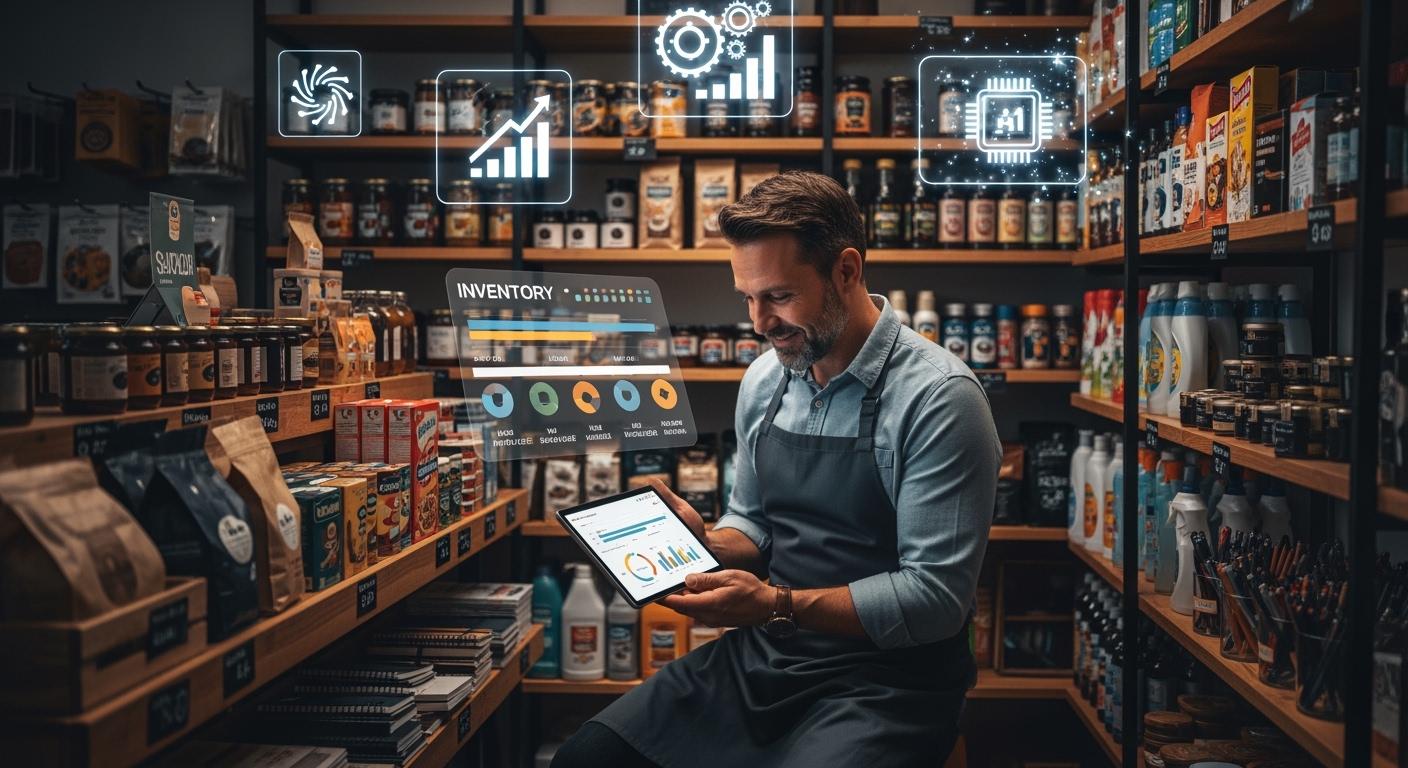
You can use AI to make smarter decisions about what to stock in your shop. AI helps you spot slow-moving items early and avoid wasting money on products that do not sell. When you use Inventory Optimization, you keep the right amount of each product and prevent overstocking. This means you spend less and your customers find what they need more often.
| Benefit | Description |
|---|---|
| Reduction of Dead Inventory | AI identifies slow-moving SKUs early, enabling proactive strategies to reduce waste. |
| Improved Asset Utilization | By optimizing inventory levels, businesses can enhance overall asset utilization and reduce costs. |
| Prevention of Overstocking | AI helps in maintaining optimal inventory levels, thus preventing excess inventory costs. |
You do not need expensive or complicated systems. A few simple steps can help you see real results.
What Is AI Inventory Optimization?
AI-Driven Inventory Explained
You can use AI to make inventory management easier and more accurate. AI-driven inventory systems use smart technology to track products, predict demand, and automate ordering. These systems help you keep the right amount of stock and avoid mistakes that cost money. Unlike traditional methods, AI uses real-time data and advanced algorithms to make decisions quickly.
Here is a table that shows the main components of AI inventory optimization for retail shops:
| Component | Description |
|---|---|
| Multi-echelon inventory management | Aligns demand and stock across stores, warehouses, and the entire supply chain. |
| Demand forecasting | Autonomously forecasts and plans demand to optimize inventory levels. |
| Automation of replenishment | Automates order generation to ensure timely replenishment of stock. |
| Precision ordering and stock optimization | Improves accuracy of stock and store orders to prevent overstock and shortages. |
You can see that AI covers many parts of inventory management. It helps you plan better, order smarter, and keep your shelves stocked with what customers want.
Why Local Shops Need AI
Local shops face many challenges with inventory. You may struggle with high costs, unreliable data, and slow manual processes. AI can solve these problems by making inventory optimization faster and more reliable. AI systems automate tasks, use real-time analytics, and improve forecasting accuracy.
Here is a comparison between AI-driven and traditional inventory management:
| Feature/Benefit | AI-Driven Inventory Management | Traditional Inventory Management |
|---|---|---|
| Automation | High automation with minimal human input | Relies heavily on manual processes |
| Decision-Making | Smarter decision-making through real-time analytics | Dependent on human analysis |
| Demand Forecasting | Uses predictive analytics for accurate forecasting | Basic forecasting methods |
| Real-Time Tracking | Integrates with IoT for real-time updates | Often lacks real-time visibility |
| Stock Level Optimization | Advanced algorithms optimize stock levels | Manual calculations and estimations |
| Customer Service Improvement | Faster order fulfillment with accurate stock info | Slower response times due to manual checks |
Tip: You can start with simple AI tools that fit your shop’s needs. Even small changes can make a big difference in how you manage inventory.
Inventory Optimization with AI helps you save money, reduce waste, and keep customers happy. You gain more control and confidence in your business.
Benefits of Inventory Optimization
Lower Costs and Less Waste
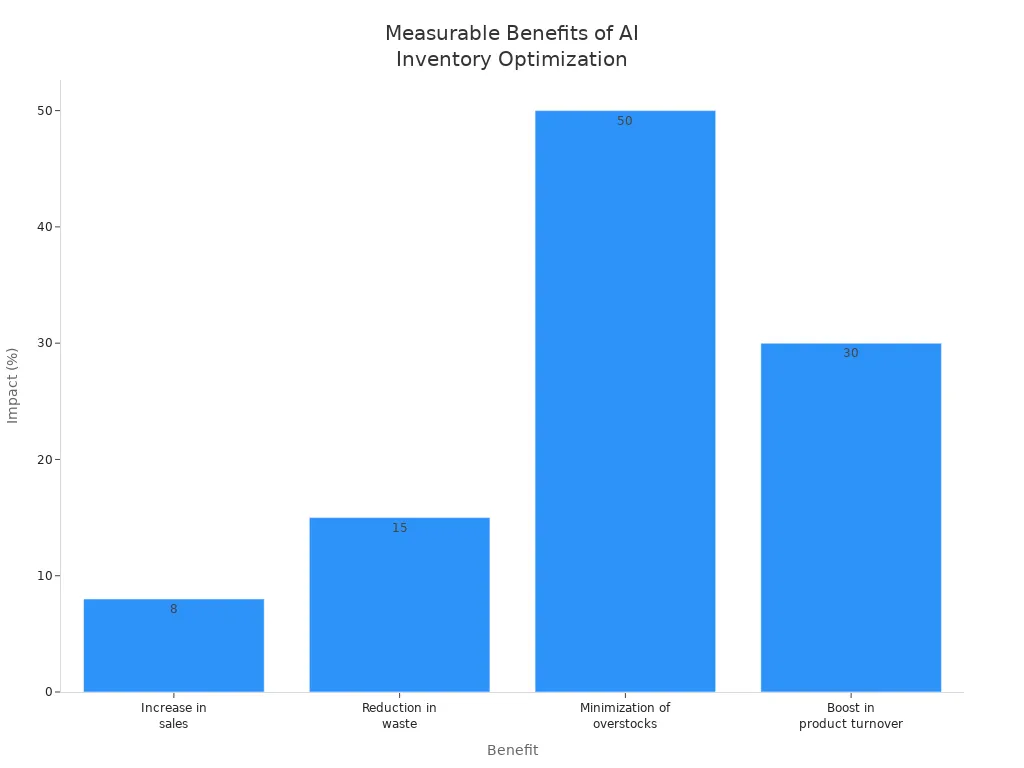
You can lower your costs and reduce waste by using Inventory Optimization. AI helps you spot slow-moving products and avoid buying too much. Many local shops have seen a 15% reduction in waste and a 50% drop in overstocks after using AI tools. Some grocers have cut food waste by 49% with smart demand forecasting. You save money when you buy only what you need. Supermarkets often waste 2.5-4% of their revenue on surplus food. AI-driven inventory redistribution also helps you minimize excess stock, which supports environmental sustainability.
Here is a table showing measurable impacts:
| Benefit | Measurable Impact |
|---|---|
| Increase in sales | 8% |
| Reduction in waste | 15% |
| Minimization of overstocks | 50% |
| Boost in product turnover | 30% |
Fewer Stockouts and Overstock
You can keep your shelves full without overstocking. AI-powered systems help you predict demand and plan smart replenishment. This means you avoid running out of popular items and prevent piling up unsold goods. Some shops have reduced inventory by 68% and dead stock by up to 89%. You get better accuracy in forecasting and improved productivity through automation. Optimized supply chain management and reduced storage costs make your business more efficient.
Happier Customers
You make your customers happy when you always have what they want. AI ensures product availability and prevents lost sales. Proactive inventory transfers based on demand patterns help you keep popular items in stock. Customers feel satisfied and loyal when they find what they need. You build trust and encourage repeat visits. Smart inventory management leads to higher customer satisfaction scores.
Tip: You can start small with AI tools and see big improvements in your shop’s performance and customer happiness.
AI Strategies for Inventory Optimization
You can use several AI strategies to make Inventory Optimization work for your local shop. These strategies help you predict what to stock, automate orders, set the right safety stock, and track inventory in real time. Machine learning improves accuracy and efficiency, so you can make better decisions and save money.
Predictive Demand Forecasting
You can use AI-powered demand forecasting to predict what your customers will buy. This system looks at historical sales, seasonal trends, and even local events or weather. For example, big retailers like Walmart use real-time sales data and weather forecasts to plan inventory. Brands such as Allbirds use machine learning to study past sales and spot patterns.
Here are some ways predictive demand forecasting helps your shop:
- Increases forecast accuracy by up to 30%, which means you buy the right amount of stock.
- Reduces stockouts and excess inventory, so you do not lose sales or waste money.
- Uses real-time, location-aware data to plan better and boost revenue.
- Analyzes data from many sources, giving you a clear view of market demand.
AI forecasting can reach 80-90% accuracy, while manual methods only get 60-75%. This improvement lets you lower safety stock by 20-30% and still keep shelves full. You do not have to guess what to order. The system learns from your sales and adjusts as trends change.
Tip: Start by collecting your sales data and let an AI tool analyze it. You will see patterns you might miss on your own.
Automated Replenishment
You can use AI to automate your reordering process. Automated replenishment systems create purchase orders based on real-time sales and demand. This reduces manual errors, such as data entry mistakes or miscounts, and saves you time.
Key features of automated replenishment include:
| Feature | Description |
|---|---|
| Automatic replenishment and allocation system | Uses AI to cut food waste by up to 40% and optimize inventory management. |
| Order Troubleshooting AI agent | Spots and fixes order issues before they become problems. |
| Dynamic min/max recalibration | Adjusts stock levels as sales change. |
| Real-time inventory visibility | Connects with your POS and other systems for accurate stock data. |
| Intelligent stock allocation | Sends products where they are needed most to maximize sales. |
Automated systems handle routine tasks, so you can focus on helping customers. They also improve supply chain efficiency and make sure popular items stay in stock. You get fewer errors and faster restocking.
Safety Stock Optimization
You can use AI to set the right amount of safety stock. Safety stock is the extra inventory you keep to prevent shortages. AI models look at many factors, such as sales history, supplier reliability, and even weather forecasts. These models learn from changes in demand and supply, so they adjust safety stock levels in real time.
Here is how AI helps with safety stock:
- Maintains higher service levels, so customers find what they want.
- Reduces inventory investment by 20-30%, which means you spend less on extra stock.
- Uses advanced techniques like LSTM networks and neural networks to predict demand changes.
- Considers supplier delays and market conditions to set the best safety stock.
Traditional methods use simple rules and old data. AI systems use real-time information and adjust quickly. This keeps your shelves stocked without tying up too much money in inventory.
Note: AI-driven safety stock optimization helps you avoid both shortages and overstocks, making your business more resilient.
Real-Time Inventory Tracking
You can track your inventory in real time with AI. This gives you a live view of what you have in stock. Barcode scanners, smart sensors, and even cameras update your inventory instantly. AI systems alert you when stock runs low, update records, and detect shrinkage or theft.
Real-time tracking improves your shop in these ways:
- Provides accurate stock information, so you always know what is available.
- Automates replenishment and improves demand forecasting.
- Reduces waste and improves stock rotation, which saves money.
- Alerts staff to low stock and updates inventory records automatically.
You only need simple hardware like barcode scanners or smart sensors. Some systems use computer vision to count products. Predictive analytics can even tell you when you will run out of an item.
Tip: Real-time tracking helps you prevent stockouts and overstocks, leading to happier customers and better sales.
Here is a table showing the most effective AI strategies for Inventory Optimization in small shops:
| Strategy | Description | Benefits |
|---|---|---|
| AI-Powered Demand Forecasting | Uses machine learning to analyze sales and trends for accurate predictions. | Improves forecast accuracy by up to 30%. |
| Smart Replenishment Algorithms | Automates orders based on real-time sales and demand trends. | Reduces excess inventory by up to 35%. |
| AI Dynamic Pricing | Adjusts prices based on demand to manage stock levels. | Prevents overstock with smart pricing. |
| Real-Time Inventory Visibility | Tracks stock movement in real time with sensors and IoT. | Helps prevent stockouts with live data. |
| Supplier and Lead Time Optimization | Analyzes supplier behavior to improve vendor management. | Minimizes delays and maximizes uptime. |
You can combine these strategies for the best results. AI makes Inventory Optimization easier, more accurate, and more profitable for your local shop.
Getting Started With AI Tools
Choosing Simple AI Solutions
You can start your journey with user-friendly AI tools that make Inventory Optimization easy. Many local shops choose tools that do not require advanced technical skills. Here is a table showing some of the most popular options:
| Tool Name | Description | User-Friendliness |
|---|---|---|
| Ply | Designed for contractors with AI features for inventory management. | Intuitive interface for easy tracking and purchasing. |
| Zoho Inventory | Tailored for small to medium-sized businesses with automated forecasting. | Accessible platform with a low learning curve. |
| ClickUp | Project management tool with integrated AI for inventory. | Collaborative features for team efficiency. |
When you select an AI solution, look for these important features:
- Demand forecasting to predict what you need.
- Smart replenishment to automate restocking.
- Real-time inventory visibility for up-to-date stock information.
- Supplier optimization for better deals and reliability.
- Automation to reduce manual work and errors.
- Integration capabilities to connect with your current systems.
Easy Integration Steps
You can follow a few simple steps to add AI tools to your shop’s workflow:
- Assess your current systems. Find out what works and what needs improvement.
- Set clear goals. Decide if you want to reduce costs, improve accuracy, or both.
- Choose the right AI tool. Pick one that matches your needs and has a good reputation.
- Integrate your data. Make sure the new system connects with your existing software.
- Monitor and improve. Check results often and update your AI tool as needed.
Tip: Start small and expand as you see results. This approach helps you avoid overwhelm.
Staff Training Tips
You help your team succeed by offering the right training. Personalize training based on each employee’s needs and learning style. Use short sessions, hands-on practice, and simple guides. Encourage questions and give feedback. This support builds confidence and helps everyone use the new tools effectively.
Note: Well-trained staff make your Inventory Optimization project more successful.
Local Shop Success Stories

Grocery Store Example
You can see real results when you use AI for Inventory Optimization in a grocery store. Many grocers have started using AI tools to manage their stock, especially for fresh products. These tools help you predict how much you need to order each day. You avoid buying too much and throwing food away. You also make sure your shelves stay full for your customers.
- AI-enabled systems improve forecasting and inventory management. You reduce waste and save money.
- Better planning lowers your environmental impact. You help your community by wasting less food.
- Some stores use solutions like RELEX to cut overstock and spoilage. This means you keep more profit and support sustainability.
- One online grocer used AI demand forecasting and saw a 49% drop in food waste. You can see how this change boosts both your bottom line and the planet.
When you use AI, you make smarter choices about what to stock. You keep your store efficient and your customers happy.
Boutique Shop Example
You can also benefit from AI if you run a boutique shop. AI tools help you understand what your customers want. You can track trends and see which items sell best. This helps you keep the right products on your shelves.
- AI predicts customer buying patterns. You avoid running out of popular items or having too many unsold products.
- These tools use demand forecasting to match your stock with what people want. You increase sales and keep customers satisfied.
- Real-time inventory tracking lets you check product availability quickly. You can give better service and suggest alternatives if something is out of stock.
- AI connects with your customer management system. Your staff can help shoppers find what they need and even target special offers to loyal customers.
With AI, you make your boutique more responsive and personal. You build trust and encourage repeat visits.
Overcoming Common Challenges
Managing Costs
You might worry about the cost of using AI in your shop. You can control these costs with smart strategies. Start with AI tools that grow with your business. This way, you do not spend too much at the beginning. Try adding AI in small steps. You can see the benefits before making a bigger investment. Training your staff helps everyone use the new tools well and avoids mistakes.
| Strategy | Description |
|---|---|
| Start with Scalable Solutions | Begin with flexible AI tools that can grow with the business, reducing initial costs. |
| Phased Implementation | Implement AI in stages to manage costs and demonstrate benefits gradually. |
| Employee Training | Conduct workshops and provide ongoing support to help staff adapt to AI tools effectively. |
Tip: You do not need to buy everything at once. Take small steps and watch your savings grow.
Data and Privacy
You want to keep your shop’s data safe. Local AI systems can help you do this. These systems process your data inside your shop, not on the internet. Your customer and sales information stays private. You control who sees your data. This also helps you follow privacy rules and keeps your business safe from hackers.
Note: Using local AI tools gives you more control and protects your shop’s information.
Technical Barriers
You may think AI is too hard to use. Many small shops still use paper or spreadsheets to track inventory. These methods can lead to mistakes and slow down your work. You can choose AI tools that do not need coding skills. No-code platforms make it easy to get started. If you have trouble connecting your systems, look for tools that bring all your data together in one place. User-friendly tools help you avoid the need for special tech experts.
| Technical Barriers | Solutions |
|---|---|
| Complexity | Use no-code platforms to simplify implementation |
| Integration difficulties | Centralized systems to ensure data quality |
| Need for specialized technical expertise | Leverage user-friendly tools |
- Manual tracking can cause errors.
- Operations slow down with old systems.
- Growing your shop gets harder without the right tools.
Tip: Pick simple AI tools that fit your shop. You can always add more features as you grow.
You can make Inventory Optimization simple and effective with AI. Start by looking at your current inventory process and find one area to improve. AI helps you predict demand, adjust stock levels, and learn from your data. Even small changes can boost efficiency, lower costs, and help you make better decisions. Try one AI strategy and watch your shop grow.
- AI fits into your current process and improves results.
- It uses data to predict demand and adjust stock in real time.
- Small steps with AI lead to big gains in customer satisfaction.
FAQ
What is AI inventory optimization?
AI inventory optimization uses smart computer programs to help you manage your shop’s stock. These programs look at sales data and trends. They help you decide what to order and when to restock.
Do I need special skills to use AI tools?
You do not need to be a tech expert. Many AI tools have simple dashboards and guides. You can learn how to use them with basic training.
How much does AI inventory software cost?
Prices vary. Some tools offer free trials or low monthly fees. You can start small and upgrade as your shop grows. Always check for hidden costs.
Can AI help my shop if I have only a few products?
Yes! AI works for shops of any size. You can use it to track even a small number of items. This helps you avoid running out or overstocking.
See Also
Enhancing Ecommerce Warehouse Operations Through Intelligent Strategies
AI-Driven Safety Stock Solutions for Fashion Retail in 2025
Effective Merchandise Assortment Planning Strategies for Retail Success
Utilizing Predictive Analytics for Efficient Retail Re-stocking