

You see autonomous commerce changing the way you interact with products and services every day. This new approach uses ai and automation to let platforms handle many commerce tasks without human help. You notice a big shift from old online shopping to autonomous systems that use conversational commerce and smart agents.
- Consumer visits from ai browsers and chat services increased by 4,700% in the past year.
- Ai-driven shoppers spend 32% more time shopping and browse over 10% more pages, with a 27% lower bounce rate.
The market for ai-powered autonomous platforms keeps growing fast, reaching a projected 9.70 billion dollars by 2026. You join millions who experience more autonomy and smarter commerce every year.
What Is Autonomous Commerce?
Autonomous vs. Traditional eCommerce
You see a big difference between autonomous commerce and traditional eCommerce. Autonomous systems use ai to make decisions and complete tasks without human help. Traditional eCommerce depends on people to manage most steps. You notice that autonomous commerce brings more speed and flexibility to shopping. It uses real-time data and smart agents to handle orders, answer questions, and adjust to changes in the market.
Here is a table that shows how autonomous commerce and traditional eCommerce compare:
| Aspect | Autonomous Commerce | Traditional eCommerce |
|---|---|---|
| Data Usage | Leverages real-time data and AI agents | Relies on historical data and manual processes |
| Task Automation | Automates complex tasks | Manual task execution |
| Adaptability | Adapts to changing market conditions | Less adaptable to market changes |
| Customer Interaction | Involves agents interacting in real-time | Direct human interaction with customers |
You get a different experience when you use autonomous platforms. These platforms use microservices and an API-first approach. This means you can enjoy more flexible and custom shopping journeys. You do not have to follow a fixed path. You can ask for what you want, and the system adapts to your needs. Traditional eCommerce platforms make it easy to start, but they limit your options. You may need to change the system if you want something special. Autonomous commerce gives you more autonomy and control over your shopping experience.
You also see that conversational commerce plays a big role in autonomous commerce. You can talk to ai agents, ask questions, and get help right away. This makes shopping feel more natural and personal. Autonomous platforms use ai to understand what you want and help you find the best products.
Key Concepts: Agentic Commerce & Execution Fabric
You hear about agentic commerce when you learn about autonomous commerce. Agentic commerce means ai agents act for you or your business. These agents search for products, compare prices, and even buy items for you. You do not need to do these steps yourself. The agents can research, negotiate, and finish purchases. This saves you time and effort.
Autonomous commerce takes agentic commerce to the next level. In autonomous commerce, the system takes full responsibility for the results. You trust the platform to make the right choices and complete the transaction. This is possible because of new technology. Large language models understand what you want. APIs let the system take real actions. Secure payment and delivery systems keep your information safe. Trust layers protect your data and make sure everything follows the rules.
You also need to know about the execution fabric in autonomous commerce. The execution fabric connects all the parts of the system. It helps the platform work smoothly and quickly. Here are the main parts of the execution fabric:
- Unified execution layer that links different shopping channels
- Intelligent orchestration for fast and accurate transactions
- Real-time inventory visibility so you know what is in stock
- Modular design that supports many types of business systems
You see that autonomous commerce uses ai, automation, and smart design to give you more autonomy. You get a better shopping experience, faster service, and more choices. Autonomous platforms change how you shop and do business. You can trust ai agents to handle tasks, while you enjoy the benefits of autonomy and advanced technology.
Core Features of Autonomous Platforms
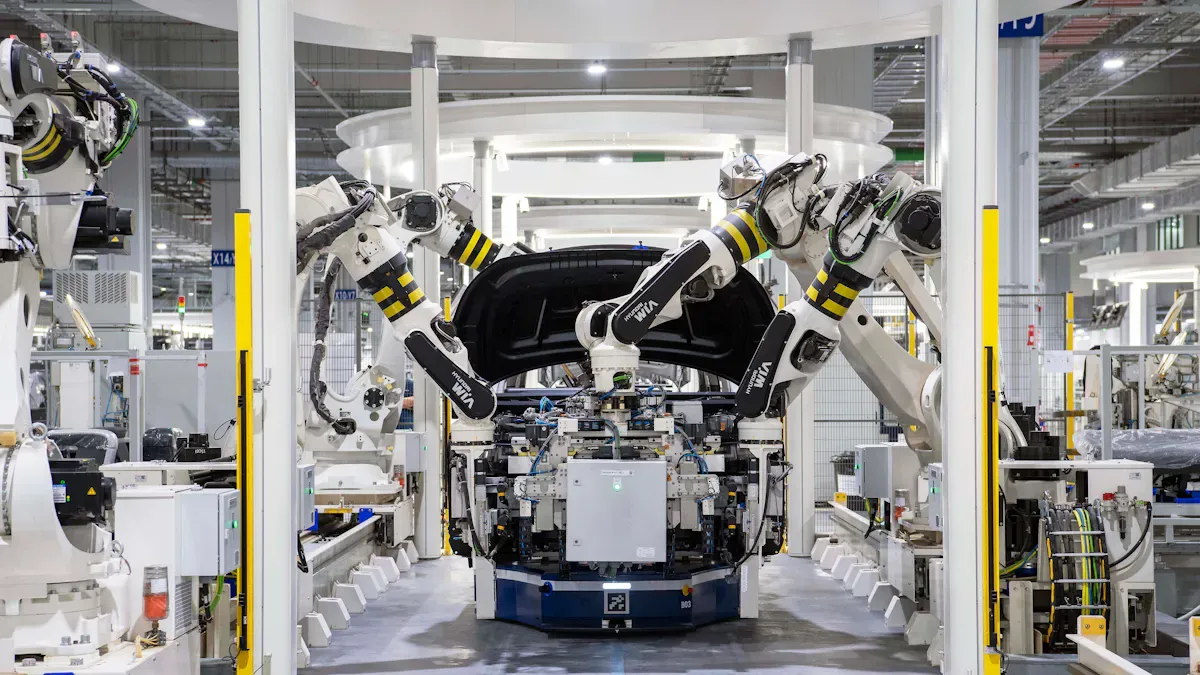
You see autonomous commerce changing how you shop and do business. These platforms use ai, automation, and data integration to create end-to-end autonomous execution. You get a faster, smarter, and more flexible commerce experience. Let’s explore the main features that make autonomous platforms powerful.
AI-Driven Automation
You notice that ai-driven automation is at the heart of autonomous commerce. These platforms read live intent signals from shoppers. They analyze clicks, comparisons, and abandoned items. You see them adjust product discovery and messaging in real time. This creates a dynamic shopping experience that feels personal and responsive.
AI agents can complete entire shopping journeys for you. They search for products, compare prices, and finalize purchases without needing your constant input. You save time and enjoy more autonomy.
Here is a table showing common ai-driven automation features in autonomous commerce:
| Feature | Description |
|---|---|
| AI Automation | Uses ai, machine learning, and automated processes to streamline operations and enhance experience. |
| AI Agents | Operate independently to improve shopping journeys and customer satisfaction. |
| Dynamic Personalization | Adjusts product discovery and messaging based on live shopper signals. |
| Natural Language Processing | Helps platforms communicate with you through conversational commerce. |
| Computer Vision | Recognizes products for better inventory management and seamless shopping. |
| Predictive Analytics | Forecasts inventory needs using data analysis. |
You see agentic commerce in action when ai agents handle tasks for you. These agents use natural language processing to answer your questions and computer vision to recognize products. Predictive analytics helps platforms optimize inventory and reduce waste. You get a smoother shopping journey and more control.
Data Integration & Analytics
You benefit from strong data integration in autonomous commerce platforms. These platforms connect different systems and synchronize data in real time. You see accurate product details and quick order processing. Automation reduces manual tasks and speeds up operations.
- Real-time data synchronization keeps all platforms updated.
- Seamless integration improves your shopping experience.
- Centralized management allows easy expansion into new channels.
- Integrated data provides better business insights.
- Quick adaptation to market changes gives you a competitive advantage.
Analytics tools drive decision-making and performance improvements. You see descriptive analytics summarizing past data. Diagnostic analytics explain why things happened. Predictive analytics forecast what is likely to happen. Prescriptive analytics recommend what you should do next.
| Type of Analytics | Description | Role in Decision-Making |
|---|---|---|
| Descriptive | Answers 'What happened?' | Summarizes past data for insights |
| Diagnostic | Explains 'Why did it happen?' | Identifies correlations and trends |
| Predictive | Forecasts 'What is likely to happen?' | Uses machine learning models for future predictions |
| Prescriptive | Recommends 'What should we do next?' | Provides ai-driven simulations for action plans |
You see agentic platforms using ai-powered analytics for real-time monitoring and proactive decision support. In financial services, agentic ai can spot unusual trading patterns and help prevent losses. You get improved foresight and planning.
Self-Operating Marketplaces
You experience self-operating marketplaces when autonomous commerce platforms manage transactions without human help. These marketplaces use ai, automation, and agentic commerce to create seamless shopping environments. You see real-time tracking of customers and products. Automated transaction processing reduces errors and speeds up checkout.
- Computer vision technology tracks customers and products for seamless shopping.
- Automated transactions lower the need for human intervention.
- Inventory management improves with precise data and analytics.
- Store layouts optimize customer flow by analyzing traffic patterns.
- Operational costs drop because platforms require less labor.
You notice that autonomous marketplaces adapt quickly to changes. They use agentic commerce and execution fabric to connect all parts of the system. You get a flexible and scalable commerce environment. You enjoy more autonomy and a better shopping experience.
Tip: Autonomous commerce platforms use conversational commerce to make shopping feel natural. You can talk to ai agents, ask questions, and get instant help.
You see that autonomous commerce combines ai-driven automation, data integration, analytics, and self-operating marketplaces. These features give you more autonomy, improve your shopping journey, and help businesses grow. You benefit from agentic commerce, execution fabric, and advanced technologies like computer vision.
Business Applications of Autonomous Commerce

Procurement & Supply Chain Automation
You see autonomous commerce changing how you manage procurement and supply chains. These platforms use ai and real-time data to automate many steps. When stock runs low, the system can reorder products without waiting for you to act. This keeps your shelves full and reduces out-of-stock problems. You also notice better teamwork between businesses and suppliers. IoT connections help everyone share information quickly, which improves communication and efficiency.
An autonomous supply chain works as a self-optimizing system. It uses ai, automation, and data to adjust itself. You do not need to step in as often. This makes your operations faster and more resilient. You can adapt quickly to changes in the market or global disruptions.
Here is a table showing how autonomous commerce platforms help in procurement and supply chain management:
| Benefit | Description |
|---|---|
| Cost Reduction | AI-driven optimization lowers route miles, robotics reduces labor costs, and automated returns reduce waste. |
| Throughput Acceleration | Robots and ai work without breaks, improving picking speed and shortening delivery cycles. |
| Accuracy & Scalability | Machines reduce errors, and you can grow your operations without hiring more workers. |
You gain more autonomy and control over your commerce operations. You see fewer mistakes, faster deliveries, and lower costs.
Agentic Ecosystem in Practice
You experience agentic commerce when ai agents handle tasks across the commerce journey. These agents create personalized sales presentations and product recommendations for your customers. This increases order value and customer loyalty. E-commerce platforms use recommendation engines to improve shopping across websites, apps, and stores. You notice that agentic platforms manage customer journeys, making each interaction smooth and connected.
The agentic ecosystem uses rules that let you set your preferences and limits. Merchant agents must act in ways that match your brand values. This ensures fairness, transparency, and respect in every action. The HAI Model guides how consumer and brand agents interact, giving you more control and better decision-making.
Here is a table showing key functions of agentic commerce in business:
| Functionality | Description |
|---|---|
| Inventory Management | Inventory agents check stock and reserve items at the best fulfillment center. |
| Pricing Management | Pricing agents apply contract pricing and promotions. |
| Credit Verification | Credit agents verify credit terms. |
| Approval Routing | Approval agents decide if manual approval is needed based on customer history. |
| Fulfillment Initiation | Fulfillment agents start the picking process. |
| Communication | Communication agents send confirmations. |
You see that agentic commerce and conversational commerce work together to create a seamless shopping experience. Ai transforms every stage of the commerce lifecycle. You get hyper-personalization, smarter decisions, and higher efficiency. Autonomous commerce gives you more autonomy and a better experience from start to finish.
Adoption Benefits & Challenges
Efficiency & Revenue Growth
You gain many benefits when you use autonomous commerce in your business. These autonomous systems help you work faster and make fewer mistakes. You see more sales and higher profits because ai can make smart decisions in real time. When you use autonomous commerce, you can automate repeat orders and improve how you manage your shopping and sales. This leads to better conversion rates and more revenue.
Here is a table that shows how businesses report improvements after adopting autonomous commerce:
| Efficiency Gain Type | Reported Improvement |
|---|---|
| Revenue Improvement | 2% - 5% |
| Profit Increase | 10% - 40% |
| Conversion Rate Improvement | 1.5% - 2.5% |
| Revenue Increase from Pricing | 2% - 5% |
| Profit Increase from AI Optimization | 10% - 40% |
You also see that process automation can boost your revenue by over 31%. Sales and marketing automation can add around 20% more revenue. Ai helps you make better choices, target the right customers, and build stronger relationships. You can measure your return on investment in real time and use predictive models to plan for the future. This gives you more autonomy and helps your business grow.
Implementation Risks & Change Management
You face some challenges when you move to autonomous commerce. Integration can be hard because you must connect new autonomous platforms with your old systems. Sometimes, data comes from many places, and you need to make sure it is accurate. You also need people who know how to use the new technology.
Here are some common risks you may face:
| Risk Type | Description |
|---|---|
| Transaction Authorization | Proving if a customer allowed a purchase by an ai agent can be difficult. |
| Consent Capture | Capturing and validating consent for transactions can be a challenge. |
| Dispute Management | Resolving disputes is harder when data is spread out and evidence is missing. |
You can also face new security threats. Ai agents might act outside their limits, which can lead to mistakes or fraud. To manage these risks, you should use strong data encryption, monitor ai for bias, and make sure decisions are clear and explainable. Regular security checks and following legal rules help keep your business safe.
When you adopt autonomous commerce, your workforce will change. Ai agents can take over routine tasks, so your team can focus on bigger decisions. You should train your staff and set up clear roles for ai leads. This helps everyone adjust to the new way of working and keeps your business running smoothly.
Tip: Start by integrating autonomous commerce with your current systems. Train your team and use best practices for security and data management.
You see autonomous commerce platforms transforming how you do business. Companies like Amazon and FedEx use these systems for faster, safer deliveries and better customer experiences. About one-third of U.S. consumers now trust ai to make purchases. You notice more businesses designing their commerce for automated buying assistants.
Key steps to prepare for autonomous commerce:
- Build a strong leadership team.
- Audit your data and improve its quality.
- Set clear rules for ai use.
- Start with small pilot projects.
- Train your staff for new roles.
"I think I will look back in a year and realize how laughably bad [AI systems] were." — Brad Lightcap, OpenAI COO
| Step | Description |
|---|---|
| 1. AI Strategy & Business Alignment | Define AI goals and find high-impact uses. |
| 2. Data & Security Readiness | Check data quality and security. |
| 3. Workforce & AI Talent Development | Train your team and hire experts. |
| 4. AI Deployment & Scaling | Test small projects and track results. |
You should review your readiness for automation. Start with your current commerce systems and see how your products appear in ai-driven recommendations. Autonomous commerce gives you new ways to grow and compete in the modern market.
FAQ
What is an autonomous commerce platform?
You use an autonomous commerce platform to let AI handle shopping tasks for you. The platform can search, compare, and buy products without your help. It uses real-time data and smart agents to make decisions.
How do AI agents improve my shopping experience?
AI agents learn your preferences and help you find the best products. They answer your questions and suggest items you might like. You get faster service and more personal recommendations.
Tip: You can chat with AI agents to get instant help any time.
Are autonomous commerce platforms safe to use?
You stay safe because these platforms use strong security tools. They protect your data with encryption and follow strict rules. You should always check for trusted brands and secure payment options.
Can my business start using autonomous commerce right away?
You can start by testing small projects. First, check your data quality and train your team. Many businesses begin with pilot programs before expanding.
- Review your current systems
- Set clear goals for AI use
- Train your staff
See Also
The Evolution of Ecommerce Services for Tomorrow's Market
The Essential Role of SaaS WMS in Modern Warehousing
Top 10 E-commerce Platforms That Integrate With Accounting
Actionable Ecommerce Strategies for 2025: A Comprehensive Guide
Advantages of Blind Shipping for Today's E-commerce Businesses