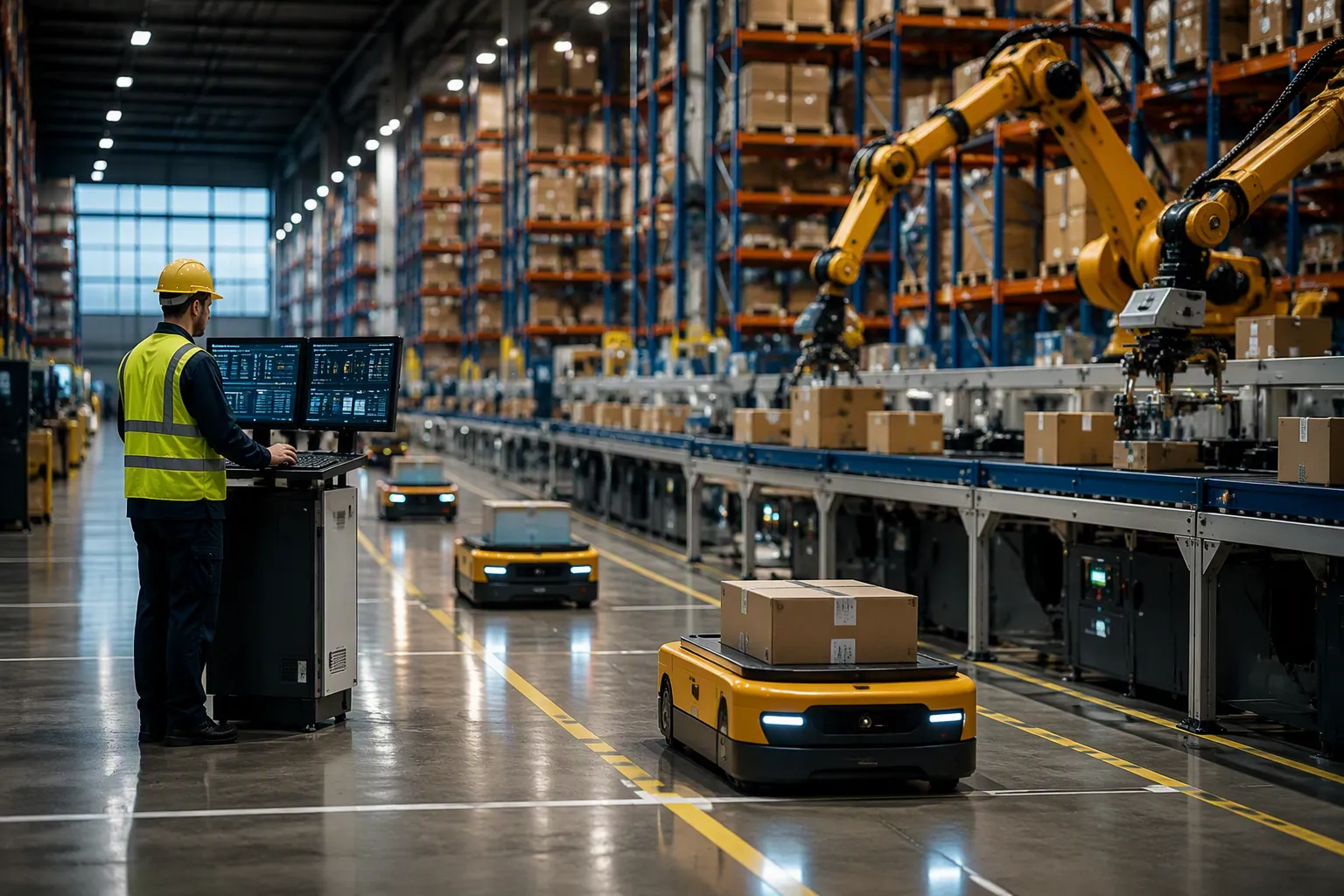
Peak season arrives. A warehouse manager watches orders stack up faster than the team can pick them. Warehouse automation systems solve this problem. These systems use robots, software, and sensors to move inventory with minimal human effort. The global warehouse automation market reached USD 19.2 billion in 2023, so many operations already trust this approach. Could automation make your warehouse run smoother? The answer depends on your goals, your budget, and your current workflow. Robots handle repetitive tasks. People handle exceptions and decisions. That balance matters. Warehouse leaders everywhere ask the same question. The technology keeps improving. The costs keep falling.
What Are Warehouse Automation Systems?
A Simple Definition
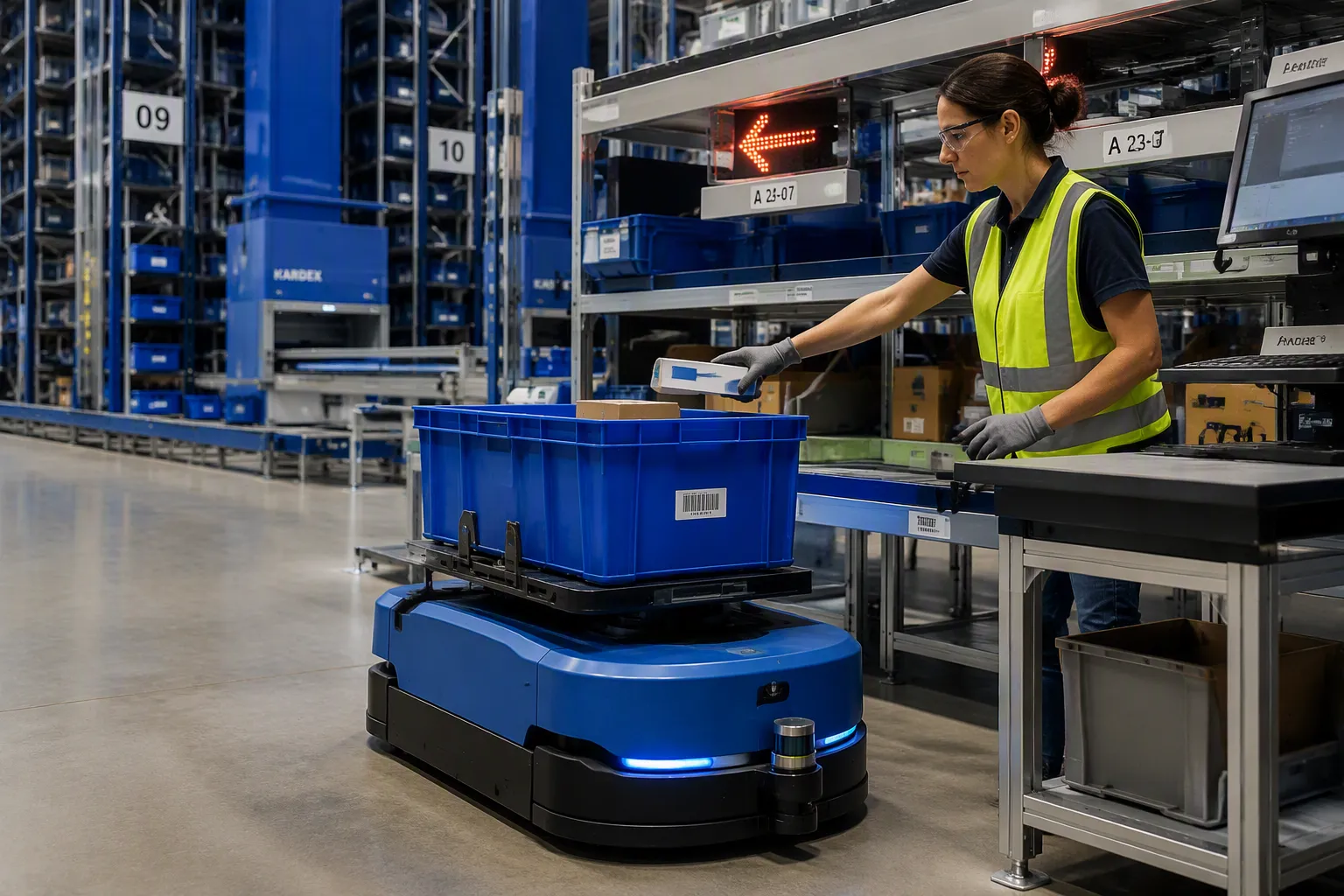
Warehouse automation systems combine robotics, software, and sensors. They move inventory through the warehouse with minimal human effort. These systems cover every step from receiving to picking, packing, and shipping. The goal is to handle repetitive movement with machines.
Several common technologies fall under this category:
- Goods-to-person technology (GTP): This approach brings items to workers instead of sending workers to find items. It raises throughput and cuts travel time.
- Automated storage and retrieval systems (AS/RS): These systems store and retrieve goods automatically. They maximize space utilization and speed.
- Pick-to-light systems: LED displays guide operators to the correct storage location. This method lowers picking errors.
- Autonomous mobile robots (AMRs): These robots move totes across the warehouse floor. They reduce traffic and keep workers safe.
Adoption of these technologies is growing but still limited. The table below shows key statistics.
| Metric | Value |
|---|---|
| Overall warehouse automation adoption | 25% of warehouses use any automation; only 10% use advanced technologies |
| Market size (2026) | $34.17 billion |
| Projected market size (2031) | $65.74 billion |
| Mobile robot revenue forecast | From less than $5B (2024) to $14B (2030) |
| Labor cost reduction example | 40% reduction in variable labor costs (THG) |
All figures are sourced from referenced market reports.
These automated systems integrate with software. A modern warehouse management system (WMS) connects with conveyors, robots, and IoT devices.
"Modern WMS integrates with conveyors, robots, IoT devices, and predictive analytics."
How Warehouse Automation Technology Works
Warehouse automation technology relies on several layers. Sensors collect data about the environment. LiDAR sensors emit and receive pulsed light. They use time-of-flight principles to measure distances. This allows robots to map their surroundings. Mobile robots combine LiDAR, radar, sonar, and thermal sensors. This combination helps them avoid collisions with products, people, and other robots.
Navigation systems guide these machines:
- Navigation: Automated guided vehicles (AGVs) follow pre-set paths using wires or markers. Autonomous mobile robots (AMRs) use SLAM (Simultaneous Localization and Mapping). They navigate freely and adapt to changes.
- Obstacle handling: Equipped with various sensors, robots detect and avoid obstacles. They operate safely near human workers.
- Item identification: Barcode scanners or RFID readers identify goods during picking and placing tasks.
- Collaborative robots (cobots): Cobots take over repetitive or strenuous tasks. Humans focus on complex decisions.
A warehouse control system (WCS) or warehouse execution system (WES) connects all automated equipment.
"A WCS or WES connects directly with automated equipment—conveyors, carousels, ASRS systems, and picking technologies—providing a consistent interface for managing material flow."
This integration boosts warehouse operations. It improves accuracy, speed, and inventory visibility. Companies can handle higher volumes without proportional increases in labor. The order fulfillment process becomes faster and more reliable. Real-time data from sensors and RFID tags feeds the WMS, enabling precise inventory management. This level of inventory management helps reduce stockouts and overstock. Overall, warehouse automation technology transforms how goods move through the supply chain.
Main Types of Warehouse Automation
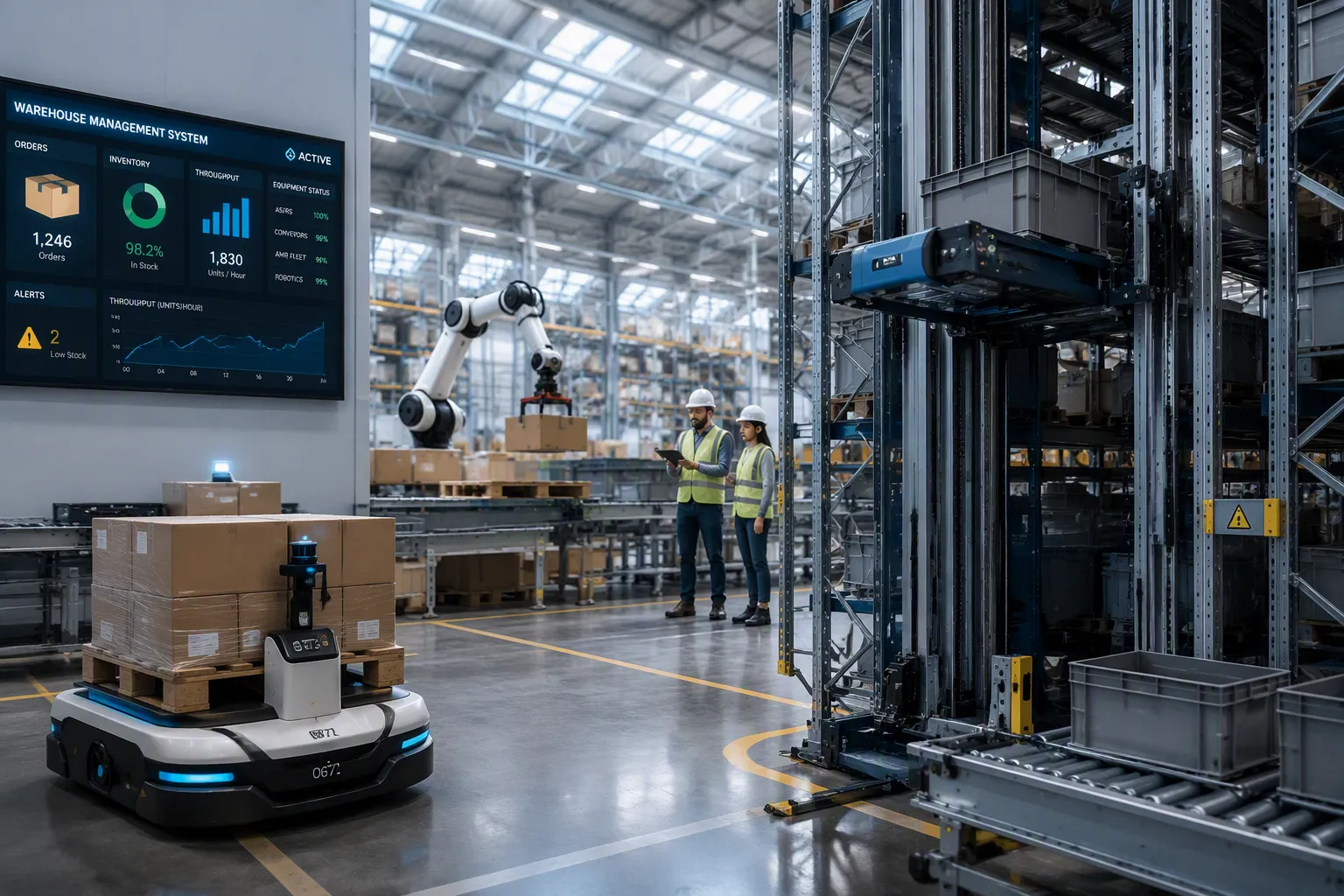
Warehouse automation systems divide into five primary categories. Conveyor or sortation systems move products along fixed paths. Automated storage and retrieval systems (AS/RS) store and retrieve goods from defined locations. Mobile robots transport materials across the floor. Warehouse management systems (WMS) coordinate the entire operation. Automatic identification and data capture (AIDC) tools track inventory with barcodes or RFID tags. Most facilities combine several types for a complete solution.
Robotics, AMRs, and ASRS
AS/RS uses fixed rails or carousels near storage aisles. These automated storage and retrieval systems maximize vertical space. They achieve high retrieval speeds. They pair with warehouse execution or management software. Automated storage and retrieval systems work best for maximizing space utilization and eliminating walking. Leading manufacturers produce these systems. Choose automated storage and retrieval systems for space efficiency and high throughput. These automated storage and retrieval systems improve product security and scale efficiently within existing square footage.
AMRs navigate freely using sensors and cameras. This warehouse automation technology finds efficient paths dynamically. AMRs stop or reroute around workers using collision avoidance. This flexibility makes AMRs adaptable. Deployment takes one to two months. No fixed infrastructure is needed. The AMR market continues to grow rapidly.
Real-world warehouse automation examples show how these robots deliver value. For instance, one manufacturing client achieved a payback period of 2.2 years on a $3.5 million investment, and THG achieved a 40% reduction in variable labor costs. These examples demonstrate measurable results.
Sortation and Warehouse Management Systems
Sortation systems direct products to correct destinations. Conveyors carry items past scanners. Diverters push packages onto specific lanes. This speeds order sorting. It reduces manual handling in high-volume distribution centers.
Modern warehouse management systems coordinate everything. They integrate with robotics and conveyors. A WMS communicates with automated systems. Some vendors offer a WES built into a WMS, controlling every aspect of the distribution center. Modern warehouse management software connects all equipment. It tracks inventory in real time. Warehouse management software optimizes picking routes and worker coordination. These warehouse management systems handle omnichannel pressures and labor volatility.
Together, sortation and WMS create seamless fulfillment. Products move from storage to shipping without human intervention. Order fulfillment speeds up significantly. Warehouse operations run faster. Inventory management improves with real-time data. Operations gain visibility into every step.
Choosing the right combination depends on needs. A small facility might start with AMRs and a basic WMS. A large center installs AS/RS, sortation, and an advanced WES. The best warehouse automation software and hardware solutions match volume and labor goals. Consider how warehouse automation software and hardware solutions fit your workflow. Effective warehouse automation requires careful planning. Automated solutions help scale operations. These automated solutions improve accuracy and speed. Automated solutions also reduce error rates significantly.
Benefits of Warehouse Automation
Speed, Accuracy, and Cost Savings
Warehouse automation systems deliver measurable improvements in speed and accuracy. ASRS systems achieve very high accuracy levels that remain stable regardless of operator performance. This consistency transforms the order fulfillment process. One company integrated high-density storage with an automated retrieval system, multiplying capacity significantly and enabling effective peak demand handling. This scalability allows precise capacity matching to demand levels. Order processing times dropped. Fulfillment accuracy improved significantly.
The benefits of warehouse automation include predictable returns. Typical payback periods depend on the system type and investment level. A well-planned project can achieve strong ROI over several years. These benefits of warehouse automation extend beyond cost savings. Automation improves warehouse efficiency by optimizing walking paths. Workers spend less time traveling. Productivity rises. The entire fulfillment process becomes more reliable. Inventory management becomes more precise. This inventory visibility reduces stockouts and overstock.
Productivity gains compound over time. Productivity metrics show consistent improvement. Automation handles repetitive tasks with consistency. Workers manage quality control. The benefits of warehouse automation create a stronger operation. Productivity increases become permanent. Automation delivers reliable results across every shift.
What to Watch Out For
The benefits of warehouse automation come with real challenges. Integration complexity poses the first hurdle. Barcode scanners, 3D vision systems, and robotic controllers require precise synchronization. Misconfigurations can cause significant throughput drops.
Hidden expenses appear in multiple areas. Infrastructure modifications add unforeseen costs. Training and project management require investment. A shortage of automation talent drives high recruitment costs. Cybersecurity risks demand network segmentation and encryption. These connected systems require compliance measures that many operations overlook.
Downtime factors require planning. Conveyor timing issues cause frequent stops. Product variability leads to jams. Poor facility layout creates congestion. Inadequate training slows response to interruptions. Each factor reduces overall productivity if left unaddressed.
The long-term benefits outweigh the short-term friction. Smart implementation delivers lasting value. Benefits appear across the entire operation. Automation supports scalable growth. Productivity continues improving week by week. Inventory management accuracy strengthens. The entire warehouse runs smoother. Warehouse operations become more efficient with each improvement cycle. Effective automation requires careful planning. The benefits multiply as the system matures. Efficiency benefits appear quickly after implementation. Cost benefits accumulate over several years. These benefits compound through continuous improvement. Start with proven approaches. Productivity metrics show consistent gains. Scale gradually as results appear.
Choosing and Implementing a System
A Step-by-Step Guide
Small and mid-sized businesses should start with foundational steps. First, establish baseline metrics for current warehouse operations. Second, identify specific pain points and prioritize automation targets. Third, organize warehouse layout and standardize locations before introducing technology. Fourth, begin with inventory management software and barcode scanning. Fifth, implement changes in phases rather than all at once. Sixth, train staff thoroughly and address resistance to change. Seventh, measure results against baseline metrics and adjust as needed. Finally, gradually expand automation scope after initial successes.
A cloud-based warehouse management system with inventory tracking provides a strong starting point. Mobile barcode scanners digitize receiving, putaway, and picking. Connecting the WMS with e-commerce platforms eliminates manual data entry. For small warehouses, a compact automated storage system serves as an ideal first step. It functions like a giant tray vending machine. The operator selects the needed part, and the machine delivers it within seconds. This scalable entry point allows later expansion with pick-assist tools.
Mistakes to Avoid
Several common errors derail warehouse automation projects. Scope creep expands projects beyond original boundaries without calculating true integration costs. Poor data quality causes unpredictable behavior, such as conveyors routing packages to wrong zones. Treating automation as a capital equipment decision rather than change management is another critical mistake. The real determinant of success is operational change management, not the hardware purchase.
Underestimating the timeline creates unrealistic production schedules. Full adoption often takes months, not weeks. Training only the day shift leaves other shifts to learn informally, causing inconsistent operation. Ignoring maintenance training means a system breakdown halts value delivery. Declaring victory too early allows operators to drift back to manual workarounds. Successful implementations plan for a period of reduced productivity during installation. Pausing automation halfway through extends the productivity valley and erodes staff confidence. Choosing automation based on industry benchmarks rather than specific bottlenecks leads to poor technology decisions. The right choice should be driven by the facility's actual constraint.
Warehouse automation systems use robots, software, and sensors to move inventory with minimal human effort. Main types include AMRs, AS/RS, sortation, and warehouse management systems. The benefits of warehouse automation include speed, accuracy, and cost savings. Challenges include integration complexity and hidden expenses.
Automation is a tool, not a magic fix. Start small with a warehouse management system or barcode scanning. Research vendors and plan for training. Measure results against baseline metrics. Then scale gradually. Consult a vendor or download a checklist before committing. Your warehouse can run smoother with the right approach.
FAQ
How much does warehouse automation cost?
Costs vary widely by system type. Smaller deployments are more affordable, while large systems can require substantial investment. Payback periods depend on the specific project.
How long does implementation take?
Timelines depend on scope. AMR deployment takes one to two months with no fixed infrastructure. Full adoption often takes months, not weeks. Successful projects plan for a period of reduced productivity during installation. Pausing halfway extends the productivity valley and erodes staff confidence.
What is the difference between AMRs and AGVs?
AGVs follow pre-set paths using wires or markers. AMRs use SLAM technology to navigate freely and adapt to changes. AMRs stop or reroute around workers using collision avoidance. This flexibility makes AMRs more adaptable for dynamic warehouse environments.
Can small warehouses benefit from automation?
Yes. Start with a cloud-based warehouse management system and barcode scanning. A compact automated storage system serves as an ideal first step for small warehouses. It delivers needed parts within seconds. This scalable entry point allows later expansion with pick-assist tools.
What is the biggest mistake to avoid?
Treating automation as a capital equipment decision rather than change management is critical. The real determinant of success is operational change management, not the hardware purchase. Scope creep and poor data quality also derail projects. Choose technology based on specific bottlenecks, not industry benchmarks.
See Also
Breakthrough Tools Revolutionizing Warehouse Efficiency During The Year 2025
Internal Logistics Advancements Defining Tomorrow's Warehouse Operations And Management
Essential Strategies For Successful Movement Of Stock Within Warehouses
Ways Pick Lists Improve And Simplify Daily Warehouse Workflow Processes
Methods Dynamic Slotting Uses To Revolutionize Warehouse Productivity And Layout