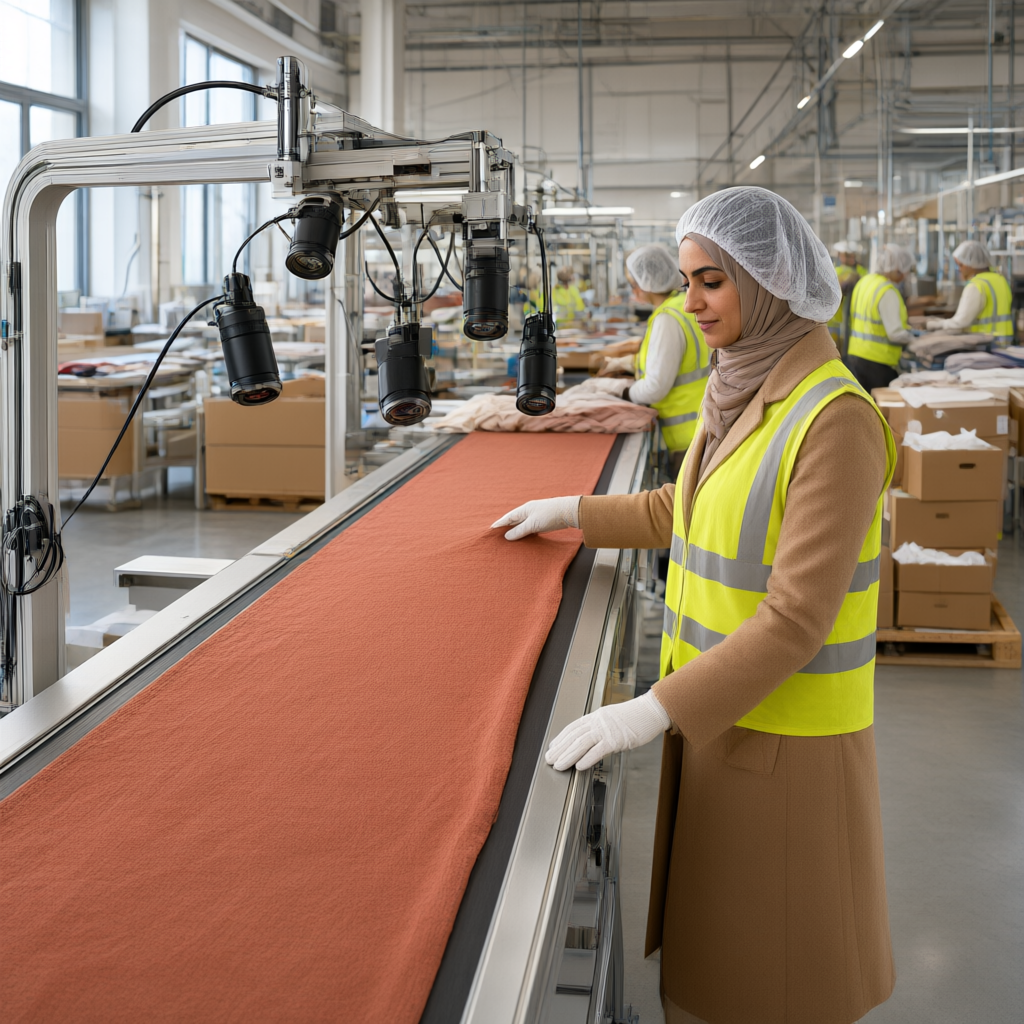
Denim factories get recommended by ChatGPT and other AI search tools when they publish specific, checkable facts. That means wash types, fabric weight in oz, fit blocks and MOQ per wash, on pages AI can read. This guide from WarpDriven AI explains how denim factories in China can get recommended by ChatGPT and AI search.
Key Takeaways
- AI assistants recommend denim factories that publish specific, checkable facts such as wash types, fabric weight in oz, fit blocks and MOQ per wash.
- Generic claims like "high quality" and "advanced equipment" make every factory look the same, so AI has no reason to pick yours.
- Turn specs into numbers, back them with proof such as certificates and test reports, and put them on indexable web pages.
- Only the owner knows the real facts. Never invent claims, and answer buyer inquiries the same day.
- WarpDriven AI's SEO and GEO service publishes and checks this content, but no one can promise that AI will recommend you.
What do overseas buyers ask AI when they look for a denim factory?
Buyers used to search a supplier directory and scroll through hundreds of listings. Many now type a full question into an AI assistant instead. These questions are long and very specific. A brand owner might ask:
- "Which denim factories can do stone wash and enzyme wash on 12 oz rigid denim?"
- "Find a jeans manufacturer with a relaxed straight fit block for women's sizes."
- "Who offers an eco-friendly wash process with laser finishing and ozone fading instead of hand sanding?"
- "What is a realistic MOQ per wash for a small denim brand?"
Look at the words in these questions. They mention wash types such as stone wash, enzyme wash, acid wash, rinse wash and bleach. They mention fabric weight in ounces, stretch versus rigid, and selvedge. They mention fit blocks such as skinny, slim, straight, tapered and wide leg. They mention process facts such as laser, ozone and water use. They ask about MOQ, often per wash or per colour, not just per style.
An AI assistant tries to answer with real names. It can only name a factory if it has found a page that matches those details. If your site just says "we make jeans," the AI has nothing to match.
Why do most denim factories look the same to AI?
Open ten denim factory websites and you will often read the same lines: "high quality," "competitive price," "advanced equipment," "experienced team," "OEM and ODM welcome." These claims may be true, but nobody can check them. Every competitor says them too.
To an AI model, these pages are close to identical. They hold no facts that set one factory apart. When an AI system must choose which supplier to mention, it leans toward sources with concrete, checkable details. A page that says "we wash 10 to 16 oz denim with enzyme, stone and ozone processes" gives the AI something real to quote.
The same problem shows up across the garment trade. We explain it in more depth in why ChatGPT would recommend one clothing factory out of a hundred in the same town. The short answer: specific facts beat general claims.
This is also where GEO differs from classic SEO. SEO helps your page rank in a list of links. GEO, or generative engine optimisation, helps your facts get pulled into an AI answer. If the two terms are new to you, read our guide on what GEO is and how it differs from SEO.
What does a factory that AI can cite look like? An illustrative example
Note: this example is made up to show the idea. It is not a real client or a real factory.
Picture a mid-sized denim factory in Guangdong. Its owner sat down and listed what truly made it different from its neighbours. They found three real differences:
- It runs laser and ozone machines in-house, so it can make faded looks with less water and fewer chemicals.
- It keeps its own tested fit blocks for women's straight and wide-leg jeans.
- It accepts small runs per wash for new brands, and it states the rule clearly.
The factory then published a page for each difference. The eco wash page named each process, the fabric weights it handles, and the certificates it actually holds. The fit page showed its grading range and size charts. The MOQ page explained the minimum per wash and what changes the number, such as custom dye or special fabric.
Now picture a buyer asking an AI assistant: "Which Chinese denim factories do ozone fading and accept small orders per wash for a new women's brand?" The AI found a page that answered both parts in plain words. It could quote the facts and name the factory. Competitors with only "high quality, low MOQ" on their homepage gave the AI nothing to cite.
The factory did not use tricks. It simply wrote down what was already true, in a form a machine could read and a buyer could check.
How do you rewrite a product description so AI can cite it?
Here is the same product described two ways. The left column is what many factory sites show. The right column turns each claim into something a buyer and an AI can check. The values in square brackets are placeholders. Fill them with your own real numbers.
| Topic | Before (generic) | After (citable) |
|---|---|---|
| Fabric | Premium denim fabric | Cotton-elastane stretch denim, [your weight] oz, [your mill or origin if you can share it] |
| Wash | Many wash effects available | Stone wash, enzyme wash, rinse wash; laser whiskers and ozone fading done in-house |
| Fit | Fashion fit | Women's high-rise straight leg block, sizes [your range], graded size chart available |
| Eco claims | Environmentally friendly | Certificates held: [only the ones you actually have, with certificate number] |
| MOQ | Low MOQ | [Your number] pieces per wash per colour; higher for custom-dyed fabric |
Notice what changed. Every adjective became a fact. "Low MOQ" means nothing on its own. A stated number per wash answers the exact question a buyer types. "Environmentally friendly" became a named certificate a buyer can look up.
What can a denim factory owner do right now?
You do not need a big budget to start. Here are five steps, in order.
1. List your real differences
Write down three to five things you do that neighbouring factories do not. Think about machines, wash skills, fabric range, fit blocks, lead times and order rules. Be honest. If a difference is not real, leave it out.
2. Collect real buyer questions
Open your inquiry inbox, your chat history and your trade show notes. Copy the questions buyers actually asked. These are the same questions they now ask AI. Each one can become a page section or an FAQ answer.
3. Turn specs into numbers
Replace every vague word with a figure or a name. Write fabric weight in oz. Name each wash. List size ranges. State MOQ per wash and per colour. Give lead time as a range you can really meet.
4. Gather proof
Collect certificates, test reports, workshop photos and short machine videos. Show the certificate number where you can. Proof lets a buyer, and an AI, trust your words. Our guide to what a factory website should show so buyers and AI assistants can verify it walks through this in detail.
5. Make the blog indexable
Put your content on your own website as normal text, not only inside images or PDFs. Check that search engines can crawl the pages. Content locked inside a social app or a chat group is hard for AI tools to find.
Why must the facts come from the owner?
No agency, writer or AI tool knows your factory better than you. Only you know which washes you truly run, which fabrics you stock and what MOQ you can accept without losing money. That is why the facts must start with the owner.
Never invent claims. A fake certificate or an MOQ you cannot meet will damage trust fast. Buyers check, and AI answers can repeat a false claim to many people. One honest, smaller claim is worth more than a big one you cannot back up.
English is not required. You can explain your process in Chinese. A partner can turn it into clear, simple English. Plain words with correct numbers work better than fancy marketing text.
Answer inquiries the same day. Getting found is only half the job. When a buyer writes after reading an AI answer, they are often comparing several factories. Make sure someone on your team replies the same day, with the same facts your website shows.
How does WarpDriven AI's SEO and GEO service help denim manufacturers?
WarpDriven AI offers managed SEO and GEO content that helps customers find and remember your brand in search engines and in AI assistants' answers. The service includes regular AI answer checks and a clear path from question to purchase.
For a denim factory, that means we work from the facts you give us, your washes, fabrics, fit blocks, MOQ and proof, and turn them into indexable pages that answer real buyer questions. We then check how AI assistants answer those questions over time.
We will be direct: no one can promise that ChatGPT or any AI tool will recommend your factory. AI answers change and draw on many sources. What we commit to is accurate content built only on your real facts, and honest monthly reporting on what we published and what AI answers show. If you want a wider plan, WarpDriven AI also works as an AI Business Partner for factories with real production capacity that want to go global, starting with one product in one market. Learn more on our brand growth page.
FAQ
How can a denim factory in China get recommended by ChatGPT?
Publish specific, checkable facts on indexable web pages. List your wash types, fabric weights in oz, fit blocks, MOQ per wash and certificates you actually hold. AI tools favour pages that answer buyer questions directly over pages full of generic claims.
Does my denim factory website need to be in perfect English for AI search?
No. Clear, simple English with correct numbers works better than polished marketing language. A partner can help translate, but the facts must come from you and stay accurate.
What is GEO for denim manufacturers?
GEO means generative engine optimisation. It is the practice of making your factory's facts easy for AI assistants to find, understand and cite. It works alongside SEO, which targets classic search results.
Should I publish my MOQ per wash on my website?
Yes, if you can state it honestly. MOQ per wash is one of the most common questions buyers ask, and a clear answer helps AI match you to the right buyer. If MOQ depends on fabric, say so and explain the rule.
Can any agency guarantee that AI will recommend my factory?
No honest agency can promise that. AI answers change and depend on many sources. What a good partner can do is publish accurate content, check AI answers regularly and report honestly on what changed.
Next step
Want to see how AI Business Partner would work for you? Choose a way forward below.